

A rupture disc is non-reclosing, 100% leak tight until it bursts, very fast and free of mechanical maintenance, but it works once and usually means a process stop. A pressure relief valve recloses after the event and keeps the process running, but it has moving parts that need maintenance and can leak at the seat. Many plants combine both, with the disc upstream of the valve.
Rupture disc vs pressure relief valve: an honest starting point
Rupture disc vs pressure relief valve is the question almost every buyer and process engineer asks at some point, and it rarely has a one-line answer. Both devices protect equipment against overpressure. Both are recognised in the standards and both have decades of use behind them. Yet they work in fundamentally different ways, and that difference shows up in leak tightness, in speed, in maintenance and above all in what happens to your process after an event.
We should be open about our position before we start. Dutch Valve Vision is the exclusive agent of STRIKO Verfahrenstechnik GmbH for the Netherlands, Belgium and Luxembourg, so rupture discs, holders and burst detection are our daily work. That does not mean a disc is always the answer. There are processes where a pressure relief valve is simply the better device, and there are many where the best solution is to use both together. A comparison is only useful if it tells you when the other option wins, so that is what this page does.
A quick note on terms. Pressure relief valve, safety valve and safety relief valve are used differently in different standards and companies. On this page we use pressure relief valve for the reclosing, spring loaded device in general, and rupture disc for the non-reclosing membrane that bursts at a set pressure. The principles hold whichever label your plant uses.
Picture a design review for a new unit. The process engineer wants a relief valve on a reactor because the plant standard says so, the safety engineer points at the toxic medium and asks about seat leakage, and the maintenance lead worries about yet another valve on the overhaul list. All three are right about something. The rupture disc vs pressure relief valve discussion in that room is not about which device is better in general. It is about which weaknesses this particular process can live with, and the criteria below are the ones that settle it.

Reclosing or non-reclosing: the difference that drives everything
The single most important difference in the rupture disc vs pressure relief valve comparison is what happens after the device has done its job. A pressure relief valve opens when the pressure under its disc overcomes the spring force, relieves the excess and closes again once the pressure has dropped far enough. The valve can open and close with pressure variations, and in many cases the process keeps running while only a limited amount of medium is lost.
A rupture disc cannot do that. Once it has burst, the opening stays open until the disc is replaced. The medium keeps flowing out until the pressure has equalised or the system has been isolated. In most plants that means the process has to stop for a while. For a continuous unit that runs for long periods between turnarounds, an unplanned stop can be a serious cost in lost production. For a batch reactor where an overpressure event would end the batch anyway, the consequence is much smaller.
This one property explains a lot of real-world choices. Where overpressure events are expected occasionally as part of normal upsets, a reclosing valve limits both the loss of medium and the disruption. Where an overpressure event is a rare emergency that already means shutting down, the non-reclosing nature of a disc is a much smaller drawback than it first appears.
Leak tightness: where the rupture disc vs pressure relief valve comparison is clearest
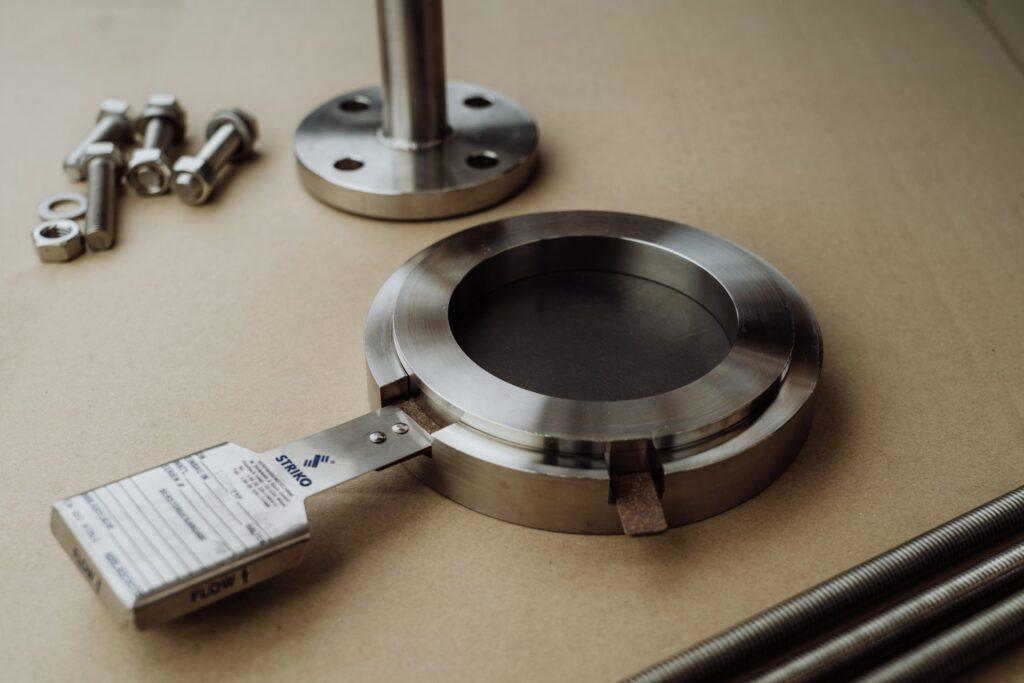
On leak tightness the difference is black and white. An intact rupture disc is 100% leak tight up to the moment it bursts. There is no seat, no gap and no moving part that could let a small amount of medium past. A pressure relief valve relies on a disc pressed onto a seat by a spring, and a valve can show small leaks before it opens. Wear, corrosion and deposits on the seat make that more likely over time, and so does operation close to the set pressure.
For many media a small seat leak is an inconvenience. For toxic, expensive or environmentally harmful media it can be unacceptable. Think of a plant handling a toxic gas, where even a small continuous emission through a relief valve seat would breach emission limits and put people at risk. In that situation leak tightness alone can decide the design, either in favour of a disc or in favour of a disc upstream of the valve.
Leak tightness also works the other way round. A seat leak in a valve is often not noticed until it has been going on for some time, while a burst disc can be signalled immediately with a burst detection sensor. Electrical detection monitors a loop that breaks when the disc opens, and magnetic detection reads a field that changes when the disc moves, with fail-safe designs that also report a sensor defect. The signal goes to PLC, SCADA or DCS, so there is no doubt about the state of the device.
Unsure about the right choice?
Share your process data with our specialists. We check the numbers with you and give reasoned advice.
Speed and the nature of the overpressure event
A rupture disc responds within milliseconds once the burst pressure is reached. There is no spring to compress, no stem to move and no inertia of moving parts to overcome, so the reaction is faster than with many safety valves. A graphite disc opens across its full diameter when it bursts, which gives fast relief. For events where pressure rises extremely quickly, such as a runaway exothermic reaction or a sudden blockage, that speed is a strong argument.
A pressure relief valve is fast enough for a great many scenarios, and it is the standard device for good reason. Where the pressure rises gradually, for example through heat input or a control failure that develops over time, the difference in response time rarely decides the choice. The honest summary is this: the faster and more violent the event, the stronger the case for a disc. The slower and more frequent the event, the stronger the case for a valve.
Maintenance, testing and what happens after an event
A pressure relief valve has a spring, a stem, a seat and a disc, and each of those parts can stick, corrode, wear or drift. That is why valves are inspected, tested and overhauled at intervals set by the plant’s inspection regime. The upside is that a valve can be tested, reset and returned to service, and its settings can be checked and adjusted. A good valve with proper maintenance serves for many years.
A rupture disc has no moving parts and needs no mechanical maintenance. Periodic visual inspection and checks of the installation conditions are enough while it is in service. The flip side is that a disc cannot be tested in place without being used up. Confidence in its burst pressure comes from the design and from the manufacturer’s testing, and STRIKO works to a philosophy of testing, evaluating and recalibrating. After an event the disc is replaced, and a damaged disc must never be installed, because even small defects can change the burst pressure. The holder stays in place and can be reused for a long time without losing performance.
In practice this means different logistics. A valve owner plans overhaul capacity and spare parts. A disc owner keeps spare discs in stock for critical positions, so that a disc that has opened can be replaced quickly and the process restarted. Both are manageable, but they are different ways of working, and it pays to decide which one suits your maintenance organisation. When you set the rupture disc vs pressure relief valve options side by side over the full life of a plant, look beyond the device itself. Count the planned overhauls of a valve, the spare discs you keep on the shelf, the downtime after an event and the cost of an emission through a leaking seat. A quality holder lowers the total cost of a disc position through less unplanned downtime, a longer service life and predictable behaviour at overpressure, but only if the disc suits the process in the first place.
At a glance
- Disc: leak tight until the moment of bursting
- Valve: recloses once pressure has dropped
- Disc must be replaced after activation
- Combination isolates valve from process medium
Choosing by process: where each device has the edge
When we look at a rupture disc vs pressure relief valve question with a customer, we walk through the process rather than the devices. The same criteria come back every time, and they point one way or the other quite clearly.
Where the rupture disc has the edge
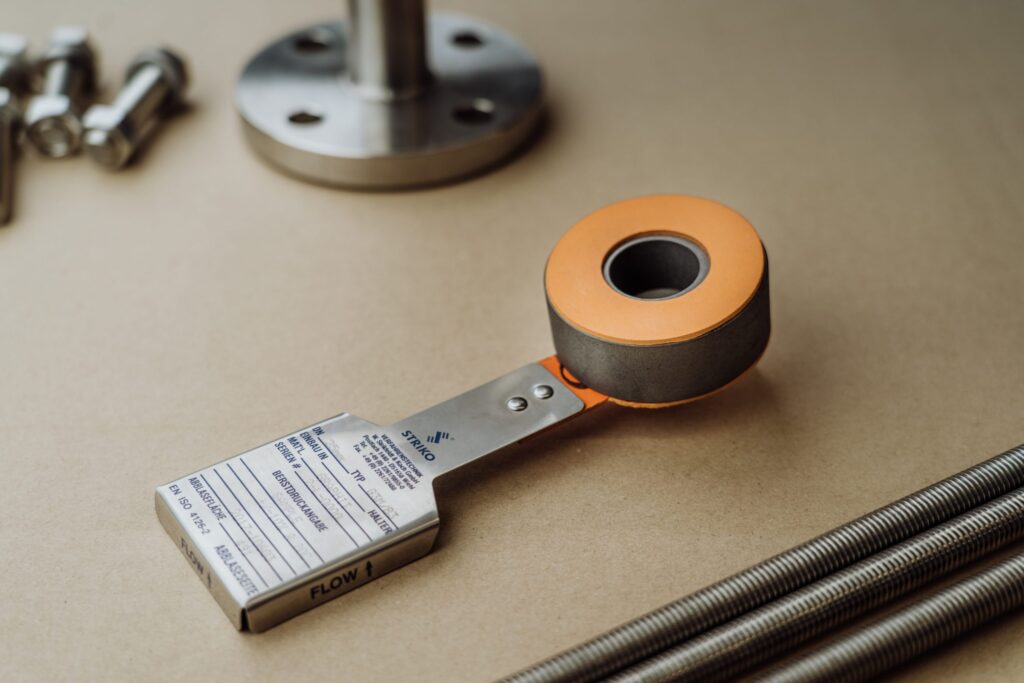
A disc is strong where leak tightness is critical, with toxic, expensive or environmentally harmful media. It is strong with corrosive media, especially when graphite or special alloys are used, since graphite is naturally resistant to many acids, bases and aggressive media without coatings. It is strong with very fast pressure rise, and in compact installations where space and weight count, because discs are light and have a small installation length compared to many valves. It also suits hygienic processes, where aseptic discs with highly polished surfaces support cleaning and CIP. And it has no problem with a power failure, since it needs no external energy at all. Media that are viscous, sticky or inclined to polymerise deserve a separate mention. Such media can build up on a valve seat and in the guiding of moving parts, until the valve no longer opens at the intended pressure or no longer closes properly. A disc has no seat to foul and no guide to block. In an extruder, where a blockage or an unexpected change in viscosity makes the pressure climb fast, a disc or burst plug is a proven fail-safe that protects the screw, the barrel and the seals. The same reasoning applies to other positions where the medium itself is the biggest enemy of a mechanical device.
Where the pressure relief valve has the edge
A valve is the better device where overpressure events are expected more than rarely and the process has to keep running. It is the better device where the loss of medium during an event must be limited, because it closes again once the pressure has dropped. It is often preferred where the operating pressure fluctuates a lot and the plant wants to avoid any risk of a disc fatiguing and opening unexpectedly, although reverse acting discs offer higher resistance to pressure cycles than forward acting designs. A disc is also a poor choice when the plant simply cannot accept a stop after an event. Saying so is part of giving honest advice.
Temperature and operating ratio: the criteria people forget
Two further factors shift the balance and are easy to overlook. The first is temperature. The burst pressure of a disc depends on it, and at higher temperatures the effective burst pressure can fall, depending on material and design, so a disc has to be selected for the temperature in the relief scenario and not only for normal operation. The second is the operating ratio, the relation between the maximum operating pressure and the burst pressure, which directly affects the service life of a disc. A process that runs close to its relief pressure asks more of a disc than one with a comfortable margin, and that can tip the choice towards reverse acting designs, towards a valve or towards the combination of both.
Rupture disc vs pressure relief valve: when the answer is both
In many plants the answer to rupture disc vs pressure relief valve is not one or the other but a combination. The most common arrangement places the disc directly upstream of the valve. The disc keeps the valve isolated from corrosive or fouling media and prevents leakage through the valve seat, while the valve can reclose after the pressure has dropped and so limits the loss of medium. Together they combine the leak tightness of the disc with the reclosing ability of the valve.
A combination has its own design points. The disc must open fully and must not leave fragments that could interfere with the valve. The small space between disc and valve has to be monitored, because pressure trapped there changes the pressure at which the disc opens. And the combined capacity of disc and valve has to be checked, since the disc adds flow resistance in front of the valve. We cover this arrangement in depth on our pages about the rupture disc relief valve combination and about the safety valve with rupture disc from the valve owner’s point of view.
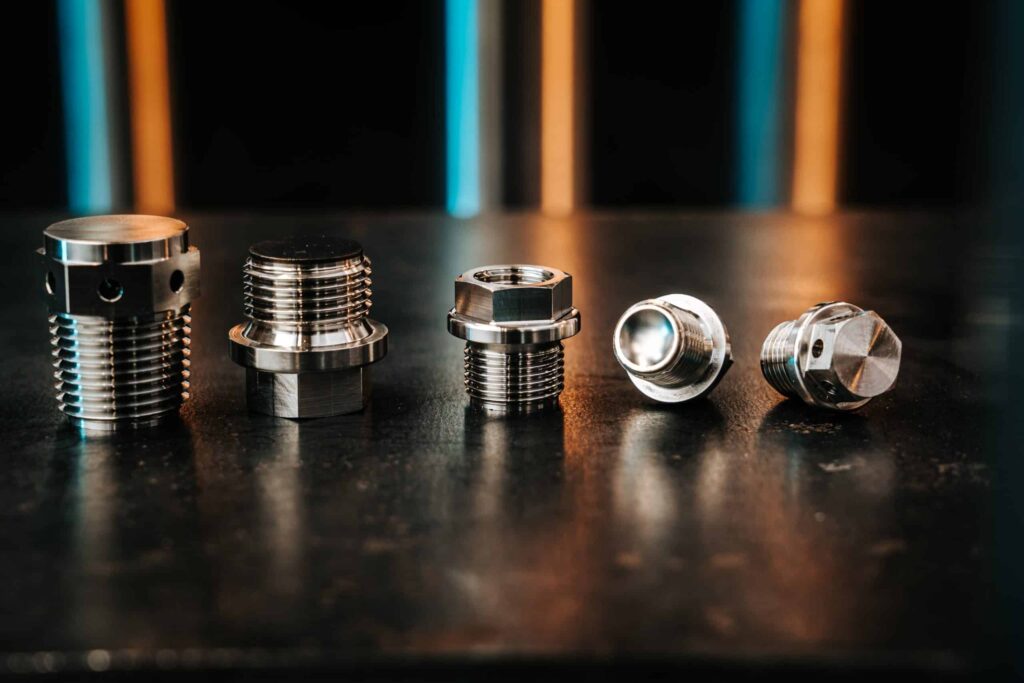
Burst plugs follow the same logic on a smaller scale. They are applied next to or instead of safety valves, depending on the application, sometimes as primary protection against a specific scenario such as a blockage and sometimes as secondary protection alongside a safety valve. What they should never be is a replacement for all safety valves without a proper engineering basis.
How Dutch Valve Vision helps you decide
We would rather help you make the right choice than sell a disc that does not belong in your process. Our focus is the disc side: STRIKO rupture discs in metal, graphite, aseptic and extruder versions, holders for forward acting, reverse buckling and vacuum support duty, burst detection and compact burst plugs. The holders we supply follow ASME Section VIII, EN ISO 4126 and PED 2014/68/EU, with material certificates to EN 10204 3.1, pressure calculations, inspection reports and traceability for every component. On request we support FEM analyses and HAZOP and other safety studies. Dutch Valve Vision works with an ISO 9001 certified quality management system, certified by KIWA.
To give a well founded view on the rupture disc vs pressure relief valve question for your position, we need the medium and its composition, the operating pressure including peaks, the required relief pressure, the temperature in normal operation and in the relief scenario, the connection and the installation space. Tell us as well how often you expect the device to act and what a process stop would mean for you. Send your data to sales@dutchvalvevision.com or call +31 (0)70-2210560, Monday to Friday from 09:00 to 17:00, and we will come back with advice on the disc side of the choice.
Frequently asked questions
Frequently asked questions about rupture disc vs pressure relief valve
What is the main difference between a rupture disc and a pressure relief valve?
The main difference is that a rupture disc does not reclose, while a pressure relief valve does. A disc bursts at its set pressure and stays open until it is replaced. A relief valve opens when the pressure overcomes the spring force and closes again once the pressure has dropped. That affects everything that follows, from the loss of medium to the need for a process stop. A disc is 100% leak tight until it bursts, while a valve can leak slightly at the seat. A disc reacts within milliseconds and needs no mechanical maintenance. A valve can be tested, reset and returned to service after an event. Which properties weigh heaviest depends on your process and your risks.
Is a rupture disc safer than a pressure relief valve?
Neither device is safer in general terms, because safety depends on the right device in the right place. A rupture disc has no moving parts that can stick, corrode or drift, and it needs no external energy. It is also completely leak tight until it bursts. A pressure relief valve limits the loss of medium because it closes again after an event. That can be the safer outcome when a disc would release the full contents of a system. The type of overpressure event, the medium and the consequences of a release all play a role. A proper risk assessment, such as a HAZOP, is the place to make that judgement. We can support that study with engineering input on the disc side.
Why is a rupture disc faster than a relief valve?
A rupture disc has no spring to compress, no stem to move and no valve disc to lift. As soon as the burst pressure is reached, the membrane gives way and opens within milliseconds. There is no inertia of moving parts to overcome. A graphite disc opens across its full diameter, which allows fast relief. A pressure relief valve is fast enough for many scenarios, but its mechanical parts need a moment to respond. That difference matters most with very fast pressure rise, such as a runaway reaction or a sudden blockage. With gradual pressure build-up the difference rarely decides the choice. We look at the expected rate of pressure rise when we advise.
Does a rupture disc need less maintenance than a relief valve?
A rupture disc needs no mechanical maintenance, because it has no moving parts. Periodic visual inspection and checks of the installation conditions are sufficient while it is in service. A pressure relief valve has a spring, stem, seat and disc that need inspection, testing and overhaul at set intervals. On the other hand, a disc has to be replaced after every activation. A disc cannot be tested in place without being used up. That is why spare discs for critical positions are an important part of disc maintenance. The holder is designed for long-term reuse and usually only needs visual inspection. So the effort is different rather than simply lower.
When should I choose a pressure relief valve instead of a rupture disc?
A pressure relief valve is usually the better choice when overpressure events are expected more than rarely. It is also preferred when the process must keep running after an event. Because the valve recloses, the loss of medium stays limited to the duration of the overpressure. Plants that cannot accept a stop after every event will generally lean towards a valve. Where the medium is clean and not aggressive, the valve’s seat is less likely to leak or foul. A valve also allows its settings to be checked and adjusted. For very toxic or corrosive media, a disc upstream of the valve can combine the advantages of both. We will tell you honestly when a disc is not the right answer.
Can a rupture disc and a relief valve be used together?
Yes, and it is one of the most common arrangements in pressure safety. The disc is usually placed directly upstream of the relief valve. It keeps the valve isolated from corrosive or fouling media and prevents leakage through the valve seat. The valve then limits the loss of medium by closing again after the event. The space between disc and valve must be monitored, because trapped pressure changes the pressure at which the disc opens. The disc must also open fully without leaving fragments that could affect the valve. The combined relief capacity has to be checked as well. We advise on the disc, the holder and the detection for such a combination.
What happens to the process after a rupture disc bursts?
After a rupture disc bursts, the opening stays open until the disc is replaced. The medium flows out until the pressure has equalised or the system has been isolated. In most plants this means the process has to stop for a while. With a burst detection sensor, the control system is informed immediately and can shut the process down and warn personnel. The disc is then replaced with a new one, while the holder can be reused. A damaged disc must never be installed, because even small defects can change the burst pressure. Keeping spare discs in stock shortens the downtime considerably. It is also a good moment to check why the overpressure occurred.
What information does Dutch Valve Vision need to advise on disc or valve?
We need a clear picture of the process and the relief scenario. Start with the medium and its composition. Add the operating pressure including peaks and the required relief pressure. The temperature in normal operation and in the relief scenario is essential. The connection and the available installation space complete the technical data. Tell us how often you expect the device to act and what a process stop would mean for you. With that information we can give an honest view on the disc side of the choice. Send your data to sales@dutchvalvevision.com or call +31 (0)70-2210560.
Request a quote
Weighing disc against valve for your plant?
Send us the medium, pressures including peaks, temperatures and what happens in the relief scenario. We will give you an honest view on the disc side of the choice.
- +31 (0)70-2210560
- sales@dutchvalvevision.com
- Vlotlaan 641, 2681 TZ Monster
- Mon-Fri 09:00-17:00
Related pages