
Inline static mixer
Why mixing inside the pipe often beats a stirred tank, and how an inline static mixer fits between your valves and dosing points.
- Exclusive STRIKO agent Benelux
- ISO 9001 · KIWA
- Engineering support from Monster (NL)
Four steps that repeat in every mixing element.
Split
Mixing elements divide the flow into smaller partial streams.
Redirect
The partial streams are redirected, creating shear.
Recombine
The streams merge again, element after element.
Homogeneous
No moving parts, energy taken from the pressure drop.
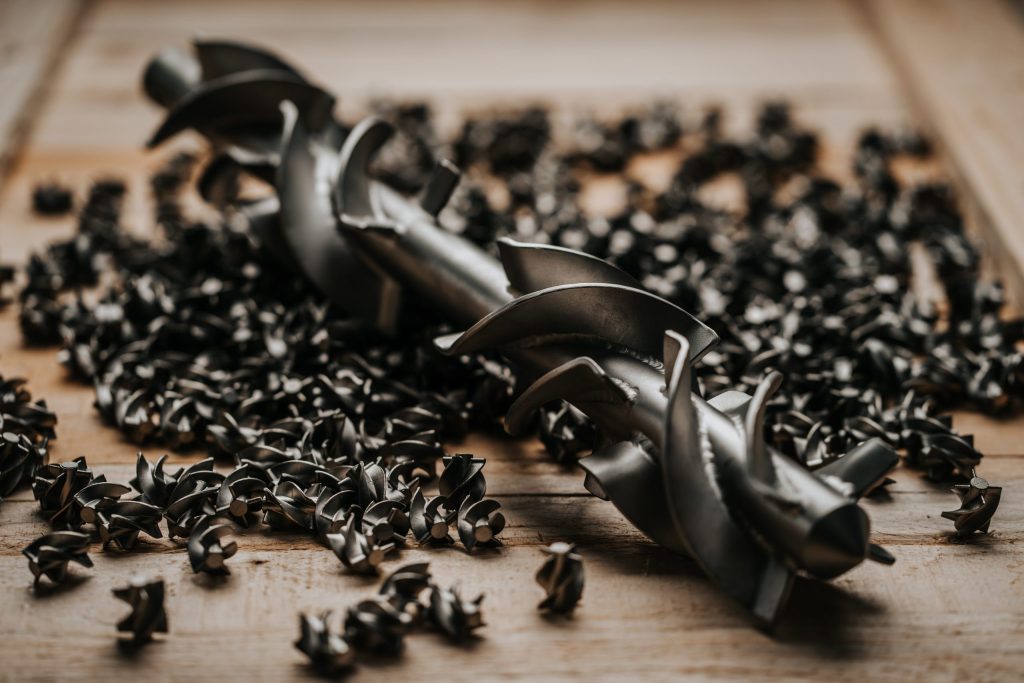
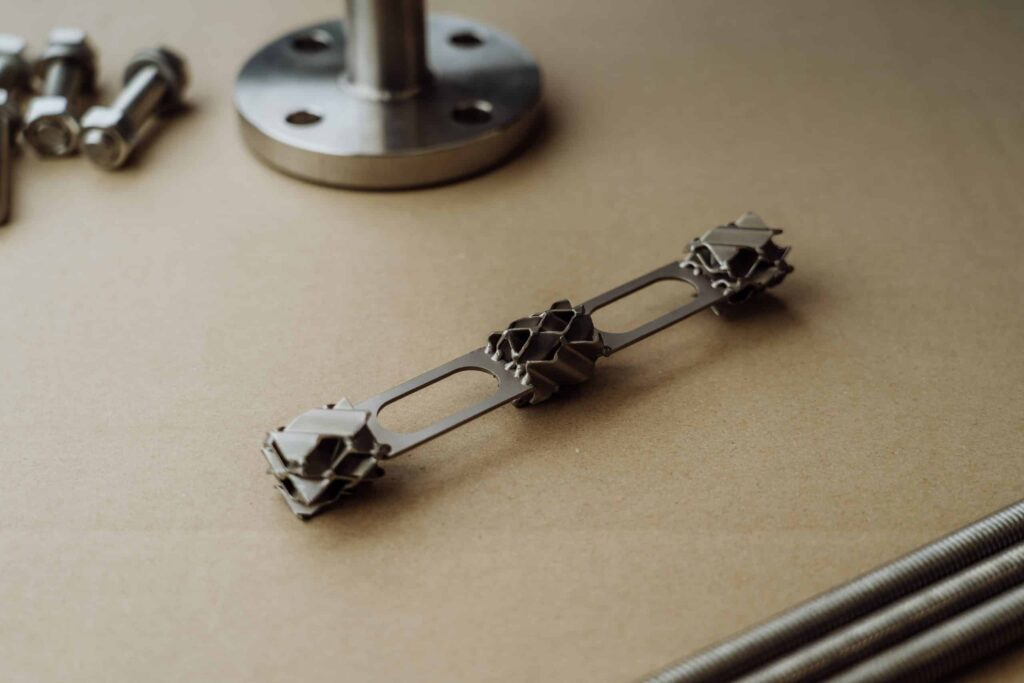
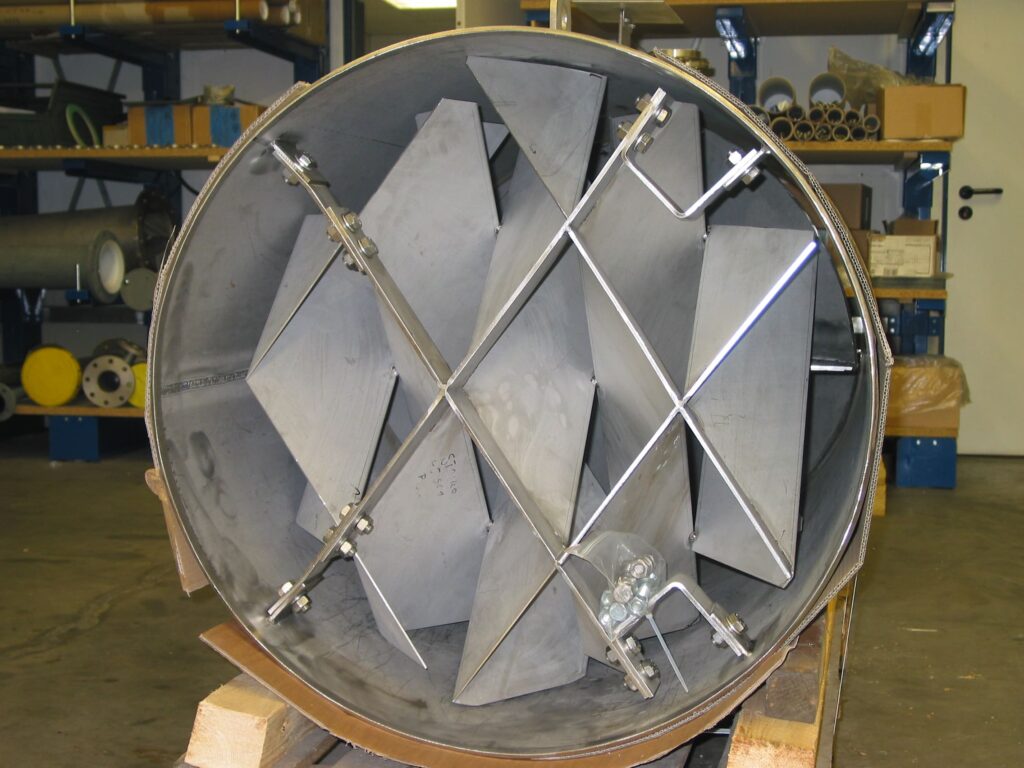
An inline static mixer is a pipe section with fixed mixing elements that blends streams continuously while they flow, instead of in a stirred batch tank. It needs no motor because the mixing energy comes from the pressure drop in the line. Dutch Valve Vision supplies STRIKO inline static mixers and advises on integration with valves and dosing.
- Continuous mixing inside closed pipework
- Energy taken from line pressure drop
- Easy dismantling for cleaning or inspection
- Integration with valves and instrumentation
An inline static mixer versus the stirred tank next to it
An inline static mixer does its work inside the pipe, while the product is on its way somewhere else, and that single fact changes how a whole process step can be designed. Walk through almost any older production hall and you will find the alternative: a vessel with an agitator on top, a motor, a gearbox and a shaft seal, surrounded by level switches and a sampling valve. Two components are pumped in, the agitator runs for a set time, an operator takes a sample, and only when the lab approves does the batch move on.
That routine works, and it has worked for decades. It also ties up floor space, electrical power, maintenance hours and, above all, time. Every batch has a filling phase, a mixing phase, a waiting phase and an emptying phase. Nothing leaves the tank while the lab is checking the sample.
An inline static mixer replaces that sequence with a continuous one. The components meet in the pipe, pass a series of fixed elements that split, redirect and recombine the flow, and leave the mixer as one homogeneous stream. There is no stop and start. At Dutch Valve Vision we supply STRIKO static mixers for exactly this kind of continuous inline operation in closed pipework, and in this article we look at what the switch from tank to pipe really means for your process.
Batch mixing and continuous inline mixing compared
The difference between a batch tank and an inline static mixer is more than a difference in hardware. It is a different way of thinking about quality. In a batch process, quality is checked per batch after mixing. If a batch is off spec, it is corrected or rejected, and the time spent on it is lost. In a continuous process, quality depends on keeping the ratio of the incoming streams stable and on mixing them well enough within a short length of pipe.
A stirred tank has real strengths. It can hold a volume for as long as a reaction needs, it can keep solids in suspension, and it can absorb fluctuations in supply. When a recipe calls for a long residence time, a tank is the logical choice.
An inline static mixer has different strengths. It has no moving parts, so wear is virtually ruled out and regular mechanical maintenance becomes unnecessary. It takes up very little space because it is part of the pipe. It does not need a motor, and it does not suffer from the variation that creeps in when a tank is filled a little differently each time. The mixture leaving the mixer is as consistent as the streams that enter it. Anyone who has replaced a leaking shaft seal on a large agitator, with the vessel drained, the motor lifted off and the production schedule on hold, will understand why the absence of a drive is more than a technical detail.
That last point is the catch. An inline static mixer cannot correct a wrong dosing ratio. It mixes what it receives, and it mixes it well, but if one pump delivers too little, the result is a perfectly homogeneous wrong product. That is why inline mixing always goes hand in hand with stable dosing and good flow control, a point we come back to below.
Pressure drop: the energy source of an inline static mixer
An agitator draws its energy from an electric motor. An inline static mixer draws its energy from the flow itself. As the product passes the elements it loses pressure, and that pressure drop is the energy that performs the splitting, redirecting and recombining. The pump that already moves the product through the line pays for the mixing.
For the operator this is invisible. For the engineer it is a design parameter that deserves attention. The pressure drop across the mixer depends on the flow rate, the viscosity of the product, the pipe diameter and the number and type of elements. In laminar flow, which is typical for viscous products, pressure drop rises roughly in proportion to velocity. In turbulent flow, typical for water and thin liquids, it rises much more steeply, roughly with the square of the velocity.
This creates a trade-off. A larger diameter reduces velocity and therefore pressure drop, but in a turbulent design a lower velocity can also reduce mixing intensity. A smaller diameter mixes more vigorously but asks more from the pump. The sweet spot depends on the process, and finding it is a matter of calculation, not guesswork.
In practice we always check three things. Is the available pressure at the mixer location sufficient at maximum flow? Does the pump still operate in a sensible part of its curve after the mixer has been added? And what happens to mixing quality at the lowest flow the plant will run? A line that operates at part load for long periods needs a different answer from one that always runs at full capacity.
Selection starts with four data points
With these we choose series, diameter and number of elements.
Viscosity
Of the main stream and of the added component.
Flow rates
Main flow and dosing, also at part load.
Temperature and pressure
Determine material and allowable pressure drop.
Mixing quality
How homogeneous the product must be downstream.
Where the inline static mixer sits between valves and dosing points
An inline static mixer never works alone. It sits in a line with pumps, valves, flow meters and often one or more dosing points, and its performance depends on how well those parts work together. Dutch Valve Vision is a specialist in special valves for special services, and that background shapes how we look at a mixing step. We advise on the integration of static mixers with valves, measuring instrumentation and process automation, not only on the mixer itself.
A typical arrangement starts upstream with the main stream and a dosing line for the second component. The dosing point is placed shortly before the mixer so the added component enters the elements straight away, rather than travelling along the pipe wall as a separate layer. A check valve in the dosing line prevents back flow when the dosing pump stops. Flow measurement on both streams gives the control system the information it needs to keep the ratio stable, and a control valve or a variable speed dosing pump adjusts the addition.
Downstream of the inline static mixer comes the proof. A sampling point or an inline analyser shows whether the mixture meets specification. During commissioning, validation can include a pressure test and leak detection, measuring points for mixing quality and simulations of flow velocity and homogeneity. Once the numbers look right, the system runs continuously without anyone waiting for a lab result per batch.
Specification ready? We will prepare a targeted quote.
Send us medium, pressure, temperature and connection. Our specialists come back with a matching proposal.
From batch schedule to continuous flow: what changes on the floor
Switching from a tank to a pipe changes more than the equipment list. It changes the rhythm of the plant. In a batch operation, the day is organised around filling, mixing, sampling and releasing. Operators wait for lab results, planners build buffers into the schedule, and a single off-spec batch can push everything back by hours. With continuous inline mixing, that rhythm disappears. Product moves from one step to the next without pauses, and quality is monitored while it flows.
That shift brings new questions. What happens at start-up, when the dosing ratio is still settling and the first metres of product may not yet be on specification? Many continuous lines solve this with a diverter valve that sends the first product to a recycle or waste route until the analyser confirms that the mixture is right. What happens at shutdown? The line empties, and the small hold-up volume of the mixer means very little product is left behind compared with the heel in a large vessel. What happens at a product changeover? Again, the limited internal volume works in your favour, because less material has to be flushed out before the next product can start.
Control also moves to a different place. In a batch tank, the operator controls the recipe by weighing or metering fixed quantities into the vessel. In a continuous line, the recipe lives in the ratio between flows, measured and adjusted in real time. That puts more weight on flow meters, dosing pumps and control valves, and less on the mixing equipment itself. It is a good trade in most continuous processes, but it has to be designed consciously rather than improvised after the tank has been removed.
For maintenance departments the change is usually welcome. The agitator, its motor, its gearbox and its seal all disappear from the inspection round. What remains in the mixing step is a static section of pipe that only needs an occasional look inside. The effort shifts towards the dosing equipment and the instruments, which are easier to access and quicker to replace than a large drive on top of a vessel.
Continuous processes where an inline static mixer pays off
In water and waste water treatment, inline mixing is the natural choice. Neutralising agents, coagulants or air have to be distributed evenly to achieve effective treatment and pH control, and the water is flowing anyway. A tank would only add volume and delay.
In continuous chemical processes, an inline static mixer accelerates and stabilises reactions by delivering a homogeneous mixture to the next step, which supports yield and consistent quality. Imagine two reactants that must meet in a fixed ratio before entering a reactor. Mixing them in the feed line avoids the local over-concentrations that occur when they are simply pumped into the reactor side by side.
In petrochemistry and oil and gas, inline mixing provides representative samples and reliable homogeneity for process control. In food and pharma, it supports emulsification, dosing of additives and temperature regulation of delicate products. STRIKO mixers are also used in cosmetics production and in cryogenic or viscous media flows.
Viscous and highly viscous media are STRIKO’s speciality. That matters for inline applications, because viscous products are exactly the ones that tend to stay in layers when two streams meet in a pipe. The STX series is designed for thick and syrupy liquids, EREstat for hygienic food processes, STV for gases and Helical as the universal mixer.
Hygiene and maintenance in a closed line
One argument for moving from a tank to an inline static mixer is often overlooked: cleaning. A tank has a lid, an agitator shaft, baffles and a seal, and each of those is a place where product can collect. An inline mixer is a closed section of pipe with fixed elements. STRIKO static mixers can be dismantled easily for cleaning or inspection, and they support inline sterilisation and steam cleaning. In a food or pharmaceutical line, that means the mixer can be part of the regular cleaning cycle instead of a separate job. For plants that switch between recipes several times a week, a mixing step that cleans together with the pipework removes one of the slowest parts of a changeover.
Maintenance follows the same logic. There is no motor to service and no gearbox to lubricate. What remains is periodic inspection of the elements, with an interval that depends on the product and its tendency to leave deposits.
Specifying an inline static mixer with Dutch Valve Vision
A good inline static mixer starts with a process analysis. We need the viscosity of each component, the volume flows at minimum and maximum load, temperature and pressure, and the mixing quality required at the outlet. Chemical compatibility determines the material, with options including stainless steel (SS316, 1.4404 and 1.4571), carbon steel, plastics such as PVC, PE and PVDF, and special coatings or linings for aggressive media. The available pressure drop and the existing pipe size complete the picture.
With those data we select the series, configure diameter, length and elements, and advise on the position of dosing points and valves around the mixer. As exclusive agent of STRIKO Verfahrenstechnik GmbH for the Netherlands, Belgium and Luxembourg, we supply original STRIKO equipment and support installation, validation and optimisation. Dutch Valve Vision is based in Monster and works with an ISO 9001 certified quality management system, certified by KIWA.
Considering a step from batch to continuous? Send your process data to sales@dutchvalvevision.com or call +31 (0)70-2210560, Monday to Friday from 09:00 to 17:00.
Frequently asked questions about inline static mixer
Can an inline static mixer completely replace a mixing tank?
In many continuous processes it can, but not in every situation. An inline static mixer blends streams while they flow, so it is ideal when components simply need to be combined into a homogeneous mixture. It does not hold a volume, so it cannot provide a long residence time. It also cannot keep solids in suspension when the flow stops. If your recipe depends on a holding time, a tank or a buffer vessel may still be needed. Some plants therefore combine an inline mixer for blending with a smaller vessel for residence time. We look at the whole process step before recommending the switch. Send us your recipe and flow data and we will give you an honest assessment.
Does an inline static mixer need a motor or power supply?
No, an inline static mixer has no motor and no electrical connection. The mixing energy is taken from the flow and shows up as pressure drop across the elements. The pump that already moves the product through the line supplies that energy. This removes the drive, the gearbox and the shaft seal that an agitator would need. It also removes the maintenance that comes with them. The only energy consideration is whether the pump can deliver the extra pressure drop. We check that during selection. In most lines this is a modest addition compared with running an agitator continuously.
How much pressure drop does an inline static mixer cause?
That depends on flow rate, viscosity, pipe diameter and the number and type of elements. In laminar flow the pressure drop rises roughly in proportion to velocity. In turbulent flow it rises roughly with the square of the velocity. A viscous product at high flow can therefore cause a considerable pressure drop, while a thin liquid at moderate flow causes much less. The design has to balance mixing quality against the available pressure. A larger diameter lowers the pressure drop but can reduce mixing intensity in turbulent service. We calculate this for your specific process. Please include the available pressure at the mixer location in your request.
Where should the dosing point be placed relative to the mixer?
The dosing point is usually placed shortly upstream of the mixer. That way the added component enters the elements immediately instead of travelling along the pipe wall as a separate layer. A long straight run between dosing point and mixer gives the component time to stratify, especially in laminar flow. The way the component is introduced also matters, for example into the centre of the pipe or at the wall. A check valve in the dosing line prevents back flow when dosing stops. The exact arrangement depends on the ratio between the streams and their viscosities. We advise on dosing position as part of the mixer selection. That is one reason we like to see a sketch or P&ID of the line.
How does an inline static mixer behave at part load?
Mixing quality in a static mixer depends partly on flow velocity. At a much lower flow, the flow regime can shift and mixing intensity changes with it. A mixer sized only for full load may therefore perform differently when the plant runs at part load. This is why we ask for the minimum flow as well as the maximum. If the range is wide, the element configuration and diameter are chosen to cover it. In some cases a different element type suits a wide turndown better. The goal is acceptable mixing quality across the whole operating window. We check this during selection rather than discovering it during commissioning.
Can an inline static mixer be added to an existing line?
Yes, because it is essentially a section of pipe with fixed elements inside. It is often installed in place of a straight pipe section in an existing line. Diameter, length and connections are matched to the pipework. The added pressure drop must be checked against the existing pump. Dosing points may have to be moved closer to the mixer to get the full benefit. Validation after installation confirms that the mixing quality is achieved. We support installation, validation and optimisation. Send us the current line data and we will look at the options for a retrofit.
How is an inline static mixer cleaned?
STRIKO static mixers support inline sterilisation and steam cleaning. That allows the mixer to be part of the regular cleaning cycle of the line. For thorough inspection or when inline cleaning is not sufficient, the mixer can be dismantled easily. Because there are no moving parts, there are no bearings or seals where product can collect. For hygienic food lines, STRIKO developed the EREstat series. The right cleaning method depends on the product and on hygiene requirements. Material choice also influences cleanability. Tell us your cleaning regime so we can take it into account in the design.
What information does Dutch Valve Vision need to select an inline static mixer?
We start with the viscosity of each component and the volume flows at minimum and maximum load. Temperature and operating pressure come next. The required mixing quality at the outlet tells us how intensive the mixing must be. Chemical compatibility determines the material. The available pressure drop and the existing pipe size and connections complete the technical picture. A sketch or P&ID showing dosing points and valves helps us advise on positioning. With those data we select the STRIKO series and configure the mixer. Send everything to sales@dutchvalvevision.com and we will get back to you as soon as possible.
Move your mixing step into the line
Send us the flows (minimum and maximum), viscosities, temperature, pressure, available pressure drop and pipe size. We will propose an inline static mixer and its position in your line.
- +31 (0)70-2210560
- sales@dutchvalvevision.com
- Vlotlaan 641, 2681 TZ Monster, the Netherlands
- Mon-Fri 09:00-17:00