

STRIKO static mixer
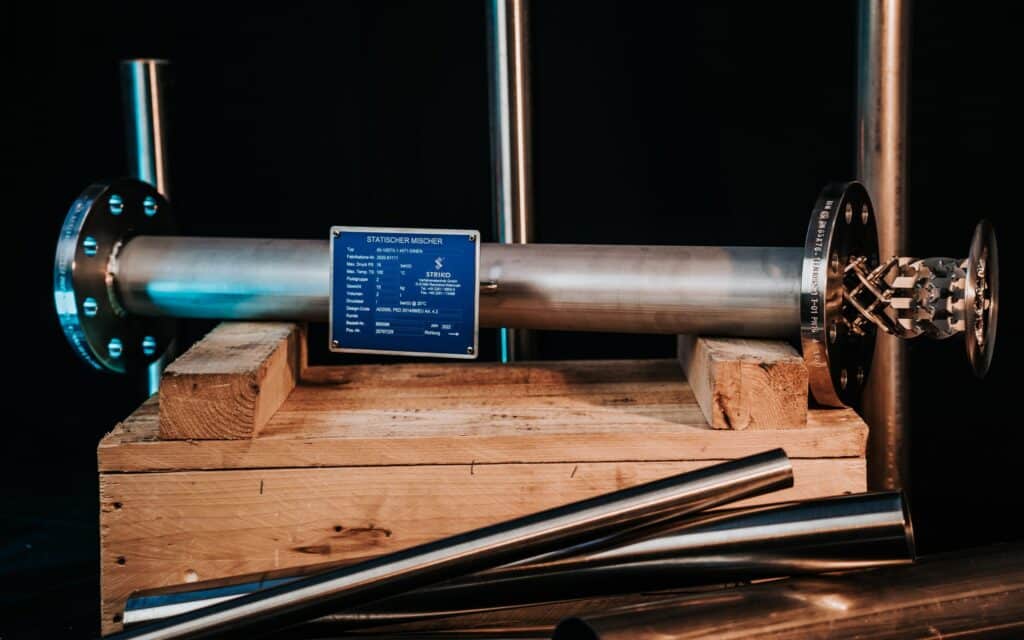
Four STRIKO series, one specialism in viscous media and a configuration built around your viscosity, flow rate and mixing target.
- Exclusive STRIKO agent Benelux
- ISO 9001 · KIWA
- Engineering support from Monster (NL)
STRIKO active in rupture discs since
Dutch Valve Vision is the exclusive agent
Quality system, KIWA certified
Advice and supply from the Netherlands
The STRIKO range through Dutch Valve Vision
One point of contact in the Benelux for the complete range.
Spare parts
Original STRIKO parts through the official partner.
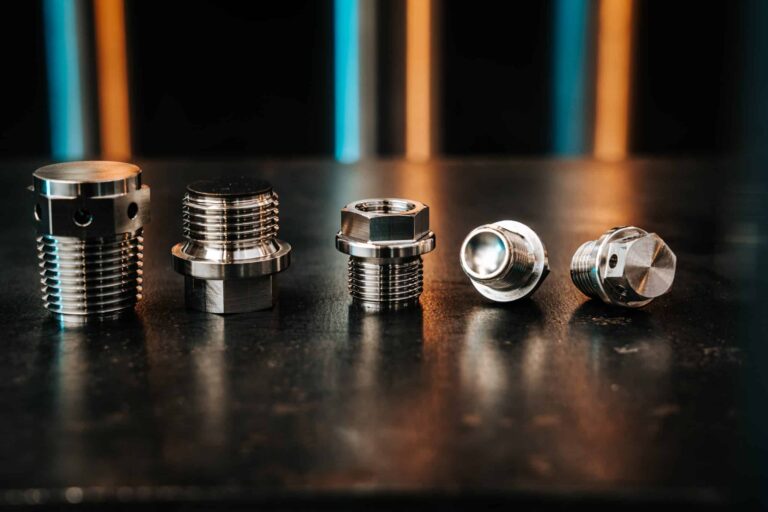
Burst plugs
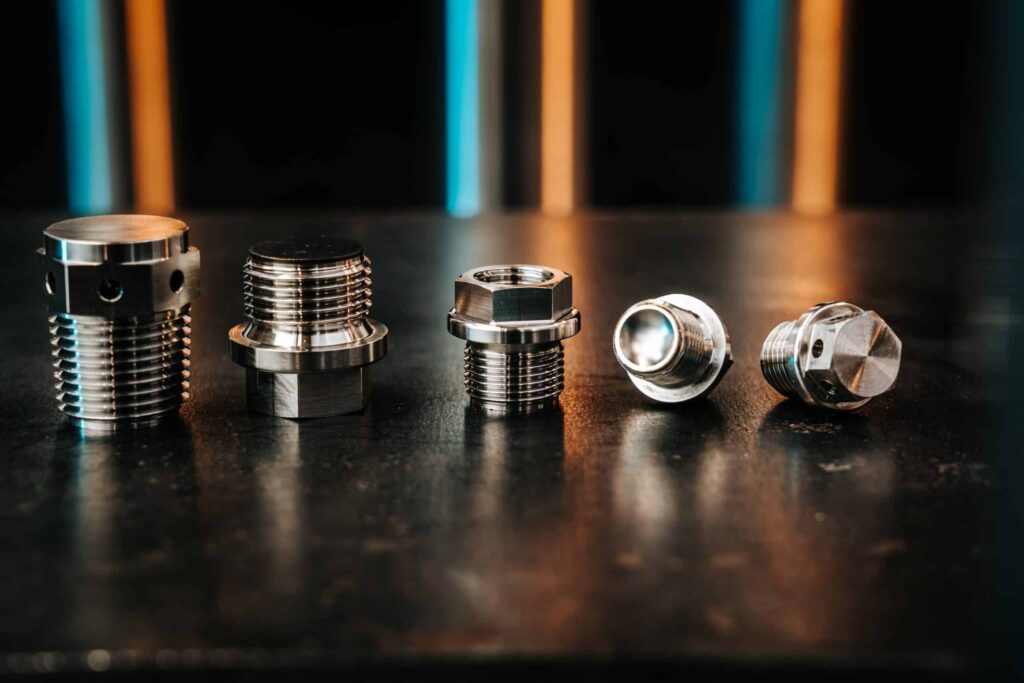
Compact threaded overpressure protection.
Heat exchangers
STRIKO heat exchangers for process plants.
Rupture discs
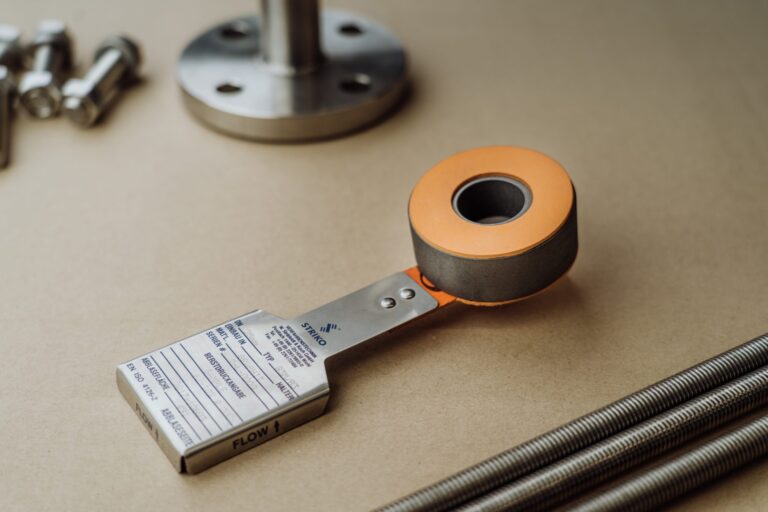
Flat, forward acting, reverse acting, aseptic, extruder and tank container.
Why engineers choose a STRIKO static mixer for difficult media
A STRIKO static mixer tends to enter a project at the point where the easy mixing problems have already been solved. Blending two thin, similar liquids in a turbulent pipe flow is rarely a headache. The headache starts when one stream is thick and the other is thin, when a small dose of additive has to disappear evenly into a syrupy product or when a gas has to be distributed through a liquid without leaving pockets behind. That is the territory where STRIKO has built its name.
STRIKO Verfahrenstechnik GmbH specialises in rupture discs and static mixers for viscous and highly viscous media. The German manufacturer is known for solid engineering and durable products, and its philosophy of testing, evaluating and recalibrating applies to its mixers as much as to its rupture discs. Dutch Valve Vision is the exclusive STRIKO agent for the Netherlands, Belgium and Luxembourg, and we support international buyers and Benelux sites in selecting and configuring STRIKO mixers.
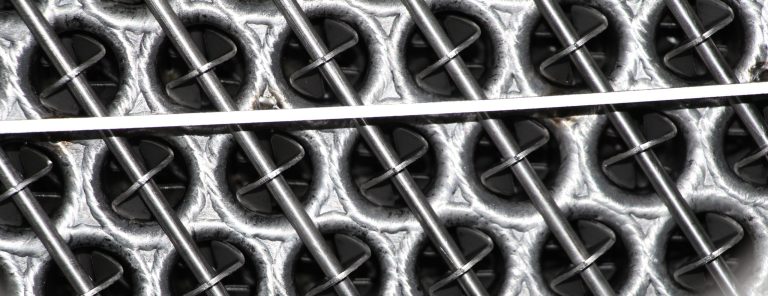
The principle behind every static mixer is straightforward. A series of geometrically designed elements inside a pipe forces the flow to split, change direction and recombine, again and again. The energy for mixing comes from the pressure drop over the mixer itself, so no motor, shaft, bearing or seal is needed. The result is an inline mixer with virtually no wear, low maintenance and a long service life.
What sets a STRIKO static mixer apart is not the principle, which is shared across the industry, but the focus on the difficult end of the viscosity scale and the willingness to configure each mixer around the process instead of forcing the process into a standard catalogue item.
The four STRIKO static mixer series at a glance
STRIKO offers four series, each aimed at a different mixing task. Choosing the right one is the first step in any selection, so here is how we explain them to buyers.
EREstat for food and hygienic processes
EREstat is the STRIKO mixer designed for food and other hygienic processes. In food and beverage production and in pharmaceuticals, hygiene and sterilisation are essential, and the mixer has to support cleaning rather than obstruct it. STRIKO mixers can be disassembled easily for cleaning or inspection and can be sterilised and steam cleaned inline, which makes EREstat the natural candidate when a product must never sit in a dead zone.
Helical as the universal mixer
Helical is the universal STRIKO mixer, designed for uniform mixing across a wide range of industries. As a general principle, helical elements are arranged as alternating left and right twisted sections, so the flow is divided and turned repeatedly as it passes through the pipe. That makes Helical a sensible starting point when the task is general blending and no special conditions dominate.
STV for gases
STV is the STRIKO mixer optimised for gas processing. Gas streams behave very differently from liquids. Densities are lower, velocities are usually higher and the aim is often to achieve an even composition over the whole pipe cross section, for example before a measurement point or a reaction step. STV is the series designed with those conditions in mind.
STX for viscous liquids
STX is the STRIKO mixer for viscous liquids, ideal for thick and syrupy media. This is where the STRIKO specialism shows most clearly. With the right sizing and configuration, viscous media can be mixed efficiently in an STX, a point we will look at more closely below.
A STRIKO static mixer is an inline mixer without moving parts from STRIKO Verfahrenstechnik GmbH, a specialist in mixing viscous and highly viscous media. The range covers EREstat for hygienic food processes, Helical as the universal mixer, STV for gases and STX for viscous liquids. Dutch Valve Vision is the exclusive STRIKO agent for the Benelux and configures each mixer to the process.
EREstat, Helical, STV and STX series
Specialised in viscous and highly viscous media
No moving parts, inline sterilisation possible
Configured in diameter, length and elements
High viscosity: where a STRIKO static mixer shows its strength
To understand why viscous mixing deserves specialist attention, it helps to think about how a fluid moves through a pipe. Engineers describe the flow regime with the Reynolds number, which compares inertial forces with viscous forces. Thin liquids at reasonable velocities usually flow turbulently. Eddies form everywhere and do a lot of the mixing work for free. Thick liquids flow laminarly. The layers slide over each other in an orderly way, and without help two streams can travel side by side down a long pipe while barely mixing at all.
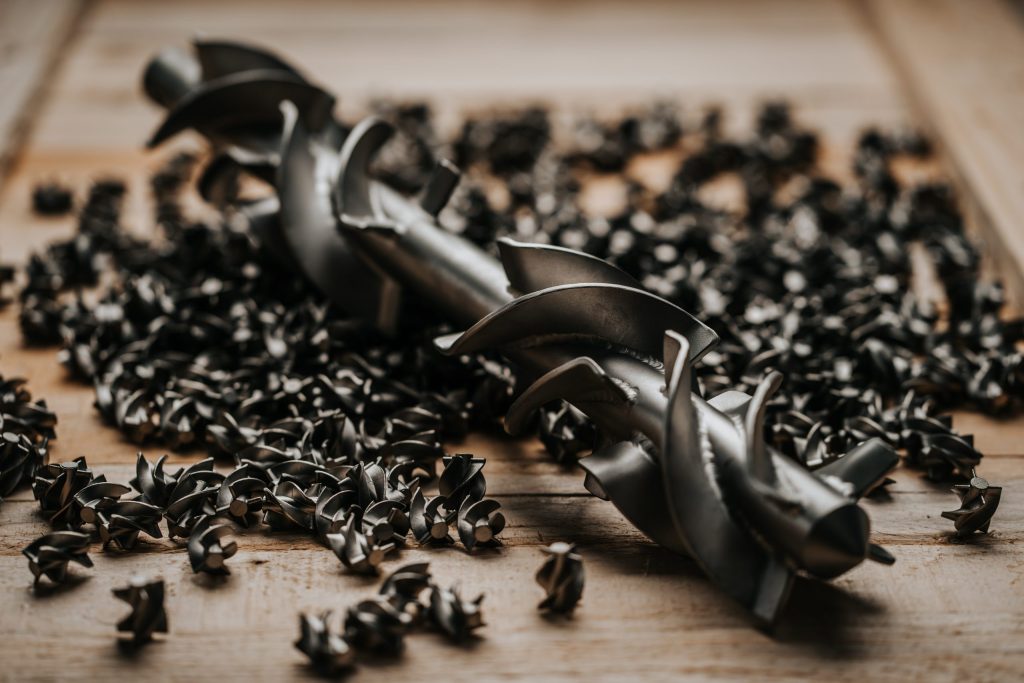
In laminar flow, a static mixer cannot rely on turbulence. It has to do the work geometrically. Each element splits the flow, reorients the layers and brings them back together, so the layers become thinner and more numerous with every element. After enough elements, the striations are so fine that the product is homogeneous for practical purposes. The right choice of elements and the length of the mixer determine how intensively the flow is mixed.
The price for this is pressure drop. Viscous media already need significant pressure to move through a pipe, and a mixer adds to that. A good design balances mixing quality against the available pressure, which is why the viscosities of all components, the flow rates and the permitted pressure drop belong in every enquiry.
Consider a realistic case. A cosmetics producer wants to blend a small quantity of a fragrance or active ingredient into a thick cream base. The additive has a much lower viscosity than the base. In a plain pipe it would form a thin thread that travels through the line largely intact. A STRIKO static mixer configured for this viscosity ratio breaks that thread up and distributes it over the whole cross section before the product reaches the filling line. Cosmetics production is one of the sectors where STRIKO mixers are used, together with petrochemicals and water treatment.
Customising a STRIKO static mixer to your process
No two processes present the same combination of viscosity, flow rate and required mixing quality. STRIKO static mixers can be configured flexibly in diameter, length and internal mixing elements, so they can be adapted to the specific viscosity, flow velocity and end quality a process requires.
Customisation brings extra benefits in specialist applications. Examples include homogenising an end product just before filling, dissolving gas in liquid and temperature regulating tasks where an even temperature over the cross section matters. In each case the mixer is not an off the shelf part, but a piece of process equipment designed around a duty.
Material is part of that customisation. The choice depends on the nature of the fluids or gases, the temperature, corrosive conditions and process requirements. Common materials include stainless steel such as SS316, 1.4404 and 1.4571, carbon steel, plastics such as PVC, PE and PVDF, and special coatings or linings for aggressive media. Materials can be adapted to project specific requirements to achieve a long service life and chemical compatibility.
A useful way to think about customisation is to start from the outcome. What does homogeneous mean for your product? Is it an even colour, a constant concentration at a sampling point, a stable emulsion or a uniform temperature? Once that target is clear, the configuration follows from it.
Cleaning, sterilisation and a life without wear
Because a STRIKO static mixer has no moving parts, wear is practically excluded and regular mechanical maintenance is unnecessary. There are no drives to service, no seals to replace and no bearings to lubricate. That translates directly into higher process reliability and lower maintenance costs.
What remains is cleaning and inspection, and STRIKO has designed for both. The mixers can be disassembled easily for cleaning or inspection, and inline sterilisation and steam cleaning are possible. For a food or pharmaceutical line that switches products regularly, that is a practical advantage. The mixer can be cleaned in place along with the rest of the line, and it can be opened when a visual check is required.
Validation belongs to the same picture. After installation, a mixer can be validated with a pressure test and leak detection, measurement points for mixing quality and simulations of flow velocities and homogeneity. Those steps confirm that the mixer performs within the process as designed.
Specification ready? We will prepare a targeted quote.
Send us medium, pressure, temperature and connection. Our specialists come back with a matching proposal.
Where STRIKO static mixers are at work
STRIKO static mixers are used in food technology and beverage production, chemical and petrochemical processes, pharmaceutical production, water and wastewater treatment and cryogenic or viscous media streams. Each sector brings its own requirements for materials, sterilisation and chemical compatibility.
In water and wastewater, static mixers take care of chemical dosing and homogenisation, distributing neutralising agents, coagulants or air evenly for effective treatment and pH control. In petrochemicals and oil and gas, they provide representative samples and reliable homogeneity for process control and further treatment. In continuous chemical processes, they help reactions run more stably by ensuring a homogeneous mixture. In food and pharmaceuticals, they support emulsion formation, the dosing of additives and temperature regulation of delicate products.
That breadth makes STRIKO mixers attractive for integrators, OEM developers and end users who want high mixing quality with minimal maintenance.
Static or dynamic: when an inline mixer is the better answer
A question we hear often is whether a static mixer can replace an agitated vessel. The honest answer depends on the task. A dynamic mixer uses mechanical stirrers or impellers for intensive mixing, usually in a tank. A static mixer works inline, in closed piping, without moving parts. Both have their place.
A dynamic mixer makes sense when a product needs long residence time, when solids have to be kept in suspension in a vessel or when batches are prepared one at a time with frequent recipe changes. A STRIKO static mixer is the stronger option when the process is continuous, when the streams already arrive in the right ratio and when the goal is a homogeneous product at the outlet of a pipe section. It avoids an extra vessel, a drive, a shaft seal and the maintenance that comes with them. It also takes up little space, which matters on a crowded skid or in an existing plant where there is no room for another tank.
In practice we often see the two combined. A batch is prepared in a stirred vessel and a final additive is blended inline on the way to storage or filling. That last step is exactly where a static mixer earns its place, because the additive is distributed continuously and there is no second batch step to wait for.
From enquiry to installed mixer
How does a STRIKO static mixer project run in practice? It starts with the process data. We ask for the viscosities, the flow rates, temperature and pressure, the required mixing quality and the permitted pressure drop. If any of these are uncertain, for example because the viscosity of a new product has not been measured at operating temperature yet, we discuss how to deal with that uncertainty before a configuration is fixed.
The next step is the proposal: series, diameter, length, element configuration, material and connections. This is also the moment to look at the surroundings. Where does the dosing point sit? Is there enough straight pipe for a representative sample after the mixer? Does the cleaning regime of the line fit the mixer design? Those questions are easier to settle on paper than on site.
After delivery and installation, validation confirms the result. A pressure test and leak detection show that the mixer is tight, measurement points show the mixing quality and simulations of flow velocities and homogeneity support the interpretation. If the process changes later, we look at the configuration again with you, starting from the new process data.
Selecting a STRIKO static mixer with Dutch Valve Vision
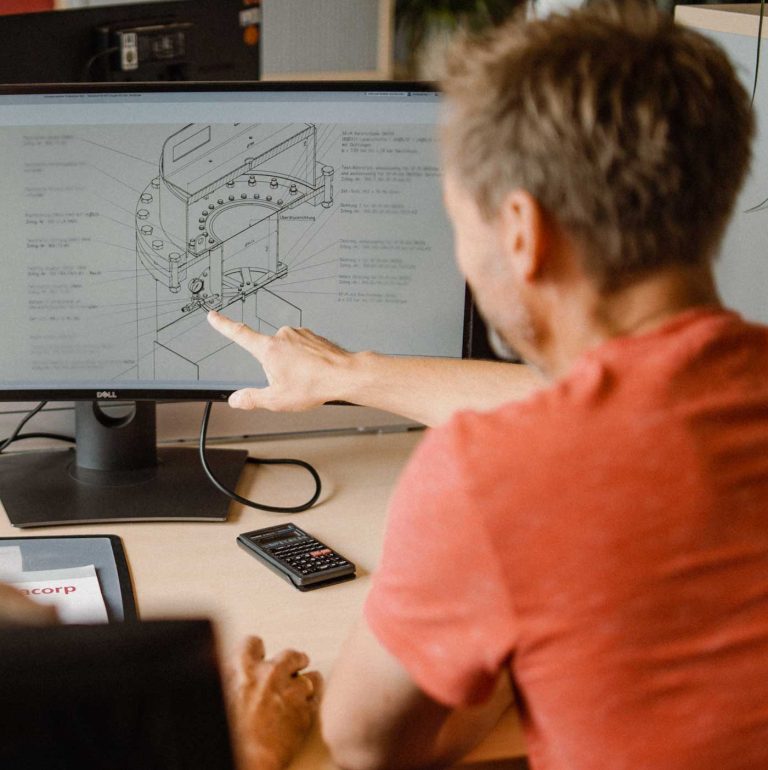
A successful installation starts with a proper process analysis. The key parameters are the viscosity of the components, the volume flows, the temperature and pressure and the required mixing quality. On that basis the right STRIKO static mixer is selected and configured to meet the process goals.
At Dutch Valve Vision we combine product knowledge with process insight. We help with selecting and dimensioning static mixers, integrating them with valves, measuring instruments and process automation, and supporting installation, validation and optimisation. Because our background lies in special valves for special services, we look at the mixer as part of the line rather than as an isolated component. The dosing valve upstream and the sampling point downstream matter as much as the elements inside.
Quality at Dutch Valve Vision is managed under ISO 9001, certified by KIWA. Process data can be sent to sales@dutchvalvevision.com, and our office on +31 (0)70-2210560 is staffed Monday to Friday between 09:00 and 17:00.
Frequently asked questions about STRIKO static mixers
Question not listed? Our specialists are happy to help.
- +31 (0)70-2210560
- sales@dutchvalvevision.com
- Vlotlaan 641, 2681 TZ Monster, the Netherlands
- Mon-Fri 09:00-17:00
What is a STRIKO static mixer?
It is an inline mixer without moving parts made by STRIKO Verfahrenstechnik GmbH. Geometric elements inside a pipe split, redirect and recombine the flow. The energy for mixing comes from the pressure drop over the mixer. No motor, shaft or seal is needed. That results in virtually no wear and low maintenance. STRIKO specialises in mixers for viscous and highly viscous media. In the Benelux, STRIKO is represented exclusively by Dutch Valve Vision. We help select and configure the right mixer for your process.
Which STRIKO static mixer series are available?
STRIKO offers four series. EREstat is designed for food and other hygienic processes. Helical is the universal mixer for uniform mixing across many industries. STV is optimised for gas processing. STX is designed for viscous liquids, including thick and syrupy media. The right series depends on the medium and the mixing task. Several tasks can call for a customised configuration within a series. We advise on the series and configuration based on your process data.
Can a STRIKO static mixer handle highly viscous media?
Yes, viscous and highly viscous media are the specialism of STRIKO. The STX series is designed specifically for viscous liquids. Viscous media usually flow laminarly, so turbulence does not do the mixing work. The mixer elements have to divide and reorient the flow geometrically instead. The number of elements and the length of the mixer determine the result. Pressure drop increases with viscosity and must be taken into account. That is why we always ask for the viscosities and the permitted pressure drop. With correct sizing, viscous media can be mixed efficiently.
Which materials can a STRIKO static mixer be made of?
Common materials include stainless steel such as SS316, 1.4404 and 1.4571. Carbon steel is also an option. Plastics such as PVC, PE and PVDF are used in suitable applications. Aggressive media can call for special coatings or linings. The choice depends on the medium, the temperature and the corrosive conditions. Process requirements such as hygiene also play a role. Materials can be adapted to project specific needs. We select the material together with the configuration.
How is a STRIKO static mixer cleaned?
STRIKO mixers can be disassembled easily for cleaning or inspection. Inline sterilisation and steam cleaning are also possible. That makes them suitable for food and pharmaceutical lines. The mixer can be cleaned together with the rest of the installation. When a visual check is needed, the elements can be taken out. There are no moving parts that require mechanical maintenance. That keeps downtime for cleaning limited. The EREstat series is specifically designed for hygienic processes.
Can a STRIKO static mixer be customised?
Yes, STRIKO mixers are flexible in diameter, length and internal elements. They can be adapted to the viscosity, flow rate and end quality your process requires. Customisation is useful for end product homogenisation. It also helps with dissolving gas in liquid and temperature regulating tasks. Materials can be adapted to project requirements as well. The starting point is always a clear definition of the mixing target. From there we work out the configuration with you. That turns the mixer into a piece of equipment built for your duty.
What data do you need to select a mixer?
We need the viscosity of each component. Add the volume flows of all streams. State the temperature and pressure in the line. Describe the mixing quality you need, for example a concentration tolerance or a stable emulsion. Tell us the permitted pressure drop over the mixer. Mention the pipe diameter and the connection type. Include hygiene or cleaning requirements where relevant. With that information we can propose the right STRIKO series and configuration.
Why buy a STRIKO static mixer through Dutch Valve Vision?
STRIKO has appointed us as its exclusive agent for the Netherlands, Belgium and Luxembourg. That gives you a direct, official route to genuine STRIKO products. We combine product knowledge with process insight. Our support covers selection, dimensioning and integration with valves and instruments. We also help with installation, validation and optimisation. Our work follows an ISO 9001 quality system certified by KIWA. From Monster we support Benelux sites and international project teams. You deal with one partner from first question to operation.
Configure your STRIKO static mixer
Send us the viscosities of the components, the flow rates, temperature and pressure, and the mixing quality you need. We propose the right series and configuration.
- +31 (0)70-2210560
- sales@dutchvalvevision.com
- Vlotlaan 641, 2681 TZ Monster, the Netherlands
- Mon-Fri 09:00-17:00