
High pressure rupture disc
What it takes to relieve high pressure safely: disc design, multi-layer construction, holder, bolt load and materials.
- Exclusive STRIKO agent Benelux
- ISO 9001 · KIWA
- Engineering support from Monster (NL)
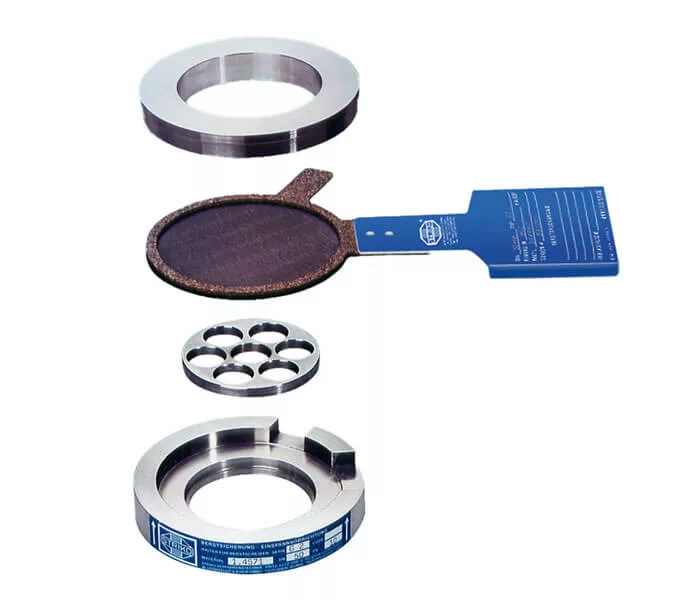
STRIKO forward acting discs for high pressure
Multi-layer build adds strength
Holders with consistent bolt load
Duplex, super duplex, Inconel, Hastelloy holders
What a high pressure rupture disc has to withstand
A high pressure rupture disc lives a double life. For almost all of its service it has to behave like a solid piece of the pressure boundary, holding a large load without leaking, creeping or tiring. Then, in the one moment that matters, it has to give way at exactly the right pressure and get out of the way of a large amount of stored energy. Both halves of that job become harder as the pressure goes up.
Think about what the disc sees on a high pressure gas line. The force on a membrane is the pressure multiplied by the area it acts on, so even a modest nominal size carries a considerable load. That load has to be transferred through the disc into the holder and from the holder into the flange bolts, without the seating faces moving and without the disc being pinched unevenly. At lower pressures small imperfections in assembly are forgiven. At high pressure they are not.
The release itself is different too. When a disc on a high pressure system opens, the medium leaves with force. The discharge line, its supports and the place where the medium ends up all deserve attention in the design, because safe discharge of the medium is essential for people and plant. In a well engineered high pressure relief path, the disc itself is rarely the weak point. The holder, the bolting and the discharge are where things go wrong when they are treated as an afterthought.
At Dutch Valve Vision we supply STRIKO rupture discs and our own holder designs for exactly this kind of duty. As exclusive STRIKO agent for the Netherlands, Belgium and Luxembourg, we work from a programme in which forward acting metal discs are the type designed for high pressure environments. This page explains why, and what else a high pressure rupture disc needs around it to work as intended.
Forward acting metal: the STRIKO route for high pressure
In a forward acting disc the process pressure acts on the concave side of the dome. The metal is loaded in tension, like the wall of a pressure vessel, and it tears open once the stress exceeds what the material can carry. That makes the burst pressure a direct function of material strength, thickness and geometry, which a manufacturer can control closely.
Why does that suit high pressure? Because tension is the load case metal handles best. A dome in tension uses the full strength of the material across its whole surface, and making the membrane stronger is a matter of choosing the right thickness and alloy. The result is a disc that can hold a high working pressure and still open within milliseconds at its set point, with no spring, stem or seat that has to move first.
Our forward acting holders add three qualities that matter on these services: high accuracy of the burst pressure, suitability for gas and liquid, and easy inspection and replacement. On a hydrogen compressor or a high pressure reactor feed line, accuracy is not an academic point. The margin between the maximum allowable pressure of the equipment and the normal operating pressure is expensive to create, and a disc that opens at the wrong pressure wastes it.
It is worth adding that forward acting is not the only design that performs at high loads. Reverse acting metal discs, loaded in compression, offer higher resistance to pressure cycles and allow a higher ratio between operating pressure and burst pressure. Where a high pressure process also cycles heavily, we compare both routes. For steady high pressure service, however, the STRIKO forward acting metal disc is the natural starting point.
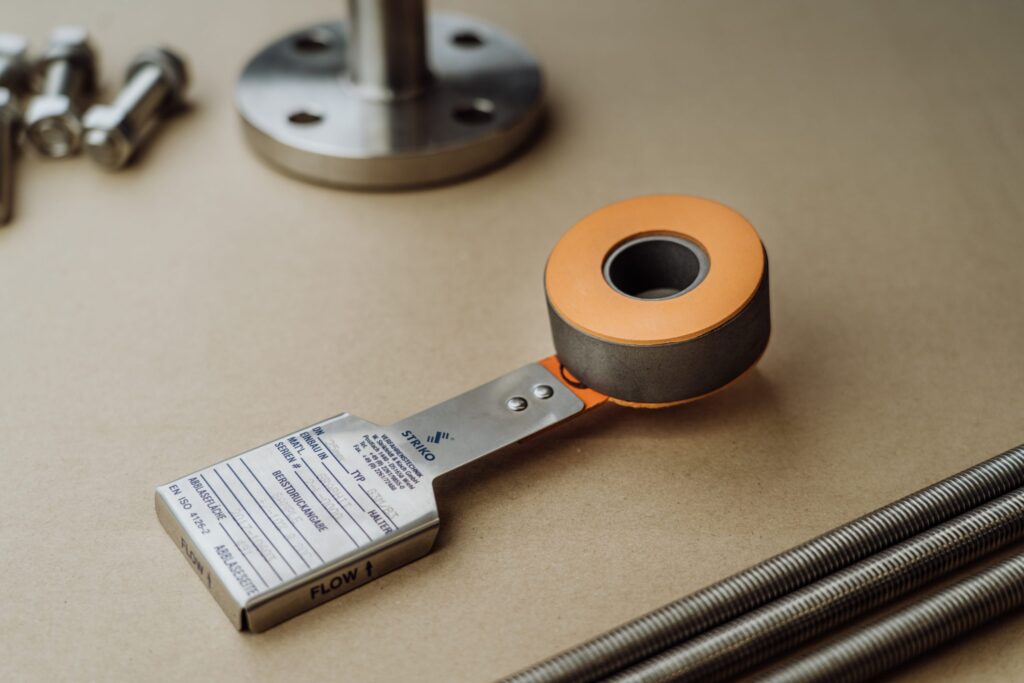
Multi-layer construction in a high pressure rupture disc
A single thick sheet is not always the best way to carry a high load. In a multi-layer construction, several layers work together, and that construction provides extra strength and reliability under higher pressures. Flat and multi-layer discs are part of the metal disc range we supply, alongside domed discs with X or C cut patterns for a controlled bursting action.
The logic behind layering is familiar from other parts of engineering. Several thinner layers can be formed and controlled more precisely than one heavy plate, and the combination can be tuned to the burst pressure that is needed. Depending on the design, the layers can also split tasks between them, with one layer carrying the load and another taking care of the seal against the medium. That gives the designer more freedom to meet a high set pressure without giving up on accuracy.
Geometry plays its part as well. For a given material and thickness, a smaller diameter carries a higher pressure, because the load on the membrane grows with its area. That relation between size, thickness and burst pressure is exactly what the manufacturer uses to design a high pressure rupture disc for a specific set point. It is also why we always ask for the nominal size and the available installation space at the very start of an enquiry.
A high pressure rupture disc is usually a forward acting metal disc, loaded in tension and designed with enough strength to hold high operating pressures until the set burst pressure is reached. Multi-layer construction adds strength and reliability at higher pressures, and a holder with tight tolerances and a consistent bolt load keeps the burst pressure reproducible. Dutch Valve Vision supplies STRIKO forward acting metal discs designed for high pressure environments.
Holder and bolt load: where high pressure is won or lost
At high pressure the holder stops being a simple accessory. It is the component that turns a well made disc into a reproducible safety device. A poorly designed holder can cause premature failure, leakage, a wrong burst pressure or even a complete system failure, and every one of those risks grows with the pressure.
Our holders are designed with tight tolerances to avoid stress concentrations. The load on the disc has to be reproducible regardless of small variations during assembly, and a consistent bolt load is one of the design goals. That matters because the clamping load decides how the edge of the disc is held. Uneven bolting can pinch one side of the membrane harder than the other, shift the actual burst pressure and in the worst case start a leak path across the seating face.
Sealing is the other half of the story. Leakage before bursting is unacceptable in many processes, and even more so when the medium is a high pressure gas that finds every gap. Our holders use sealing faces with controlled roughness and metal or soft seals chosen to suit the medium. Leak detection ports can be integrated where required, so a slow leak is noticed long before it becomes a safety or corrosion problem.
Picture a maintenance team closing a holder on a high pressure line at the end of a shutdown. Clean faces, a centred disc, the flow arrow in the right direction and bolts tightened evenly, in steps, to the recommended torque. Those are not details. On a high pressure rupture disc they are the difference between the burst pressure on the tag and a burst pressure nobody can predict.
Where a design has to be proven rather than assumed, we support it. FEM analyses are available on request, and our holders come with pressure calculations. For positions with cyclic loading we can optimise the holder design for that load, and we support HAZOP and other safety studies when the relief concept has to be justified.
What we need for the right selection
- Medium and composition
- Operating pressure and pressure peaks
- Required burst pressure
- Temperature, normal and in the relief scenario
- Connection and installation space
Designs in the STRIKO range
Every application needs its own rupture disc. These are the designs we supply most often.
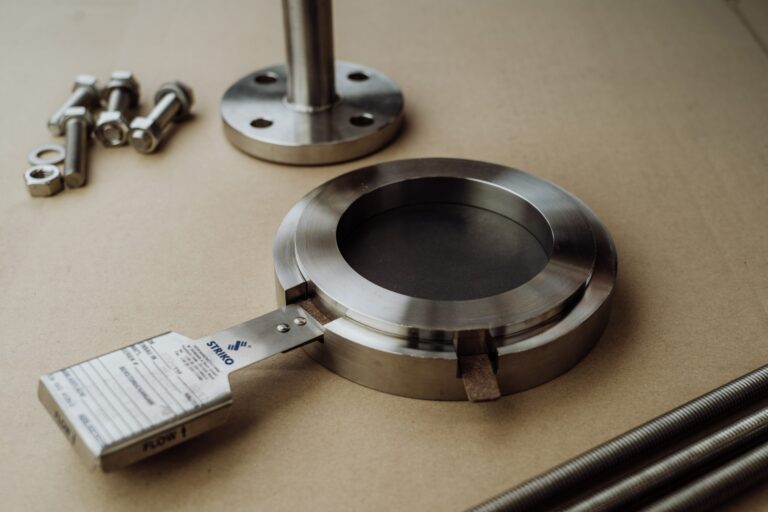
Graphite rupture disc
Corrosion resistant without coating, DN25 to DN400, between ANSI or DIN flanges.

Rupture disc holder
Correct positioning, reproducible loading and a reliable seal.
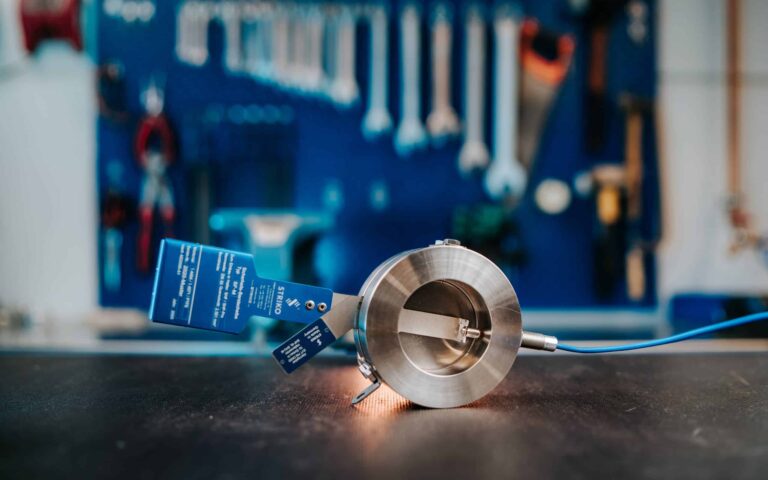
Burst indicator
Signals an opened disc directly to PLC, SCADA or DCS.
Reverse acting rupture disc
Loaded in compression, resistant to pressure cycling.
Materials for disc and holder at high pressure
High pressure rarely comes alone. It often arrives together with high temperatures, corrosive components or both, and the material choice has to cover all of them at once. Our standard metal disc is made of 316 stainless steel. Hastelloy and titanium are available as options where the medium or the temperature asks for more. The choice is always based on chemical compatibility with the medium, working temperature and mechanical load.
Temperature deserves its own sentence here, because it moves the burst pressure. At higher temperatures the effective burst pressure of a disc can fall, depending on material and design. On a high pressure line that is also hot, a disc selected on the normal operating temperature alone may open at a different pressure in the very scenario it was installed for. That is why we ask for the temperature during the relief case as well as in normal operation, and why the alloy for the disc is chosen with both values on the table. A compressor discharge that heats up when a cooler fails is a good example of a case where the two temperatures can be far apart.
For the holder, the range is wider. Carbon steel suits standard applications with controlled media. Stainless steel 316/316L is corrosion resistant and broadly applicable. Duplex and super duplex combine high strength with chloride resistance, which makes them a logical choice for offshore duties where seawater and high pressure meet. Inconel and Hastelloy are used for high temperatures and aggressive media, and special alloys can be supplied on request for niche applications.
The same thinking applies across our wider range. Dutch Valve Vision supplies special valves in duplex, super duplex, Hastelloy and Inconel for applications with high pressure, extreme temperatures or corrosive media, and we deliver to both DIN and ANSI/ASME standards. For a high pressure rupture disc, that means the holder can be matched to the flange standard and pressure class of the line it sits in, whether the installation is built around PN flanges or ASME classes.
Specification ready? We will prepare a targeted quote.
Send us medium, pressure, temperature and connection. Our specialists come back with a matching proposal.
Where high pressure rupture discs are used
The applications share one feature: a lot of stored energy in a system that must never exceed its design limits. In oil and gas, both offshore and onshore, holders and discs are used on installations with high pressure, corrosive media and strict regulation. In energy and hydrogen, they provide pressure relief on electrolysers, compressors and storage modules, where gas at high pressure and the need for leak tight sealing come together.
Steam is another classic field. In boilers and steam circuits, metal rupture discs protect against overpressure during rapid load changes. In chemical and petrochemical plants, high pressure reactors and feed lines are protected against overpressure caused by exothermic reactions or blockages. Precision applications such as fuel systems and hydraulic circuits use metal rupture discs where accuracy under pressure is required.
Take the example of a hydrogen storage module on a skid. The operating pressure is high, the gas is light and finds every leak path, and the relief concept has to satisfy a safety study before anything is commissioned. A high pressure rupture disc in a properly bolted holder, with burst detection connected to the control system, gives a leak tight barrier during operation and an immediate signal if it ever opens. For H2 and NH3 duties, STRIKO burst plugs with a threaded connection are another compact option where installation space is limited.
Documentation and support for your high pressure rupture disc
On high pressure equipment, paperwork is part of the product. Our holders are designed in line with ASME Section VIII, EN ISO 4126 and PED 2014/68/EU, with ATEX where applicable. Metal discs fall under PED, ISO 4126, EN 14491 for explosion safety and CE marking. We supply material certificates to EN 10204 3.1, pressure calculations, inspection reports and traceability per component. Dutch Valve Vision itself works with an ISO 9001 certified quality management system, certified by KIWA.
To select a high pressure rupture disc, we need the medium and its composition, the operating pressure including peaks, the required burst pressure, the temperature in normal operation and during the relief scenario, the connection with flange standard and pressure class, and the available installation space. Information about pressure cycles, back pressure in the discharge line and a possible wish for burst detection helps us complete the design. STRIKO, active in rupture discs since 1974 with a philosophy of testing, evaluating and recalibrating, builds the disc, and we match holder and documentation to it.
Working on a new high pressure unit or replacing discs during a turnaround? The data can go to sales@dutchvalvevision.com, and our engineers answer the phone on +31 (0)70-2210560 on working days from 09:00 to 17:00. For time critical projects we offer fast track delivery thanks to an efficient supply chain and close cooperation with manufacturers.

Frequently asked questions about high pressure rupture disc
Question not listed? Our specialists are happy to help.
- +31 (0)70-2210560
- sales@dutchvalvevision.com
- Vlotlaan 641, 2681 TZ Monster, the Netherlands
- Mon-Fri 09:00-17:00
Which type of rupture disc is best for high pressure?
For steady high pressure service, a forward acting metal disc is the usual starting point. In the STRIKO programme, forward acting metal discs are the type designed for high pressure environments. The metal is loaded in tension, which uses the full strength of the material. That allows a disc to hold a high working pressure and still open accurately at its set point. Multi-layer construction adds extra strength and reliability at higher pressures. When a high pressure process also cycles heavily, a reverse acting disc can be the better option. Reverse acting discs offer higher resistance to pressure cycles and allow a higher operating ratio. We compare both routes against your process data before we advise.
Why does the bolt load matter so much on a high pressure rupture disc?
The bolt load decides how the edge of the disc is clamped. If the load is uneven, one side of the membrane is pinched harder than the other. That can shift the actual burst pressure away from the value on the tag. It can also open a leak path across the seating face, which is dangerous with high pressure gas. Our holders are designed with tight tolerances and a consistent bolt load for that reason. The clamping load has to be reproducible regardless of small variations during assembly. Tightening the bolts evenly, in steps, to the recommended torque is therefore essential. At high pressure this detail makes the difference between a predictable and an unpredictable disc.
What is a multi-layer rupture disc and when is it used?
A multi-layer rupture disc is built from several layers that work together. This construction provides extra strength and reliability at higher pressures. Several thinner layers can be formed and controlled more precisely than one heavy plate. Depending on the design, layers can also split tasks, such as carrying the load and sealing against the medium. Flat and multi-layer discs are part of the metal disc range we supply. They are the basic version for general process applications and a strong option where pressures rise. The final choice depends on the set pressure, the medium, the temperature and the nominal size. We advise the construction that meets your burst pressure with the right accuracy.
Which holder materials are available for high pressure service?
Holders are available in carbon steel for standard applications with controlled media. Stainless steel 316/316L is corrosion resistant and broadly applicable. Duplex and super duplex combine high strength with chloride resistance, which suits offshore duties. Inconel and Hastelloy are used for high temperatures and aggressive media. Special alloys are available on request for niche applications. The disc itself is made of 316 stainless steel as standard, with Hastelloy and titanium as options. Material choice always follows the process data and the chosen disc. We match the holder to the flange standard and pressure class of your line as well.
Can a high pressure rupture disc be used for hydrogen?
Yes, pressure relief in hydrogen applications is one of the fields our holders are designed for. Typical positions are electrolysers, compressors and storage modules. Hydrogen is light and finds every leak path, so leak tight sealing before bursting is essential. Our holders use sealing faces with controlled roughness and seals selected for the medium. Leak detection ports and burst detection can be integrated where required. For compact positions in H2 and NH3 installations, STRIKO burst plugs with a threaded connection are another option. Material choice and process safety are critical in these applications. We select disc, holder and materials as part of the complete relief concept.
How do I know a high pressure rupture disc has opened?
Without detection, an opened disc may only be found during a routine inspection. On a high pressure system that can mean a long period of uncontrolled release. A burst detection sensor signals the opening immediately. Electrical detection uses a loop that is interrupted when the disc breaks. Magnetic detection reads a field that changes when the disc moves. Fail-safe designs also give a safe signal if the sensor itself fails. The signal can be connected to PLC, SCADA or DCS systems to stop the process and alert operators. For explosive atmospheres, ATEX certification of the sensor is required.
Which documents come with a high pressure rupture disc assembly?
Our holders are supplied with material certificates to EN 10204 3.1. Pressure calculations and inspection reports are part of the package. Every component is traceable. The holders are designed in line with ASME Section VIII, EN ISO 4126 and PED 2014/68/EU, with ATEX where applicable. Metal discs fall under PED, ISO 4126, EN 14491 for explosion safety and CE marking. FEM analyses are available on request when a design has to be proven. Dutch Valve Vision works with an ISO 9001 certified quality management system, certified by KIWA. That documentation supports audits, inspections and your own safety studies.
What information do you need to size a high pressure rupture disc?
We start with the medium and its composition. Then we need the operating pressure including peaks and the required burst pressure. The temperature in normal operation and during the relief scenario is essential, because it affects the burst pressure. We also need the connection, the flange standard and the pressure class. The nominal size and available installation space matter, since size and burst pressure are directly related. Information about pressure cycles and back pressure in the discharge line completes the case. Let us know if you want burst detection and which control system it connects to. With that data we propose a STRIKO disc, a matching holder and the documentation.
Relief for your high pressure system
Send us the medium, operating pressure with peaks, burst pressure, temperatures, flange standard and class. We will propose disc, holder and documentation.
- +31 (0)70-2210560
- sales@dutchvalvevision.com
- Vlotlaan 641, 2681 TZ Monster, the Netherlands
- Mon-Fri 09:00-17:00