
Static mixer stainless steel
When stainless steel is the right material for a static mixer, which grade to choose and when carbon steel or plastics are the better call.
- Exclusive STRIKO agent Benelux
- ISO 9001 · KIWA
- Engineering support from Monster (NL)
Four steps that repeat in every mixing element.
Split
Mixing elements divide the flow into smaller partial streams.
Redirect
The partial streams are redirected, creating shear.
Recombine
The streams merge again, element after element.
Homogeneous
No moving parts, energy taken from the pressure drop.
For a static mixer, stainless steel in grades such as SS316, 1.4404 and 1.4571 is the most common material in the process industry because it combines corrosion resistance with suitability for steam cleaning and sterilisation. Carbon steel suits less demanding media, while PVC, PE and PVDF are often better in water treatment and chemical dosing. Dutch Valve Vision supplies STRIKO static mixers and selects the material on the basis of your process data.
- Stainless grades SS316, 1.4404 and 1.4571
- Supports inline sterilisation and steam cleaning
- Carbon steel and plastics also available
- Coatings or linings for aggressive media
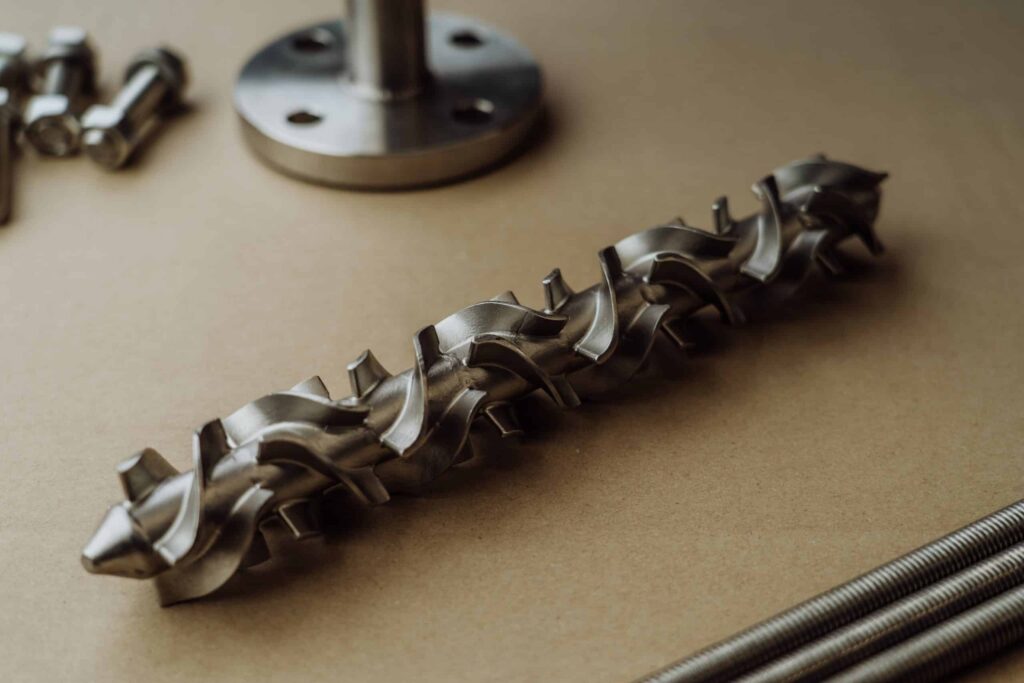
Static mixer stainless steel: why it is the default choice
A static mixer stainless steel version is what most process engineers have in mind when they first sketch a mixing step, and in the majority of cases that instinct is right. Stainless steel resists a wide range of media, it copes with elevated temperatures and pressures, it can be cleaned with steam, and it looks the same after years of service as it did on the day it was installed. For a static mixer those properties matter even more than for a straight pipe, because the elements inside are exposed to the medium on every surface, and they are the part that does the actual work.
Think of a production line in a food plant where a flavour concentrate is dosed into a base product. The mixer sits between a dosing point and a filling machine. Every night the line is cleaned, and several times a year it is sterilised. The mixer has to survive hot caustic, hot acid and steam, and it must never release anything into the product. Or think of a chemical plant where a neutralising agent is added to a process stream at elevated temperature. The mixer faces a medium that would attack carbon steel within months. In both situations stainless steel is not a luxury but the logical baseline.
At Dutch Valve Vision we supply STRIKO static mixers as exclusive agent for the Netherlands, Belgium and Luxembourg. Stainless steel in grades such as SS316, 1.4404 and 1.4571 is one of the material options, next to carbon steel, plastics such as PVC, PE and PVDF, and special coatings or linings for aggressive media. This page explains when a static mixer stainless steel design is the right answer, which grade suits which situation, and when another material deserves a serious look.
SS316, 1.4404 and 1.4571: reading the grade
Material specifications for a static mixer stainless steel unit often mix two naming systems, which can be confusing for buyers who switch between international and European documents. SS316 is the familiar AISI designation. The numbers 1.4404 and 1.4571 are European material numbers under the EN system. They all belong to the same family of molybdenum-bearing austenitic stainless steels, but they are not identical.
Grade 1.4404 corresponds to 316L, the low carbon variant. The reduced carbon content lowers the risk of chromium carbide formation during welding, which in turn reduces the risk of intergranular corrosion next to welds. For fabricated equipment with welded elements or welded flanges, that is a real advantage, and it is one reason why 316L is so widely specified in process plants.
Grade 1.4571 corresponds to 316Ti, a titanium stabilised variant. Instead of lowering carbon, it binds carbon with titanium so chromium stays available for corrosion resistance. It is traditionally popular in German and wider European specifications, particularly where elevated temperatures are involved.
The molybdenum in all three improves resistance to pitting compared with simpler stainless grades, which matters in the presence of chlorides and many process chemicals. In practice the choice between them is often driven by the specification of the plant. If the rest of the line is built in 1.4404, a mixer in the same grade keeps things consistent. If the plant standard calls for 1.4571, we follow that standard. What matters most is that the mixer is not the weakest link in a line that was carefully specified everywhere else.
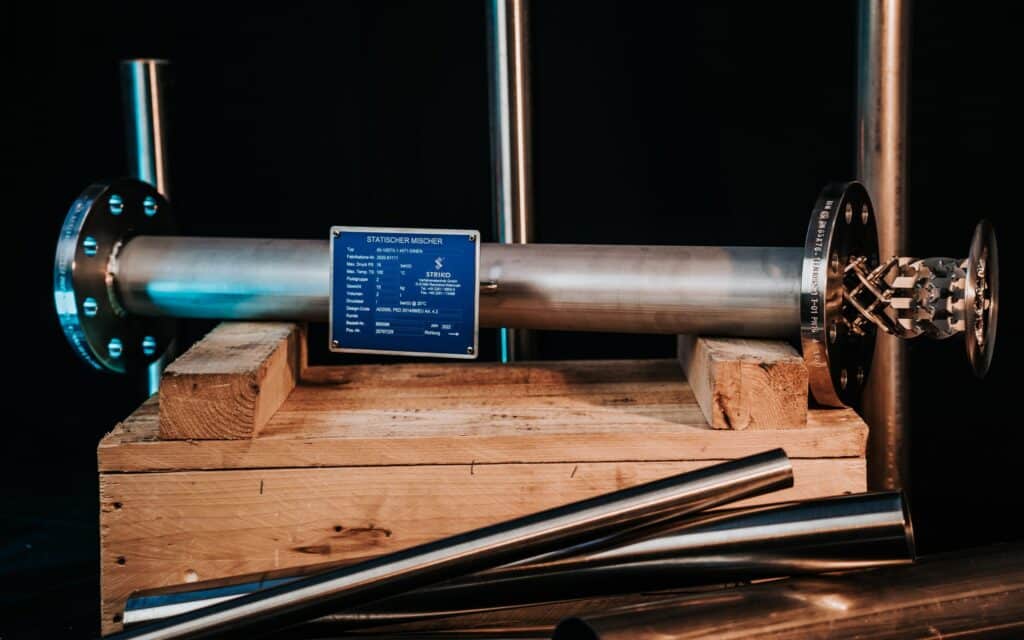
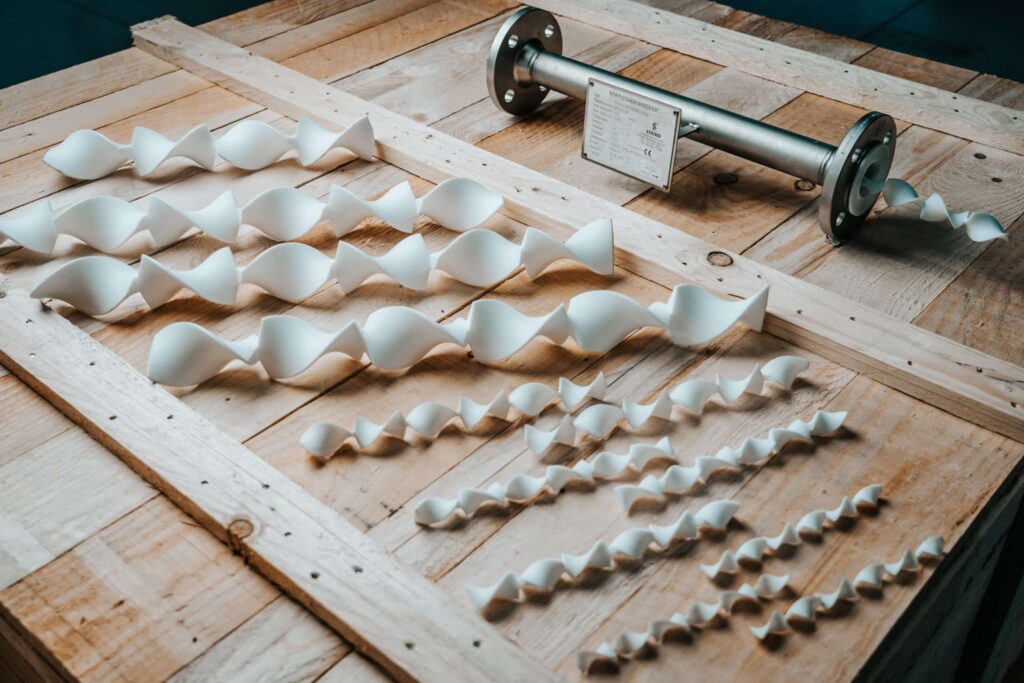
Hygiene, steam cleaning and sterilisation in stainless steel
In food, beverage and pharmaceutical production, the static mixer stainless steel combination is almost a given, and the reason is cleaning. STRIKO static mixers support inline sterilisation and steam cleaning, and stainless steel is the material that tolerates those cycles day after day without degrading.
A mixer in a hygienic line is part of the product path, so it has to be cleaned together with the pipework. Inline cleaning means hot water, caustic, acid and sometimes steam passing through the elements at the same time as through the rest of the line. A material that softens, swells or corrodes under those conditions would become a hygiene risk. Stainless steel stays stable.
The EREstat series from STRIKO is designed specifically for food processing and hygienic processes. Typical tasks include forming emulsions, dosing additives and supporting temperature control of delicate products. Because a static mixer has no moving parts, there are no bearings or shaft seals where product can collect, and that removes a common hygiene weak spot of mechanical mixers.
For inspection or when inline cleaning is not sufficient, STRIKO static mixers can be dismantled easily. A quality engineer who wants to see the elements after a validation run can do so without cutting pipe. That accessibility, combined with a material that looks the same after cleaning as before, is what makes stainless the standard in hygienic service.
Selection starts with four data points
With these we choose series, diameter and number of elements.
Viscosity
Of the main stream and of the added component.
Flow rates
Main flow and dosing, also at part load.
Temperature and pressure
Determine material and allowable pressure drop.
Mixing quality
How homogeneous the product must be downstream.
Temperature, pressure and a static mixer stainless steel design
Chemical resistance is only half of the material question. The other half is how the mixer behaves across the temperature and pressure range of the process, including the conditions that occur only occasionally, such as start-up, shutdown or a cleaning cycle.
Stainless steel keeps its strength at temperatures where plastics would soften and lose their pressure rating. That makes it the natural choice for hot process streams, for lines that are steam cleaned and for any service where the operating pressure rules out plastic construction. Austenitic stainless steels also remain tough at very low temperatures, which is why they are widely used in cryogenic service. STRIKO mixers are applied in cryogenic as well as viscous media flows, and material behaviour at the extremes of the temperature range is part of the selection.
Temperature changes deserve a thought as well. A line that alternates between cold product and hot cleaning solution goes through thermal cycles, and the mixer expands and contracts with it. In a static mixer stainless steel construction that is well within the capability of the material, but the pipe supports and flange connections around the mixer should allow for the movement.
Pressure follows a similar logic. For a static mixer stainless steel offers the mechanical strength to handle the pressures found in chemical and petrochemical processes, where plastic alternatives are out of the question. At moderate pressures and ambient temperatures, as in many water treatment lines, that strength may be more than the process needs, which is exactly why plastics remain a serious option there. The goal is not to choose the strongest material but the one that fits the complete operating window.
Specification ready? We will prepare a targeted quote.
Send us medium, pressure, temperature and connection. Our specialists come back with a matching proposal.
Stainless steel versus carbon steel
Not every process needs stainless steel, and it would be poor advice to pretend otherwise. Carbon steel is a valid material for a static mixer in less demanding service. If the medium is not corrosive to carbon steel, the temperature is moderate and hygiene is not a requirement, carbon steel can do the job at a lower material cost.
The questions that decide this are straightforward. Does the medium contain water, acids, salts or oxygen that will corrode carbon steel over time? Will corrosion products contaminate the downstream process or product? Will the line be cleaned with chemicals that carbon steel does not tolerate? Is the rest of the line in carbon steel, and has it performed well? If the honest answers point to a benign service, carbon steel is a reasonable choice.
Where corrosion is a concern, the calculation changes quickly. A carbon steel mixer that has to be replaced after a limited number of years, or that sheds rust into a product stream, costs far more than the original price difference. The elements are the most exposed part of the mixer, with thin sections and large wetted surfaces, and they tend to suffer first. That is why, for a static mixer stainless steel is often the more economical choice over the life of the installation, even if the purchase price is higher. A maintenance manager comparing quotes will see the difference in purchase price immediately. The cost of an unplanned replacement, including the shutdown, the pipe work and the lost production, only shows up later, and usually at an inconvenient moment. Looking at the full life of the mixer rather than the order value gives a more honest comparison.
Static mixer stainless steel versus PVC, PE and PVDF
Plastics are the other serious alternative, and in some industries they are the first choice. PVC, PE and PVDF are widely used for static mixers in water treatment and chemical dosing. Many dosing chemicals, such as acids, caustics and oxidising agents used in water treatment, can attack stainless steel under certain conditions, while suitable plastics resist them well.
Picture a water treatment plant where a coagulant or a pH correction chemical is dosed into the main flow. The pipework is plastic, the temperature is close to ambient and the pressure is moderate. A stainless mixer would work, but it would sit in a plastic line and might offer no advantage in chemical resistance. A mixer in the same plastic family as the surrounding pipework is often the more logical choice.
The limits of plastics are temperature, pressure and mechanical strength. Above certain temperatures, or at pressures typical for many chemical and petrochemical processes, plastics lose their suitability, and stainless steel takes over. Steam sterilisation is also generally a stainless steel domain. The decision therefore depends on the combination of medium, temperature and pressure, not on the medium alone.
Where stainless steel reaches its limits
Stainless steel is versatile, but it is not universal. Chlorides are the classic challenge. In the presence of chlorides, particularly at elevated temperatures, austenitic stainless steels can suffer pitting, crevice corrosion and stress corrosion cracking. The molybdenum in 316 grades improves resistance, but there are chloride concentrations and temperatures where it is no longer enough.
For such aggressive media, special coatings or linings can protect the mixer, and materials can be adapted to project-specific requirements. In some cases a plastic mixer is the better route, in others a lined construction. Dutch Valve Vision also works with special materials such as duplex, super duplex, Hastelloy and Inconel in its wider valve range, so we are used to thinking beyond standard grades when a medium demands it. Whether such an alternative is feasible for a specific mixer is something we assess case by case.
The practical lesson is to share the full composition of the medium, including trace components. A thick file of process data is worth little if the one component that attacks stainless steel is missing from the list. Imagine a plant that switches to a different raw material supplier and, without anyone noticing, introduces a small amount of chloride into a stream that used to be chloride free. The mixer is the same, the grade is the same, and yet the corrosion behaviour changes. Reviewing the material choice after a process change is as important as getting it right the first time.
Ordering a static mixer stainless steel unit via Dutch Valve Vision
Selecting the right static mixer stainless steel design starts with the same process analysis as any other mixer: the viscosity of each component, the volume flows, temperature and pressure, and the required mixing quality. For material selection we add the full chemical composition, any chloride content, the cleaning and sterilisation regime and the material of the surrounding pipework. If the plant has a preferred grade, such as 1.4404 or 1.4571, please mention it.
With those data we select the STRIKO series, EREstat for hygienic food processes, Helical as the universal mixer, STV for gases or STX for viscous liquids, and configure diameter, length and elements. We work from Monster in the Netherlands under a KIWA certified ISO 9001 quality management system. Send your request to sales@dutchvalvevision.com or call +31 (0)70-2210560, Monday to Friday from 09:00 to 17:00.
Frequently asked questions about static mixer stainless steel
What is the difference between 1.4404 and 1.4571?
Both are European material numbers for molybdenum-bearing austenitic stainless steels in the 316 family. Grade 1.4404 corresponds to 316L, the low carbon variant. Its reduced carbon content lowers the risk of intergranular corrosion next to welds. Grade 1.4571 corresponds to 316Ti, which is stabilised with titanium instead. That stabilisation also protects against carbide formation and is traditionally popular in European specifications at elevated temperatures. In many applications both grades perform well. The choice is often driven by the existing plant specification. We follow your standard or advise on the grade if you have none.
Is SS316 the same as 1.4404?
Not exactly, although the terms are often used loosely as if they were. SS316 is the AISI designation for the standard molybdenum-bearing austenitic grade. Grade 1.4404 is the European number for the low carbon variant, usually called 316L. Grade 1.4401 would be the closer European equivalent of standard 316. For welded equipment, the low carbon version is generally preferred. In practice, many specifications ask for 316L or 1.4404 for that reason. When you request a quote, please state the exact grade your plant requires. That avoids confusion between documents that use different naming systems.
Can a stainless steel static mixer be steam cleaned and sterilised?
Yes, inline sterilisation and steam cleaning are supported by STRIKO static mixers. Stainless steel is the material that tolerates those cycles repeatedly without degrading. This makes it the standard choice in food, beverage and pharmaceutical production. EREstat is the STRIKO series built for hygienic food processes. Without moving parts, the mixer has no bearings or seals that could trap product. For inspection, the mixer can be dismantled easily. Plastics are generally less suitable for steam sterilisation. Tell us your cleaning regime so we can confirm the right material and design.
Is stainless steel suitable for media containing chlorides?
It depends on the chloride concentration and the temperature. Austenitic stainless steels can suffer pitting, crevice corrosion and stress corrosion cracking in chloride-containing media, especially when hot. The molybdenum in 316 grades improves resistance but does not make them immune. At low concentrations and moderate temperatures, 316L or 316Ti often performs well. At higher concentrations or temperatures, other solutions deserve attention. Options include special coatings or linings, plastics or project-specific materials. The full composition of the medium is essential for this assessment. Please include chloride content and temperature in your request.
When is carbon steel good enough for a static mixer?
Carbon steel is a valid choice when the medium does not corrode it, the temperature is moderate and hygiene is not a requirement. It offers a lower material cost than stainless steel. The elements are the most exposed part of the mixer, with thin sections and large wetted surfaces. If corrosion is likely, they will suffer first. Rust can also contaminate the downstream process. A carbon steel mixer that needs early replacement ends up costing more than a stainless one. If the rest of your line is carbon steel and has performed well in the same medium, that is a useful indicator. We assess the service conditions with you before recommending either material.
When is a plastic static mixer better than stainless steel?
Plastics such as PVC, PE and PVDF are widely used in water treatment and chemical dosing. Many dosing chemicals can attack stainless steel under certain conditions, while suitable plastics resist them well. If the surrounding pipework is plastic, a mixer in the same material family keeps chemical resistance consistent. Plastics are well suited to moderate temperatures and pressures. At higher temperatures or pressures, their suitability decreases. Steam sterilisation is generally a stainless steel domain. The decision depends on the combination of medium, temperature and pressure. We compare the options for your specific process.
Does a stainless steel static mixer need maintenance?
A static mixer has no moving parts, so wear is virtually ruled out and regular mechanical maintenance is unnecessary. Stainless steel adds to that by resisting corrosion in a wide range of media. Inspection and, for some products, cleaning are all that is left to do. Some products leave deposits on the elements over time. Dismantling a STRIKO static mixer for cleaning or inspection is straightforward. In hygienic lines, inline cleaning and steam cleaning keep the mixer in condition between inspections. A rising pressure drop across the mixer can indicate that an inspection is due. We advise on a sensible interval for your medium.
What information does Dutch Valve Vision need to select the material?
We need the full chemical composition of every medium, including trace components and chloride content. Temperature and pressure in normal operation and during cleaning are equally important. The cleaning and sterilisation regime tells us whether stainless steel is required for hygiene reasons. The material of the surrounding pipework is useful for consistency. If your plant has a preferred grade, such as 1.4404 or 1.4571, please mention it. For the mixer itself we also need viscosities, flows and the required mixing quality. With these data we select both the STRIKO series and the material. Send your request to sales@dutchvalvevision.com and we will respond as soon as possible.
Choose the right grade for your mixer
Send us the medium and its composition, temperature, pressure, cleaning regime and any chloride content. We will advise the material and the matching STRIKO static mixer.
- +31 (0)70-2210560
- sales@dutchvalvevision.com
- Vlotlaan 641, 2681 TZ Monster, the Netherlands
- Mon-Fri 09:00-17:00