
Static mixer
How a static mixer works, which STRIKO series suits your medium and which process data we need to select one.
- Exclusive STRIKO agent Benelux
- ISO 9001 · KIWA
- Engineering support from Monster (NL)
Four steps that repeat in every mixing element.
Split
Mixing elements divide the flow into smaller partial streams.
Redirect
The partial streams are redirected, creating shear.
Recombine
The streams merge again, element after element.
Homogeneous
No moving parts, energy taken from the pressure drop.
A static mixer is an inline mixing device that blends liquids, gases or additives without moving parts. Fixed elements inside a pipe split, redirect and recombine the flow, using the pressure drop of the line as the only energy source. Dutch Valve Vision supplies STRIKO static mixers as exclusive agent for the Benelux.
- No moving parts, no drive needed
- Mixing energy comes from pressure drop
- STRIKO series EREstat, Helical, STV, STX
- Exclusive STRIKO agent for the Benelux
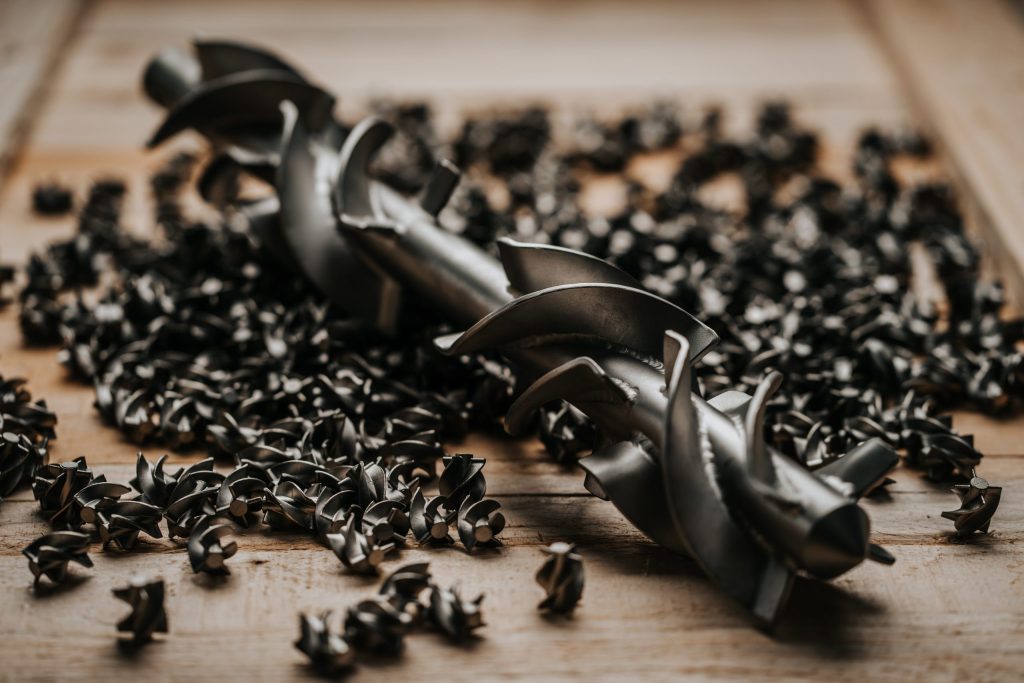
What a static mixer is and why engineers keep choosing it
A static mixer is an inline mixing device that blends liquids, gases or additives into one homogeneous flow without a single moving part. Picture a pipe with a series of fixed, geometrically designed elements inside it. The product enters as two or more separate streams and leaves the other end as one consistent mixture. There is no motor, no stirrer arm, no bearing and no shaft seal. That is the whole idea, and it explains why so many process engineers look at this solution before they even consider a stirred vessel.
At Dutch Valve Vision we recognise a familiar pattern. A plant starts with a tank and an agitator because that is how mixing has always been done on that site. Then someone reviews the maintenance log, the energy consumed by the drive and the floor space the tank occupies, and asks whether the job could be done inside the pipe instead. Quite often it can.
This page explains how a static mixer works, what changes between laminar and turbulent flow, which benefits you can realistically expect and how the STRIKO series EREstat, Helical, STV and STX differ from each other. We are the exclusive agent of STRIKO Verfahrenstechnik GmbH for the Netherlands, Belgium and Luxembourg, so we will also show you which process data we need to select the right unit.
How a static mixer works: split, redirect, recombine
The principle behind every static mixer comes down to three actions that repeat along the length of the pipe. First the elements split the flow into smaller partial streams. Then they redirect those streams, change their direction and create shear forces. Finally they bring the partial streams back together, after which the next element splits them again in a different orientation. After a number of these cycles, two components that entered side by side are distributed evenly across the entire cross section.
A helpful mental picture is a baker folding dough. Every fold multiplies the number of layers, and after enough folds you can no longer tell where the butter ended and the flour began. The mixer does the same thing continuously, with fluid instead of dough, for every litre that passes through the line.
Where does the energy come from? Not from a motor. The energy for mixing is taken from the existing flow, and it shows up as pressure drop across the mixer. The pump that already moves the product through the line supplies it. That is why the unit adds no drive power to the installation, although the pressure drop has to be included when you check the pump and the line.
The number of elements, their geometry and the length of the mixer determine how intensely the flow is mixed. A short unit with few elements suits an easy task with similar viscosities. A longer unit with more elements handles large viscosity differences or components that do not blend readily.
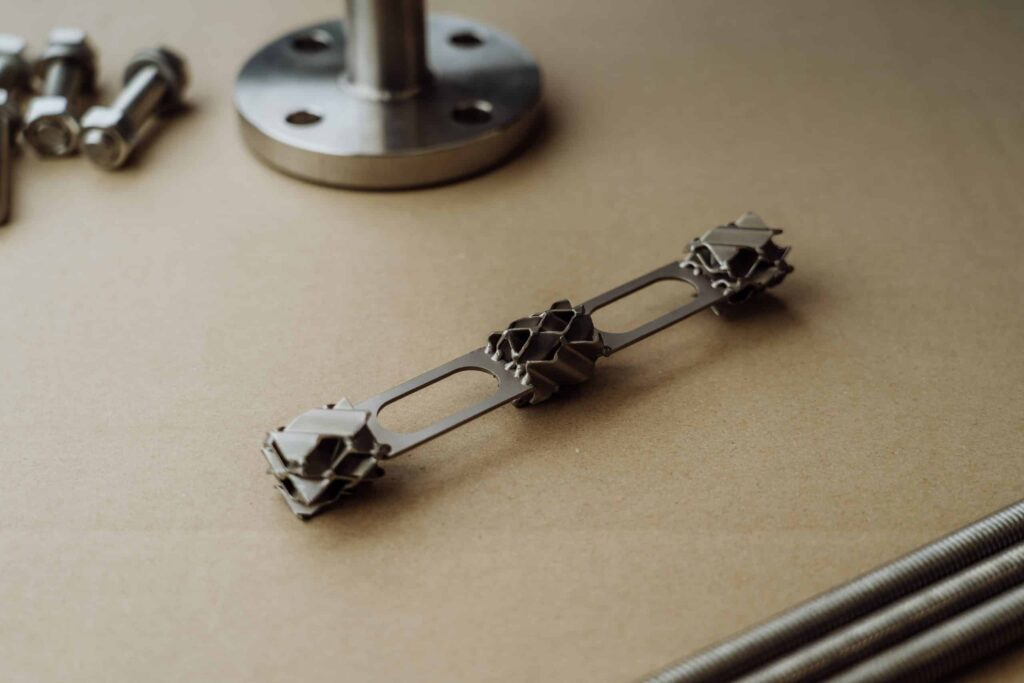
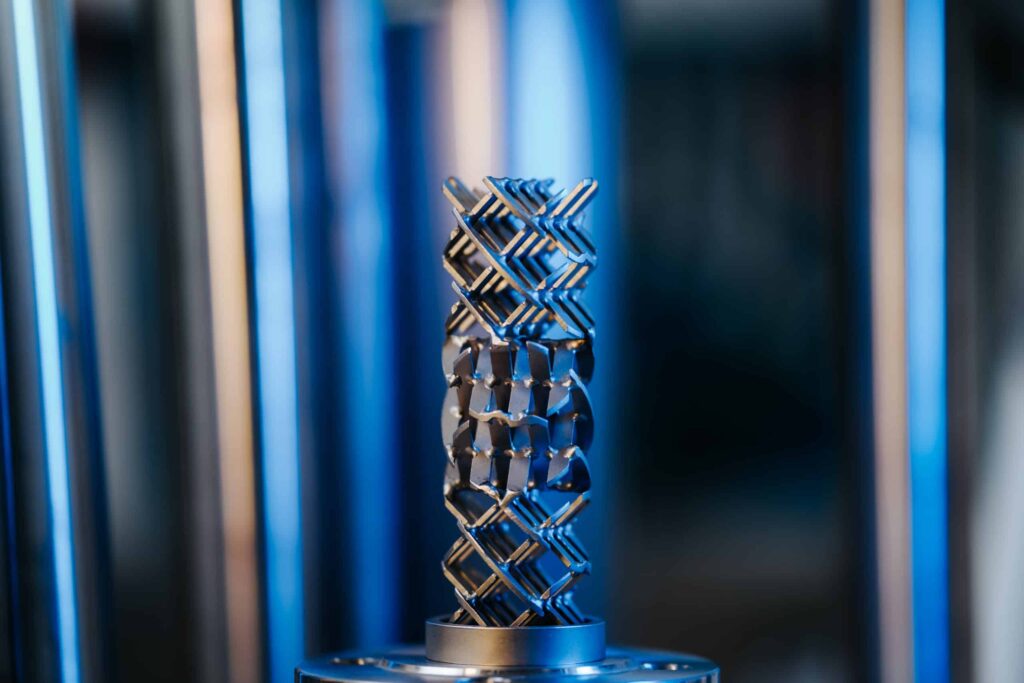
Laminar or turbulent: the flow regime inside a static mixer
Every mixer of this kind operates in a particular flow regime, and that regime changes the way mixing happens. Engineers usually describe it with the Reynolds number, the ratio between inertial forces and viscous forces in the flow. A low Reynolds number means laminar flow, which is typical for viscous products such as polymers, resins, syrups or creams. A high Reynolds number means turbulent flow, which is typical for water, thin chemicals and gases.
In laminar flow there are no eddies to help you. The fluid moves in orderly layers, and mixing relies almost entirely on repeated splitting and recombining. Each element divides the layers further until the striations are so thin that the product is homogeneous for all practical purposes. This is where element geometry and the number of elements matter most.
In turbulent flow the elements generate additional vortices that speed up distribution across the cross section. Mixing is fast, and a relatively short unit can reach a homogeneous result. Because the flow is already chaotic, the design focus shifts towards pressure drop and towards the point where a dosed component enters the line.
STRIKO specialises in static mixers for (highly) viscous media. That is the demanding end of the spectrum, where a poorly chosen element can leave streaks of unmixed product in a line that looks perfect from the outside. Imagine a thick additive being pumped into a base product. In laminar flow that additive will happily travel as a separate thread for a long distance unless the elements force it apart, fold it and spread it through the bulk.
Selection starts with four data points
With these we choose series, diameter and number of elements.
Viscosity
Of the main stream and of the added component.
Flow rates
Main flow and dosing, also at part load.
Temperature and pressure
Determine material and allowable pressure drop.
Mixing quality
How homogeneous the product must be downstream.
The benefits of a static mixer in daily operation
The first benefit is maintenance. Because a static mixer has no moving parts, wear is virtually ruled out and regular mechanical maintenance becomes unnecessary. There is no gearbox to lubricate and no mechanical seal that starts dripping just before a weekend. For a production manager that means higher process reliability and fewer interventions.
The second benefit is energy. Mixing energy comes from the pressure drop in the line itself, so no extra motor power or external energy source is required. Instead of running an agitator around the clock, you let the flow do the work.
The third benefit is space. A static mixer is compact and fits into existing pipework. Diameter, length and material can be chosen to suit the process, which makes the concept usable across very different industries.
The fourth benefit is consistency. Components are distributed homogeneously, which matters wherever accuracy counts, for example in chemical reactions, dosing or temperature control. Because the mixer works continuously in a closed line, you also avoid the variation that creeps in when a tank is filled, stirred, sampled and emptied batch after batch.
There is a fair counterpoint as well. A static mixer only mixes while product flows. It cannot keep solids in suspension in a stationary tank, and it does not create residence time by itself. If a process needs a long reaction time or a buffer volume, a vessel still has its place. The real question is which tool matches the task.
Specification ready? We will prepare a targeted quote.
Send us medium, pressure, temperature and connection. Our specialists come back with a matching proposal.
STRIKO static mixer series: EREstat, Helical, STV and STX
STRIKO offers four static mixer series, each developed for a different kind of medium. Knowing which one fits your process saves a lot of back and forth during selection.
EREstat for food and hygienic processes
EREstat is the STRIKO mixer designed for food processing and hygienic processes. In food and pharma the mixer has to fit into a strict cleaning regime. STRIKO mixers can be dismantled easily for cleaning or inspection, and they support inline sterilisation and steam cleaning. Typical tasks are forming emulsions, dosing additives and supporting temperature control of delicate products.
Helical as the universal mixer
Helical is the universal mixer in the STRIKO range. It delivers uniform mixing across a wide variety of industries and is often the logical starting point when the medium is not extreme in viscosity or composition.
STV for gases
STV is optimised for gas processing. Gases have a low density and behave very differently from liquids in a pipe, so a dedicated design for gas mixing makes sense.
STX for viscous liquids
STX is the mixer for viscous liquids and is ideal for thick and syrupy media. Given STRIKO’s specialism in highly viscous products, this is the series where that expertise is most visible. With the right sizing and typing, viscous media can be mixed efficiently.
Materials for a static mixer
The right material for a static mixer depends on the nature of the liquids or gases, the temperature, corrosive conditions and other process requirements. Stainless steel is the most common choice, in grades such as SS316, 1.4404 and 1.4571. Carbon steel is an option for less demanding media. Plastics such as PVC, PE and PVDF are widely used in water treatment and chemical dosing, where the medium would attack a metal. For aggressive media, special coatings or linings are available.
Materials can be adapted to project-specific requirements to achieve a long service life and full chemical compatibility. In practice we look at the medium first, then at temperature and pressure, and only after that at the commercial side. A mixer that corrodes after one season is never the cheap option.
Sizing a static mixer: where thin data lead to thick problems
A disappointing mixing result is rarely caused by the principle itself. Far more often the input data were incomplete, or they described the process on paper rather than the process as it actually runs. Three situations show how that plays out in practice.
The first is a unit with too few elements for the viscosity ratio. Two liquids with very different viscosities do not want to blend, and a short mixer in laminar flow leaves them as streaks that only show up later, in a sample, in a coating that dries unevenly or in a product that separates in storage. The second is the opposite: a design with more elements than needed. Mixing quality is excellent, but the pressure drop eats into the margin of a pump that was already close to its limit, and suddenly the line cannot reach its design capacity. The third is a changing flow. A mixer sized for full load may behave differently at a much lower throughput, because the flow regime can shift and the intensity of mixing changes with it. If your plant regularly runs at part load, we want to know the minimum flow as well as the maximum.
That is where the modular design of STRIKO units helps. Diameter, length and the internal mixing elements can be configured to the viscosity, flow velocity and end quality a process demands. Customisation adds value in specialist tasks such as homogenising an end product, dissolving a gas into a liquid or supporting heat regulation. A well sized static mixer is therefore never a catalogue number picked on pipe diameter alone. It is the result of a short but careful engineering exercise, and the time spent on it is repaid every day the line runs.
Where a static mixer earns its place
In water and waste water treatment, static mixers are used for chemical dosing and homogenisation. They make sure neutralising agents, coagulants or air are distributed evenly for effective treatment and pH control. Think of a treatment plant where a coagulant is dosed into the main flow. If it does not spread across the full cross section within a short distance, part of the water is overdosed while another part hardly sees the chemical at all.
In petrochemistry and oil and gas, inline mixers provide representative samples and reliable homogeneity. An analyser that measures a stratified stream produces a figure that looks precise but describes only one layer of the pipe. A mixer upstream of the sampling point removes that problem at the source.
In continuous chemical processes, these mixers accelerate and stabilise reactions by guaranteeing a homogeneous mixture, which supports yield and consistent quality. In food and pharma they optimise emulsification, additive dosing and temperature regulation of delicate products. STRIKO mixers are also found in cosmetics production and in cryogenic or viscous media flows.
Selecting a static mixer with Dutch Valve Vision
A successful static mixer starts with a thorough process analysis. The key parameters are the viscosity of each component, the volume flows, temperature and pressure, and the mixing quality you need at the outlet. Chemical compatibility completes the picture. With those data we select and configure the right STRIKO unit, including diameter, length and internal elements.
After installation, validation confirms the result. That can include a pressure test and leak detection, measuring points for mixing quality and simulations of flow velocity and homogeneity. We also advise on integration with valves, measuring instrumentation and process automation, and we support installation, validation and optimisation.
Dutch Valve Vision is based in Monster in the Netherlands and works with an ISO 9001 certified quality management system, certified by KIWA. Send your process data to sales@dutchvalvevision.com or call +31 (0)70-2210560, Monday to Friday from 09:00 to 17:00, and we will come back to you with a proposal that fits your line.
Frequently asked questions about static mixer
What is the difference between a static mixer and a dynamic mixer?
A static mixer has no moving parts and mixes the product while it flows through the pipe. A dynamic mixer uses mechanical stirrers or impellers, usually inside a tank. That difference affects maintenance, energy use and footprint. A static mixer needs no drive, no bearings and no shaft seal, so mechanical maintenance is practically absent. A dynamic mixer can mix a stationary volume and provide residence time, which a static mixer cannot do on its own. For continuous processes with a steady flow, the static option is usually the simpler one. For batch recipes with long holding times, a stirred vessel may still be the better fit. We help you weigh those factors against your own process data.
Can a static mixer handle highly viscous media?
Yes, and this is exactly where STRIKO has specialised. With the right sizing and typing, viscous media can be mixed efficiently. The STX series is developed for viscous liquids and is ideal for thick and syrupy products. In viscous media the flow is usually laminar, so mixing depends on repeated splitting and recombining rather than on turbulence. That makes the number and geometry of the elements decisive. The pressure drop across the mixer also rises with viscosity, so the pump has to be checked. We therefore ask for the viscosity of every component together with the flow rates. With those figures we can propose a configuration that reaches the required mixing quality.
How do I choose the right static mixer?
Selection depends on viscosity, flow rate, chemical compatibility and the homogeneity you need. Temperature and pressure are part of the picture as well. The medium also points towards a series, such as EREstat for hygienic food processes or STV for gases. Helical is the universal choice when the medium is not extreme. STX comes into view for thick and syrupy liquids. Diameter, length and number of elements are then configured around the process. The material follows from the medium and the operating conditions. We carry out this engineering step with you before any order is placed.
How much maintenance does a static mixer need?
Very little, because there are no moving parts that wear. There is no motor, gearbox, bearing or mechanical seal to service. Regular mechanical maintenance is therefore unnecessary. What remains is inspection and, depending on the product, cleaning. STRIKO static mixers can be dismantled easily for cleaning or inspection. In hygienic applications they support inline sterilisation and steam cleaning. Some products leave deposits, so an inspection interval that suits your medium makes sense. We advise on that interval when we select the mixer.
Does a static mixer consume energy?
A static mixer has no motor, so it consumes no electrical power of its own. The energy for mixing is taken from the flow and shows up as pressure drop. Your existing pump supplies that energy. The pressure drop depends on flow rate, viscosity, diameter and the number of elements. Thin liquids usually cause a modest drop, while viscous products demand considerably more. That is why the pump curve and the available pressure should be checked during selection. Compared with an agitator that runs around the clock, the saving in operating costs can be substantial. We include the expected pressure drop in our advice.
Which materials are available for a static mixer?
The most common material is stainless steel, in grades such as SS316, 1.4404 and 1.4571. Carbon steel is available for less demanding media. For water treatment and chemical dosing, plastics such as PVC, PE and PVDF are often the better choice. Aggressive media can call for special coatings or linings. Materials can also be adapted to project-specific requirements. The choice depends on the medium, temperature, corrosive conditions and hygiene demands. A mixer in the wrong material can corrode or contaminate the product long before any mechanical wear would appear. We select the material together with you on the basis of your process data.
Can a static mixer be cleaned and sterilised inline?
Yes, STRIKO static mixers support inline sterilisation and steam cleaning. That matters in food, beverage and pharmaceutical production, where hygiene is non-negotiable. The EREstat series is designed specifically for hygienic food processes. Because the mixer has no moving parts, there are no seals or bearings where product can hide. Where inline cleaning is not enough, the mixer can be dismantled easily for cleaning or inspection. The cleaning method should be part of the design rather than an afterthought. Material choice also affects how well a mixer cleans. Tell us your cleaning and sterilisation regime and we will take it into account.
Who supplies STRIKO static mixers in the Benelux?
Dutch Valve Vision is the exclusive agent of STRIKO Verfahrenstechnik GmbH for the Netherlands, Belgium and Luxembourg. We are based in Monster in the Netherlands. STRIKO is a German manufacturer of rupture discs and static mixers for (highly) viscous media. Its philosophy of testing, evaluating and recalibrating forms the basis of its products. Through us you get original STRIKO static mixers, technical advice on design, selection and application, and support during maintenance or replacement. We work with an ISO 9001 certified quality management system, certified by KIWA. You can reach us at sales@dutchvalvevision.com or on +31 (0)70-2210560. Our office hours are Monday to Friday from 09:00 to 17:00.
Find the static mixer that fits your process
Send us the viscosity of each component, the flow rates, temperature, pressure and the mixing quality you need. We will propose a matching STRIKO static mixer.
- +31 (0)70-2210560
- sales@dutchvalvevision.com
- Vlotlaan 641, 2681 TZ Monster, the Netherlands
- Mon-Fri 09:00-17:00