
Vacuum rupture disc
How to keep a rupture disc intact when your process swings between pressure and vacuum, from batch cycles to steam cleaning.
- Exclusive STRIKO agent Benelux
- ISO 9001 · KIWA
- Engineering support from Monster (NL)
Vacuum support holders prevent disc flipping
Vacuum suitable and double discs available
Essential in batch and cleaning cycles
Graphite discs with optional vacuum support
What a vacuum rupture disc actually has to do
A vacuum rupture disc is asked to do something that sounds contradictory. It has to hold firm while the process pushes on it, open at a set overpressure, and at other moments survive a pull from the opposite direction without losing its shape. In some installations it even has to open when the underpressure becomes too great. That is a lot to ask of a thin membrane, and it is why vacuum deserves its own design discussion instead of a footnote in the datasheet.
The term is used for two related jobs. The first is a disc that protects against overpressure but has to withstand vacuum in between, for example in a reactor that is evacuated or cooled after each batch. The second is a disc arrangement that also protects the equipment against vacuum itself, by relieving underpressure before a vessel wall is pulled in. STRIKO rupture discs are designed to protect installations against both overpressure and vacuum, and our metal discs can be selected to relieve overpressure as well as underpressure.
At Dutch Valve Vision we supply STRIKO discs and holders as the exclusive STRIKO agent for the Netherlands, Belgium and Luxembourg. A relief position where vacuum was overlooked when the disc was first specified is a disc waiting to be damaged. On this page we explain where vacuum comes from, what it does to a disc and which solutions keep a vacuum rupture disc reliable, from vacuum support holders to vacuum suitable and double discs.
Where vacuum comes from in a process plant
Vacuum is rarely designed in on purpose. More often it is a side effect of something ordinary, and that is exactly why it catches people out.
Steam cleaning is the classic case. A vessel is filled with steam to clean or sterilise it, the valves are closed and the steam condenses as the vessel cools. The volume of condensate is a tiny fraction of the steam it came from, so the pressure inside drops well below atmospheric. The same thing happens, more slowly, when a vessel full of hot vapour cools overnight after a shutdown.
Emptying is the second source. A pump that draws liquid from a closed vessel, or a line that drains downhill, leaves a space that nothing fills. If the vent is closed, blocked or too small, the pressure falls. A third source is the process itself: reactions that consume gas, vacuum distillation, drying steps and evacuation before a batch starts all create underpressure deliberately.
Then there is the discharge side. A disc does not respond to the pressure in the vessel alone, but to the difference between the pressure on its two sides. Back pressure in a common relief header pushes on the outlet side of the disc and has the same effect as vacuum in the vessel. An engineer drawing a P&ID for a unit connected to a shared flare or scrubber line should treat that back pressure as part of the vacuum case.

How a rupture disc collapses under vacuum
A domed rupture disc is shaped to handle load in one direction. In a forward acting disc the process pressure acts on the concave side and the metal is in tension. Vacuum reverses that load. The dome is now pushed from the convex side, and a thin membrane designed to be stretched is suddenly compressed. It can buckle, flip over or crease.
The consequences are not always visible from the outside. A disc that has flipped over may still be closed and leak tight, and the control room sees nothing unusual. But its shape has changed, and with it the pressure at which it will open. The next overpressure event meets a disc with an unknown burst pressure. In the best case it opens too early and causes an unplanned stop. In the worst case it opens too late.
Thin discs are the most vulnerable. Low set pressures require thin or weak membranes, and those have the least strength to resist a load from the wrong side. That is why a vacuum rupture disc question is often also a low pressure question. It is also why a damaged disc must never be reinstalled or left in service once vacuum damage is suspected, because even small defects can change the burst pressure.
A vacuum rupture disc is a disc arrangement that copes with underpressure: either a disc with vacuum support that survives vacuum without collapsing, or a vacuum suitable or double disc that also relieves underpressure. Vacuum support holders prevent the disc from flipping over or being damaged and are essential in batch processes and cleaning cycles. Dutch Valve Vision supplies STRIKO discs with vacuum support holders and graphite discs with optional vacuum support.
Vacuum support: the holder that keeps a vacuum rupture disc in shape
The most common answer is vacuum support. Our vacuum support holders are developed specifically for processes with alternating pressure and vacuum conditions. They prevent the disc from flipping over or being damaged and are essential in batch processes and cleaning cycles.
The principle behind a supported vacuum rupture disc is straightforward. On the side where vacuum would pull the disc, a support follows the contour of the membrane and carries the load when the pressure difference reverses. During normal overpressure operation the disc is free to function as designed. When vacuum occurs, the support takes over and the disc keeps its shape. When the disc eventually bursts under overpressure, the support is arranged so that the opening is not obstructed.
The holder around that support has the same requirements as any holder we supply. It is built with tight tolerances to avoid stress concentrations, with a reproducible load on the disc and a consistent bolt load. Sealing faces have controlled roughness, with metal or soft seals chosen to suit the medium, and leak detection ports can be integrated. Materials range from carbon steel and 316/316L stainless steel to duplex, super duplex, Inconel and Hastelloy, and the holders are designed in line with ASME Section VIII, EN ISO 4126 and PED 2014/68/EU, with ATEX where applicable.
For graphite discs, vacuum support is available as an option as well. Graphite discs are corrosion resistant without coating, available from DN25 to DN400 and can be mounted directly between ANSI or DIN flanges or in a holder. On corrosive batch processes that are rinsed and steamed between batches, a graphite vacuum rupture disc with vacuum support is a combination worth considering.
What we need for the right selection
- Medium and composition
- Operating pressure and pressure peaks
- Required burst pressure
- Temperature, normal and in the relief scenario
- Connection and installation space
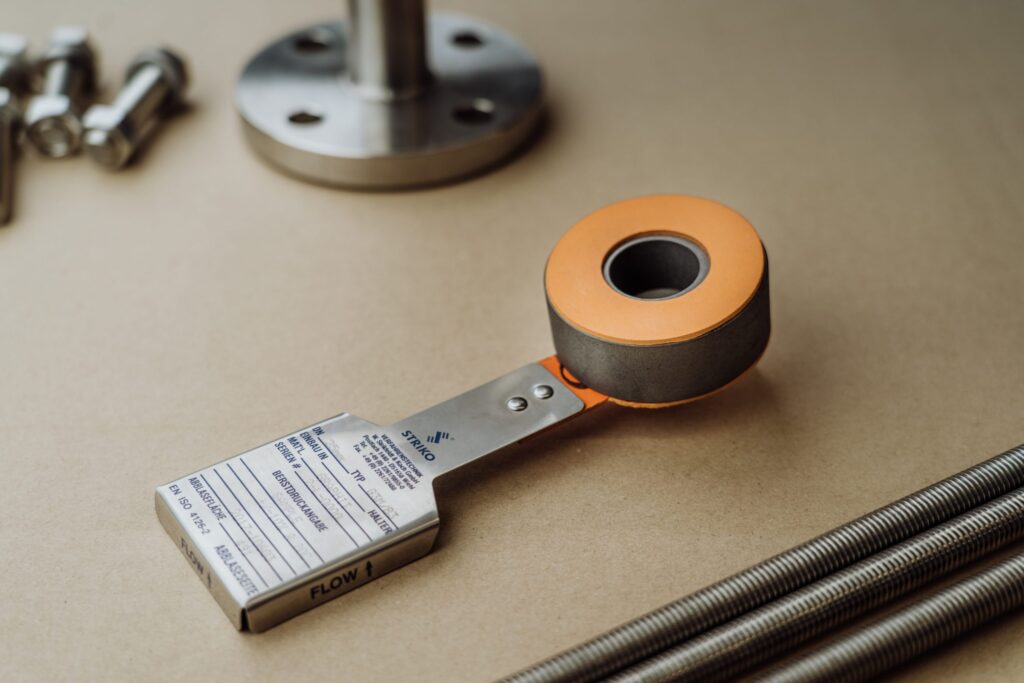
Designs in the STRIKO range
Every application needs its own rupture disc. These are the designs we supply most often.
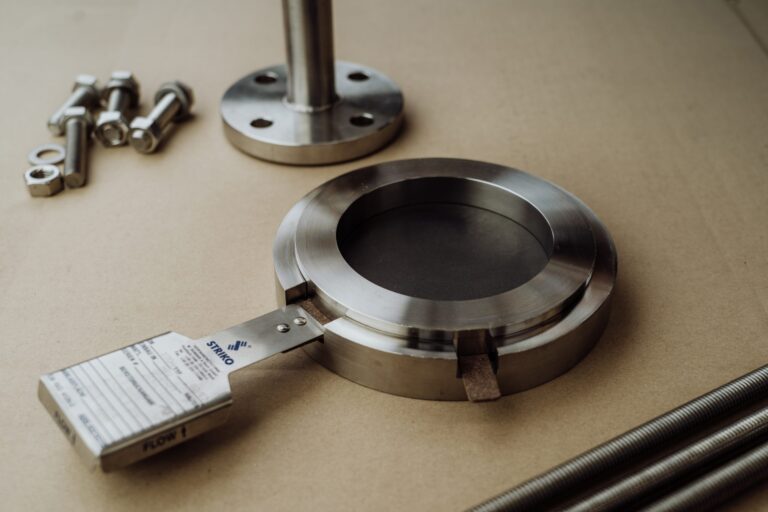
Graphite rupture disc
Corrosion resistant without coating, DN25 to DN400, between ANSI or DIN flanges.

Rupture disc holder
Correct positioning, reproducible loading and a reliable seal.
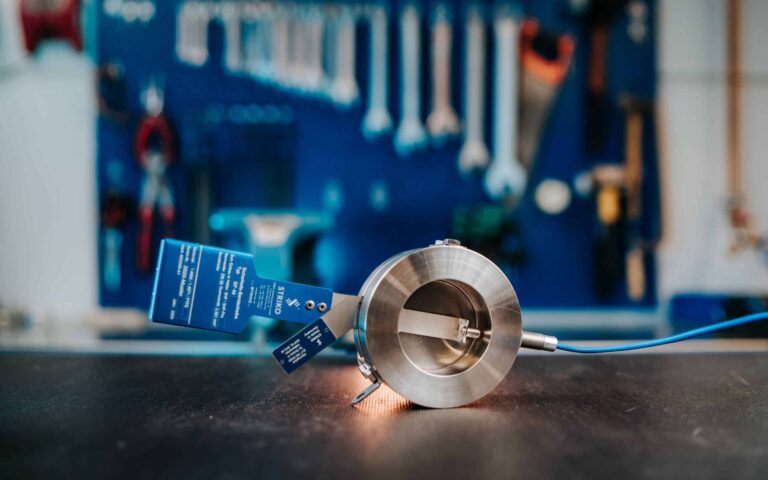
Burst indicator
Signals an opened disc directly to PLC, SCADA or DCS.
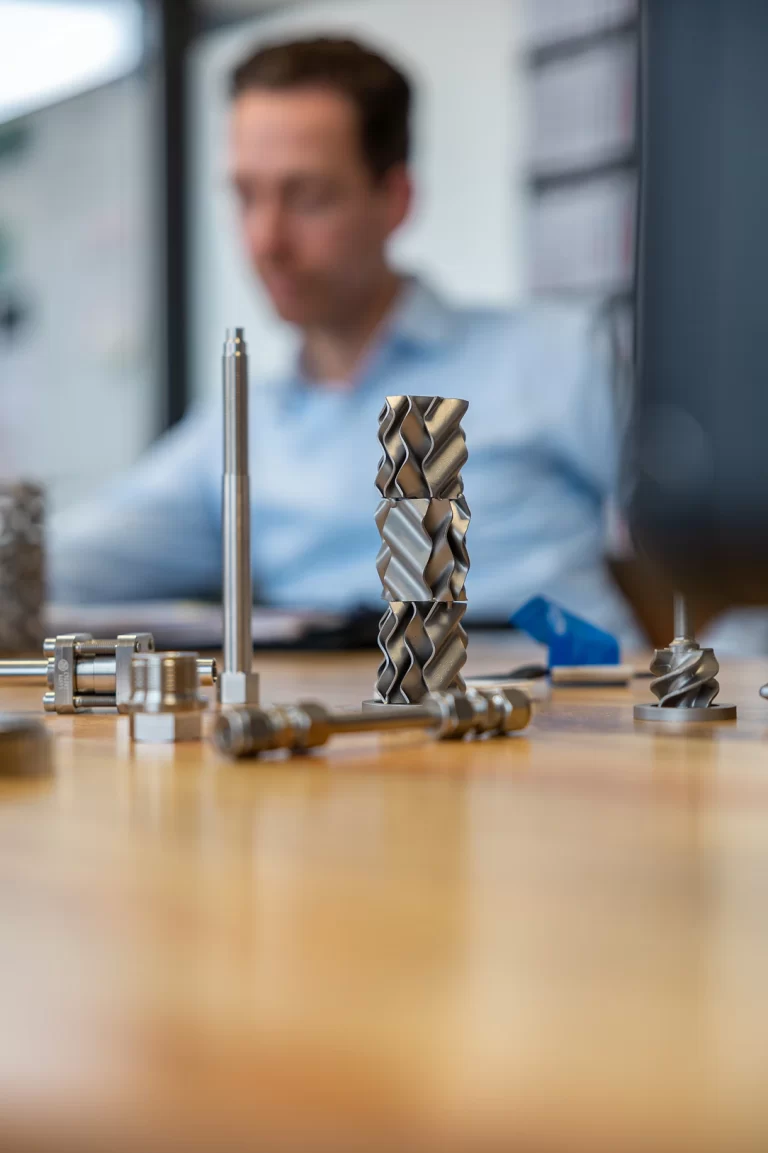
Reverse acting rupture disc
Loaded in compression, resistant to pressure cycling.
Vacuum suitable and double discs as a vacuum rupture disc solution
Support is not the only route. For systems that have to manage both overpressure and underpressure, vacuum suitable discs and double discs are available. Which one fits depends on the question you are really asking.
If the disc only has to survive vacuum, a vacuum suitable disc or a supported disc keeps it intact while it waits for an overpressure event. If the equipment itself also needs protection against vacuum, the arrangement has to open in the other direction too, and that is where double disc solutions come in. The aim is the same in each case: a defined, predictable response to overpressure and underpressure, instead of a disc that deforms without anyone knowing.
A double arrangement also changes the maintenance picture. Two directions of protection mean two sets of data to specify and two scenarios to check in the safety study. We support HAZOP and other safety studies, and FEM analyses are available on request when a design has to be proven rather than assumed.
Reverse acting discs deserve a word here too. Their dome points towards the process and is loaded in compression during normal operation, which gives higher resistance to pressure cycles and a lower risk of fatigue. That does not make vacuum irrelevant. Vacuum still loads the disc from the opposite side, so a reverse acting vacuum rupture disc needs the same careful check of its support and holder as any other.
Specification ready? We will prepare a targeted quote.
Send us medium, pressure, temperature and connection. Our specialists come back with a matching proposal.
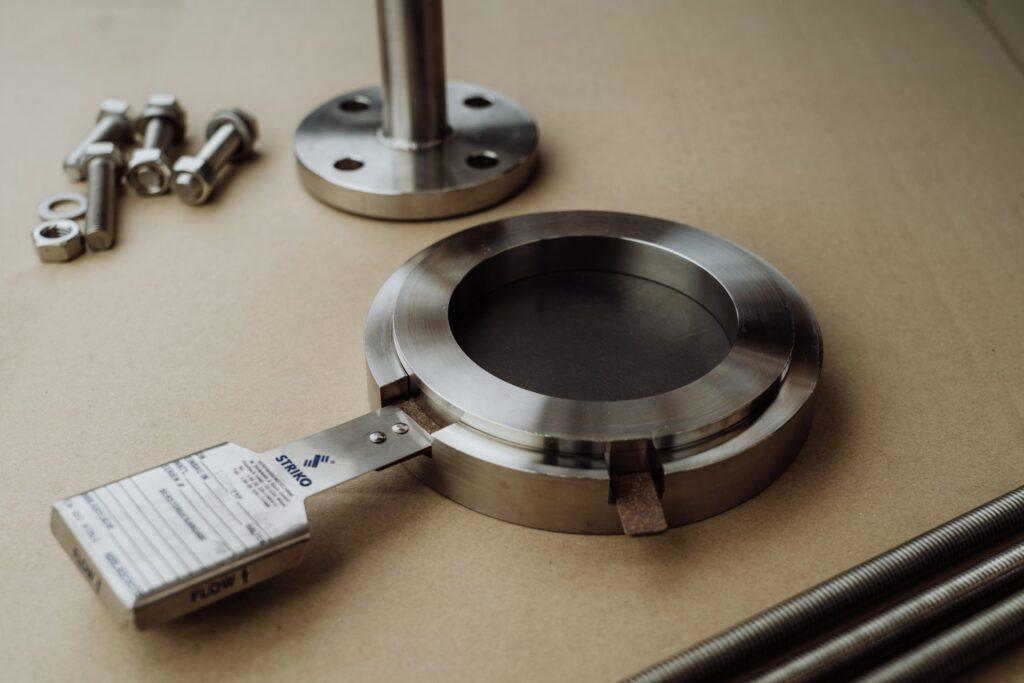
The vacuum rupture disc in batch processes and cleaning cycles
Batch plants are where vacuum problems show up most often, because every batch is a small cycle of its own. A typical sequence might be evacuation, charging, reaction under pressure, venting, emptying and cleaning with steam or hot water. The disc on that reactor sees overpressure, atmospheric pressure and vacuum, again and again, for as long as the plant runs.
Pharmaceutical, food and biotech processes add cleaning and sterilisation to that picture. Clean in place and steaming cycles are part of normal operation there, and each one ends with a cooling phase in which vacuum can form. Hygienic rupture discs with polished surfaces that support cleaning and CIP procedures exist for these processes, and STRIKO supplies aseptic metal rupture discs for pharmaceutical and food applications. In these services, vacuum support is not an extra. It is part of the basic design.
Consider a maintenance technician who replaces the same disc on a batch reactor several times a year without an obvious overpressure event. The disc looks slightly dented each time, and the burst pressure on the tag is correct. The cause is usually found in the cleaning sequence, not in the reaction. Adding vacuum support or changing to a vacuum suitable disc turns an expensive routine into a non event.
Burst detection completes the picture. A sensor based on an electrical loop or a magnetic field signals an opened disc to your PLC, DCS or SCADA system immediately, and fail-safe designs also report a fault in the sensor itself. On a batch reactor that runs through many cycles, knowing the moment a disc opens prevents a batch from being processed against an open relief path.
Inspecting a vacuum rupture disc in service
Vacuum damage is sneaky because it rarely announces itself. There is no release, no alarm and often no visible change from outside the holder. The only reliable way to find it is to look. When a disc is removed during a planned stop, check the dome for dents, creases or a changed contour, and compare it with a new disc from stock. A disc that has changed shape must not go back in, even if it is still intact, because its burst pressure can no longer be trusted.
A few patterns point to a vacuum problem rather than a faulty disc. Discs that are replaced regularly without any recorded overpressure event, discs that open below their set pressure after a cleaning campaign, and discs that look pushed inwards towards the process are all typical signs. In each case we look at the full cycle of the equipment, including emptying, cooling and cleaning, before we change anything on the disc itself.
Good stock management helps here too. Keeping spare discs for every critical position, stored in their original packaging and handled by the edge, means a suspect disc can be replaced straight away instead of being left in service because nothing else is available. A properly supported vacuum rupture disc should make these replacements rare, which is exactly the point of getting the specification right.

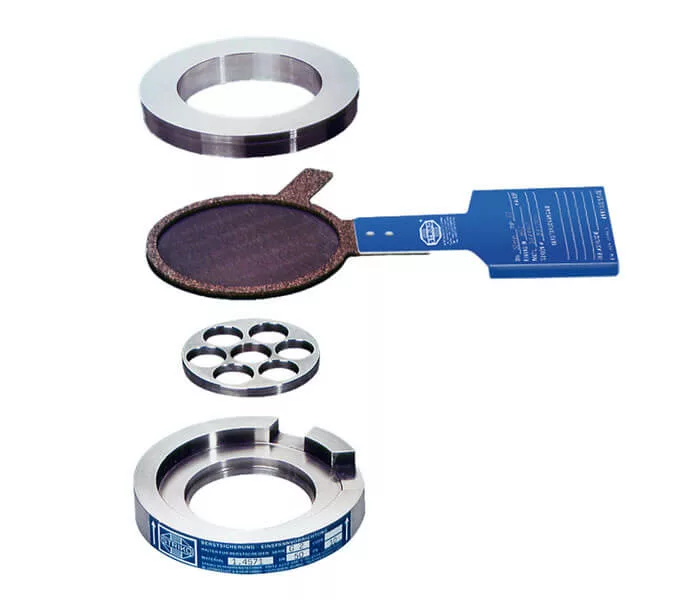
Specifying a vacuum rupture disc with Dutch Valve Vision
The key to a good vacuum rupture disc is a complete description of every pressure the disc will see. Tell us the medium and its composition, the operating pressure including peaks, the required burst pressure, the temperature in normal operation and during the relief scenario, the connection and the available installation space. For the vacuum side, tell us when vacuum occurs, how deep it can get and whether the equipment itself needs protection against underpressure. Any back pressure in the discharge line belongs in the same list.
With that information we select disc, support and holder as one combination. Our standard metal discs are made of 316 stainless steel, with Hastelloy and titanium as options. Holders come with material certificates to EN 10204 3.1, pressure calculations, inspection reports and traceability per component. Dutch Valve Vision works with an ISO 9001 certified quality management system, certified by KIWA, and supplies to DIN and ANSI/ASME.
Seeing dented discs after cleaning, or designing a new batch reactor? Share the full pressure and vacuum profile with us at sales@dutchvalvevision.com, or call +31 (0)70-2210560 from Monday to Friday, 09:00 to 17:00. From our office in Monster we will propose a vacuum rupture disc arrangement that holds its shape and opens when it should.
Frequently asked questions about vacuum rupture disc
Question not listed? Our specialists are happy to help.
- +31 (0)70-2210560
- sales@dutchvalvevision.com
- Vlotlaan 641, 2681 TZ Monster, the Netherlands
- Mon-Fri 09:00-17:00
What is a vacuum rupture disc?
A vacuum rupture disc is a rupture disc arrangement designed to cope with underpressure. In most cases it is a disc that relieves overpressure but must survive vacuum without being damaged. In other cases the arrangement also protects the equipment itself against vacuum. Vacuum support holders, vacuum suitable discs and double discs are the main solutions. STRIKO rupture discs are designed to protect installations against both overpressure and vacuum. The right choice depends on when vacuum occurs and how deep it gets. It also depends on whether the vessel wall itself needs protection against underpressure. We help you define that before a disc is selected.
Why does vacuum damage a rupture disc?
A domed disc is shaped to carry load in one direction. Vacuum in the vessel reverses that load and pushes the dome from the other side. A thin membrane that is designed to be stretched is then compressed instead. It can buckle, flip over or crease. The disc may still look closed and remain leak tight. Its shape has changed, however, and so has its burst pressure. The next overpressure event then meets a disc with an unknown opening pressure. That is why vacuum damage is dangerous even when nothing seems to have happened.
How does a vacuum support holder work?
A vacuum support holder contains a support on the side where vacuum would pull the disc. That support follows the contour of the membrane and carries the load when the pressure difference reverses. During normal overpressure operation the disc functions as designed. When vacuum occurs, the support prevents the disc from flipping over or being damaged. When the disc bursts under overpressure, the opening is not obstructed. Our vacuum support holders are developed for processes with alternating pressure and vacuum conditions. They are essential in batch processes and cleaning cycles. The holder is designed for long term reuse, so only the disc is replaced after an opening.
When do I need a double rupture disc instead of vacuum support?
Vacuum support is enough when the disc only has to survive vacuum. A double disc solution comes into view when the equipment itself also needs protection against underpressure. In that case the arrangement has to respond to both overpressure and vacuum. Vacuum suitable discs and double discs are available for systems that must handle both. Two directions of protection mean two scenarios to specify and check. We support HAZOP and other safety studies to make that choice well founded. FEM analyses are available on request when a design needs proof. Send us both scenarios and we will advise the simplest arrangement that covers them.
Can steam cleaning really damage a rupture disc?
Yes, and it is one of the most common causes of vacuum damage. A vessel filled with steam and then closed off will cool down. The steam condenses into a very small volume of water. The pressure in the vessel then falls well below atmospheric. A disc without support sees that vacuum as a load from the wrong side. After several cleaning cycles the disc can be dented or flipped without any overpressure event. Vacuum support holders are designed for exactly this situation in batch processes and cleaning cycles. If you replace discs regularly after cleaning, the cleaning sequence is the first place to look.
Is graphite suitable as a vacuum rupture disc?
Graphite discs can be supplied with vacuum support as an option. That makes them suitable for corrosive processes that alternate between pressure and vacuum. Graphite is resistant to many acids, bases and aggressive media without coating. We supply graphite discs from DN25 to DN400. Mounting is possible straight between ANSI or DIN flanges, or in a holder. Optional TFE coating and burst detection are available as well. The disc opens across its full diameter when it bursts. We advise graphite or metal based on your medium, pressures and vacuum conditions.
Does back pressure count as a vacuum load?
In effect, yes. A rupture disc responds to the difference between the pressures on its two sides. Back pressure in a common relief header pushes on the outlet side of the disc. That has the same effect as vacuum on the inlet side. The disc can be loaded from the wrong direction and deform. Units connected to a shared flare or scrubber line should therefore include back pressure in the specification. We ask for the expected back pressure in every enquiry. Where it is significant, we take it into account in the choice of support and holder.
What should I send for a vacuum rupture disc quotation?
Start with the medium and its composition. Add the operating pressure including peaks and the required burst pressure. We need the temperature in normal operation and during the relief scenario. For the vacuum side, tell us when vacuum occurs and how deep it can get. Let us know whether the equipment itself needs protection against underpressure. Any back pressure in the discharge line, the connection and the installation space complete the picture. You can send everything to sales@dutchvalvevision.com or call +31 (0)70-2210560. We then propose disc, support and holder as one combination.
Protect your disc against vacuum
Tell us when vacuum occurs, how deep it can get, plus medium, burst pressure, temperatures and connection. We will advise support or a double disc.
- +31 (0)70-2210560
- sales@dutchvalvevision.com
- Vlotlaan 641, 2681 TZ Monster, the Netherlands
- Mon-Fri 09:00-17:00