

Schroeder zero loss valve
What zero loss means for a Schroeder recirculation valve, and why recirculating only when needed beats a continuous orifice bypass.
- Exclusive Schroeder Valves agent Benelux
- Original spare parts
- ISO 9001 · KIWA
Exclusive agent for Schroeder Valves
Official spare parts distributor
Quality system, KIWA certified
Service and advice from the Netherlands
How an automatic recirculation valve works
One valve that adjusts itself to process demand.
Full load
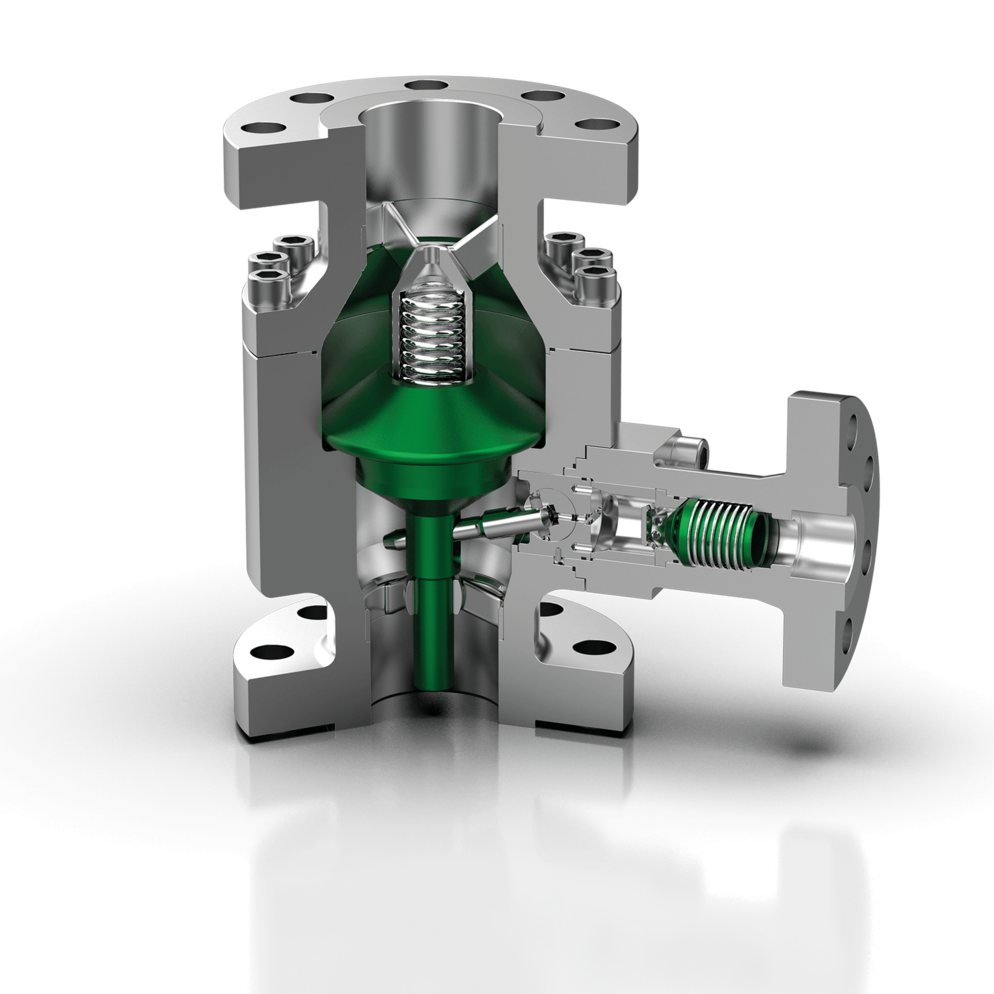
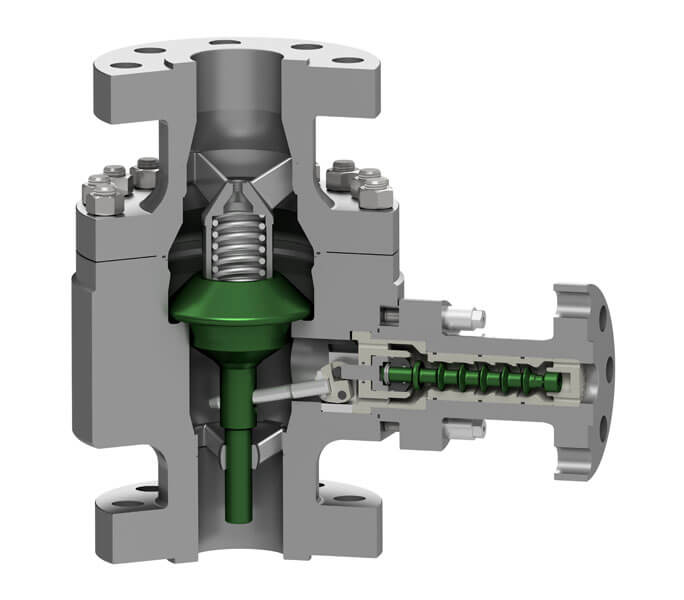
The disc is open in the main flow. The bypass stays closed, no energy is lost.
Part load
As demand drops the disc moves down and the mechanically linked bypass opens.
Zero load
The minimum flow returns through the bypass. The pump stays protected, without external energy.
What the name Schroeder zero loss valve stands for
A Schroeder zero loss valve is, at its core, an automatic recirculation valve that protects a centrifugal pump without throwing away flow when the pump does not need protection. Zero loss is Schroeder’s own way of describing that behaviour, and it is a name you will hardly find with other manufacturers. The idea behind it is simple. The valve recirculates liquid only when the process flow drops below the minimum flow of the pump. As soon as the process takes enough, the bypass is closed and every litre the pump delivers goes where it is needed.
To see why that matters, you have to look at the alternative that many plants still use. A pump needs a minimum flow to avoid overheating, cavitation and damage to bearings and seals. The cheapest way to guarantee that minimum flow on paper is a permanently open bypass line with a fixed orifice back to the suction tank. It needs no control, it has no moving parts and it always works. It also recirculates the minimum flow around the clock, including the many hours in which the process would have taken that flow gladly.
At Dutch Valve Vision we supply the Schroeder range as official and exclusive agent for the Benelux. When customers ask us about the Schroeder zero loss valve, the conversation almost always turns into a comparison with that fixed orifice bypass. This page walks through that comparison, keeps the claims general where no plant data are available, and shows how to judge the difference for your own pump.
The hidden cost of a fixed orifice bypass
Picture a feed water pump in an industrial boiler house, protected by a continuous bypass. The orifice is sized so that the minimum flow always returns to the deaerator. At start-up that is exactly what is needed. At full load, the boiler takes the full design flow, and the bypass keeps returning the same minimum flow on top of it. The pump therefore has to deliver the process flow plus the bypass flow, all day, every day.
That has three consequences. The first is energy. The recirculated liquid has been lifted to the full discharge pressure of the pump, and then the orifice throws that pressure away again on its way back to the tank. The power needed for that is pure loss. The second is pump size. Because the bypass flow is always there, the pump and motor must be selected for the process flow plus the recirculation, which usually means a larger pump than the process alone would require. The third is heat and wear. The orifice converts the pressure drop into heat and turbulence, warming the return vessel and eroding the orifice itself over time, especially at high pressure differences.
None of this shows up as an alarm. A continuous bypass works quietly, and its cost is spread across every hour of operation. That is exactly why it is easy to overlook, and why a Schroeder zero loss valve is often justified by looking at the energy bill rather than the maintenance log.
Schroeder ARC series at a glance
A dedicated series for every pressure class and application.
A Schroeder zero loss valve is an automatic recirculation valve that only opens its bypass when the process flow falls below the minimum flow of the pump. A fixed orifice bypass recirculates the minimum flow continuously, even at full load, so the pump spends energy on liquid that goes nowhere. By closing the bypass whenever the process takes enough, the Schroeder valve avoids those continuous recirculation losses.

Schroeder SSV
Standard, compact all-in-one design.
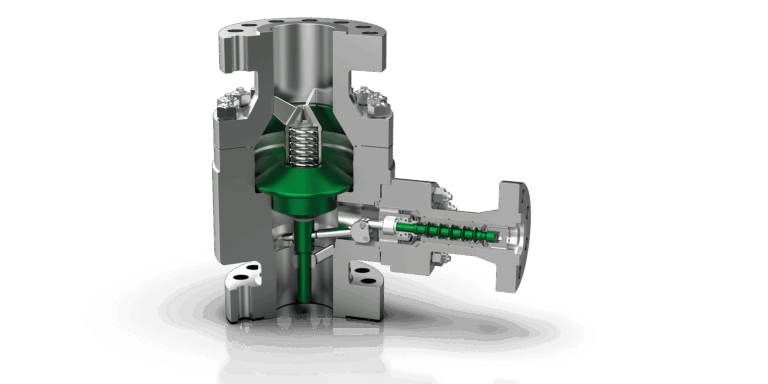
Schroeder SIP
Medium pressure, up to about 250 bar.
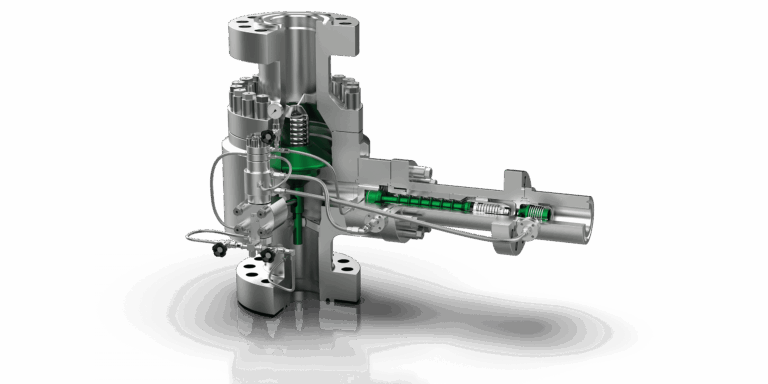
Schroeder SHP
High and very high pressure.

Schroeder SMA
ON/OFF, pilot operated.
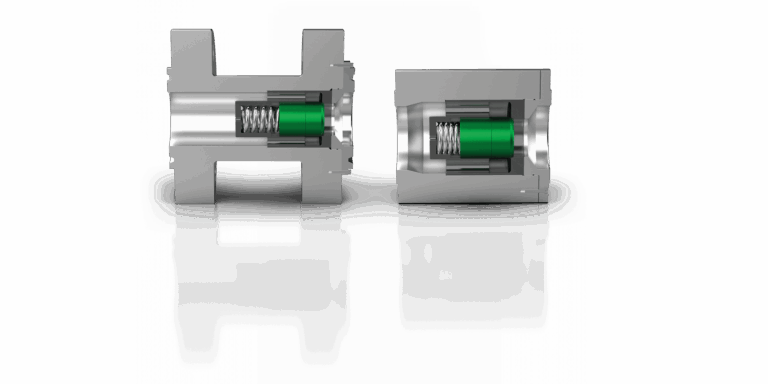
Schroeder SDV
Back pressure device with check function.

Schroeder SSD
Multi-stage throttle for high differential pressure.
How recirculation on demand removes the losses
A Schroeder zero loss valve replaces the fixed orifice with a bypass that opens and closes automatically. The valve sits on the pump discharge. A check disc in the main line is lifted by the flow going to the process, and its position is mechanically coupled to the bypass. At low process flow the disc sits close to its seat and the bypass is open, returning the minimum flow. As process flow increases, the disc lifts and the bypass closes. Once the process takes at least the minimum flow, no liquid is recirculated at all.
This is where the name comes from. Recirculation happens only when needed, so there are no continuous bypass losses at normal and full load. The pump no longer has to be sized for a permanent extra flow, the return vessel is not heated by liquid that did not need to go round, and there is no orifice eroding under a constant pressure drop.
All of this happens without external energy, sensors or control systems. The valve reacts to the hydraulics of the system, directly and without oscillation. The same disc also closes when the pump stops and prevents reverse flow, so the separate discharge check valve is no longer needed either.
The energy logic in plain terms
We are careful with savings figures, because they depend entirely on your pump and your operating profile. What we can do is explain the logic, so you can make the calculation with your own data.
The power a pump absorbs grows with the flow it delivers and the head it generates, divided by its efficiency. With a continuous bypass, the recirculated flow is delivered at full pump head and then throttled back to the suction pressure. The energy spent on that flow is lost for every hour the bypass is open while the process could have taken the flow anyway. The key factors are therefore the size of the minimum flow, the head of the pump and the number of operating hours at normal and full load.
That leads to a useful rule of thumb without numbers. The larger the minimum flow, the higher the pump head and the more hours the pump spends at normal or full load, the more a continuous bypass costs and the more a Schroeder zero loss valve saves. High pressure feed water pumps, pumps with a high minimum flow requirement and pumps running around the clock are the clearest candidates. A small pump with a low head that runs only occasionally will show a much smaller difference.
There is a second effect that is sometimes forgotten. Because the pump no longer has to be sized for a permanent extra flow, a new installation can sometimes use a smaller pump and motor than a design with a continuous bypass. That is a decision for the pump supplier, but it is worth raising early in the design phase.
Service and overhaul
OEM
Only original Schroeder parts.
Test bench
Flow calibration and pressure test after overhaul.
Warranty
Full Schroeder factory warranty.
Three ways to guarantee minimum flow, compared on losses
When we discuss energy with customers, it helps to put the three common solutions next to each other. They all guarantee the minimum flow, but they behave very differently the rest of the time.
The first is the continuous orifice bypass described above. It is simple and robust, and it recirculates all the time. From an energy point of view it is the most expensive option over the life of the pump, because the loss is permanent.
The second is the controlled loop: a flow meter in the discharge, a controller, and a control valve in the bypass that opens only when the measured flow falls below a setpoint. In theory this also recirculates only when needed. In practice the result depends on the quality of the measurement and the tuning. A setpoint chosen with a generous margin, a drifting transmitter or a control valve that does not close tightly all lead to more recirculation than necessary. The loop also needs power, instrument air, calibration and maintenance, and every one of those components is a possible point of failure.
The third is a self-actuated valve such as the Schroeder zero loss valve. It recirculates only when needed, like the controlled loop, but it does so mechanically, without measurement, controller or actuator. The flow itself moves the check disc, and the disc moves the bypass. There is no setpoint that can drift and no signal that can be lost.
A fourth arrangement deserves a mention because we meet it so often: the manual bypass. An operator opens a hand valve before starting the pump and is supposed to close it afterwards. When that last step is forgotten, the plant effectively runs with a continuous bypass for weeks, with all the losses that come with it, and nobody notices until someone checks the valve position on a round.
Beyond energy: what else disappears with the orifice
Energy is the headline, but it is not the only thing that changes. The orifice itself disappears, and with it the erosion and noise that come from throttling a high pressure flow continuously. The return vessel no longer receives a constant stream of liquid that has been heated by passing through the pump and the orifice. And the separate discharge check valve can go, because the check function is built into the valve. Fewer components mean fewer failure points and lower maintenance costs over the life of the installation.
Specification ready? We will prepare a targeted quote.
Send us medium, pressure, temperature and connection. Our specialists come back with a matching proposal.
Zero loss does not mean zero pressure drop
It is worth being precise about what zero loss means, because we would rather set the right expectation than oversell. A Schroeder zero loss valve still has a check disc in the main line, and any valve in a flow path has some pressure drop. The zero loss refers to the recirculation: no liquid is sent round the bypass unnecessarily when the process takes enough flow.
When the pump really needs protection, at start-up, at part load or when consumers close, the valve does recirculate the minimum flow. That is its job. In those moments the recirculated flow is not a loss but the price of keeping the pump alive, and it is paid only for as long as the situation lasts.
The Dutch term for these valves, nullastklep, points in the same direction from the other side. It refers to the no-load condition of the pump, the situation the valve is designed to cover. Protection when the pump has no load, and no needless recirculation when it does.
Where a Schroeder zero loss valve makes the biggest difference
Following that logic, the benefit is largest in a few typical duties. Boiler feed water pumps are the first. They combine high pressure with long operating hours, and the SIP series, designed for pressures up to about 250 bar, is widely used in feed water and utility systems. Pumps with a high minimum flow requirement are the second group. When the minimum flow is a large share of the duty flow, a continuous bypass is expensive, and the SSV with control disc handles minimum flows up to about 70 percent of the main flow. High pressure duties with strongly fluctuating loads, covered by the SHP series, are a third.
Schroeder valves are applied worldwide in power plants, chemical and petrochemical installations, offshore and injection systems, boiler feed water and auxiliary systems, and heavy industry such as steel and paper. Through Dutch Valve Vision they can be supplied for boiler feed water, ammonia and nitric acid, LNG and hydrocarbons, seawater and fire fighting systems and other special media.
Replacing an orifice bypass with a Schroeder zero loss valve
Many of the pumps that would benefit are already running. The conversion is usually planned around a turnaround or a pump overhaul. We start with the pump data and the manufacturer’s minimum flow, the normal and maximum process flow, the pressure at the pump discharge and at the return point, and the current bypass arrangement. We also ask for the operating profile: how many hours the pump runs at normal or full load, and how often it starts or runs at part load.
The existing return line can often be reused. The orifice is removed or bypassed, the Schroeder valve is installed on the pump discharge and the separate check valve can be taken out. If the pressure difference to the return point is high, an SSD multi-stage throttle valve can take care of controlled pressure reduction in the bypass.
Working with Dutch Valve Vision
Dutch Valve Vision works with an ISO 9001 certified quality management system, certified by KIWA, and supplies to DIN and ANSI standards. As exclusive Schroeder agent for the Benelux we provide advice, technical support and supply chain management, and after installation original Schroeder spare parts and repairs with a full factory warranty.
Would you like to know what your continuous bypass is costing you? Contact us at +31 (0)70-2210560 or sales@dutchvalvevision.com, Monday to Friday from 09:00 to 17:00. We will go through your pump data and show where a Schroeder zero loss valve makes sense.
Frequently asked questions about schroeder zero loss valve
Question not listed? Our specialists are happy to help.
- +31 (0)70-2210560
- sales@dutchvalvevision.com
- Vlotlaan 641, 2681 TZ Monster, the Netherlands
- Mon-Fri 09:00-17:00
What is a Schroeder zero loss valve?
A Schroeder zero loss valve is an automatic recirculation valve for the protection of centrifugal pumps. The name is Schroeder’s own designation and is rarely used by other manufacturers. The valve only opens its bypass when the process flow falls below the minimum flow of the pump. When the process takes enough, the bypass stays closed and no liquid is recirculated. That avoids the continuous losses of a fixed orifice bypass. The valve also works as a check valve in the main line. It needs no external energy, sensors or control. Dutch Valve Vision supplies it as exclusive Schroeder agent for the Benelux.
Why is a fixed orifice bypass wasteful?
A fixed orifice bypass recirculates the minimum flow continuously, whatever the process demand. At full load the pump therefore delivers the process flow plus the bypass flow. The recirculated liquid is raised to full pump pressure and then throttled back through the orifice. The energy spent on that flow is lost for every hour of operation. The pump and motor also have to be sized for the extra flow. The orifice turns the pressure drop into heat and can erode over time. None of this triggers an alarm, so the cost is easy to overlook. An automatic valve removes this loss by recirculating only when needed.
Does zero loss mean the valve has no pressure drop?
No, zero loss refers to the recirculation, not to the pressure drop in the main line. Like any valve in a flow path, the check disc in the main line has some pressure drop. What the name describes is that no flow is recirculated unnecessarily. When the process takes enough, the bypass is fully closed. When the pump needs protection, the valve does recirculate the minimum flow. In that situation the recirculation is the protection itself, not a loss. We prefer to explain this clearly rather than oversell the name. That way you can compare solutions on a fair basis.
How much energy can a Schroeder zero loss valve save?
The saving depends on your pump and the way it is operated. The key factors are the size of the minimum flow, the pump head and the hours at normal or full load. The larger these are, the more a continuous bypass costs. High pressure feed water pumps running around the clock are typical examples with a large difference. A small, low head pump that runs occasionally shows a much smaller effect. We do not quote savings figures without your data. With the pump data and operating profile we can make the comparison concrete. That gives you a sound basis for a decision.
Is the Schroeder zero loss valve the same as an ARC valve?
It follows the same principle as the Schroeder ARC valve line. ARC stands for automatic recirculation control. The valve combines a check valve with a mechanically coupled bypass. Zero loss highlights the energy aspect of that principle, recirculation only when needed. Other names for this type of valve are automatic recirculation valve, minimum flow valve and pump protection valve. In Dutch it is known as a nullastklep. The series within the line differ in pressure level and minimum flow capacity. We help you select the series that fits your pump.
Does the valve still protect the pump at start-up?
Yes, protection at start-up is one of its main tasks. At start-up the process usually takes little or no flow. The check disc then stays close to its seat and the bypass is open. The pump immediately passes its minimum flow back to the return vessel. As the process demand grows, the bypass closes gradually. At part load or when consumers close, the bypass opens again. When the pump stops, the check disc closes and prevents reverse flow. All of this happens automatically without any operator action.
Can I replace an orifice bypass in an existing plant?
Yes, this is a common retrofit that we support. We start with the pump data, the minimum flow and the current bypass arrangement. The existing return line can often be reused. The orifice is removed and the Schroeder valve is installed on the pump discharge. The separate discharge check valve can usually be taken out as well. With a high pressure difference to the return point, an SSD throttle valve can be added. A turnaround or pump overhaul is a good moment for the change. We help you plan the work so downtime stays limited.
What does Dutch Valve Vision need to advise?
We need the pump data sheet with the manufacturer’s minimum flow. The normal and maximum process flow are also required. We ask for the pump discharge pressure and the pressure at the return point. The medium and its temperature determine the material execution. A description of the current bypass shows us what can be removed. The operating profile tells us how large the recirculation losses are today. We also need the connection standard, DIN or ANSI. You can reach us at sales@dutchvalvevision.com or +31 (0)70-2210560.
See what continuous recirculation costs you
Send us the pump data, the current bypass arrangement and the operating profile of the pump. We will show you how a Schroeder valve changes the picture.
- +31 (0)70-2210560
- sales@dutchvalvevision.com
- Vlotlaan 641, 2681 TZ Monster, the Netherlands
- Mon-Fri 09:00-17:00