

STRIKO heat exchanger
Why heating and cooling thick products needs a different approach, and how to request a STRIKO heat exchanger through our Benelux office.
- Exclusive STRIKO agent Benelux
- ISO 9001 · KIWA
- Engineering support from Monster (NL)
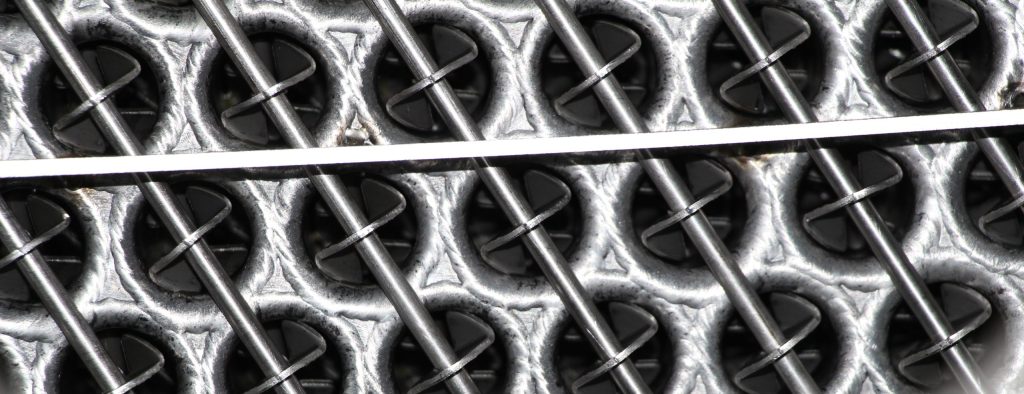
STRIKO active in rupture discs since
Dutch Valve Vision is the exclusive agent
Quality system, KIWA certified
Advice and supply from the Netherlands
The STRIKO range through Dutch Valve Vision
One point of contact in the Benelux for the complete range.
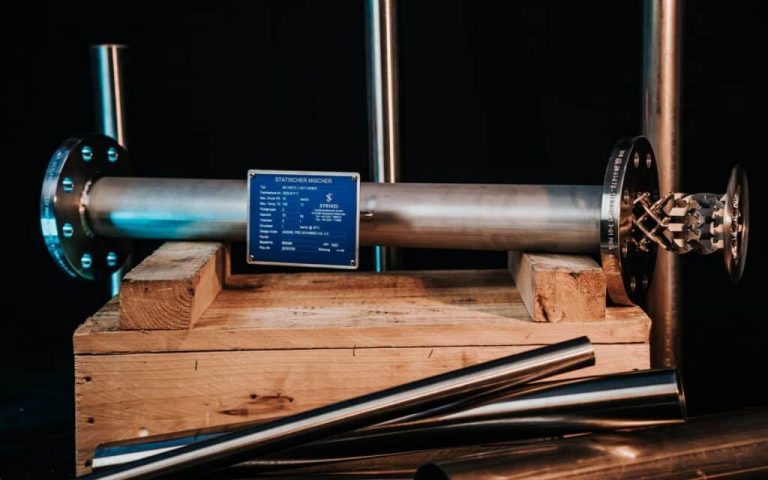
Static mixers
EREstat, Helical, STV and STX, no moving parts.
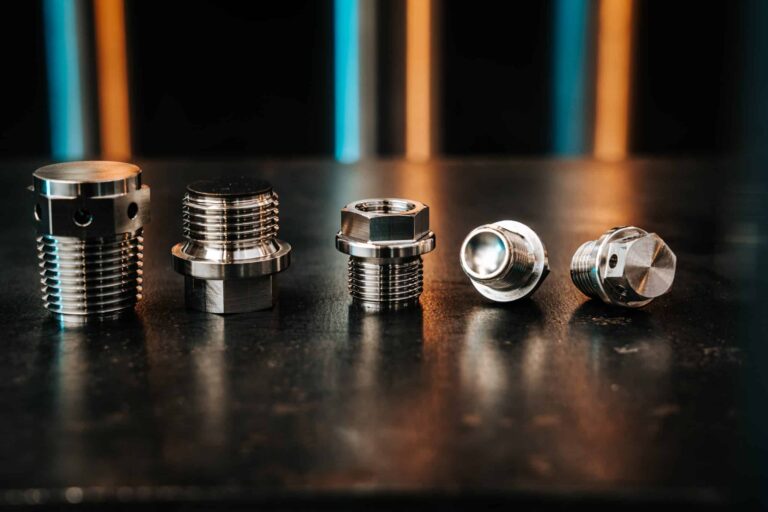
Burst plugs
Compact threaded overpressure protection.

Spare parts
Original STRIKO parts through the official partner.
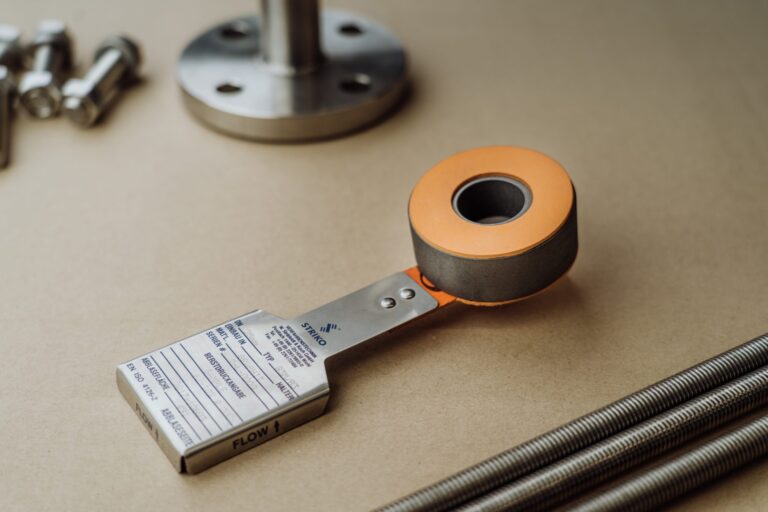
Rupture discs
Flat, forward acting, reverse acting, aseptic, extruder and tank container.
What a STRIKO heat exchanger is meant for
A STRIKO heat exchanger belongs to a manufacturer that has made viscous media its speciality. STRIKO Verfahrenstechnik GmbH is known for rupture discs and static mixers for viscous and highly viscous media, and alongside those product lines the STRIKO programme includes heat exchangers for viscous media. Dutch Valve Vision is the exclusive STRIKO agent for the Netherlands, Belgium and Luxembourg, and enquiries for STRIKO equipment in those countries come through us.
Let us be upfront about what this page is and is not. We do not publish dimensions, capacities or performance figures for STRIKO heat exchangers here, because a heat exchanger for a viscous product is designed around a duty rather than picked from a table. What we can do is explain why viscous media need a specific approach to heating and cooling, which questions determine the design and how an enquiry through us works. That is usually what an engineer needs first anyway.
Why would anyone look for a heat exchanger at a company best known for mixing? Because the two problems are closely related. Heating or cooling a thick product is, at its core, a mixing problem. Heat has to travel from the wall to the core of the flow, and in a viscous medium that journey is slow unless something helps it along. A manufacturer that understands how viscous media behave in a pipe is well placed to address both challenges.
Think of a production line where a thick product leaves a reactor or a mixing step and has to be cooled before storage or filling. In a pilot plant everything looked fine. At full scale the outlet temperature turns out to be uneven, the product near the wall is colder than expected and the core is still warm. Nobody made a mistake in the heat balance. The flow simply did not cooperate. That is the typical starting point for a conversation about a STRIKO heat exchanger.
Why viscous media make heat transfer difficult
To see why a thick product is so hard to heat or cool, we need to look at how it flows. Engineers describe the flow regime with the Reynolds number, which compares inertial forces to viscous forces. Water in a pipe at normal velocities flows turbulently. Eddies constantly move fluid from the wall to the centre and back, carrying heat with them. That is why conventional heat exchangers work so well with thin liquids.
A viscous product behaves differently. Its Reynolds number is low, and the flow is laminar. The fluid moves in orderly layers that slide past each other, with the fastest flow in the centre of the tube and almost no movement at the wall. There are no eddies to transport heat across those layers. Heat has to move by conduction alone, and viscous products are often poor conductors. The result is a low heat transfer coefficient and a large temperature difference between the wall and the core.
Uneven residence time
The laminar velocity profile creates a second problem. Product near the wall moves slowly and stays in the heat exchanger much longer than product in the centre. When heating, that slow outer layer can be exposed to the hot wall far longer than intended. For heat sensitive products, such as many food, cosmetic or polymer products, that can mean discolouration, degradation or deposits on the wall. The core, meanwhile, rushes through and leaves underheated.
Viscosity that changes with temperature
Viscosity is rarely constant. Most liquids become thicker as they cool and thinner as they heat. In a cooler, the layer at the cold wall becomes even more viscous, slows down further and starts to act as insulation. In extreme cases the product can build up on the wall and reduce the effective cross section. In a heater, the opposite happens: the warm wall layer becomes thinner and faster while the cold core stays thick. Both effects make the temperature distribution at the outlet more uneven than a simple calculation would suggest.
Pressure drop
Finally, moving a viscous product through a long, narrow tube bundle costs a lot of pressure. A conventional solution to poor heat transfer is to make the exchanger bigger or the tubes longer, but with viscous media that quickly runs into the limits of the pump. A good design for viscous media therefore balances heat transfer, residence time and pressure drop, rather than optimising only one of them.
A STRIKO heat exchanger is part of the STRIKO programme for viscous media, next to static mixers and rupture discs. Viscous products flow laminarly, which makes heat transfer slow and uneven in conventional designs. Dutch Valve Vision is the exclusive STRIKO agent for the Netherlands, Belgium and Luxembourg and handles enquiries based on your process data.
Heat exchangers for viscous media
Part of the STRIKO product programme
STRIKO specialises in highly viscous media
DVV is exclusive STRIKO agent Benelux

How designs for viscous media address the problem
Across the process industry, several design principles are used to heat and cool viscous media effectively. They all aim at the same thing: bringing product from the core to the wall and back again, so that every part of the flow sees a similar thermal history.
One widely used approach is to place mixing elements inside the heat transfer tubes. The elements continuously divide and reorient the flow, which renews the layer at the wall and carries heat into the core far more effectively than conduction alone. In a sense, this turns a static mixer into a heat exchanger. The same principle that makes a static mixer suitable for temperature regulation in delicate products, as it is used in food and pharmaceutical processes, helps to narrow the temperature spread in a heat exchanger.
Other considerations include the choice of tube diameter, the arrangement of the heating or cooling medium and the ease of cleaning. For products that must be cleaned or sterilised regularly, the internal geometry matters as much as the thermal performance.
Which STRIKO heat exchanger design is proposed for a specific duty follows from the process data. We would rather ask a few extra questions than suggest a solution that looks good on paper but does not match the product. That approach reflects the STRIKO philosophy of testing, evaluating and recalibrating, which the manufacturer describes as the foundation of its work.
Heating and cooling are two different jobs
It is tempting to treat heating and cooling as mirror images, but with viscous media they behave quite differently, and a STRIKO heat exchanger enquiry should make clear which of the two is required.
When a viscous product is heated, its viscosity usually drops near the warm wall. The wall layer becomes more mobile, which helps heat transfer a little, but the core stays thick and cold. The risk lies at the wall: product that lingers there can reach temperatures it does not tolerate. The design question is therefore how to heat the core without overheating the edge.
When a viscous product is cooled, the opposite happens. The layer at the cold wall thickens, slows down and begins to insulate the rest of the flow. In some products it can even build up as a solid or semi solid film. The design question here is how to keep that wall layer moving and renewed, so that the cooling surface remains effective over time.
Some lines need both, for example heating a product for a processing step and cooling it again afterwards. In that case it is worth describing the whole temperature path in one enquiry, because the two steps influence each other.
From pilot plant to production scale
Many heat transfer surprises appear during scale up. In a small pilot unit, tubes are short and narrow, residence times are modest and the temperature spread over the cross section stays limited. At full scale, the tubes become longer or wider, flow rates increase and the laminar velocity profile has more room to develop. A cooling step that looked perfectly controlled in the pilot can suddenly produce an uneven outlet temperature.
The practical lesson is to base a STRIKO heat exchanger enquiry on production conditions rather than on pilot results alone. If pilot data is all that exists, share it, together with the intended production flow rate and the viscosity data at the relevant temperatures. We can then flag where the scale up is likely to change the picture and make sure the design takes that into account from the start.
Specification ready? We will prepare a targeted quote.
Send us medium, pressure, temperature and connection. Our specialists come back with a matching proposal.
Where a STRIKO heat exchanger fits in the process
A STRIKO heat exchanger is relevant wherever a viscous or highly viscous product has to reach a specific temperature in a continuous flow. STRIKO serves sectors such as chemical processing, pharmaceuticals, food production, petrochemicals and energy generation, and its static mixers are also used in cosmetics production and water treatment. Many of those sectors handle products that are thick by nature.
Typical tasks include cooling a product after a reaction or a mixing step before it goes into storage, heating a viscous raw material so it can be pumped and dosed accurately, and bringing a product to a stable temperature before filling or packaging. In each case the challenge is the same: getting the whole cross section to the target temperature without overheating or overcooling the wall layer.
It often pays to look at heating, cooling and mixing together. A line that already contains a static mixer for blending an additive may benefit from considering the thermal step at the same time. Because the STRIKO programme covers both static mixers and heat exchangers for viscous media, and because we supply both through one channel, those steps can be discussed in one conversation rather than with separate suppliers.
Questions that shape a STRIKO heat exchanger design
A useful enquiry answers a handful of questions. The first is about the product itself. What is it, and what is its viscosity at the inlet temperature and at the outlet temperature? Because viscosity often changes strongly with temperature, both values matter. If only one is known, say so, because that changes how the design margin is set.
The second question is about the duty. What flow rate has to be heated or cooled, from which temperature to which temperature? What is available as a heating or cooling medium, and at what temperature?
The third question concerns limits. How much pressure drop can the pump deliver over the heat exchanger? Is there a maximum wall temperature above which the product degrades? Is there a minimum wall temperature below which it builds up or solidifies?
The fourth concerns operation and hygiene. How often is the line cleaned, and how? Is sterilisation or steam cleaning required? Are there product changes that require the exchanger to drain completely?
The last question concerns materials for the STRIKO heat exchanger. The medium, the temperature and the cleaning agents together determine which materials are suitable. For the related static mixers, STRIKO works with stainless steel such as SS316, 1.4404 and 1.4571, carbon steel, plastics such as PVC, PE and PVDF, and special coatings or linings for aggressive media. For a heat exchanger we check the options against your specific process.
Requesting a STRIKO heat exchanger through Dutch Valve Vision
Dutch Valve Vision is the exclusive STRIKO agent for the Netherlands, Belgium and Luxembourg. For sites in those countries, we are the official route to STRIKO equipment, including the STRIKO heat exchanger programme. We are based in Monster in the Netherlands, and our core business is special valves for special services. That background means we are used to equipment that has to be engineered to a duty rather than picked from a catalogue.
When you send us your process data, we review it, ask targeted follow up questions where something is unclear and prepare the enquiry so that the design can be based on complete information. We also look at the surrounding equipment. A heat exchanger for a viscous product does not work in isolation. The pump, the valves, the dosing and mixing steps and the pressure protection all interact with it, and we supply several of those components ourselves.
We work under a KIWA certified ISO 9001 quality management system. You can reach us on +31 (0)70-2210560 or at sales@dutchvalvevision.com, Monday to Friday from 09:00 to 17:00.
Frequently asked questions about STRIKO heat exchangers
Question not listed? Our specialists are happy to help.
- +31 (0)70-2210560
- sales@dutchvalvevision.com
- Vlotlaan 641, 2681 TZ Monster, the Netherlands
- Mon-Fri 09:00-17:00
Does STRIKO make heat exchangers?
Yes, heat exchangers for viscous media are part of the STRIKO programme. STRIKO Verfahrenstechnik GmbH is best known for rupture discs and static mixers. Its specialism is viscous and highly viscous media. Heat exchangers for such media fit that specialism naturally. Enquiries from the Benelux are handled by Dutch Valve Vision as exclusive STRIKO agent. Enquiries for STRIKO heat exchangers in that region come through us. We do not publish detailed specifications on this page. The design always follows from your process data.
Why do viscous products need a special heat exchanger?
Viscous products flow laminarly, without the eddies that carry heat in thin liquids. Heat has to move from the wall to the core mainly by conduction. That results in a low heat transfer coefficient. Product near the wall also moves much slower than product in the centre. This can lead to overheating or overcooling of the wall layer. Viscosity changes with temperature and makes the effect stronger. Pressure drop limits how long or narrow the tubes can be. A design for viscous media has to balance all of these factors.
What is the role of mixing in heat transfer?
Mixing brings product from the core to the wall and back again. That renews the layer at the wall and carries heat into the core. Without mixing, a viscous flow keeps its layers and heats or cools unevenly. One widely used approach places mixing elements inside the heat transfer tubes. The same principle makes static mixers suitable for temperature regulation. STRIKO specialises in mixing viscous media. That knowledge is directly relevant to heating and cooling them. We discuss the right approach based on your product.
Which information do you need for an enquiry?
We need the product and its viscosity at inlet and outlet temperature. Add the flow rate and the required temperatures. Tell us which heating or cooling medium is available. State the permitted pressure drop over the heat exchanger. Mention any maximum or minimum wall temperature for the product. Describe the cleaning regime and any sterilisation requirements. Include material requirements or known compatibility issues. With that information the enquiry can be prepared properly.
Can a heat exchanger be combined with a static mixer?
Yes, heating, cooling and mixing are often discussed together. A line that blends an additive may also need a thermal step. Considering both at once avoids interfaces that do not fit. The STRIKO programme covers both static mixers and heat exchangers for viscous media. Through Dutch Valve Vision both are available from one channel. That makes it easier to design the steps as one system. We look at the sequence of dosing, mixing and temperature control with you. The best order depends on the product and the process.
Which materials are possible?
The material depends on the medium, the temperature and the cleaning agents. For related STRIKO static mixers, stainless steels such as SS316, 1.4404 and 1.4571 are common. Carbon steel is used where the medium allows it. Plastics such as PVC, PE and PVDF appear in suitable applications. For aggressive media, coatings or linings are an option. For a heat exchanger we check the options against your specific process. Please describe the medium and cleaning agents in detail. That allows a well founded material choice.
Is a STRIKO heat exchanger suitable for heat sensitive products?
Heat sensitive products are exactly where uneven heating causes problems. In laminar flow, the slow layer near the wall stays in contact with the hot surface for a long time. That can lead to discolouration, degradation or deposits. A design for viscous media aims to narrow the spread in temperature and residence time. Whether a specific design suits your product depends on its limits. Tell us the maximum wall temperature the product tolerates. We take that into account when preparing the enquiry. The final design is always based on the product data.
Why go through Dutch Valve Vision?
Our exclusive STRIKO agency covers the Netherlands, Belgium and Luxembourg. That makes us the official route to STRIKO equipment in the Benelux. We review your data and ask the right follow up questions. We also consider the pumps, valves, mixers and pressure protection around the heat exchanger. Several of those components are supplied by us as well. KIWA certifies our quality management to ISO 9001. Our office in Monster is easy to reach by phone or email on working days. You have one partner for the whole viscous media line.
Request a STRIKO heat exchanger
Send us the product, its viscosity at inlet and outlet temperature, flow rate, heat duty, permitted pressure drop and cleaning needs. We come back with a proposal.
- +31 (0)70-2210560
- sales@dutchvalvevision.com
- Vlotlaan 641, 2681 TZ Monster, the Netherlands
- Mon-Fri 09:00-17:00