
Rupture disc assembly
Why a matched disc, holder and detection set performs better than separate parts, and how we configure it for your process.
- Exclusive STRIKO agent Benelux
- ISO 9001 · KIWA
- Engineering support from Monster (NL)

Disc, holder and detection as one
Reproducible load on the disc
EN 10204 3.1 certificates and traceability
STRIKO discs via exclusive Benelux agent
Rupture disc assembly: the combination decides, not the parts
A rupture disc assembly is what you actually install on a vessel or a line, even if the purchase order sometimes pretends otherwise. The disc does the bursting, the holder positions and seals it, and a detection sensor tells the control room when it has happened. Each of those parts can be bought on its own. The question we want to answer on this page is why that is usually not the smartest way to do it.
Here is a situation that is easy to picture. A plant needs a new relief position on a vessel. Engineering specifies a disc with a certain burst pressure. Purchasing finds the disc at one supplier and a holder that looks right at another, because it has the right nominal size and fits the flanges. The instrument department adds a sensor from its preferred brand. All three parts arrive on time. Then the fitter discovers that the holder is shaped for a different disc geometry, the sensor does not fit the holder, and three sets of paperwork each describe only one piece of the puzzle. Nobody made a big mistake, and still the result is a position that is not ready for service.
A complete rupture disc assembly avoids that. At Dutch Valve Vision we select the disc, the holder and the optional burst detection as one unit, from one desk, for one position. As the exclusive agent of STRIKO Verfahrenstechnik for the Netherlands, Belgium and Luxembourg, we build that unit around the STRIKO disc programme and supply the holder and detection that belong with it.
What goes into a rupture disc assembly
The heart of the assembly is the disc. Depending on the duty that is a flat metal disc for standard applications, a forward acting metal disc for high pressure, a reverse acting metal disc for durability under pressure cycles, an aseptic disc for pharmaceutical and food processes, an extruder disc or a graphite disc for corrosive chemistry. Metal discs are made of 316 stainless steel as standard, with Hastelloy and titanium available. Graphite discs are available from DN25 to DN400.
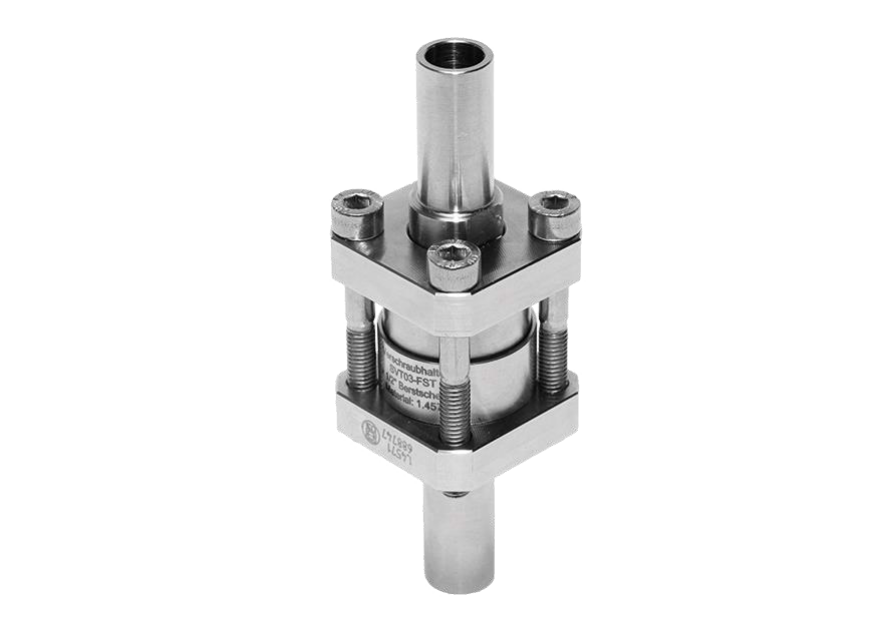
Around the disc sits the holder. The holder options are forward acting, reverse buckling and vacuum support designs. Materials range from carbon steel and 316/316L stainless steel to duplex, super duplex, Inconel and Hastelloy. The holder carries sealing surfaces with controlled roughness, metal or soft seals depending on the medium and, where requested, leak detection ports.
The third element is optional but increasingly specified: burst detection. A sensor registers the moment the disc opens, either through an electrical loop that is broken or through a magnetic field that changes. The signal goes to a PLC, SCADA or DCS. Detection can be integrated in the disc or in the holder, which is exactly why it belongs in the same design step as the other two.

Why buying separate components causes trouble
Each part of a rupture disc assembly can be perfectly good on its own and still not work well with the others. That is the core of the problem. A disc is designed for a specific load, a specific seating geometry and a specific direction of pressure. A holder is designed for a specific family of discs. A sensor is designed for a specific mounting position. When those three are chosen by different people at different times, the interfaces between them are where the risk sits.
The consequences are rarely dramatic on day one. More often they show up later. A disc that bursts somewhat below its rated pressure because the seating load was higher than intended. A seal that weeps at operating temperature because the holder faces were not matched to the disc edge. A sensor that reports a false alarm because it was never meant for that holder. Each of those events costs production time, and each one undermines trust in the relief system.
There is also a hidden administrative cost. When disc, holder and sensor come from three sources, the plant has to manage three sets of certificates, three contacts and three delivery schedules. At the next replacement, someone has to remember which disc went with which holder. With a single rupture disc assembly, that knowledge is captured once.
Responsibility is the last piece. When a relief position does not behave as expected, the first question is always why. If disc, holder and sensor came from three parties, each of them can reasonably point at the interface with the others. With a matched assembly there is one party that selected the combination and one party you call. That does not make problems impossible, but it makes them much faster to solve.
A rupture disc assembly is the complete combination of rupture disc, holder and, where required, burst detection, selected and supplied as one matched unit. Buying the assembly gives a reproducible load on the disc, correct positioning and one consistent documentation set. Dutch Valve Vision configures assemblies around the STRIKO disc range and supplies them to DIN and ANSI standards.
Reproducible load: the main technical argument
The most important reason to buy a rupture disc assembly is the load on the disc. A disc bursts at its rated pressure only when it is clamped the way it was designed to be clamped. Too much clamping force can pre-stress the membrane. Too little can allow it to shift or leak. Both affect the burst behaviour.
When a disc is installed directly between flanges, that load depends on the gasket, the bolt sequence and the torque the fitter applied. In a holder designed for that disc, the load is defined by the holder geometry instead. Whoever fits the disc, the load it sees should be the same. That is the principle behind every holder we supply, and it only works fully when holder and disc are selected together. A holder chosen for a different disc family cannot give the load that your disc expects.
The same logic applies over time. Temperature, vibration and cyclic loading all act on the assembly. Our holders are designed with tight tolerances to avoid stress concentrations and with those process conditions taken into account. When the disc and holder are matched from the start, the behaviour of the assembly stays predictable across many operating cycles.
For positions with heavy cyclic loading, we can go a step further. Optimisation for cyclic loading and FEM analyses on request are part of our engineering support. Those tools look at the assembly as a whole, because stress in the holder, seating load on the disc and fatigue of the membrane are linked. Analysing a disc without its holder, or a holder without its disc, would miss exactly the interaction that decides service life.
Correct positioning and flow direction
A disc that is mounted upside down will not burst at its rated pressure, and it may not burst at all when it should. It sounds like an obvious mistake, yet it happens, particularly during rushed replacements. Our holders carry clear flow and installation markings and are shaped to position the disc correctly, so there is one right way to fit it. In a matched assembly, disc and holder markings tell the same story, which makes it very hard to get wrong.
What we need for the right selection
- Medium and composition
- Operating pressure and pressure peaks
- Required burst pressure
- Temperature, normal and in the relief scenario
- Connection and installation space
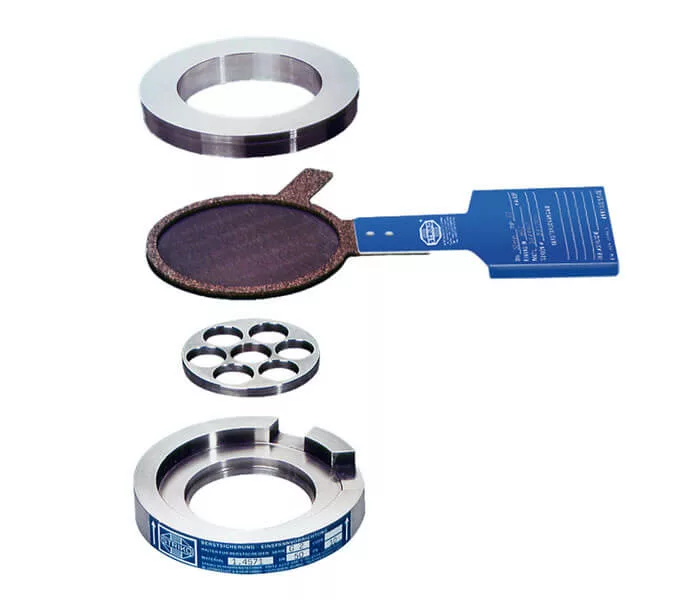
Designs in the STRIKO range
Every application needs its own rupture disc. These are the designs we supply most often.
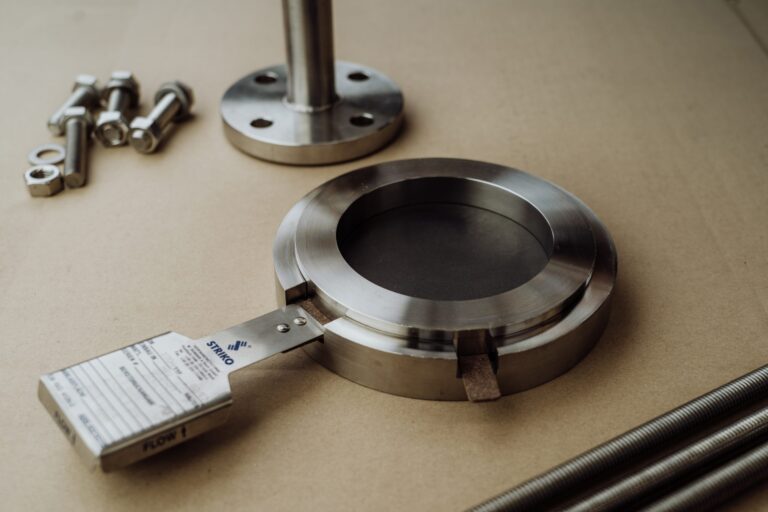
Graphite rupture disc
Corrosion resistant without coating, DN25 to DN400, between ANSI or DIN flanges.

Rupture disc holder
Correct positioning, reproducible loading and a reliable seal.
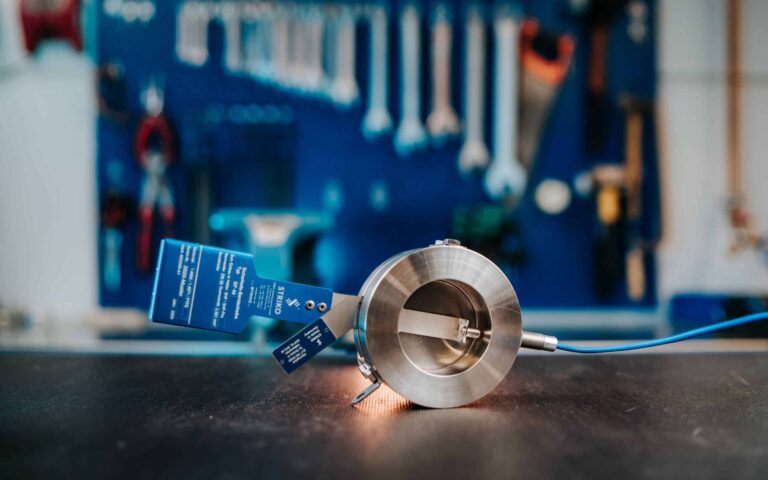
Burst indicator
Signals an opened disc directly to PLC, SCADA or DCS.
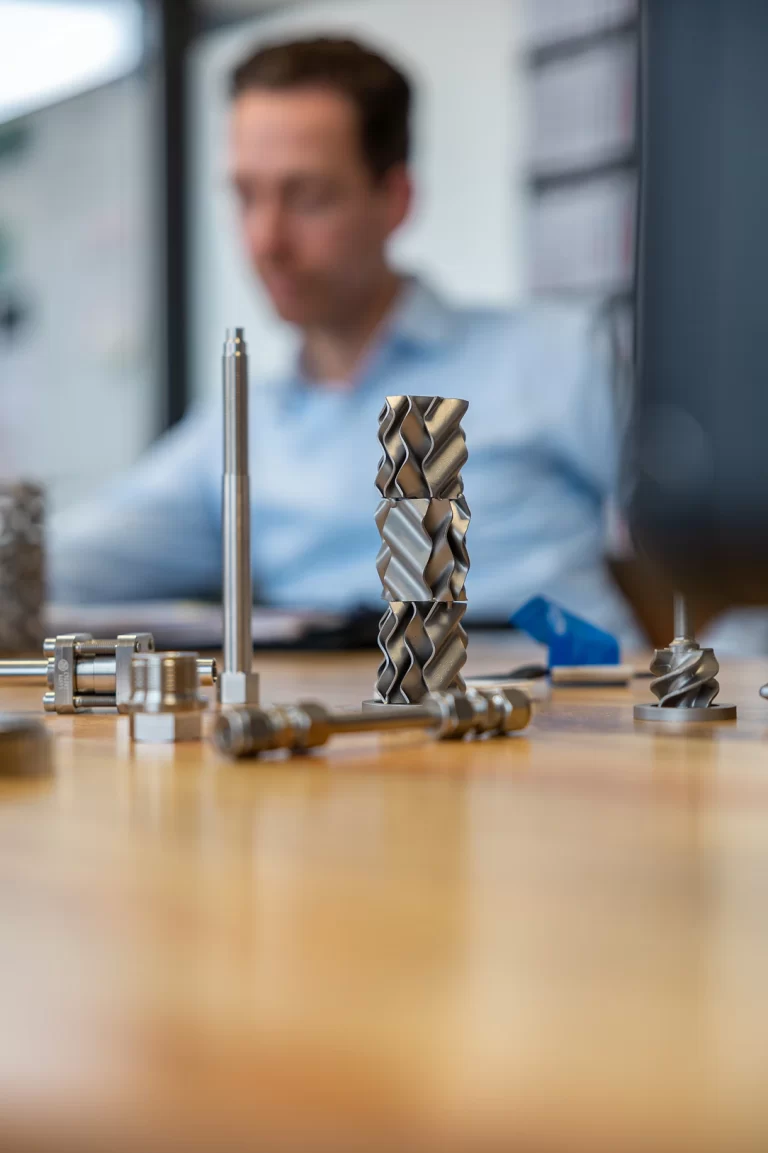
Reverse acting rupture disc
Loaded in compression, resistant to pressure cycling.
One documentation set for the whole rupture disc assembly
Inspectors and notified bodies look at the relief position as a whole. They want to know that the disc, the holder and any detection device together meet the applicable rules. With one supplier for the complete rupture disc assembly, the documentation is structured that way from the start.
Holder design follows ASME Section VIII, EN ISO 4126 and PED 2014/68/EU, with ATEX taken into account where applicable. They come with material certificates according to EN 10204 3.1, pressure calculations, inspection reports and traceability per component. For the metal discs, PED, ISO 4126, EN 14491 on explosion safety and CE marking apply. When those documents are delivered as one package for one position, filing, auditing and future replacements become far simpler.
Dutch Valve Vision works with an ISO 9001 certified quality management system, certified by KIWA. That means controlled processes and complete traceability, and it means the documentation for your assembly is not an afterthought assembled from three different sources.
Specification ready? We will prepare a targeted quote.
Send us medium, pressure, temperature and connection. Our specialists come back with a matching proposal.
Configuring a rupture disc assembly for your process
There is no single standard rupture disc assembly. The configuration follows the process. A few typical combinations show how that works in practice.
For a gas or liquid line with steady pressure, a forward acting disc in a forward acting holder is often the logical choice, with high accuracy of burst pressure and easy inspection and replacement. For a process with frequent pressure cycles or high temperatures, a reverse acting disc in a reverse buckling holder offers higher resistance to cycling and a lower risk of fatigue. For a batch reactor that is emptied, cooled and cleaned, a vacuum support holder prevents the disc from flipping over when the pressure reverses. For an acid line, a graphite disc may be the heart of the assembly, with the option of a holder, burst detection and vacuum support.
The sector adds its own requirements. On hydrogen installations, such as electrolysers, compressors and storage modules, the light and fast medium makes leak tightness and material choice critical, and the assembly is part of a carefully designed protection concept. In pharmaceutical, biotech and food plants, an aseptic STRIKO disc in a holder with a hygienic design, reproducible performance and documentation for validation forms the assembly. Offshore and in oil and gas, high pressure, corrosive media and strict regulation push the holder towards duplex or super duplex and put the documentation under a magnifying glass. OEMs and skid builders, finally, want the same assembly delivered with the same documents every time, so their own package stays consistent.
Material choice runs through all of these. The holder material is selected together with the process data and the disc it carries, so disc and holder resist the same medium and age at a similar pace.
Burst detection in the rupture disc assembly
Adding detection afterwards is possible, but designing it in from the start is better. The sensor has to be compatible with the medium and the ambient conditions, including the cabling. It has to fit the holder or disc. In explosive atmospheres it has to be ATEX certified. And it has to connect to your existing automation platform. Resolving those points together with the disc and holder saves a second engineering round.
Good detection systems are fail-safe, which means that a fault in the sensor itself also produces a safe notification rather than silence. Some systems, such as magnetic sensors, do not come into contact with the process medium at all, which keeps them functional even with aggressive substances. For safety-critical positions we recommend specifying detection as part of the rupture disc assembly.

Replacing discs and ordering the assembly
After a burst, the holder in a rupture disc assembly normally stays. It is designed for long-term reuse without loss of performance, so only the disc is replaced after checking the sealing faces. Because we know which disc belongs to which holder, reordering a matching replacement is quick. Keeping a spare disc for each critical position on the shelf is good practice, and in a matched assembly you know exactly which spare to stock.
Turnarounds are a good moment to look at the relief positions as assemblies. During a planned stop, discs can be replaced preventively where the process profile calls for it, holders can be inspected and cleaned, and positions that were originally built from mixed components can be brought back to a matched configuration. Planning that ahead of the stop means the right discs, and where needed the right holders and sensors, are on site before the scaffolding goes up.
To configure a new assembly, we need the medium and its composition, the operating pressure including peaks, the required burst pressure, the temperature in normal operation and in the relief scenario, the nominal size and flange standard, and the available installation space. Let us know if the process sees vacuum and if you want detection. FEM analyses and support for HAZOP and other safety studies are available on request. You can reach us at sales@dutchvalvevision.com or on +31 (0)70-2210560 on weekdays from 09:00 to 17:00.
Frequently asked questions about rupture disc assembly
Question not listed? Our specialists are happy to help.
- +31 (0)70-2210560
- sales@dutchvalvevision.com
- Vlotlaan 641, 2681 TZ Monster, the Netherlands
- Mon-Fri 09:00-17:00
What is included in a rupture disc assembly?
A rupture disc assembly consists of the rupture disc and the holder in which it is mounted. Optionally, a burst detection sensor is added. The disc is chosen for the process duty, such as forward acting, reverse acting or graphite. The holder is matched to that disc type and to your flange standard. The holder includes the sealing faces and, if requested, leak detection ports. Detection can be integrated in the disc or in the holder. All parts are selected together for one position. The documentation covers the complete combination.
Why not buy the disc and holder from different suppliers?
It is possible, but the interfaces between the parts then become a risk. A holder designed for another disc family may give the wrong seating load. That can shift the burst pressure or cause leakage. Markings on disc and holder may not match, which increases the chance of wrong installation. Detection may not fit the holder you chose. Documentation arrives in separate packages that do not describe the whole position. A matched assembly removes those uncertainties. It also makes future replacements simpler because the right spare disc is clear.
Does the assembly include burst detection as standard?
No, burst detection is optional. We recommend it for safety-critical positions. The sensor signals an opening through an electrical loop or a magnetic field. The signal can go to a PLC, SCADA or DCS. Where the atmosphere is potentially explosive, ATEX certification of the sensor is required. Designing detection in from the start avoids fitting problems later. We discuss per position whether detection adds value. If you want it, it becomes part of the same proposal and documentation.
Can I replace only the disc in an existing assembly?
Yes, that is the normal situation after a burst. The holder is designed for long-term reuse without loss of performance. Before fitting a new disc, inspect the sealing faces for damage or deposits. Check that the flow and installation markings are still clear. The new disc must be of the same type and rating as the one the holder was designed for. Never install a disc that shows any damage. Because we know which disc belongs with which holder, reordering is quick. Keeping a spare disc for critical positions shortens downtime considerably.
Which standards apply to a rupture disc assembly?
The holder is designed in line with ASME Section VIII and EN ISO 4126. In Europe the Pressure Equipment Directive PED 2014/68/EU applies. ATEX is taken into account where relevant. Metal discs fall under PED, ISO 4126 and EN 14491 for explosion safety, with CE marking. Material certificates according to EN 10204 3.1 are included for the holder. Pressure calculations, inspection reports and traceability per component complete the package. Our own quality management system is ISO 9001 certified by KIWA. That system also governs the way we compile and deliver the documentation package.
Which holder goes with which disc in an assembly?
Forward acting discs go into forward acting holders. Reverse acting discs need reverse buckling holders. Processes with vacuum or alternating pressure call for vacuum support holders. Graphite discs can be mounted directly between flanges or in a holder. The holder material is chosen together with the disc and the process data. That ensures both parts resist the same medium. We never combine parts that were not designed to work together. The result is an assembly that behaves predictably over many cycles.
Can you supply an assembly for DIN and ANSI flanges?
Yes, we supply according to both DIN and ANSI standards. That covers European PN flanges as well as ASME class flanges. In many plants both systems are present side by side. The holder must match the flange pair it is installed between. We check the nominal size, pressure rating and flange standard before quoting. Existing tag numbers or data sheets help us do that quickly. The result is an assembly that fits the gap it was ordered for. That avoids surprises on site during installation.
What do you need to quote a complete rupture disc assembly?
We need the medium and its composition. We also need the operating pressure including peaks and the required burst pressure. We also need the temperature, both during normal running and in the relief scenario. Nominal size, flange standard and available installation space complete the mechanical picture. Tell us if the process can see vacuum. Let us know if you want burst detection or leak detection ports. Mention any documentation requirements from your client or inspector. With that we prepare one proposal for disc, holder and detection.
Configure your complete assembly
Send us the medium, pressures, temperatures, nominal size and flange standard, and tell us if you need detection. We return one proposal for disc, holder and sensor.
- +31 (0)70-2210560
- sales@dutchvalvevision.com
- Vlotlaan 641, 2681 TZ Monster, the Netherlands
- Mon-Fri 09:00-17:00