
Static mixer elements
What the elements inside a static mixer do, how they are removed for cleaning or inspection and how to order original STRIKO replacements.
- Exclusive STRIKO agent Benelux
- ISO 9001 · KIWA
- Engineering support from Monster (NL)
Four steps that repeat in every mixing element.
Split
Mixing elements divide the flow into smaller partial streams.
Redirect
The partial streams are redirected, creating shear.
Recombine
The streams merge again, element after element.
Homogeneous
No moving parts, energy taken from the pressure drop.
Static mixer elements are the fixed inserts inside a static mixer that split, redirect and recombine the flow until it is homogeneous. Their geometry, number and material determine mixing quality and pressure drop, and in STRIKO mixers they can be removed easily for cleaning or inspection. Dutch Valve Vision supplies original STRIKO parts for maintenance and replacement as official STRIKO partner.
- Elements split, redirect and recombine flow
- Configurable to viscosity and end quality
- Easy dismantling for cleaning or inspection
- Original STRIKO parts via DVV
Static mixer elements: the part that does the work
Static mixer elements are the fixed inserts inside the pipe that turn an ordinary pipe section into a mixer, and without them a static mixer is just an expensive piece of straight pipe. The housing holds pressure and connects to the line. The elements do everything else. They split the flow into partial streams, redirect those streams and create shear, and then recombine them before the next element splits them again in a different orientation. After enough of those cycles, two components that entered side by side leave the mixer as one homogeneous flow.
That makes the elements the most interesting part of the mixer, and also the part that deserves the most attention during maintenance. They are exposed to the medium on every surface. They carry the full mixing duty. If they are damaged, fouled or configured for a process that no longer exists, the mixer stops doing its job, even though the outside of the housing looks exactly as it did on the day of installation.
At Dutch Valve Vision we are the exclusive agent of STRIKO Verfahrenstechnik GmbH for the Netherlands, Belgium and Luxembourg, and official partner for STRIKO spare parts. This page focuses on the static mixer elements themselves: their geometry, how many a process needs, which materials are used, how they are removed for cleaning or inspection, and how to order original replacements when the time comes.
Consider a maintenance engineer who opens a mixer during a planned stop and finds the first two elements coated with a hard deposit while the rest look clean. Or a process engineer whose plant has switched to a thicker product and whose mixer no longer delivers the homogeneity it used to. Both are really asking questions about the elements, and both deserve a clear answer.
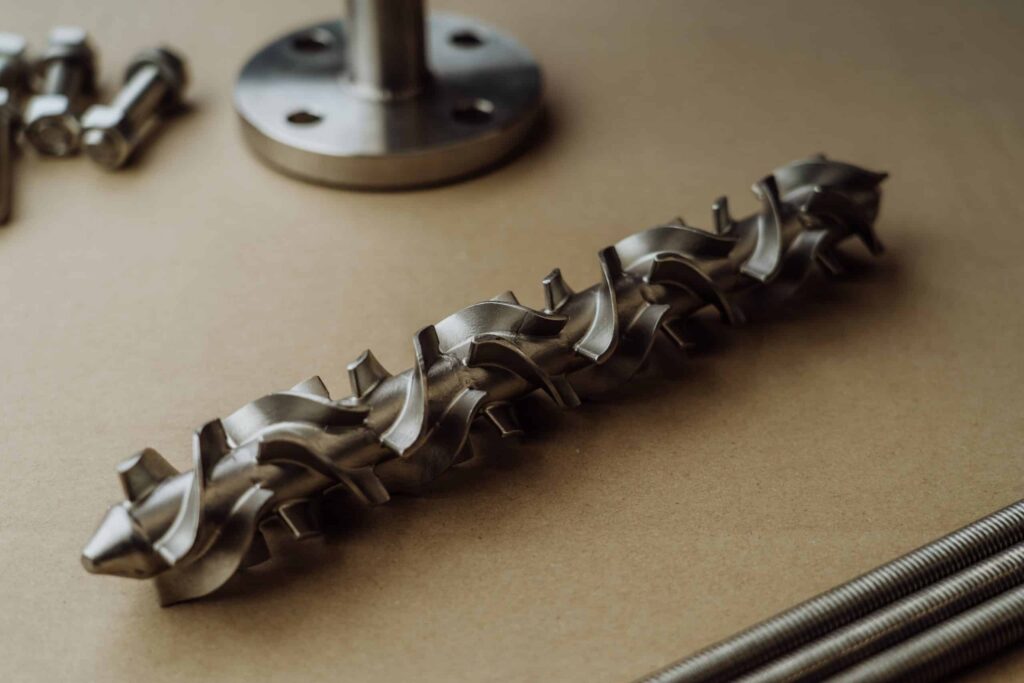
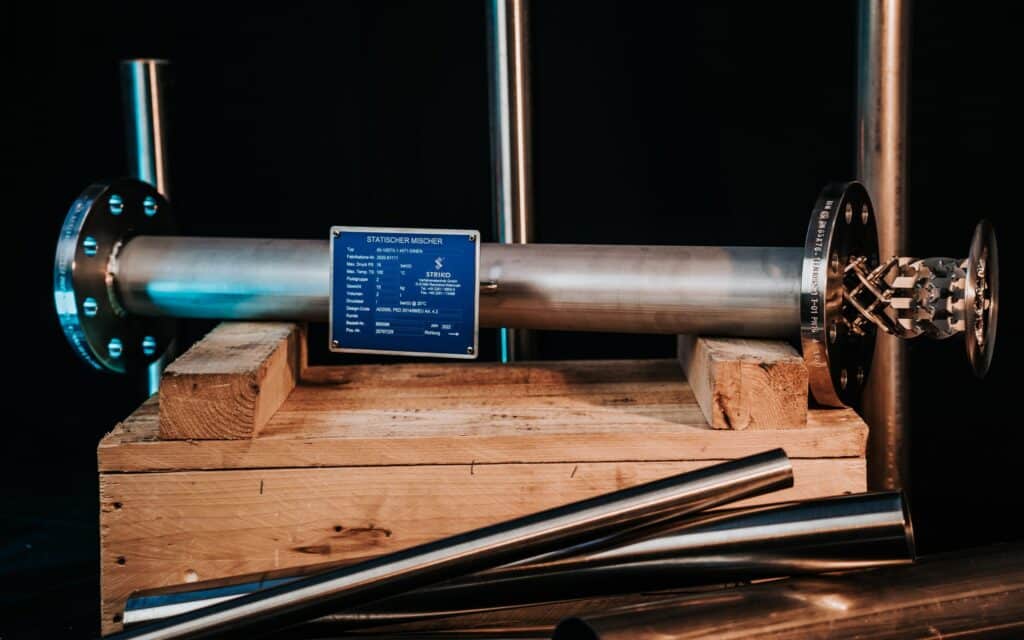
The geometry of static mixer elements
The geometry of static mixer elements determines how they divide and move the flow, and there is no single geometry that is best for every medium. That is why STRIKO offers four series, each with a design aimed at a particular kind of product.
The Helical series is the universal mixer. In a classic helical design, each element is a strip twisted through half a turn, with the direction of twist alternating from one element to the next and each element set at a right angle to the previous one. The flow is divided, rotated and reversed at every transition. The relatively open flow path keeps pressure drop moderate and suits a wide range of general blending and dosing duties.
The STX series is designed for viscous liquids, ideal for thick and syrupy media. Viscous media are STRIKO’s specialism, and the STX design reflects that most clearly. In viscous service the flow is laminar and mixing depends almost entirely on repeated division, so the element design is tuned to divide the flow effectively.
The STV series is optimised for gases, which have a low density and behave very differently from liquids in a pipe. The EREstat series is designed for food processing and hygienic processes, where cleanability and sterilisation drive the design as much as mixing performance.
The first element in the sequence deserves special mention. It meets the incoming streams while they are still completely separate, and in many installations it sits closest to a dosing point. It therefore sees the highest concentration of any added chemical and often the first deposits. When an inspection shows fouling or corrosion, it frequently starts there. Whatever the series, static mixer elements work on the same principle: split, redirect, recombine. What differs is how aggressively they do it, how much pressure drop they cause and how easily they can be cleaned.
How many static mixer elements a process needs
The number of static mixer elements is the main lever for mixing intensity. Each element adds another cycle of division and recombination. In laminar flow, the effect is cumulative and easy to picture. If each element doubles the number of layers, a handful of elements already creates dozens of layers, and ten elements create more than a thousand. A thick additive that entered as one stripe ends up so finely divided that the product is homogeneous for practical purposes.
In turbulent flow, vortices generated at the element edges speed up mixing, so fewer elements can achieve the same result. The design focus then shifts towards pressure drop and the position of dosing points.
More elements always mean more pressure drop. The energy for mixing comes from the flow, and each element takes its share. A mixer with far more elements than the process needs mixes beautifully but may push the pump beyond its comfortable operating range. A mixer with too few elements saves pressure but leaves streaks. The right number sits between those extremes and depends on viscosity ratio, dosing ratio, flow regime and the required mixing quality.
STRIKO mixers are configurable in diameter, length and internal elements, so the number and type of elements can be matched to the viscosity, flow velocity and end quality a process demands. That flexibility becomes especially useful later, when a process changes.
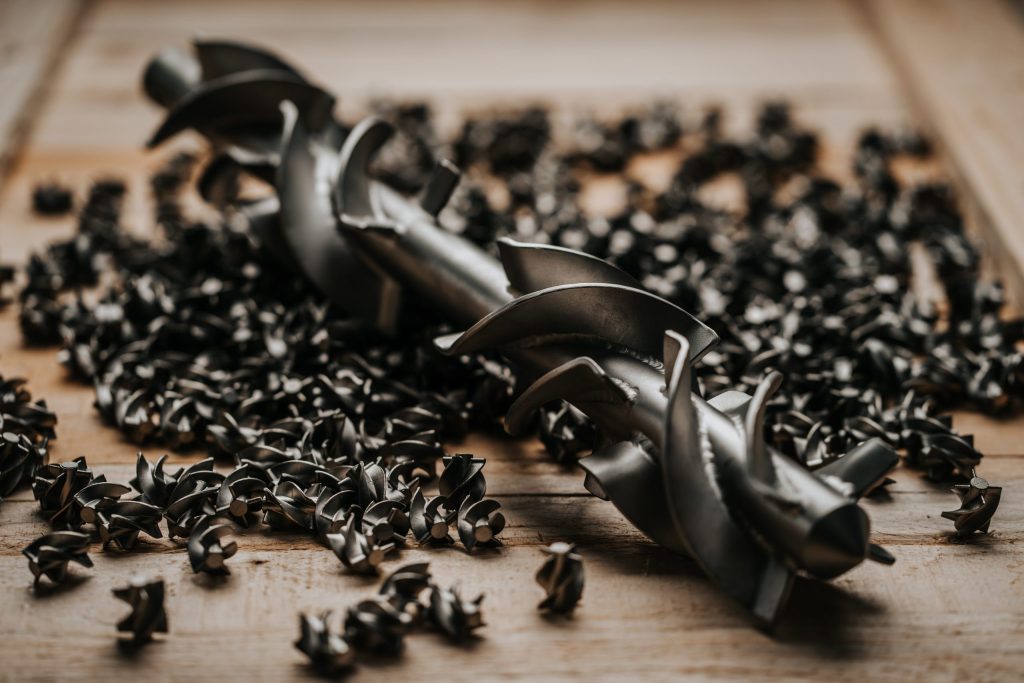
Selection starts with four data points
With these we choose series, diameter and number of elements.
Viscosity
Of the main stream and of the added component.
Flow rates
Main flow and dosing, also at part load.
Temperature and pressure
Determine material and allowable pressure drop.
Mixing quality
How homogeneous the product must be downstream.
Materials for static mixer elements
The elements see the medium on every surface, often with thin sections and a large wetted area. Material selection is therefore at least as important for the elements as for the housing, and arguably more so.
Available materials for STRIKO static mixers include stainless steel in grades such as SS316, 1.4404 and 1.4571, carbon steel, plastics such as PVC, PE and PVDF, and special coatings or linings for aggressive media. Where needed, the material is adapted to the project so the elements reach a long service life with full chemical compatibility.
Two situations deserve particular attention. The first is a dosing point directly upstream of the mixer. The first elements see the additive at full concentration, before any dilution has occurred, and their material must be compatible with it. The second is a process change. A new raw material, a different cleaning chemical or a higher temperature can change the corrosion picture for the elements long before anyone thinks of the mixer as affected. Reviewing the element material after such a change is a sensible habit.
Specification ready? We will prepare a targeted quote.
Send us medium, pressure, temperature and connection. Our specialists come back with a matching proposal.
Removing static mixer elements for cleaning and inspection
One of the practical strengths of STRIKO mixers is that they can be dismantled easily for cleaning or inspection. That makes the elements accessible without cutting pipe or replacing the whole section.
In hygienic applications, STRIKO static mixers support inline sterilisation and steam cleaning, so routine cleaning happens without removal. Removal becomes relevant for periodic visual inspection, for thorough cleaning after a product that leaves stubborn deposits, and for validation, when a quality engineer wants to see the condition of the elements with their own eyes.
A few habits make removal easier and safer. Plan enough clearance around the mixer to unbolt the section and take out the elements. Handle the elements carefully once they are out, because a bent or dented element can change the flow pattern and the mixing result. Keep spare gaskets for the flanged connections on site. Note the orientation and sequence of the elements before removing them, so they go back in the same arrangement. And record the differential pressure across the mixer after reassembly, so there is a reference value for the next inspection.
Keeping a record of your static mixer elements
A static mixer is easy to forget precisely because it causes so little trouble. Years can pass between inspections, the people who specified it may have moved on, and by the time the elements need attention, nobody remembers exactly what was installed. A simple record avoids that situation and makes every later step faster.
The record does not need to be elaborate. Note the series and the diameter of the mixer, the number and type of static mixer elements, their material and the sequence and orientation in which they sit in the housing. Add the tag number used in your plant and a photo of the nameplate. After commissioning, write down the differential pressure across the mixer at a known flow rate. That single value becomes the reference for every future comparison.
At each inspection, add the date, the differential pressure before the stop, photos of the elements and any findings, such as deposits on the first elements, discolouration or a dent from an earlier removal. Over a few inspections, a pattern appears. Perhaps the deposits always form in the same place, which says something about the dosing point. Perhaps the pressure rises faster in summer, which says something about the product.
With such a record, a request for original replacement parts takes minutes instead of days, and a decision to reconfigure the elements after a process change can be based on facts rather than memory.
When static mixer elements need replacing
Because a static mixer has no moving parts, wear is virtually ruled out and regular mechanical maintenance is unnecessary. In many applications the elements last for the life of the installation. There are, however, situations where replacement becomes the sensible choice.
Mechanical damage is one. Elements can be bent or dented during removal, transport or an incorrect reassembly. Corrosion is another, particularly after a process change that introduced a component the original material was not selected for. Abrasive particles in the medium can erode leading edges over time. Deposits that cannot be removed without damaging the elements are a fourth reason. In hygienic service, damaged surfaces that no longer clean properly can also justify replacement.
The signals are usually visible before the mixing result suffers badly. A steadily rising differential pressure points to fouling. A falling differential pressure together with poorer mixing can point to damaged or missing elements. A visual inspection during a planned stop confirms what the numbers suggest.
Original STRIKO replacement parts via Dutch Valve Vision
When static mixer elements or other parts need to be replaced, we supply original STRIKO parts as official STRIKO partner, with fast delivery and support during maintenance or replacement. Original parts ensure that the replacement fits the housing exactly and matches the design the mixer was engineered around.
To identify the right parts quickly, we need the details of the existing mixer: the tag or nameplate data, the series, the diameter, the material and, if available, the original order information. A photo of the nameplate and the elements helps. If the reason for replacement is a process change rather than damage, please tell us, because a different element configuration or material may then be the better answer.
For critical lines, particularly hygienic ones where downtime is expensive, keeping a spare set of elements on site can be worth considering. We are happy to discuss that during selection or at the first inspection.
Changing the element configuration after a process change
Processes rarely stay the same for the life of a plant. A thicker product, a new additive, a different flow rate or a tighter quality specification can each change what the mixer has to deliver. Because STRIKO mixers are configurable in their internal elements, the answer is not always a new mixer. Sometimes a different number or type of elements in the existing housing is enough. In other cases a change of series is needed, for example from Helical to STX when the product becomes much more viscous.
The starting point is the same as for a new mixer: viscosity of each component, volume flows, temperature and pressure, required mixing quality and the available pressure drop. With those data, and the details of the existing unit, we assess whether reconfiguration is possible. Our quality management system is ISO 9001 certified by KIWA. Requests can go to sales@dutchvalvevision.com, and our phone line +31 (0)70-2210560 is open Monday to Friday from 09:00 to 17:00.
Frequently asked questions about static mixer elements
What are static mixer elements?
Static mixer elements are the fixed inserts inside a static mixer that perform the mixing. They split the flow into partial streams, redirect those streams and recombine them. The next element then splits them again in a different orientation. After enough cycles, separate components become one homogeneous flow. The elements have no moving parts, and the mixing energy comes from the pressure drop of the flow. Their geometry, number and material determine mixing quality and pressure drop. STRIKO offers different geometries in its Helical, STX, STV and EREstat series. We help you choose the configuration that suits your medium.
Do static mixer elements wear out?
Because there are no moving parts, wear is virtually ruled out in normal service. In many applications the elements last for the life of the installation. There are exceptions, however. Abrasive particles can erode leading edges over time. Corrosion can occur after a process change that introduces an incompatible component. Mechanical damage can happen during removal or reassembly. Stubborn deposits can make cleaning impossible without damaging the elements. Periodic inspection shows whether any of this applies to your mixer.
Can static mixer elements be removed for cleaning?
Yes, STRIKO static mixers can be dismantled easily for cleaning or inspection. In hygienic applications they also support inline sterilisation and steam cleaning. Routine cleaning therefore often happens without removal. Removal is useful for visual inspection, thorough cleaning after products with deposits and validation. Leave enough clearance around the mixer to take the elements out. Handle them carefully, because a bent element can change the mixing result. Note the orientation and sequence before removal so they go back correctly. Keep spare gaskets available for reassembly.
How do I know when static mixer elements need replacing?
The differential pressure across the mixer is a useful first indicator. A steadily rising value usually points to fouling on the elements. A falling value combined with poorer mixing can indicate damaged or missing elements. Declining mixing quality at the measuring point is another signal. A visual inspection during a planned stop confirms the condition. Look for bends, dents, corrosion, erosion of leading edges and deposits that will not clean off. In hygienic service, surfaces that no longer clean properly are a reason for replacement. We can assess photos or inspection findings and advise on the next step.
Can I order replacement elements for an existing STRIKO mixer?
Yes, Dutch Valve Vision supplies original STRIKO parts as official STRIKO partner. We offer fast delivery and support during maintenance or replacement. Original parts ensure the replacement fits the housing and matches the original design. To identify the right parts, we need the tag or nameplate data, the series, the diameter and the material. A photo of the nameplate and the elements helps. If available, the original order information speeds things up further. Tell us why the elements need replacing, because that can influence the advice. Send your request to sales@dutchvalvevision.com.
Can I change the number or type of elements later?
In many cases, yes, because STRIKO mixers are configurable in their internal elements. A process change such as a thicker product or a tighter specification may call for more elements or a different type. Sometimes this can be done within the existing housing. In other cases a change of series is the better answer, for example from Helical to STX for a much more viscous product. More elements also mean more pressure drop, so the pump has to be checked. The available installation length can also limit what fits in the existing housing. We assess the options on the basis of your new process data. The details of the existing unit help us determine what is possible.
Which material should the elements be made of?
The elements see the medium on every surface, often with thin sections, so material selection is critical. The choice ranges from stainless steel grades such as SS316, 1.4404 and 1.4571 to carbon steel and the plastics PVC, PE and PVDF. Aggressive media can be handled with special coatings or linings. Materials can be adapted to project-specific requirements. Elements directly behind a dosing point see the additive at full concentration. A process change can alter the corrosion picture for the elements. We select the material on the basis of the full composition of your media. Please include temperature and cleaning chemicals in your request.
What details does Dutch Valve Vision need for a replacement order?
We need the tag or nameplate data of the existing mixer. The series, diameter and material are essential to identify the right parts. The original order information, if available, speeds up the process. Photos of the nameplate and of the elements help us check the configuration. Tell us the reason for replacement, such as damage, corrosion, fouling or a process change. For a process change, please also send the new viscosities, flows, temperature and pressure. With those details we can advise on original STRIKO parts or a new configuration. Contact us at sales@dutchvalvevision.com or on +31 (0)70-2210560.
Order or reconfigure your mixing elements
Send us the tag or nameplate data of your mixer, the series, diameter, material and the reason for replacement. We will advise on original STRIKO parts or a new element configuration.
- +31 (0)70-2210560
- sales@dutchvalvevision.com
- Vlotlaan 641, 2681 TZ Monster, the Netherlands
- Mon-Fri 09:00-17:00