












The technology behind turbine valve explained
A turbine valve sits in the steam circuit of a turbine, controlling admission, bypass or emergency shut off with response times measured in fractions of a second. The subject of turbine valve touches both the construction of the valve and the way the plant is operated. With turbine valve the difference between a good and a mediocre solution often sits in details that do not show on a drawing. Steam is a demanding medium because pressure and temperature rise together and the medium can change phase within the same line. Condensate carried along in a steam line causes erosion and water hammer, and both attack a valve faster than the steam itself. An emergency stop valve shuts off supply in a hazardous situation, and closing time there is a safety parameter rather than a comfort requirement. For turbine valve this means that construction and operating conditions cannot be judged separately. How turbine valve behaves under varying load says more about the quality of the selection than behaviour under steady load. We regularly see that a small change in the execution of turbine valve makes a large difference to maintenance frequency. A turbine bypass routes steam around the turbine during start up and on a trip, and that valve has to handle a large duty within seconds. A pressure reducing station brings steam pressure back to the level the consumers require and holds that pressure stable under varying demand. There are assumptions circulating about turbine valve that do not hold up under closer examination.
What to watch technically on turbine valve
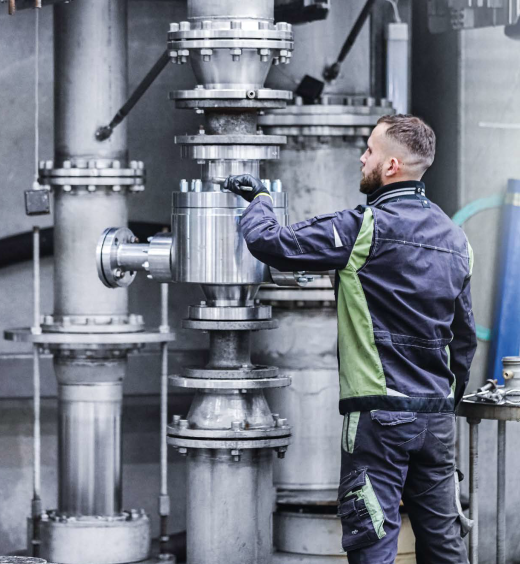
The steam conditions around a turbine are severe, with high pressure and high temperature occurring together. With turbine valve it pays to include phase changes in the medium, because those sharply increase the load on the seal. That principle explains why turbine valve behaves differently from a standard execution under heavier duty. Response time is a design parameter rather than a comfort feature, because a turbine trip has to be executed immediately. On a boiler, blowdown valves control the salt content of the boiler water, with continuous blowdown for fine control and periodic blowdown for sludge at the bottom. A desuperheater injects water into the steam flow to bring temperature back to just above saturation, where atomisation quality determines the result. In superheated steam the temperature sits above saturation, and soft seats and ordinary packings are then no longer usable. Thermal cycling from start up and shutdown is the main fatigue mechanism on these valves. PRUSS is strongly represented in this segment with valves for steam, boiler, turbine and gas turbine duty. On steam we always advise a condensate drain upstream of the valve, because it is the cheapest life extension available. In practice we find that most failures around turbine valve come not from the material but from a wrong assumption during selection. What weighs heaviest on turbine valve in practice is the combination of temperature and differential pressure, not either one alone.

Turbine valve in demanding installations
They are found in power stations, combined heat and power plants and in industrial installations with steam turbines. In power generation these valves sit on the critical paths around boiler and turbine, where downtime costs money immediately. In process industry steam is used for heating, stripping and sterilisation, and each of those duties sets its own requirements. In an existing plant turbine valve is often part of a wider question about availability and maintenance. The application range of turbine valve runs from simple utility duty to heavy process plant, with a corresponding difference in execution. Demand for turbine valve reaches us mainly from projects where the standard range falls short. In plants where turbine valve is applied, the emphasis is on reliability rather than lowest purchase price. Boiler houses, combined heat and power plants and district heating together form the largest application area for these valves. Dutch Valve Vision supplies special valves for special applications from its base in Monster, the Netherlands, with QUADAX and PRUSS as the core brands in the programme. What defines us is that we would rather spend an extra half hour on the specification than ship the wrong valve that comes back two months later. On project supply we record per position which execution of turbine valve was delivered, including materials and tests. During turnarounds turbine valve is regularly on the critical path, and then predictability matters more than the lowest price.

How to select turbine valve without mistakes
Standardising across several positions makes turbine valve simpler in maintenance and in spare parts management. For safety functions we record the required closing time and fail position explicitly in the order. At large pressure ratios we use multistage or perforated trim to keep noise and erosion within acceptable limits. Material selection for steam moves towards alloy steel with hardened trim, because erosion and thermal cycling weigh heaviest. If a simpler type will do the job, we say so on turbine valve, even when that means a smaller order. The cleaning and flushing procedure counts too on turbine valve, because it can be more aggressive than the process itself. On turbine valve we also state what an execution cannot do, because that prevents more problems than a list of advantages. For turbine valve we ask as standard for DN, pressure class, medium, temperature and required actuation. On commissioning we record set pressure, closing time and test results, so the plant can be shown to run within specification. Insulation around a steam valve should leave the actuator clear, because overheating of the actuator is a common cause of failure. We come back with a proposal that explains why we recommend a particular execution, including the alternatives we considered. The required leakage class often drives the choice around turbine valve more strongly than the budget does. On turbine valve we check that the actuator is sized on torque at maximum differential pressure and not on an average value.
Requesting turbine valve from Dutch Valve Vision
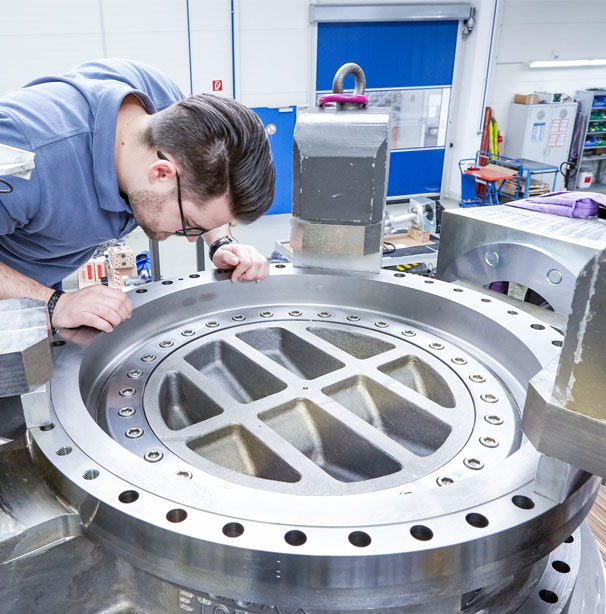
We supply turbine valve as a loose product or as a fully assembled unit with actuator and accessories. Alongside QUADAX and PRUSS we represent Pibiviesse, Schroeder, Striko, Malbranque, Daume, FluoroSeal and Guichon, so we can select the right brand for each project. On turbine valve we come back with a proposal that explains why we recommend a particular execution. Even when the specification for turbine valve is not yet finalised, you can bring the question to us. Dutch Valve Vision stays available after delivery of turbine valve for technical questions and for parts. We quote a realistic lead time rather than an optimistic one, because a missed delivery date costs more than an extra week in the planning. Documentation such as material certificates, test reports and declarations is supplied as standard, matched to what the project requires. Material certificates and test reports are supplied with turbine valve, matched to what the project requires. Documentation on turbine valve has to be the kind a buyer or inspector accepts without discussion. Tests around turbine valve are carried out by us or on our instruction according to the requirements in the specification. For repeat orders of turbine valve we record the configuration, so a follow up delivery is identical to the first. Requests can be submitted by phone on +31 (0)70-2210560, by e-mail at sales@dutchvalvevision.com or through the contact form on our website.

Frequently asked questions about turbine valve
What exactly does turbine valve mean?
An emergency stop valve shuts off supply in a hazardous situation, and closing time there is a safety parameter rather than a comfort requirement. A desuperheater injects water into the steam flow to bring temperature back to just above saturation, where atomisation quality determines the result. A pressure reducing station brings steam pressure back to the level the consumers require and holds that pressure stable under varying demand. A turbine valve sits in the steam circuit of a turbine, controlling admission, bypass or emergency shut off with response times measured in fractions of a second. On turbine valve we prefer a well founded answer to a fast one that turns out to be wrong later. We see this come back regularly in enquiries about turbine valve, and the answer is rarely a single sentence. Once turbine valve is correctly specified it disappears from the fault list, and that is exactly the intention. Dutch Valve Vision supplies special valves for special applications from its base in Monster, the Netherlands, with QUADAX and PRUSS as the core brands in the programme.
Which executions of turbine valve are available?
In superheated steam the temperature sits above saturation, and soft seats and ordinary packings are then no longer usable. Steam is a demanding medium because pressure and temperature rise together and the medium can change phase within the same line. The steam conditions around a turbine are severe, with high pressure and high temperature occurring together. Insulation around a steam valve should leave the actuator clear, because overheating of the actuator is a common cause of failure. We always explain why we arrive at a particular recommendation on turbine valve, so you can follow the reasoning yourself. That makes turbine valve a subject where discussion up front pays for itself in operation. A correct execution of turbine valve accounts for real operating conditions and not only for design values. We work as a technical supplier rather than a catalogue reseller, which means we carry out the selection ourselves on the basis of medium, pressure, temperature and code requirements.
Which materials are used for turbine valve?
Response time is a design parameter rather than a comfort feature, because a turbine trip has to be executed immediately. On a boiler, blowdown valves control the salt content of the boiler water, with continuous blowdown for fine control and periodic blowdown for sludge at the bottom. On commissioning we record set pressure, closing time and test results, so the plant can be shown to run within specification. PRUSS is strongly represented in this segment with valves for steam, boiler, turbine and gas turbine duty. If you are unsure about this on turbine valve, we are glad to put the question alongside the actual process data. In most projects turbine valve turns out to be less standard than it first appears. The balance between required tightness and available operating force is a recurring tension on turbine valve. Our market is project driven and international, and we deliver worldwide to installers, EPC contractors and end users.
What should I watch technically on turbine valve?
What should I watch technically on turbine valve?
Which applications call for turbine valve?
Boiler houses, combined heat and power plants and district heating together form the largest application area for these valves. In process industry steam is used for heating, stripping and sterilisation, and each of those duties sets its own requirements. They are found in power stations, combined heat and power plants and in industrial installations with steam turbines. In power generation these valves sit on the critical paths around boiler and turbine, where downtime costs money immediately. For turbine valve a good specification up front is cheaper than a correction afterwards. The answer on turbine valve depends strongly on operating conditions, which is why we always ask for those first. For turbine valve the sector determines which documentation and tests belong with the delivery. Alongside QUADAX and PRUSS we represent Pibiviesse, Schroeder, Striko, Malbranque, Daume, FluoroSeal and Guichon, so we can select the right brand for each project.
What determines the price and lead time of turbine valve?
Lead times depend on the execution, because a standard size from a running series behaves very differently from a valve in an exotic alloy with NACE certification. A P&ID, a datasheet or even a photograph of the existing installation often helps us faster than a long description. Documentation such as material certificates, test reports and declarations is supplied as standard, matched to what the project requires. Please also state the connection standard, the required leakage class and any project requirements such as NACE, PED or ATEX. This is one of the points on turbine valve where suppliers differ most clearly from one another. The answer to this question on turbine valve changes as soon as the medium or the temperature changes. We handle an enquiry for turbine valve on its technical merits rather than as a price request that only produces a number. Send us your DN, pressure class, medium and temperature at sales@dutchvalvevision.com, or call +31 (0)70-2210560 to speak to a specialist.
What about maintenance and spare parts on turbine valve?
For shutdowns and turnarounds we look at accelerated routes, and in those cases we are honest up front about what is and is not achievable. We keep spare parts and overhaul kits mapped per project, so that a breakdown does not start with a search from scratch. On repeat orders we record the configuration, so a follow up delivery is identical to the first and installation holds no surprises. On steam we always advise a condensate drain upstream of the valve, because it is the cheapest life extension available. We see this come back regularly in enquiries about turbine valve, and the answer is rarely a single sentence. The answer to this question on turbine valve changes as soon as the medium or the temperature changes. We work on turbine valve under a KIWA ISO 9001 certified quality system, which safeguards traceability. We think along from the basic specification through to the tag plate, and supply documentation that a buyer or inspector accepts without discussion.
How do I request a quotation for turbine valve?
For an accurate quotation we need the nominal diameter, the pressure class, the medium, the operating temperature and the required actuation. We quote a realistic lead time rather than an optimistic one, because a missed delivery date costs more than an extra week in the planning. If you have an existing tag plate or serial number, send it along, because that lets us work directly from the original configuration. We come back with a proposal that explains why we recommend a particular execution, including the alternatives we considered. This is one of the points on turbine valve where suppliers differ most clearly from one another. On turbine valve we prefer a well founded answer to a fast one that turns out to be wrong later. Our specialists are happy to discuss turbine valve on the basis of your P&ID, your datasheet or simply a photograph of the situation. Requests can be submitted by phone on +31 (0)70-2210560, by e-mail at sales@dutchvalvevision.com or through the contact form on our website.