

STRIKO rupture disc holder
How the right holder keeps a STRIKO disc accurate: holder types, materials, installation markings, bolt load and reuse over many disc changes.
- Exclusive STRIKO agent Benelux
- ISO 9001 · KIWA
- Engineering support from Monster (NL)

STRIKO active in rupture discs since
Dutch Valve Vision is the exclusive agent
Quality system, KIWA certified
Advice and supply from the Netherlands
The STRIKO range through Dutch Valve Vision
One point of contact in the Benelux for the complete range.
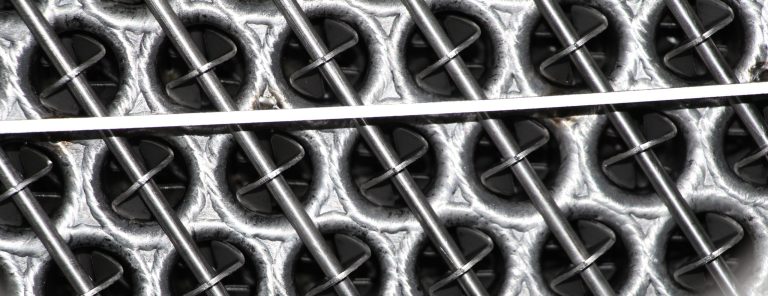
Heat exchangers
STRIKO heat exchangers for process plants.
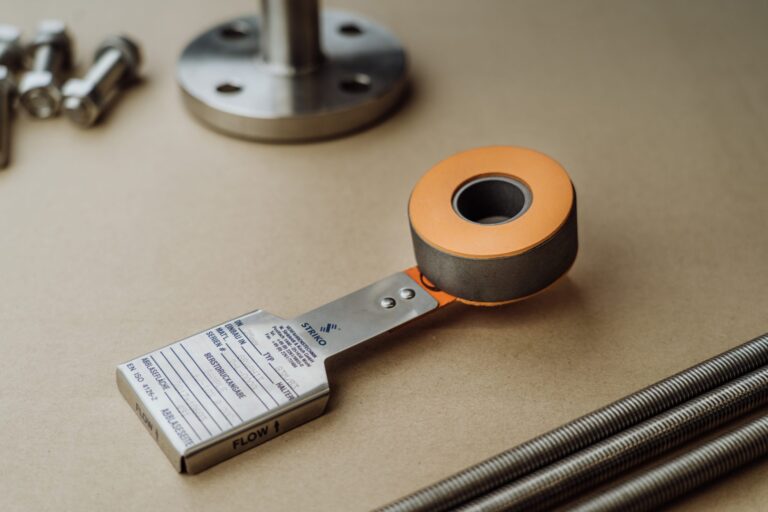
Rupture discs
Flat, forward acting, reverse acting, aseptic, extruder and tank container.
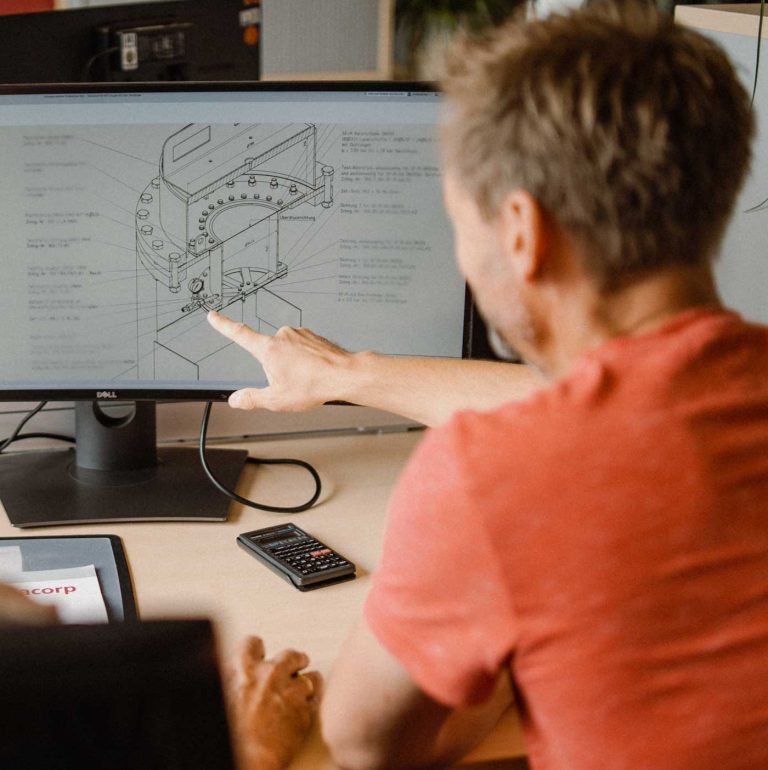
Spare parts
Original STRIKO parts through the official partner.
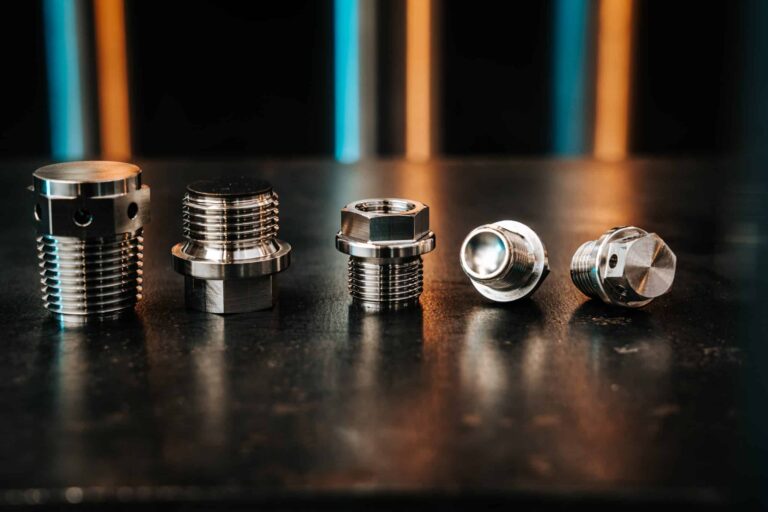
Burst plugs
Compact threaded overpressure protection.
What a STRIKO rupture disc holder really does
A STRIKO rupture disc holder is the part of the relief assembly that nobody photographs, yet it decides whether the disc performs as calculated. The disc gets all the attention because it is the component that opens. The holder is what makes that opening predictable. It positions the disc in exactly the right place, seals it under operating pressure, applies a controlled load to it and allows it to relieve safely when the set pressure is exceeded.
At Dutch Valve Vision we treat the holder as a safety component in its own right, not as an accessory. A poorly designed or poorly installed holder can lead to premature failure, leakage, a shifted burst pressure or, in the worst case, a disc that does not open when it should. Every one of those outcomes defeats the purpose of installing a rupture disc in the first place.
We are the exclusive STRIKO agent for the Netherlands, Belgium and Luxembourg, and we supply holders together with STRIKO rupture discs for Benelux installations. This page looks at the holder side of that combination: which holder types exist, how materials are chosen, why installation markings and bolt load matter so much, and what reuse of a holder means over the life of a plant.
Could you mount a disc straight between flanges instead? Sometimes, yes. Metal discs can be installed directly between flanges in straight pipe runs, and graphite discs are often clamped between standard ANSI or DIN flanges without a separate holder. As soon as the pressure pulsates, the load is cyclic or process integrity is critical, a dedicated holder becomes the better engineering choice.
Three STRIKO rupture disc holder families for three kinds of disc behaviour
The type of STRIKO rupture disc holder follows directly from the type of disc and the way pressure acts on it. We distinguish three families.
Forward acting holders
Forward acting holders are designed for forward acting discs, where the process pressure works on the concave side of the dome. These holders are known for high accuracy of the burst pressure. They suit both gas and liquid applications and allow simple inspection and replacement. For a high pressure duty where a forward acting STRIKO disc has been specified, this is the natural partner.
Reverse buckling holders
Reverse buckling holders serve discs where the pressure loads the convex side of the dome. The combination offers higher resistance to pressure cycles, better performance at high temperatures and a lower risk of fatigue. Think of a reactor that is charged and discharged many times a day. Each cycle stresses the disc a little, and a reverse buckling arrangement is built to take that punishment.
Vacuum support holders
Vacuum support holders are developed for processes with alternating pressure and vacuum. They prevent the disc from flipping over or being damaged when the pressure drops below atmospheric. In batch processes and cleaning cycles they are essential. A vessel that is steamed out and then cooled can pull a surprising amount of vacuum, and without support a thin disc can deform long before it ever meets an overpressure.
A STRIKO rupture disc holder is the mechanical housing that clamps and seals the disc so it bursts at its specified pressure. Dutch Valve Vision supplies forward acting, reverse buckling and vacuum support holders in carbon steel, stainless steel, duplex and nickel alloys. The holder is reused over many disc changes, while the disc itself is replaced after every burst.
Forward acting, reverse buckling, vacuum support
Clear flow and installation markings
Designed for long term reuse
EN 10204 3.1 certificates available
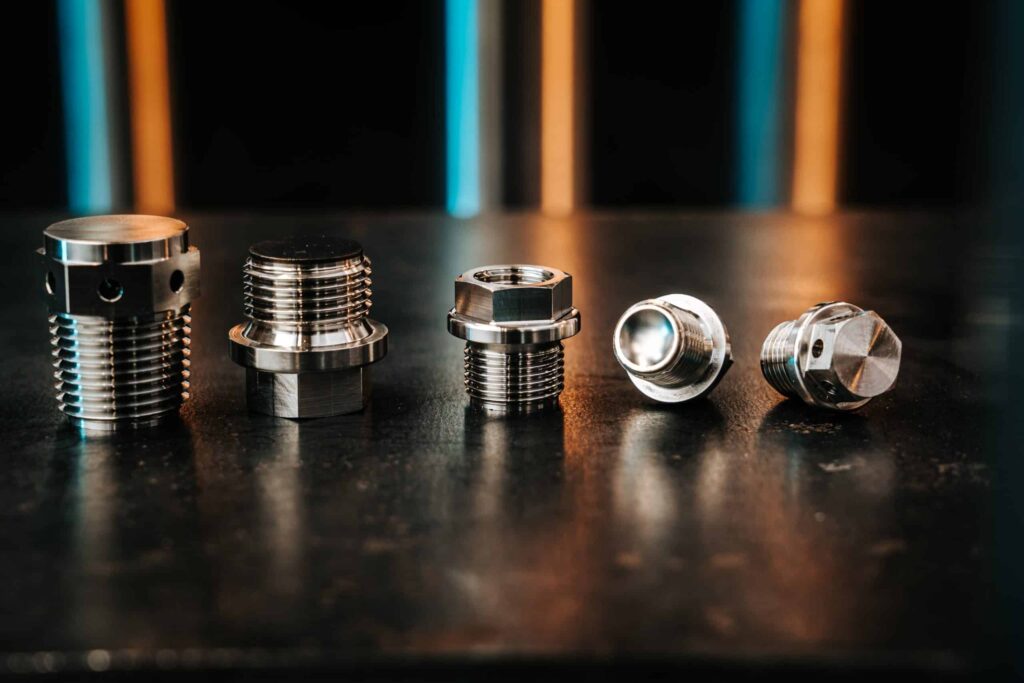
Choosing the material of the holder body
Material choice for a STRIKO rupture disc holder is about more than corrosion resistance. The holder is a pressure bearing part that stays in service for years, so strength, temperature behaviour and compatibility with the medium all count. The options we offer include carbon steel for standard applications with controlled media, and 316 or 316L stainless steel for corrosion resistance and broad applicability. Duplex and super duplex bring high strength and chloride resistance. Inconel and Hastelloy are the choice for high temperatures and aggressive media, and special alloys are available on request for niche applications.
A realistic example helps. A seawater cooled installation offshore will quickly show the limits of plain stainless steel, which is exactly where duplex or super duplex earns its place. A chlorination step in a chemical plant may push the choice towards a nickel alloy. We always choose the holder material together with the process data and the disc it will carry, because a holder that outlives the disc by decades is only useful if it survives the medium as well.
Markings, bolt load and the minutes that decide performance
Here is a scene every maintenance planner knows. A turnaround is running, a rupture disc has to be replaced on top of a column, and the job is scheduled for the night shift. The fitter is experienced but has not seen this particular assembly before. The disc is thin, the flanges are heavy and the clock is ticking. What prevents a mistake?
A good STRIKO rupture disc holder answers that question through its design. Our holders carry clear flow and installation markings, so the direction is obvious even under poor light. The design supports correct positioning of the disc, which removes guesswork about centring. And the holder is built for consistent bolt load, so the clamping force on the disc does not depend on the mood of the day or the torque wrench in the toolbox.
Why does bolt load matter so much? A rupture disc is designed on the assumption that it is clamped in a specific way. If the clamping is uneven, one part of the disc sees a different stress than the rest, and the burst pressure can shift. Uneven load can also leave a micro leak path at the seal. Holders are therefore designed with tight tolerances to avoid stress concentrations, with the aim that the load on the disc is reproducible regardless of small variations during assembly.
The general installation checklist remains valid alongside the holder. Check that diameter and burst pressure match the application, make sure flanges are clean and aligned, place gaskets accurately and centre them, watch the direction arrow and tighten flange bolts evenly according to the recommended torque values. A damaged disc must never be installed, because even small defects can influence the burst pressure. The holder makes the right way the easy way, but it does not replace care.
Reusing a STRIKO rupture disc holder: what stays and what goes
One of the most practical advantages of a well designed STRIKO rupture disc holder is reuse. The disc is a single use component: once it has opened, it must be replaced. The holder stays. Our holders are designed for long term reuse without degradation of performance, and maintenance is limited to visual inspection and periodic replacement of the disc.
That changes the economics of relief protection. The investment in a precise, durable holder is made once, while each disc change is a relatively simple swap. Over the life of a plant, a solid holder contributes to less unplanned downtime, a longer service life, predictable behaviour at overpressure and lower maintenance costs. Cheap design often leads to expensive consequences, and a holder that loses its sealing quality after a few disc changes quickly costs more than it saved.
During each disc change, it is worth giving the holder a proper look. Inspect the sealing faces for damage or corrosion, confirm that the markings are still legible and check that the holder is still the right match for the disc being installed. If the process has changed since the original design, for example a different medium or a new operating pressure, the combination of disc and holder should be reassessed rather than simply refilled.
Specification ready? We will prepare a targeted quote.
Send us medium, pressure, temperature and connection. Our specialists come back with a matching proposal.
Where a STRIKO rupture disc holder earns its keep
The same holder principles apply across very different industries, but the reason for choosing a dedicated holder shifts from one sector to the next. Looking at a few of them makes the choice easier to explain internally.
In the chemical and petrochemical industry, holders protect reactors, columns and piping systems against overpressure and runaway reactions. Here the combination of aggressive media and frequent load changes is typical, so material choice and resistance to cycling usually lead the discussion. A STRIKO rupture disc holder on a reactor nozzle is often combined with burst detection, because the operator needs to know within seconds that the disc has opened.
In oil and gas, both offshore and onshore, the holder has to cope with high pressure, corrosive media and strict regulation. That is typically where duplex, super duplex or nickel alloys appear on the data sheet, and where complete documentation per component is not a nice extra but a condition for acceptance.
In energy and hydrogen applications, holders provide reliable pressure relief on electrolysers, compressors and storage modules. These installations are often built as compact skids, which means limited space around the relief device and a strong preference for a design that can be serviced quickly.
In pharmaceuticals and biotech, the priorities are hygienic design, reproducible performance and documentation that supports validation. A holder that behaves identically after every disc change is exactly what a validated process needs.
Finally, in process industry and OEM equipment, holders are integrated into skid construction, custom solutions and series production. An OEM that ships the same machine many times wants one holder design that fits every unit and is easy to explain in the operating manual.
Holder or direct mounting: weighing the options honestly
We are regularly asked whether a holder is really necessary. The honest answer is that it depends on the duty. In a straight pipe section with steady pressure, direct mounting between flanges can work well and saves a component. Graphite discs in particular are frequently mounted directly between standard flanges, which makes installation simpler and more economical.
A holder adds value as soon as the conditions become less forgiving. It protects the disc during installation, it creates the option to integrate pressure or signal detection systems and it allows a better distance to other safety equipment in the line. When a disc is installed upstream of a safety valve, for instance, that arrangement and the monitoring of the space between both devices benefit from a well defined holder. Our advice is simple: describe the process, and we will tell you whether a holder is needed or whether direct mounting is the sensible choice.
Sealing surfaces and leak detection ports
In many processes, leakage before the burst is simply unacceptable. Toxic media, expensive products and emissions regulations all push towards a relief device that is truly tight until the moment it opens. For that reason we pay extra attention to the sealing design of the holder. Sealing surfaces are made with controlled roughness, and metal or soft seals are chosen depending on the medium.
Where desired, leak detection ports can be integrated into the holder. A correctly designed holder prevents micro leakage that could otherwise lead to corrosion, product loss or safety risks. The holder is also the natural place to integrate burst detection, so that a signal reaches the control system as soon as the disc opens. That combination of a tight seal and a clear signal is what many safety engineers look for when they specify a STRIKO rupture disc holder.
Standards, documentation and engineering support
Our burst disc holders are designed in line with relevant international standards, including ASME Section VIII, EN ISO 4126 and PED 2014/68/EU, with ATEX where applicable. Documentation can include EN 10204 3.1 material certificates, pressure calculations, inspection reports and traceability per component. For pharmaceutical and biotech users, reproducible performance and documentation for validation are part of the package.
Not every application is standard. We offer engineering support in selecting the right combination of holder and disc, FEM analyses on request, optimisation for cyclic loads and support for HAZOP and safety studies. We work with EPC contractors, end users and OEMs, for instance when holders are integrated into skids for compressors, electrolysers or storage modules in hydrogen applications. Our own quality management system is ISO 9001 certified, with KIWA as the certifying body.
To specify a holder, send us the disc type, nominal size, flange standard, medium, operating and set pressure, temperature and whether vacuum or cycling can occur. If you are replacing an existing holder, the data of the current assembly speed things up considerably.
Frequently asked questions about STRIKO rupture disc holders
Question not listed? Our specialists are happy to help.
- +31 (0)70-2210560
- sales@dutchvalvevision.com
- Vlotlaan 641, 2681 TZ Monster, the Netherlands
- Mon-Fri 09:00-17:00
Why does a STRIKO rupture disc need a holder?
A holder positions the disc correctly and seals it under operating pressure. It applies a controlled, reproducible load to the disc. That load is one of the conditions under which the burst pressure was designed. It also protects the disc during installation, when thin material is easily damaged. A holder makes it possible to integrate burst detection or leak detection ports. Direct mounting between flanges is possible in straight pipe runs with steady conditions. With pulsating pressure, cyclic loads or strict integrity requirements, a holder is the better choice. We help you decide which approach fits your installation.
Which holder types are available?
We supply three families of holders. Forward acting holders are for discs where pressure acts on the concave side. They offer high burst pressure accuracy and suit gas and liquid applications. Reverse buckling holders are for discs loaded on the convex side. They offer higher resistance to pressure cycles and a lower risk of fatigue. Vacuum support holders prevent the disc from flipping over under vacuum or alternating pressure. Batch processes and cleaning cycles are where they matter most. The right family follows from the disc type and your process conditions.
Which materials can the holder be made of?
Carbon steel is used for standard applications with controlled media. Stainless steel 316 or 316L is corrosion resistant and widely applicable. Duplex and super duplex offer high strength and chloride resistance. Inconel and Hastelloy suit high temperatures and aggressive media. For niche duties, other special alloys can be requested. The material is always chosen together with the process data and the disc. A holder stays in service for many years, so it must withstand the medium over its whole life. Tell us about the medium in detail and we will propose a suitable material.
Can a rupture disc holder be reused?
Yes, our holders are designed for long term reuse without loss of performance. The disc itself is single use and must be replaced after it has opened. Maintenance of the holder is normally limited to visual inspection. During each disc change, check the sealing faces for damage or corrosion. Also confirm that the flow and installation markings are still legible. If the process has changed, reassess whether the holder still fits the new conditions. A damaged holder should not simply be refilled with a new disc. Reuse lowers the cost per disc change considerably.
Why is consistent bolt load so important?
A rupture disc is designed on the assumption that it is clamped in a specific way. Uneven bolt load creates uneven stress in the disc material. That can shift the actual burst pressure away from the specified value. It can also create a small leak path at the seal. Our holders are designed for consistent bolt load and correct positioning of the disc. Flange bolts should be tightened evenly according to the recommended torque values. Clean, aligned flanges and centred gaskets complete the picture. Together these steps keep the assembly behaving as calculated.
How do installation markings help during maintenance?
Disc changes often happen under time pressure during a stop or at night. Clear flow and installation markings show the fitter the correct direction at a glance. A disc installed the wrong way round will not behave as designed. The holder design also supports correct centring of the disc. That removes guesswork, even for someone who has not seen the assembly before. Markings should remain legible over the life of the holder. We recommend checking them at every disc change. Good markings turn a critical job into a routine one.
Which standards and documents apply to the holders?
Our holders are designed in line with ASME Section VIII, EN ISO 4126 and PED 2014/68/EU. ATEX applies where the installation requires it. Documentation can include EN 10204 3.1 material certificates. Pressure calculations and inspection reports are also available. Traceability is provided per component. For pharmaceutical and biotech users, documentation supports validation processes. Dutch Valve Vision works under an ISO 9001 certified quality management system, certified by KIWA. Tell us which documents your project requires and we include them in the proposal.
What should I send to get the right holder?
Start with the type of disc the holder will carry. Add the nominal size and the flange standard, DIN or ANSI. Describe the medium and its composition. State the operating pressure including peaks, the set pressure and the temperature. Let us know if the holder will see vacuum or frequent pressure cycles. Tell us whether leak detection ports or burst detection are required. If you replace an existing holder, send the data of the current assembly. We then propose the holder design, material and sealing that suit your installation.
Match the holder to your STRIKO disc
Send us the disc type, nominal size, flange standard, medium, pressure and temperature. We advise the holder design, material and sealing that fit your installation.
- +31 (0)70-2210560
- sales@dutchvalvevision.com
- Vlotlaan 641, 2681 TZ Monster, the Netherlands
- Mon-Fri 09:00-17:00