
Bursting disc liners
When a lined or coated bursting disc makes sense for aggressive media, and when graphite or a higher alloy is the better route.
- Exclusive STRIKO agent Benelux
- ISO 9001 · KIWA
- Engineering support from Monster (NL)
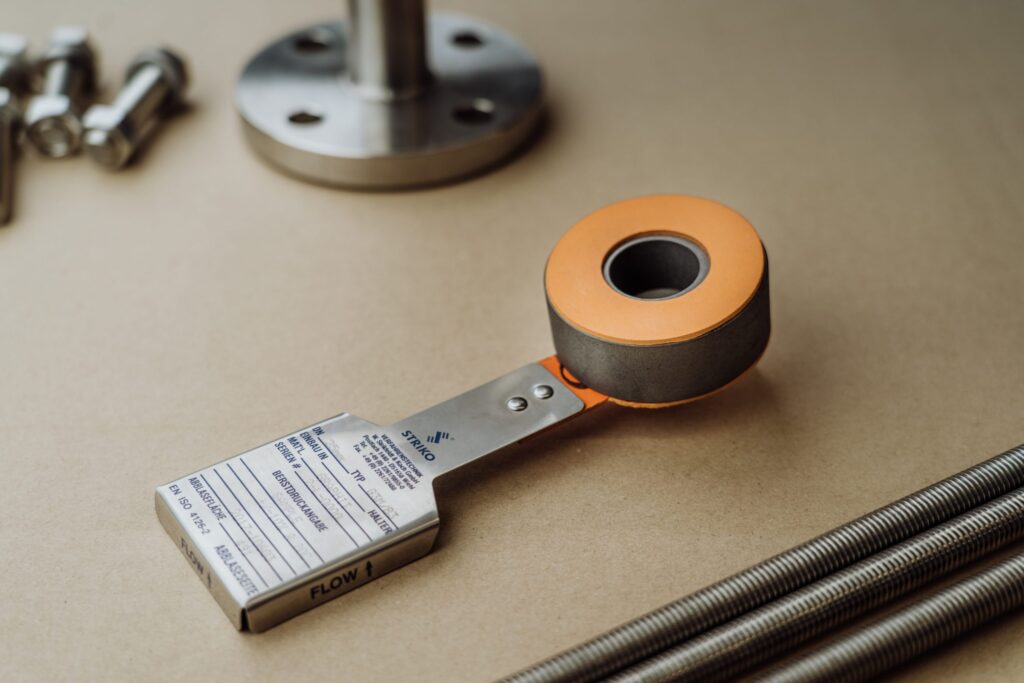
Graphite discs resist corrosion without coating
Optional TFE coating on graphite discs
Metal discs in Hastelloy and titanium
Vacuum support available for graphite
Bursting disc liners: what engineers are really asking for
Bursting disc liners come up in almost every conversation about aggressive media, usually phrased as a simple question: can you put a liner on it? Behind that question sits a real problem. The standard metal disc on a vessel or line is being attacked by the medium, the burst pressure can no longer be trusted, and someone needs a solution that keeps the relief device reliable for longer than a few months.
Picture a maintenance engineer reviewing the replacement history of a relief position on a line with a chlorinated medium. The discs keep opening below their rated pressure, always after a similar number of months, and each inspection shows the same dull, pitted surface on the process side. The disc design is fine. The burst pressure was specified correctly. The material simply does not belong in that medium. The engineer searches for bursting disc liners because a liner seems like the smallest possible change to a design that otherwise works.
A liner is one possible answer. It is a thin protective layer on the process side of a metal bursting disc, typically made of a fluoropolymer, that keeps the medium away from the metal membrane. The metal still provides the strength and the calibrated burst behaviour. The liner provides the chemical barrier. It is an elegant idea, and in the right service it works well.
At Dutch Valve Vision we approach the question from the other end. We do not start with the liner. We start with the medium, the temperature, the pressure and the operating cycle, and then compare the routes that can deal with that combination. Bursting disc liners are one of those routes. A graphite disc and a disc in a higher alloy are the other two. On this page we explain how each works, where their limits lie and how we help you choose. We also say clearly what we can and cannot confirm, because in pressure protection an honest answer is worth more than a confident one.
Liner, coating or lined disc: a word on terms
The terminology is not always used consistently. Bursting disc is the British and European term for what North American documents usually call a rupture disc. A liner generally refers to a separate thin film or layer placed on the process side of the disc, while a coating is applied to the surface of the disc material itself. A lined disc is simply a disc supplied with such a liner. In practice, buyers searching for bursting disc liners are usually looking for any construction that keeps the medium off the load-bearing material, and that is how we treat the question.
Why corrosion is so dangerous for a bursting disc
A bursting disc is calibrated. Its burst pressure is determined by the material, the thickness and the geometry, with a tolerance that depends on material properties and the manufacturing process. Every one of those factors is affected by corrosion.
Imagine a thin membrane in an acid line. Corrosion removes material from the process side, slowly and often unevenly. A disc that was designed to burst at a specific pressure now has a thinner wall in places, and it will burst earlier than intended. That may sound like the safe direction, but an unplanned burst means an unplanned shutdown, a release of medium into the discharge system and a vessel that has to be opened for a replacement.
The opposite can happen too. Deposits, corrosion products or polymer build-up on the membrane can stiffen it or block its movement, especially on reverse acting designs where the dome has to snap through freely. A disc that bursts late is a genuine safety risk, because the vessel it protects may then see pressures above its design limit.
Corrosion on the downstream side is a less obvious threat. If medium weeps past the seal, or if the discharge side is exposed to condensate or vapours, the disc can be attacked from the side nobody inspects. That is why sealing surfaces with controlled roughness and, where needed, leak detection ports on the holder are part of the same discussion as bursting disc liners.

How bursting disc liners protect the membrane
In a lined design, the liner sits between the process and the metal. The medium only touches the liner, and the metal carries the pressure load without being exposed. When the disc reaches its burst pressure, the metal opens and the liner tears with it, so the relief function is not hindered.
The benefit is that you can use a standard metal disc construction with its known burst behaviour in a service where that metal alone would not survive. The liner also contributes to tightness at the seat, which is useful with media that should never escape.
The idea is simple. The execution is not. The liner has to be compatible with the full composition of the medium, including trace components and cleaning agents. It has to cope with the process temperature. It has to stay in place during pressure cycles and, if the process sees vacuum, it must not be pulled away from the metal. And it has to survive transport, storage and installation without scratches or creases, because a damaged liner is a door through which the medium reaches the metal after all.
Bursting disc liners are thin protective layers, usually fluoropolymer, on the process side of a metal bursting disc that keep a corrosive medium away from the metal membrane. They make sense where the metal alone would corrode, but they have their own limits in temperature, handling and vacuum. Dutch Valve Vision compares liners with graphite discs, which resist corrosion without a coating and are available with an optional TFE coating, and with higher alloys such as Hastelloy and titanium.
When bursting disc liners make sense, and when they do not
Every protective measure has a window in which it works well. Bursting disc liners are no exception.
Situations where a liner is a good fit
A liner is worth considering when the medium attacks the disc metal but the fluoropolymer is resistant, when temperatures stay well within the range of the liner material and when the process pressure is steady rather than strongly cyclic. It is also attractive when a metal disc construction is needed for mechanical reasons, for example because of the burst pressure range or the disc geometry, while the chemistry rules out bare metal.
Situations where another route is better
Liners are less suitable at high temperatures, because fluoropolymers have lower temperature limits than metals and graphite. They also call for care in processes with deep vacuum or frequent pressure reversals, unless the design includes proper support. Where handling on site is rough, or where the disc is replaced often by different crews, the risk of liner damage during installation goes up. And some media can slowly permeate thin polymer layers over time, which means the metal may eventually be reached anyway. In those cases, a material that is corrosion resistant throughout is often the safer choice.
What we need for the right selection
- Medium and composition
- Operating pressure and pressure peaks
- Required burst pressure
- Temperature, normal and in the relief scenario
- Connection and installation space

Designs in the STRIKO range
Every application needs its own rupture disc. These are the designs we supply most often.
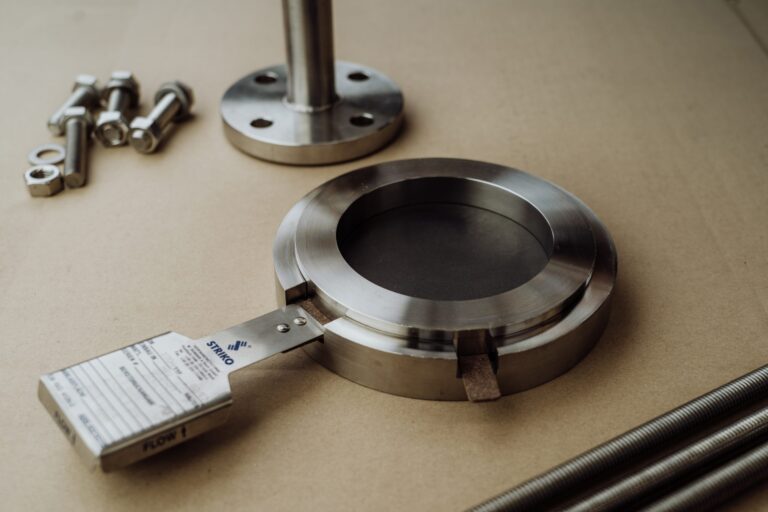
Graphite rupture disc
Corrosion resistant without coating, DN25 to DN400, between ANSI or DIN flanges.
Rupture disc holder
Correct positioning, reproducible loading and a reliable seal.
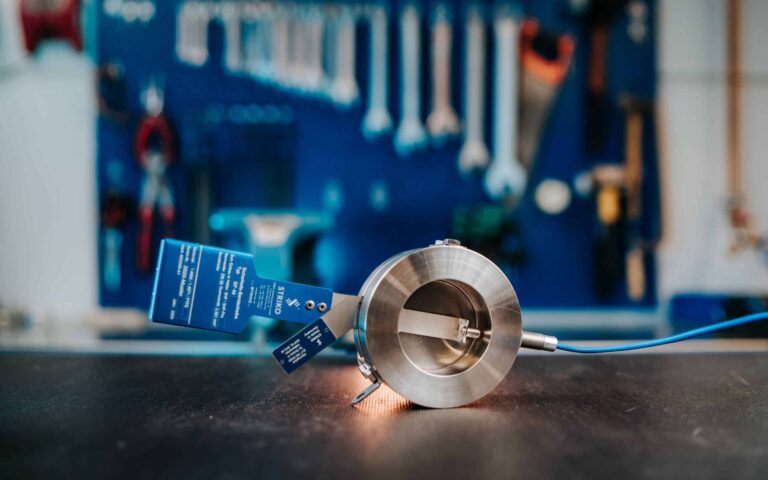
Burst indicator
Signals an opened disc directly to PLC, SCADA or DCS.
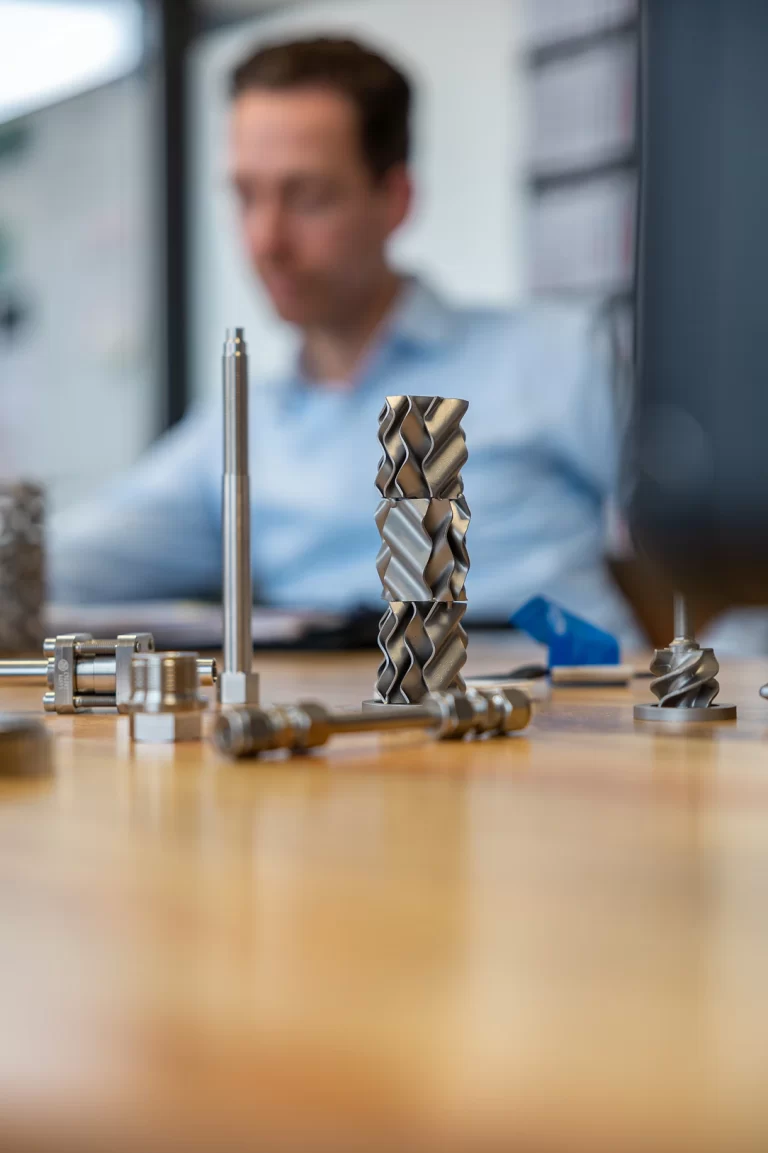
Reverse acting rupture disc
Loaded in compression, resistant to pressure cycling.
Graphite: the main alternative to bursting disc liners
Graphite takes a completely different approach. Instead of protecting a metal membrane with a layer, the whole disc is made of a material that resists the medium. Graphite is naturally resistant to many chemicals, including acids, bases and strongly aggressive media, without any additional coating. There is no layer to damage, because the resistance sits in the bulk of the material.
Our graphite discs cover nominal sizes from DN25 up to DN400. They can be installed directly between ANSI or DIN flanges or in a holder, and direct mounting between standard flanges often makes installation simpler and more cost-effective. When a graphite disc bursts, it opens across its full diameter, which gives fast and controlled pressure relief. Until that moment it is 100% leak tight.
The optional TFE coating on graphite
Here the two worlds meet. Although graphite needs no coating for its corrosion resistance, an optional surface treatment such as a TFE coating is available for graphite discs. That is the one coated execution we can confirm directly from our range. It is chosen when a process calls for a specific surface on the media side, and we advise per application whether it adds value or whether plain graphite is sufficient.
Graphite discs can also be fitted with burst detection and vacuum support. The vacuum support matters for exactly the processes where liners struggle: vessels that are emptied, cooled or cleaned and briefly see a vacuum.
Graphite has its own limits. It is more brittle than metal, it needs careful handling and even bolt tightening, and for very high pressures or heavy cyclic loading a metal disc is usually the better base.
Specification ready? We will prepare a targeted quote.
Send us medium, pressure, temperature and connection. Our specialists come back with a matching proposal.

Higher alloys as the third route
The third option skips both liner and graphite and moves to a metal that can handle the medium on its own. Our standard metal disc is made of 316 stainless steel, and Hastelloy and titanium are available as alternatives. Material choice is always based on chemical compatibility with the medium, operating temperature and mechanical load.
A higher alloy keeps the familiar behaviour of a metal disc, including forward acting and reverse acting designs, flat and multi-layer constructions and domed discs with X or C scoring. It avoids the temperature and handling limits of a polymer liner. The trade-off is that the alloy must genuinely resist the full medium, and that exotic alloys tend to be a more expensive route. The holder can follow the same logic, with options in duplex, super duplex, Inconel and Hastelloy.
Questions to answer before specifying bursting disc liners
Before anyone specifies bursting disc liners, graphite or a higher alloy, a few questions need clear answers. What exactly is in the medium, including contaminants and cleaning agents? What are the normal and peak temperatures, and what is the temperature in the relief scenario? Is the pressure steady or cyclic, and does the process ever go into vacuum? How often is the disc replaced, and by whom? Are there requirements for burst detection or for leak detection on the holder?
The answers usually narrow the choice quickly. A hot, cyclic process with a medium that attacks stainless steel points towards a higher alloy. A moderate temperature, low burst pressure and highly corrosive chemistry points towards graphite. A case where a metal construction is essential but the metal needs a barrier is where bursting disc liners come into their own.
For lined metal constructions, we look at what is feasible for your specification rather than promising a standard product up front. That is the honest position: we can confirm graphite with optional TFE coating and metal discs in 316, Hastelloy and titanium directly, and we check other executions case by case.


How Dutch Valve Vision handles corrosive duties
Dutch Valve Vision is the exclusive agent of STRIKO Verfahrenstechnik for the Netherlands, Belgium and Luxembourg. STRIKO, in the rupture disc business since 1974, builds its work on testing, evaluating and recalibrating. We combine that range with holders, detection and our own engineering support, including FEM analyses on request and support in HAZOP and safety studies.
Our quality management system is ISO 9001 certified by KIWA, and we supply to DIN as well as ANSI standards. Every holder is delivered with EN 10204 3.1 material certificates, pressure calculations, inspection reports and component traceability.
The holder, seals and detection around the disc
Choosing between bursting disc liners, graphite and an alloy is only half the job. The disc sits in a holder or between flanges, and those parts see the same medium. Our holders are available in carbon steel, 316/316L stainless steel, duplex, super duplex, Inconel and Hastelloy, with sealing surfaces of controlled roughness and metal or soft seals depending on the medium. A holder that corrodes at its sealing faces will eventually let the medium past the disc edge, and then even the best protected disc is attacked from the other side.
Leak detection ports on the holder let you monitor the downstream space, and burst detection tells the control room immediately when a disc has opened. On corrosive lines, where escaping medium is hazardous, both are worth considering. Magnetic detection systems that stay out of contact with the medium are a sensible choice where the chemistry is very aggressive.
Send us the medium with its full composition, temperatures, pressures and any vacuum conditions via sales@dutchvalvevision.com or call +31 (0)70-2210560 on weekdays between 09:00 and 17:00. We will put the options side by side and advise the one that keeps your relief device reliable.
Frequently asked questions about bursting disc liners
Question not listed? Our specialists are happy to help.
- +31 (0)70-2210560
- sales@dutchvalvevision.com
- Vlotlaan 641, 2681 TZ Monster, the Netherlands
- Mon-Fri 09:00-17:00
What are bursting disc liners?
Bursting disc liners are thin protective layers on the process side of a metal bursting disc. They are usually made of a fluoropolymer. The liner keeps the corrosive medium away from the metal membrane. The metal still provides the strength and the calibrated burst behaviour. When the disc bursts, the liner tears together with the metal. The idea is to combine a proven metal construction with a chemical barrier. It works well within the limits of the liner material. We help you check if your process falls within those limits.
When should I choose a liner instead of graphite?
A liner can make sense when a metal disc construction is needed for mechanical reasons. That can be the case with certain burst pressure ranges or disc geometries. The medium must attack the metal but not the liner material. Temperatures must stay well within the range of the liner. Graphite is often the better choice for highly corrosive media at moderate temperatures. It resists corrosion throughout its thickness without a coating. There is then no layer that can be damaged. We compare both routes against your process data before advising.
Does Dutch Valve Vision supply coated bursting discs?
We can directly confirm graphite discs with an optional TFE coating. The graphite does not rely on that coating to resist corrosion. The coating is chosen when a specific surface on the media side is required. Our metal discs are available in 316 stainless steel, Hastelloy and titanium. For lined metal constructions we assess what is feasible for your specification. We do not promise an execution before we have checked it. That keeps our advice honest and reliable. Send us your requirements and we will come back with the options.
What are the limits of bursting disc liners?
Fluoropolymer liners have lower temperature limits than metals and graphite. They can be damaged by rough handling during transport or installation. Vacuum or pressure reversal can pull a liner away from the metal unless it is supported. Some media can slowly permeate thin polymer layers over time. In that case the metal may eventually be exposed anyway. Frequent replacements by different crews increase the risk of liner damage. None of this rules liners out. It simply means the choice should be based on a careful review of the process.
Is graphite suitable for vacuum service?
Graphite discs can be fitted with vacuum support. The support protects the membrane when the outside pressure exceeds the process pressure. That occurs when vessels are emptied, cooled or cleaned. Without support, the reverse load could damage the disc. A damaged disc may no longer burst at its rated pressure. With vacuum support the disc stays intact for the overpressure case. Tell us how deep the vacuum can go in your process. The proposal will then include a support that matches it.
Can a higher alloy replace a lined disc?
In many cases a higher alloy is a valid alternative. Our metal discs are available in Hastelloy and titanium besides 316 stainless steel. An alloy keeps the familiar behaviour of a metal disc. It avoids the temperature and handling limits of a polymer liner. The alloy must however resist the complete medium, including trace components. Exotic alloys also tend to be a more expensive route. The holder material should follow the same reasoning. We compare alloy, graphite and liner options for your specific duty.
Why does corrosion change the burst pressure of a disc?
The burst pressure depends on material, thickness and geometry. Corrosion removes material and makes the membrane thinner in places. A thinner disc bursts earlier than it was designed to. Deposits and corrosion products can have the opposite effect. They can stiffen the disc or hinder its movement. A disc that bursts late is a real safety risk for the vessel. Corrosion from the downstream side can go unnoticed for a long time. That is why material choice and sealing design deserve careful attention.
What information do you need to advise on corrosion protection?
We need the full composition of the medium, including contaminants and cleaning agents. We ask for normal, peak and relief scenario temperatures. Operating pressure, pressure peaks and the required burst pressure are essential. Tell us if the process is cyclic and if it can go into vacuum. Nominal size and flange standard, DIN or ANSI, complete the picture. Let us know if you need burst detection or leak detection ports. Information on how often discs have been replaced so far is also useful. With that we compare liner, graphite and alloy options for you.
Protect your disc against corrosion
Send us the medium with its full composition, temperatures, pressures and any vacuum conditions. We compare liner, graphite and alloy options for your duty.
- +31 (0)70-2210560
- sales@dutchvalvevision.com
- Vlotlaan 641, 2681 TZ Monster, the Netherlands
- Mon-Fri 09:00-17:00