
Rupture disc
The full STRIKO rupture disc programme explained: types, materials, holders and detection, plus what we need to quote.
- Exclusive STRIKO agent Benelux
- ISO 9001 · KIWA
- Engineering support from Monster (NL)

Exclusive STRIKO agent for the Benelux
STRIKO active in rupture discs since 1974
Metal discs in 316, Hastelloy, titanium
Graphite discs from DN25 to DN400
The rupture disc: the device that works when everything else has failed
A rupture disc is the one component in a pressurised plant that nobody wants to see in action, and yet every process engineer is glad it is there. It is a thin, calibrated membrane clamped between flanges or held in a holder, and it has a single task. It stays closed and completely tight while the process runs, and it opens the instant the pressure reaches a predetermined value. That is all it does, and that is exactly why it is trusted.
Think about the layers of protection in a typical chemical plant. There is the control system, then the alarms, then the operator who reacts to those alarms, and often a relief valve as well. Each of those layers depends on something: power, a signal, a human decision, a spring that has not seized. A rupture disc depends on nothing except the pressure that is actually acting on it. When the control layers fail, the disc is still there.
At Dutch Valve Vision we treat the rupture disc as a precision product rather than a consumable. As the exclusive agent of STRIKO Verfahrenstechnik GmbH for the Netherlands, Belgium and Luxembourg, we supply the complete STRIKO range from our office in Monster. On this page we take you through what a rupture disc is, which types exist, which materials and holders go with them, how you detect an opening, and what information you need to send us for a sound selection.
What happens inside a rupture disc when pressure climbs
In normal operation the disc carries the process pressure without any visible change. The material is under load, but it holds, and because there is no seat and no moving part, nothing escapes. Until it bursts, an intact rupture disc is 100% leak tight. For toxic, costly or environmentally harmful media, that single property often decides the design before any other argument is made.
Now imagine a line that slowly fouls up, or a reactor where an exothermic reaction accelerates beyond what the cooling can handle. Pressure rises. The stress in the membrane rises with it. As soon as the set burst pressure is reached, the disc gives way within milliseconds and opens a flow path. The pressure drops and the vessel stays intact.
After that, the job is done and the disc is spent. A rupture disc does not close again, so the process usually stops until a new disc is fitted. That is the honest trade-off. You gain speed, simplicity and tightness, and you accept a replacement after every activation. Many plants combine both worlds by placing a disc upstream of a relief valve, so the valve is isolated from the medium during normal operation.
Vacuum is a scenario that is easy to forget. A tank that cools down after steam cleaning can pull a vacuum strong enough to damage the wall or collapse a disc that was never designed for reverse loading. STRIKO discs are designed to protect installations against overpressure and vacuum, provided the right execution is chosen.
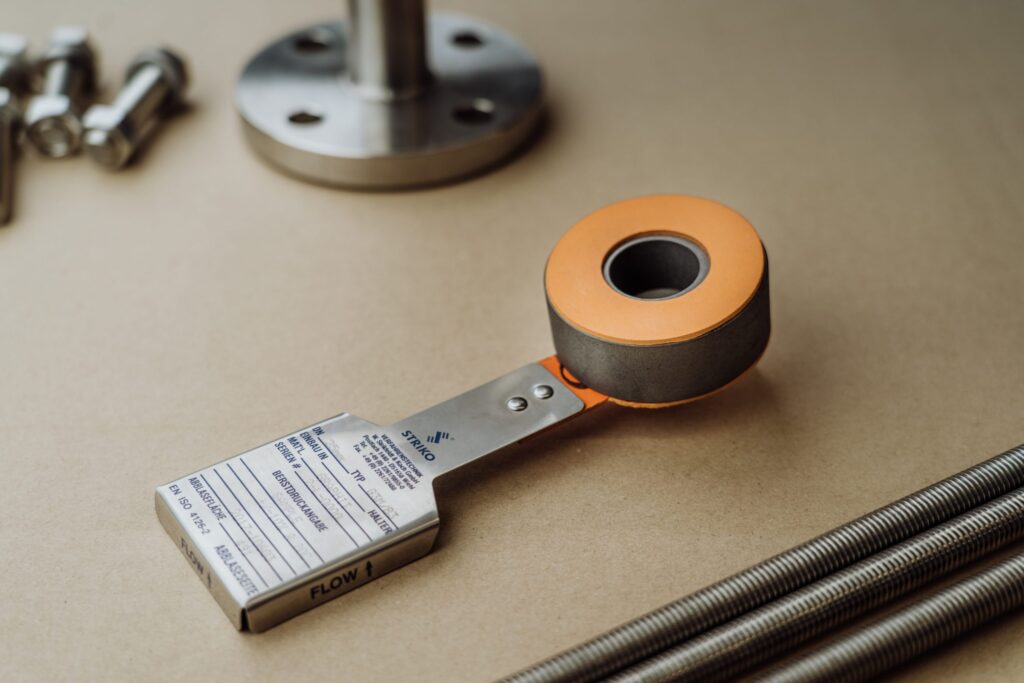
The STRIKO rupture disc range we supply
STRIKO has been active in rupture discs since 1974 and works to a clear philosophy: test, evaluate and recalibrate. That approach shows in a programme that covers very different duties. We group it below the way customers usually approach it: by what the process asks for.
Flat metal discs for standard duties
Flat metal discs are the straightforward choice for standard applications. In the flat and multi-layer construction the layers work together to give extra strength and reliability, which makes this design suitable for general process duties where pressures are moderate and the load is steady.
Forward acting metal discs for high pressure
In a forward acting disc the pressure acts on the concave side of the dome and the material is loaded in tension. STRIKO designs its forward acting metal discs for high pressure environments. This is the classic type, known for accurate burst pressure in gas and liquid service.
Reverse acting metal discs for durability
In a reverse acting disc the pressure works on the convex side. At the set pressure the dome snaps through and opens. Because the material is loaded in compression during normal operation, this type copes better with pressure cycles and fatigue. In the STRIKO range, the reverse acting metal discs stand for durability and efficiency.
Aseptic, extruder and tank container discs
Some processes need a disc built around their specific constraints. STRIKO aseptic metal discs are made for the pharmaceutical and food industries. Extruder metal discs are built for demanding duties in polymer processing, where a blockage can raise pressure very quickly. Discs for tank containers provide safety solutions for transport tanks.
Burst plugs for compact spaces
A burst plug is a compact, non-reclosing relief device, usually screwed into a line, extruder, pump or vessel. Inside sits a calibrated burst element. Burst plugs are used where installation space is tight, for example on extruders and in hydrogen and ammonia installations.
A rupture disc is a non-reclosing pressure relief device that stays leak tight until a set burst pressure is reached and then opens within milliseconds. Dutch Valve Vision is the exclusive STRIKO agent for the Netherlands, Belgium and Luxembourg and supplies flat, forward acting, reverse acting, aseptic, extruder and tank container discs, graphite discs, holders and burst detection.
Rupture disc materials: from 316 stainless steel to graphite
The standard metal rupture disc we supply is made from 316 stainless steel, a material with good corrosion resistance and structural integrity. Where the medium or temperature asks for more, Hastelloy and titanium are available. Material choice is always made on three grounds: chemical compatibility with the medium, operating temperature and mechanical load. Get those right and the deviation from the design burst pressure stays small while the service life stays long.
Metal discs come in several geometries. Besides flat and multi-layer discs, there are domed discs with an X or C scored dome, where the scoring determines how the disc opens. Vacuum-suitable and double discs are available for systems that have to handle both overpressure and underpressure.
Graphite is the other main route. A graphite rupture disc resists many acids, bases and aggressive media without any coating. We supply graphite discs from DN25 to DN400, for installation directly between ANSI or DIN flanges or in a holder, with an optional TFE coating, burst detection and vacuum support. When a stainless disc would corrode away within a short time, graphite is often the more sensible answer.
What we need for the right selection
- Medium and composition
- Operating pressure and pressure peaks
- Required burst pressure
- Temperature, normal and in the relief scenario
- Connection and installation space
Designs in the STRIKO range
Every application needs its own rupture disc. These are the designs we supply most often.
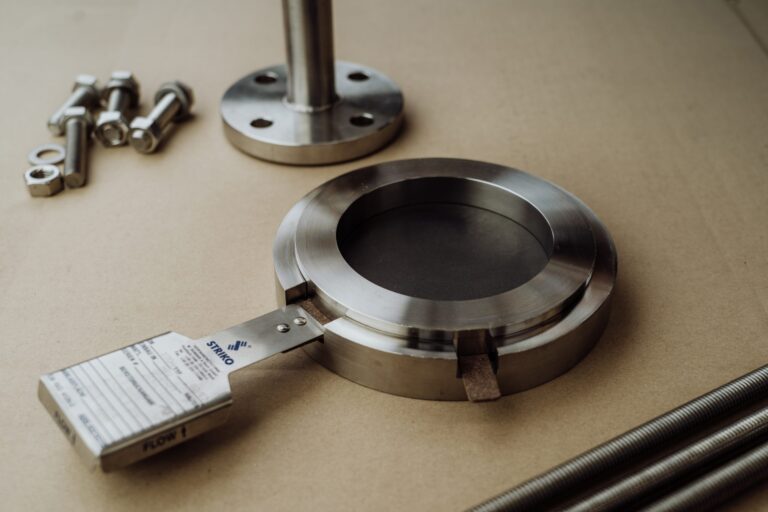
Graphite rupture disc
Corrosion resistant without coating, DN25 to DN400, between ANSI or DIN flanges.

Rupture disc holder
Correct positioning, reproducible loading and a reliable seal.
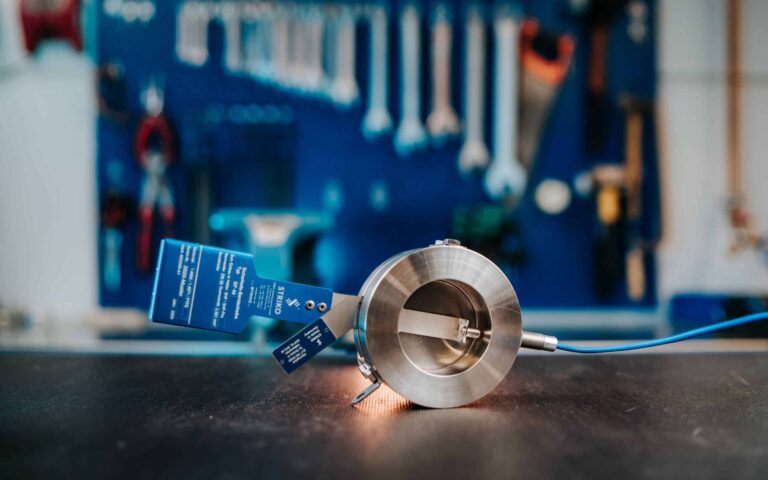
Burst indicator
Signals an opened disc directly to PLC, SCADA or DCS.
Reverse acting rupture disc
Loaded in compression, resistant to pressure cycling.
Holders and burst detection around the rupture disc
Holder or direct mounting between flanges?
A metal rupture disc can be installed directly between flanges in systems with straight pipe sections. In many situations, though, a dedicated holder is the better option. That is especially true with pulsating pressure, cyclic loads or wherever process integrity is critical.
The holder protects the disc during installation, allows integration of detection systems and creates a better distance to other safety equipment. It also positions the disc correctly and applies a reproducible load that does not depend on how carefully the bolts were tightened on a Friday afternoon. We supply forward acting holders, reverse buckling holders and vacuum support holders, in carbon steel, 316/316L stainless steel, duplex and super duplex, Inconel and Hastelloy, with special alloys on request.
Our holders are designed in line with ASME Section VIII, EN ISO 4126 and PED 2014/68/EU, and ATEX where applicable. Each holder comes with material certificates to EN 10204 3.1, pressure calculations, inspection reports and traceability per component. Sealing surfaces with controlled roughness and optional leak detection ports keep micro leakage out of the picture.
Knowing the moment a rupture disc opens
A disc that has opened on a remote vessel can go unnoticed for longer than anyone would like, and all that time the medium can escape. That is why we recommend burst detection for safety-critical positions. A sensor watches the disc and sends a signal as soon as it opens.
There are two common principles. With electrical detection, a loop is interrupted when the disc bursts. With magnetic detection, a magnet attached to the disc creates a field that a sensor reads, and when the disc moves the field changes. Good systems are fail-safe, so a fault in the sensor itself also triggers a safe notification instead of silence. The signal goes straight to a PLC, SCADA or DCS, where it can start a shutdown and warn personnel. For explosive atmospheres, ATEX certification of the sensor is essential.
Specification ready? We will prepare a targeted quote.
Send us medium, pressure, temperature and connection. Our specialists come back with a matching proposal.

Where a rupture disc earns its place
The sectors we serve all share one thing: a failure of pressure equipment is not an option. In chemical and petrochemical plants, discs protect reactors, columns, storage vessels and process lines against overpressure from exothermic reactions or blocked flows. A runaway reaction does not wait for a relief valve to lift, and a disc that opens in milliseconds buys the plant its safety margin.
In power generation, discs protect steam boilers and steam circuits against pressure peaks during rapid load changes. In cryogenic storage of liquefied gases such as LNG, they relieve pressure peaks caused by temperature swings. Hydrogen and ammonia installations bring their own demands on material choice and process safety, and here discs and burst plugs are part of a carefully designed protection concept, including electrolysers, compressors and storage modules.
Pharmaceutical, biotech and food producers use hygienic discs with highly polished surfaces that support cleaning and CIP procedures. Polymer processors fit extruder discs or burst plugs to protect the screw, barrel and seals when a blockage or a viscosity change drives the pressure up. Offshore, the combination of high pressure, corrosive media and strict regulation makes material choice and documentation just as important as the burst pressure itself.
Installation, inspection and spare discs
Most early failures we see have nothing to do with the disc design and everything to do with how it went in. A rupture disc is precise, and it rewards careful handling. Check that the diameter and burst pressure match the position. Make sure the flanges are clean and aligned, centre the gaskets accurately and respect the flow direction arrow on the disc or holder. Tighten the bolts evenly and to the recommended torque values.
One rule has no exceptions: a damaged disc must never be installed, because even a small dent or scratch can change the burst pressure. Storage and handling matter for the same reason, so keep spare discs in their packaging until the moment of fitting.
Maintenance itself is limited. It comes down to periodic visual inspection, checking the installation conditions and keeping records of inspections and replacements. Because a disc is single use, a stock of spare discs for critical positions is simply good practice. When a disc does open, you want the replacement on the shelf, not on order.

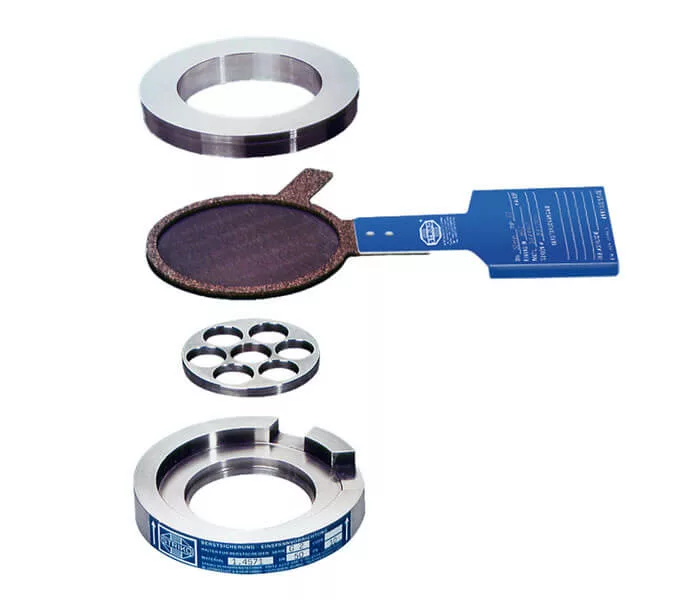
Standards and selection: how we specify a rupture disc
Standards, quality and documentation
A rupture disc is pressure equipment, and it is treated that way by regulators and inspectors. Metal discs fall under recognised European and international rules, including PED, ISO 4126 for pressure relief devices, EN 14491 for explosion safety and CE marking. Following those standards is about more than ticking boxes. It is the evidence that the disc will burst where it should and nowhere else.
Dutch Valve Vision works with an ISO 9001 certified quality management system, certified by KIWA. That means controlled processes, full traceability and thorough documentation. We supply to both DIN and ANSI standards, so a disc for a European process line and one for an internationally specified installation come from the same desk. On request we also support FEM analyses and help with HAZOP and other safety studies.
The data we need for your rupture disc
A rupture disc should never be selected on design pressure alone. The burst pressure of any disc is linked to temperature, and at higher temperatures the effective burst pressure can drop, depending on material and design. That is why we always look at the temperature in the relief scenario, not only at the normal operating temperature. The ratio between maximum operating pressure and burst pressure also matters, because it affects service life and reliability.
To give you a solid proposal we need a handful of facts: the medium and its composition, the operating pressure including peaks, the required burst pressure, the temperature in normal operation and in the scenario, and the connection and available installation space. With that, we choose disc type, material and holder, and we advise on detection where it adds value.
Maybe you are planning a turnaround and want spare discs on the shelf. Maybe you are drawing a new P&ID and need a rupture disc specified correctly from day one. Either way, send your data to sales@dutchvalvevision.com or call +31 (0)70-2210560, Monday to Friday from 09:00 to 17:00. We turn your process conditions into a STRIKO rupture disc that does its job when it counts.
Frequently asked questions about rupture disc
Question not listed? Our specialists are happy to help.
- +31 (0)70-2210560
- sales@dutchvalvevision.com
- Vlotlaan 641, 2681 TZ Monster, the Netherlands
- Mon-Fri 09:00-17:00
What is a rupture disc used for?
A rupture disc protects vessels, piping and equipment against overpressure and, in the right execution, against vacuum. It opens at a predetermined burst pressure and relieves the system before the equipment is damaged. Typical positions are reactors, storage vessels, process lines and steam systems. Cryogenic storage of liquefied gases is another area where discs relieve pressure peaks caused by temperature changes. In pharmaceutical and food plants, hygienic discs protect sterile processes. Because the disc has no moving parts, it needs no power and no control signal to work. It is often the last layer of protection after control systems and alarms. We help you decide where a disc makes sense in your plant.
Which types of rupture disc does Dutch Valve Vision supply?
We supply the full STRIKO programme as the exclusive agent for the Benelux. That includes flat metal discs for standard applications and forward acting metal discs for high pressure. Reverse acting metal discs are chosen when durability under pressure cycles matters. For pharmaceutical and food processes there are aseptic metal discs. Extruder discs are designed for demanding polymer processing duties. There are also discs for tank containers and compact burst plugs. Next to the metal range we supply graphite discs from DN25 to DN400. Holders and burst detection complete the programme.
What is the difference between a rupture disc and a safety valve?
A rupture disc is non-reclosing, while a safety valve closes again once the pressure has dropped. An intact disc is 100% leak tight until it bursts, whereas a valve seat can develop small leaks through wear or deposits. A disc also responds faster because there is no spring to compress. On the other hand, a burst disc has to be replaced, and the process usually stops for a while. A safety valve can be reused and keeps the process running after a pressure peak. Many plants combine both by fitting a disc upstream of the valve. That keeps the valve isolated from corrosive or toxic media during normal operation. We can advise on the disc and holder for such a combination.
Which materials are available for a metal rupture disc?
Our standard metal disc is made from 316 stainless steel. For more demanding media or temperatures, Hastelloy and titanium are available. Holders come in carbon steel, 316/316L stainless steel, duplex, super duplex, Inconel and Hastelloy. The choice always depends on chemical compatibility, temperature and mechanical load. A mismatch can cause corrosion that shifts the burst pressure over time. For very aggressive chemistry, graphite is often the better route. Graphite resists many acids and bases without a coating. We compare the options against your process data before we propose a disc.
How long does a rupture disc last?
Service life depends on the process conditions rather than on a fixed number of years. Pressure cycles, the ratio between operating pressure and burst pressure, temperature and corrosion all play a part. A disc that runs close to its burst pressure with frequent cycles will age faster. Reverse acting designs are better at resisting pressure cycles and fatigue. Correct installation also has a large influence on service life. Periodic visual inspection helps you spot problems early. Replacement intervals are best set based on process conditions and applicable safety rules. We are happy to review your operating profile and suggest a sensible approach.
Do I always need a holder for a rupture disc?
Not always, because a metal disc can be installed directly between flanges in straight pipe sections. Graphite discs are often mounted directly between standard ANSI or DIN flanges as well. With pulsating pressure or cyclic loads, a holder is usually the better choice. The holder protects the disc during installation and positions it correctly. It also applies a reproducible load that does not depend on how the flange bolts were tightened. A holder makes it easier to integrate burst detection. Holders are designed for long-term reuse, so only the disc is replaced after an opening. We advise per position whether a holder adds value.
How do I know that a rupture disc has burst?
The most reliable way is a burst detection sensor on the disc or holder. An electrical version works with a loop that is interrupted when the disc opens. A magnetic version reads the field of a magnet on the disc and responds when that field changes. Fail-safe designs also report a fault in the sensor itself. The signal can go directly to a PLC, SCADA or DCS. That allows an automatic shutdown and an immediate warning to personnel. Without detection, an opened disc may only be found during a routine check. For safety-critical positions we recommend specifying detection from the start.
What information do you need to quote a rupture disc?
We need the medium and its composition first, because that drives material choice. Next is the operating pressure including any peaks. The required burst pressure is the third key figure. We also need the temperature, both in normal operation and in the relief scenario. The connection type and the available installation space complete the picture. If you have an existing tag or data sheet, sending it along speeds things up. With these data we select the disc type, material and holder. Send everything to sales@dutchvalvevision.com and we will respond with a matching STRIKO proposal.
Request your rupture disc quote
Send us the medium, operating pressure with peaks, required burst pressure, temperature in normal operation and in the relief scenario, and the connection. We come back with a matching STRIKO disc and holder.
- +31 (0)70-2210560
- sales@dutchvalvevision.com
- Vlotlaan 641, 2681 TZ Monster, the Netherlands
- Mon-Fri 09:00-17:00