
Low pressure rupture disc
Why low burst pressures are the hardest to get right, and how graphite, flat multi-layer discs and vacuum support solve it.
- Exclusive STRIKO agent Benelux
- ISO 9001 · KIWA
- Engineering support from Monster (NL)
Graphite discs from DN25 to DN400
Graphite resists corrosion without coating
Flat and multi-layer metal discs
Vacuum support prevents disc damage
Why a low pressure rupture disc is harder to make than it looks
A low pressure rupture disc sounds like the easy end of the range. Less pressure, less force, less to worry about. In reality it is the other way round, and anyone who has watched a thin disc open at the wrong moment knows it. Making a membrane that holds a high pressure is mainly a question of enough material. Making one that holds a small pressure and then opens at exactly the right value is a question of craftsmanship.
The reason is simple physics. The load on a disc is the pressure times the area it acts on. When the set pressure is low, the membrane has to be very thin, or made of a weak material, or both. Every small variation in thickness, material strength or clamping then becomes a large variation relative to the burst pressure. The same goes for a little corrosion, a scratch from handling or a small amount of vacuum that pushes the disc the wrong way. What a heavy disc shrugs off, a thin one notices.
Low set pressures are common in practice. Atmospheric storage tanks, low pressure process vessels, tank containers, collection systems and other equipment with a low design pressure all need relief at pressures where a standard disc would be far too strong. At Dutch Valve Vision we treat these positions as specialist work. This page explains why graphite and flat multi-layer discs are used, how tolerance behaves at low pressure and when vacuum support becomes essential.
Thin material, tight tolerance
Every rupture disc has a tolerance, the permitted variation around its set burst pressure. That tolerance is determined by material properties and the production process. At higher pressures, a given absolute variation is small compared with the burst pressure. At low pressures the same absolute variation weighs much more heavily, and that is where the difficulty lies.
Consider a vessel designed for a low maximum allowable pressure, with a normal operating pressure only a little below it. The relief device has to open above the operating pressure and below the design limit, and the window between those two is narrow. A low pressure rupture disc with a loose tolerance either opens during normal operation or opens too late. Neither is acceptable, so the whole selection revolves around keeping that window intact.
This is why the manufacturer matters so much. STRIKO, for which we are the exclusive agent in the Netherlands, Belgium and Luxembourg, has been active in rupture discs since 1974 and works to a philosophy of testing, evaluating and recalibrating. That philosophy is exactly what low set pressures demand. The design is not finished when the drawing is done. It is finished when tests show that the disc opens where it should.
The holder plays an equally important part. At low pressures, an uneven clamping load can shift the burst pressure noticeably. Our holders are designed with tight tolerances to avoid stress concentrations, with a reproducible load on the disc regardless of small variations during assembly and a consistent bolt load. On a heavy disc those are good habits. On a low pressure rupture disc they are the difference between a device you can trust and one you cannot.

Graphite as a low pressure rupture disc material
Graphite behaves very differently from metal, and at low set pressures that difference works in its favour. A graphite rupture disc does not rely on a very thin metal foil to reach a low burst pressure, and graphite is naturally resistant to many chemicals, including acids, bases and strongly aggressive media, without any coating. That combination makes it one of the most practical materials for low pressure relief on corrosive services.
Corrosion is a bigger threat at low pressure than many engineers expect. On a thick disc, a little material loss changes very little. On a thin metal disc, the same loss can weaken the membrane and lower the burst pressure over time. A graphite disc avoids that problem in many chemical environments, which keeps the set pressure where it was designed to be.
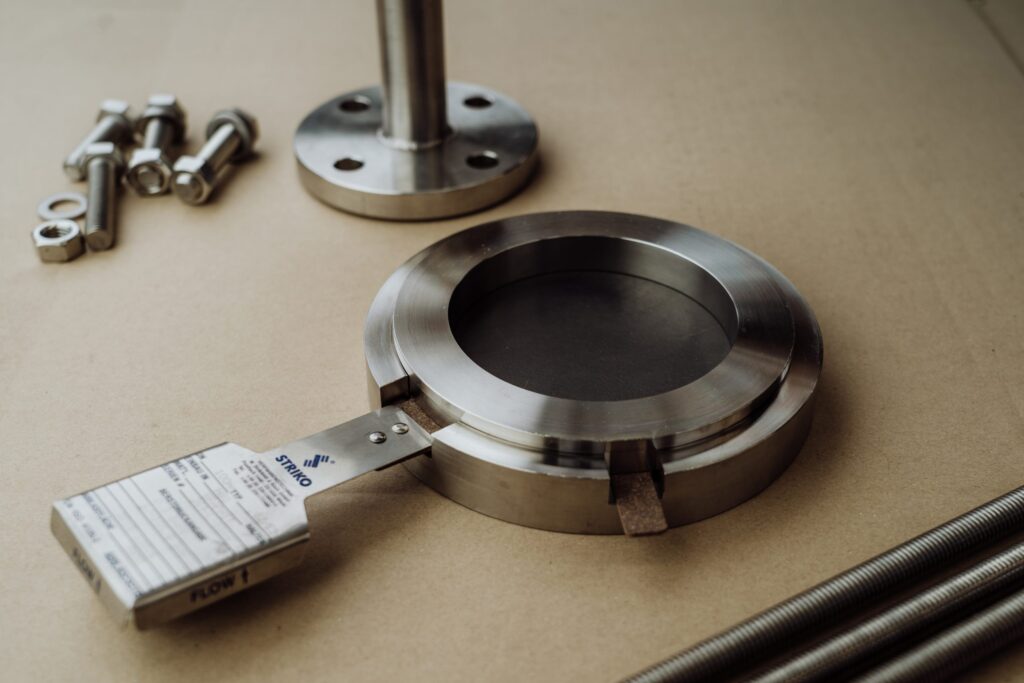
When a graphite disc bursts, it opens across the full diameter, so the pressure is relieved quickly and in a controlled way. Graphite discs are suitable for gases, vapours and liquids and function reliably over a wide temperature range. We supply them with a burst pressure set to your specification, in sizes from DN25 to DN400, for installation directly between ANSI or DIN flanges or in a holder. Optional surface treatments such as a TFE coating are available, as are burst detection and vacuum support.
That last option is important for this page. Because graphite discs are often mounted directly between standard flanges without a separate holder, installation is simpler and more economical. The flip side is that the disc must be protected against loads from the wrong side where those can occur. A graphite low pressure rupture disc on a vessel that can pull vacuum should therefore be specified with vacuum support from the start.
A low pressure rupture disc has to open at a small pressure, which means a very thin or very weak membrane that is sensitive to tolerance, corrosion, handling and vacuum. Graphite discs and flat multi-layer metal discs are the usual answers, because they combine a low set pressure with a stable, predictable opening. Where vacuum or back pressure can occur, vacuum support keeps the disc in shape.
Flat and multi-layer metal discs for low burst pressures
Not every low pressure position suits graphite. Where a metal disc is preferred, for example because of temperature, the medium or the plant standard, flat and multi-layer discs are the usual choice. The flat disc is the basic version for general process applications, and the multi-layer construction adds strength and reliability where it is needed.
The idea behind layering at low pressure is to split the job. A single metal sheet thin enough to open at a low pressure would be fragile and sensitive to every scratch. In a layered design, the tasks of carrying the load and sealing against the medium can be divided over different layers. Cuts or patterns in a load carrying layer can then define where and how the disc opens, while a sealing layer keeps the barrier leak tight. The result is a disc that reaches a low set pressure without depending on one extremely thin sheet.
Material choice still follows the process. Our standard metal discs are made of 316 stainless steel, with Hastelloy and titanium as options where the medium is more aggressive. The choice is based on chemical compatibility with the medium, the working temperature and the mechanical load. For a low pressure rupture disc in metal, chemical compatibility is doubly important, because the margin to absorb any material loss is small.
Domed discs with X or C cuts are also part of our range, for applications where a controlled bursting action and a specific opening pattern are needed. Whether a flat, layered or domed design is the best fit depends on the burst pressure, the nominal size and the presence of vacuum or back pressure, which brings us to the next point.
What we need for the right selection
- Medium and composition
- Operating pressure and pressure peaks
- Required burst pressure
- Temperature, normal and in the relief scenario
- Connection and installation space
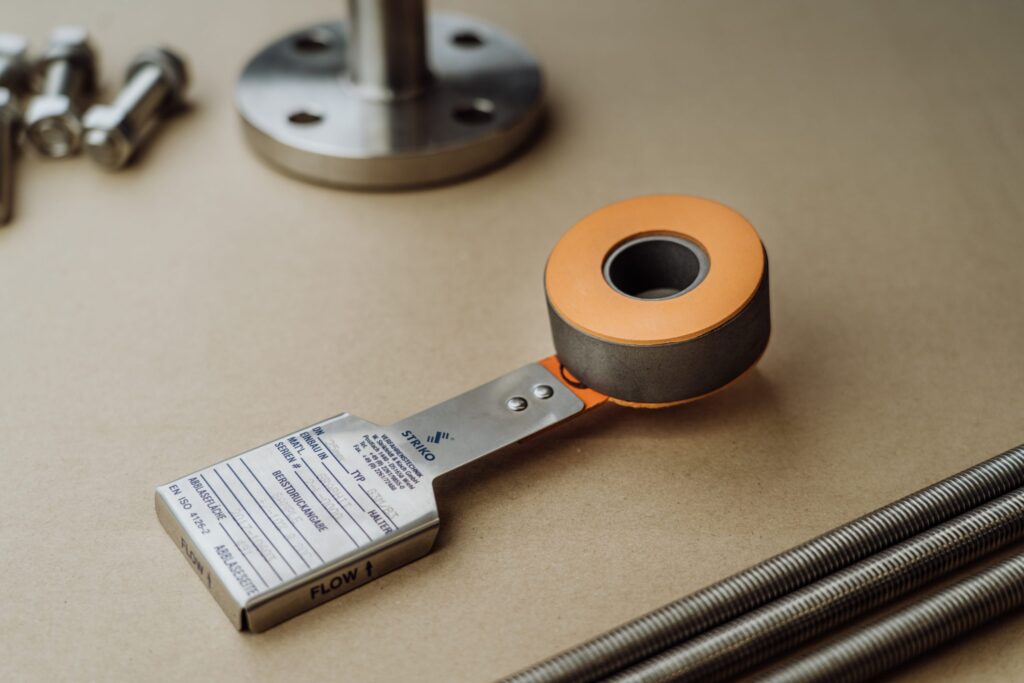
Designs in the STRIKO range
Every application needs its own rupture disc. These are the designs we supply most often.
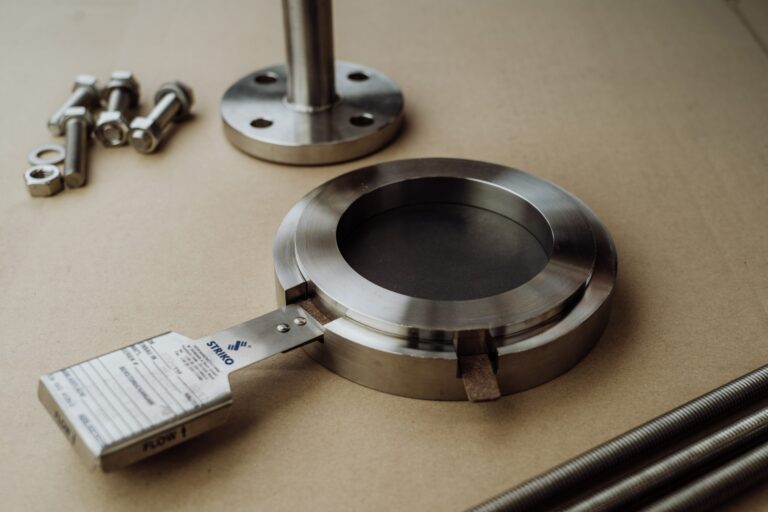
Graphite rupture disc
Corrosion resistant without coating, DN25 to DN400, between ANSI or DIN flanges.

Rupture disc holder
Correct positioning, reproducible loading and a reliable seal.
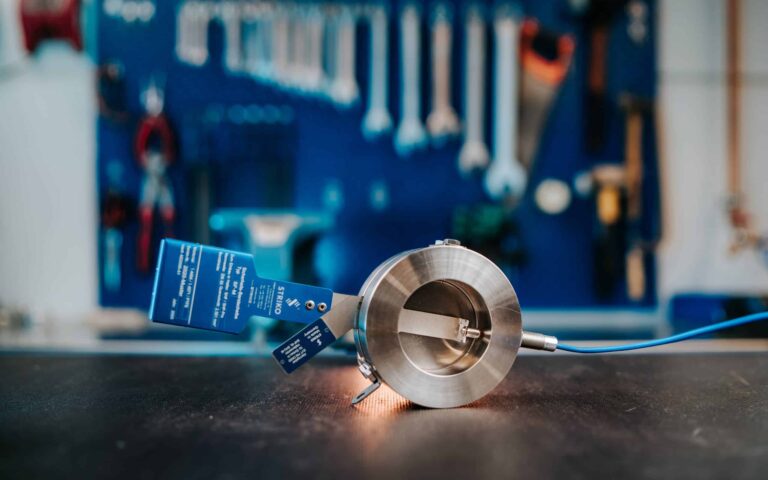
Burst indicator
Signals an opened disc directly to PLC, SCADA or DCS.
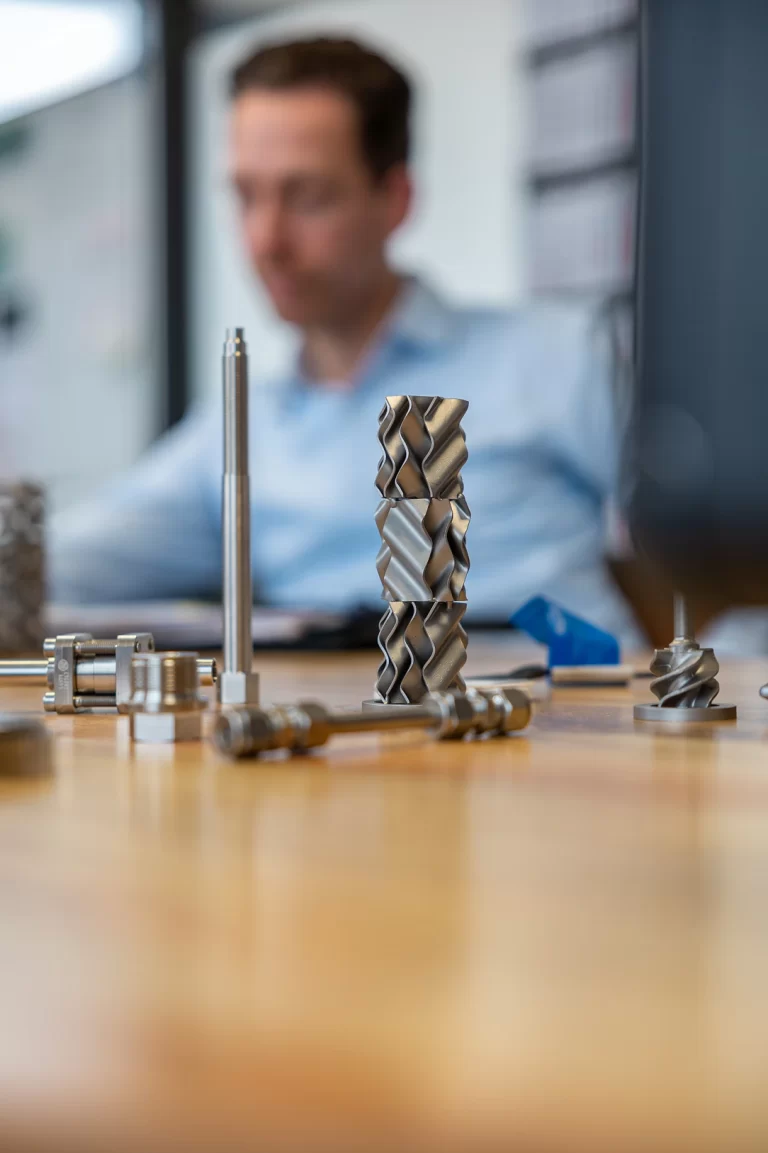
Reverse acting rupture disc
Loaded in compression, resistant to pressure cycling.
Vacuum support for a low pressure rupture disc
A disc that opens at a low pressure also has little strength to resist pressure from the other side. A vessel that is emptied by a pump, a tank that cools after steam cleaning or a discharge line with some back pressure can push the membrane the wrong way. For a heavy disc such loads are often harmless. For a thin one they can be enough to deform it, flip it over or damage it, after which its burst pressure is no longer what the tag says.
Vacuum support solves that problem. Our vacuum support holders are developed specifically for processes with alternating pressure and vacuum conditions. They prevent the disc from flipping over or being damaged and are essential in batch processes and cleaning cycles. For graphite discs, vacuum support is available as an option. For systems that must handle both overpressure and underpressure, vacuum suitable discs and double discs are available as well.
The important thing is to recognise the vacuum case early. An engineer drawing a P&ID for a low pressure storage vessel may think only about filling and overpressure. Yet emptying, cooling and cleaning are part of the same vessel’s life, and each can create a small vacuum. With a low set pressure, even that small vacuum matters. We ask about it in every enquiry for exactly that reason.
Specification ready? We will prepare a targeted quote.
Send us medium, pressure, temperature and connection. Our specialists come back with a matching proposal.

Where a low pressure rupture disc earns its place
Low set pressures turn up in more places than the name suggests. Picture an atmospheric storage tank in a chemical plant, fitted with a nitrogen blanket to keep air out. The blanket runs at a pressure only just above atmospheric, and a failing regulator can push it up quickly. The tank wall was never designed for much more than that, so the relief device has to open at a value most discs would not even notice. A low pressure rupture disc is a compact, leak tight answer, and it keeps the blanket gas inside during normal operation instead of letting it seep out through a seat.
Another example is a collection or scrubber system downstream of other relief devices. The pressure there is low by design, the media are often corrosive and the equipment is not built for heavy loads. Graphite, with its chemical resistance and full diameter opening, is often the logical material in that kind of position.
Temperature adds a final layer. At higher temperatures the effective burst pressure of a disc can fall, depending on material and design. On a disc that already opens at a small pressure, that shift is felt quickly. We therefore always ask for the temperature during the relief scenario, not just the normal operating temperature, and we choose disc material and construction with both values in view. A low pressure rupture disc that is right at ambient temperature and wrong in the hot scenario protects nothing.
Handling and installation of thin discs
The lower the burst pressure, the more careful the handling has to be. A damaged disc must never be installed, because even small defects can change the burst pressure, and on a thin disc a small defect is easily made. Keep discs in their original packaging until installation, handle them by the edge and never place tools or other parts on them.
The installation itself follows good practice, with extra attention. Check that diameter and burst pressure match the specification. Make sure the flanges are clean and aligned, place and centre the gaskets carefully, respect the direction arrow and tighten the bolts evenly to the recommended torque. Uneven tightening that would go unnoticed on a high pressure disc can shift the opening pressure of a low pressure one.
After installation, periodic visual inspection, a check of the installation conditions and a stock of spare discs keep the protection reliable. Burst detection is worth considering too. A sensor that signals the opening to your PLC, DCS or SCADA system means an opened disc is noticed immediately, rather than during the next round of inspections.
Selecting a low pressure rupture disc with Dutch Valve Vision
Because the margins are small, a complete data set is the best starting point. For a low pressure rupture disc we need the medium and its composition, the operating pressure including peaks, the required burst pressure, the temperature in normal operation and during the relief scenario, any vacuum or back pressure, the connection and the available installation space. With that information we choose between graphite and metal, select the construction and decide on vacuum support and detection.
Our holders are available in carbon steel, 316/316L stainless steel, duplex, super duplex, Inconel and Hastelloy, and are designed in line with ASME Section VIII, EN ISO 4126 and PED 2014/68/EU, with ATEX where applicable. They are supplied with material certificates to EN 10204 3.1, pressure calculations, inspection reports and traceability per component. We work under a KIWA certified ISO 9001 quality management system and supply to DIN as well as ANSI/ASME.
Protecting a storage tank, a low pressure vessel or a tank container? Email the details to sales@dutchvalvevision.com or ring +31 (0)70-2210560 between 09:00 and 17:00 on weekdays. We will help you get a low burst pressure right the first time.
Frequently asked questions about low pressure rupture disc
Question not listed? Our specialists are happy to help.
- +31 (0)70-2210560
- sales@dutchvalvevision.com
- Vlotlaan 641, 2681 TZ Monster, the Netherlands
- Mon-Fri 09:00-17:00
Why is a low burst pressure so difficult to achieve?
At a low set pressure, the membrane has to be very thin or made of a weak material. Every small variation in thickness, strength or clamping then has a large effect relative to the burst pressure. Corrosion, handling damage and small amounts of vacuum weigh more heavily as well. The window between normal operating pressure and design pressure is often narrow on low pressure equipment. That leaves little room for a disc that opens slightly too early or too late. STRIKO addresses this with its philosophy of testing, evaluating and recalibrating. We add a holder with tight tolerances and a reproducible clamping load. Together that keeps a low set pressure predictable.
What does tolerance mean for a low pressure rupture disc?
Tolerance is the permitted variation around the set burst pressure. It is determined by material properties and the production process. At high pressures, a given absolute variation is small compared with the burst pressure. At low pressures the same variation is relatively large. That makes tolerance one of the key selection points for low pressure relief. The operating pressure has to stay safely below the lowest possible burst pressure. The highest possible burst pressure has to stay below the design limit of the equipment. We check both sides of that window with you before we propose a disc.
Why is graphite often used for low pressure rupture discs?
Graphite reaches low burst pressures without relying on a very thin metal foil. It is also naturally resistant to many acids, bases and aggressive media without any coating. On a thin metal disc, a little corrosion can lower the burst pressure over time. Graphite avoids that problem in many chemical environments. When a graphite disc bursts, it opens across its full diameter for fast relief. We supply graphite discs from DN25 to DN400 with a burst pressure set to your specification. They can be installed directly between ANSI or DIN flanges or in a holder. Optional TFE coating, burst detection and vacuum support are available.
Can a metal disc be used at low burst pressures?
Yes, flat and multi-layer metal discs are commonly used for low burst pressures. The flat disc is the basic version for general process applications. In a layered design, carrying the load and sealing against the medium can be split over different layers. That avoids depending on one extremely thin sheet. Our standard metal disc material is 316 stainless steel, with Hastelloy and titanium as options. Chemical compatibility is especially important, because a thin disc has little margin for material loss. Metal may be preferred because of temperature, the medium or a plant standard. We compare metal and graphite for your specific case.
When does a low pressure rupture disc need vacuum support?
Vacuum support is needed whenever the disc can see pressure from the wrong side. That happens when a vessel is pumped empty, cools after steam cleaning or has back pressure in its discharge line. A low pressure disc has little strength to resist such loads. Without support it can deform, flip over or be damaged, after which the burst pressure is unreliable. Our vacuum support holders prevent that and are essential in batch processes and cleaning cycles. For graphite discs, vacuum support is available as an option. Vacuum suitable discs and double discs are also available. We ask about vacuum conditions in every low pressure enquiry.
How should a low pressure rupture disc be handled during installation?
With more care than a heavy disc. Keep the disc in its original packaging until the moment of installation. Handle it by the edge and never place tools or parts on it. A damaged disc must never be installed, because even small defects change the burst pressure. Check that the diameter and burst pressure match the specification. Clean and align the flanges and centre the gaskets carefully. Respect the direction arrow and tighten the bolts evenly to the recommended torque. Uneven tightening can shift the opening pressure of a thin disc noticeably.
Is a low pressure rupture disc suitable for tank containers?
Tank containers are one of the applications with their own disc type in the STRIKO programme. STRIKO supplies rupture discs for tank containers as safety solutions for transport tanks. The set pressure, medium and connection determine which design fits. Vacuum can also occur in a tank during emptying or cooling, so we check that as well. Material choice follows the product carried and its temperature. We advise the disc and any vacuum support based on your data. Please send us the tank data, the medium and the required burst pressure. We will then propose a suitable STRIKO solution.
What information does Dutch Valve Vision need for a low pressure disc?
We need the medium and its composition as a starting point. The operating pressure including peaks and the required burst pressure define the window we work in. The temperature in normal operation and during the relief scenario is essential. Any vacuum or back pressure has to be known, because it decides on vacuum support. The connection, the nominal size and the available installation space complete the picture. Let us know if you want burst detection and which control system it connects to. You can reach us at sales@dutchvalvevision.com or on +31 (0)70-2210560. We then advise graphite or metal, the construction and the holder.
Get a low burst pressure right first time
Send us the medium, required burst pressure, operating pressure, vacuum or back pressure, temperatures and the connection. We will advise graphite or metal.
- +31 (0)70-2210560
- sales@dutchvalvevision.com
- Vlotlaan 641, 2681 TZ Monster, the Netherlands
- Mon-Fri 09:00-17:00