

Pump protection valve
Which pumps need a pump protection valve, and how it protects them during start-up, part load, shut-off and test runs.
- Exclusive Schroeder Valves agent Benelux
- Original spare parts
- ISO 9001 · KIWA
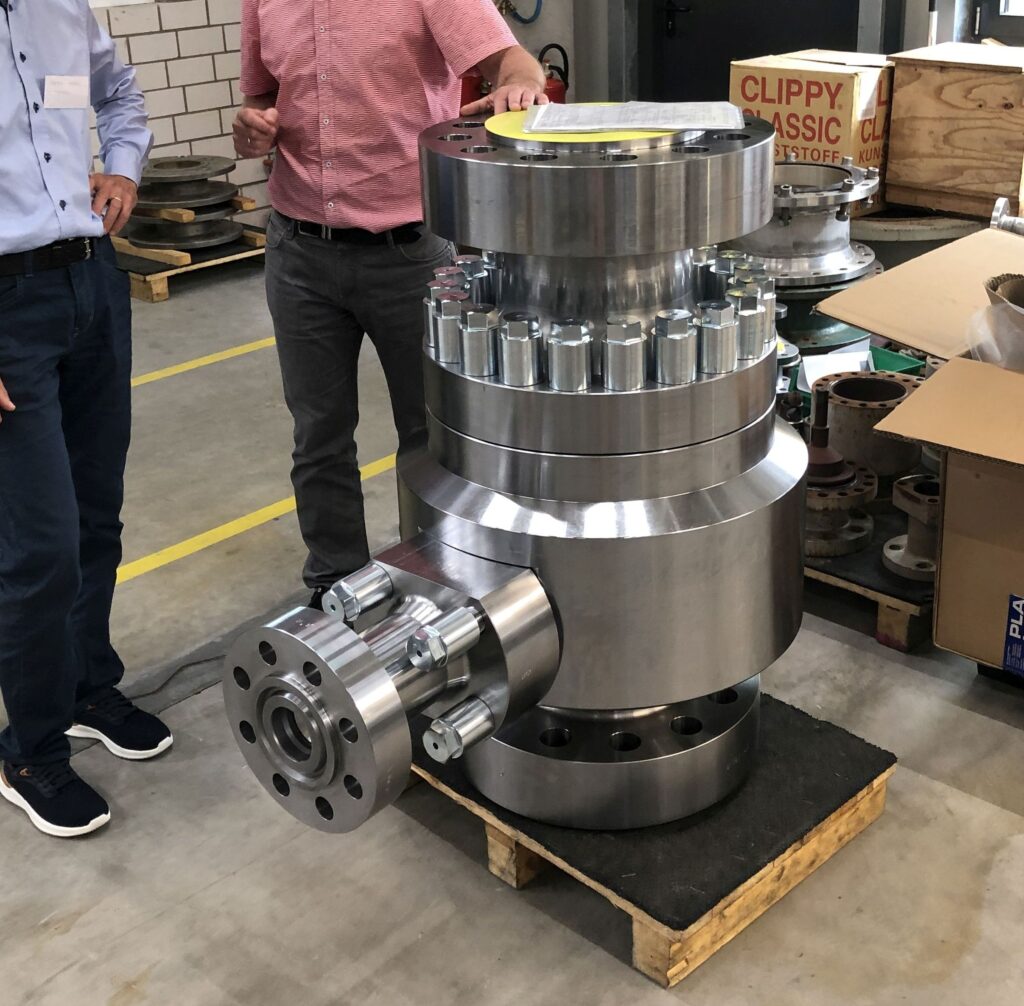
Exclusive agent for Schroeder Valves
Official spare parts distributor
Quality system, KIWA certified
Service and advice from the Netherlands
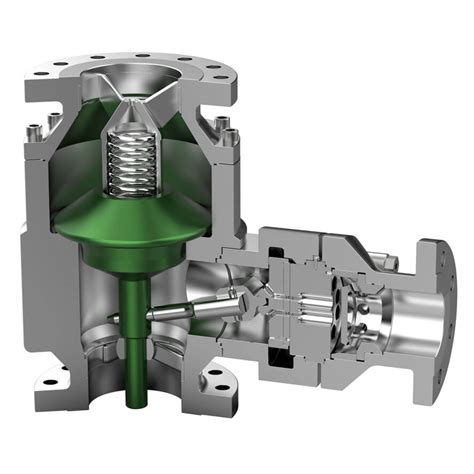
How an automatic recirculation valve works
One valve that adjusts itself to process demand.
Full load
The disc is open in the main flow. The bypass stays closed, no energy is lost.
Part load
As demand drops the disc moves down and the mechanically linked bypass opens.
Zero load
The minimum flow returns through the bypass. The pump stays protected, without external energy.
A pump protection valve for every phase of pump operation
A pump protection valve keeps a centrifugal pump safe in the moments when the process forgets about it: at start-up, at part load, when consumers close and when the pump is switched off. Those are the phases in which pumps get damaged, not during the steady hours at their design point. The valve sits on the pump discharge, lets the process flow pass through its main line and automatically opens a bypass whenever the process takes too little.
At Dutch Valve Vision we look at pump protection from the application side. A plant manager rarely asks us for a specific valve type. The question usually sounds more like this: this pump keeps needing new seals, can you do something about it? Or: our fire pump is tested every week against a closed network, is that a problem? Behind each of those questions is the same need, a pump that must survive the way it is really operated.
As official and exclusive agent of Schroeder Valves in the Benelux, we supply the pump protection valves that Schroeder has been developing for more than 70 years. On this page we walk through the operating phases in which a pump needs protection, the types of pumps that benefit most and the way we help you decide whether a pump protection valve belongs in your installation.
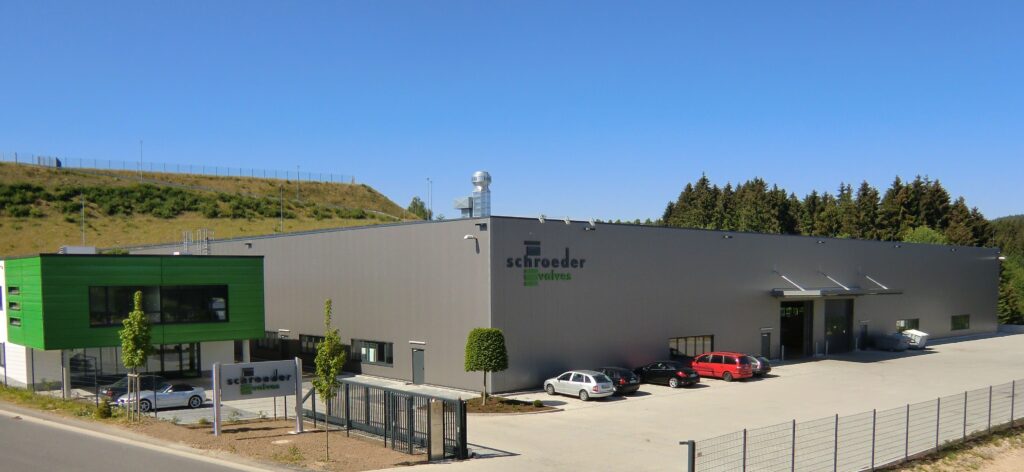
What a pump protection valve guards against, phase by phase
Every pump goes through the same cycle: it starts, it runs at varying load, and it stops. In each of these phases a different risk appears, and a well chosen valve covers all of them with one mechanism.
Start-up against a closed system
When a pump starts, the process is often not ready to take its flow. Downstream valves are closed, a boiler is not yet demanding water or a tank is being filled slowly. Without protection the pump spins up against a nearly closed discharge, and the energy of the motor goes straight into the liquid as heat. A pump protection valve opens its bypass from the first second, so the pump immediately passes its minimum flow back to a tank or suction vessel. As the process opens up and demand grows, the bypass closes gradually.
Part load and fluctuating demand
Most pumps spend a large part of their life below their design flow. Reduced production, night operation, batch processes and seasonal changes all mean lower demand. In energy plants and district heating networks, the continuous availability of pumps is essential, and the load varies with the heat or steam demand. The valve follows those fluctuations directly. Whenever process flow drops towards the minimum, the bypass opens just enough to compensate.
Sudden shut-off by the process
Sometimes the demand disappears in an instant. A downstream unit trips, an operator closes a valve or a control valve fails closed. Those unexpected closures are exactly the situations for which Schroeder designs its recirculation valves: the valve prevents damage during start-up, part load and unexpected shut-offs. Because the valve reacts to the hydraulics and not to a signal, there is no delay while a controller works out what is happening.
Stopping the pump
When the pump stops, the column of liquid in the discharge line wants to flow back. The main check disc of the pump protection valve closes and prevents reverse flow through the pump. That means no reverse rotation of the impeller and no separate check valve needed in the discharge line.
Running without throughput
Dry running is usually associated with an empty suction line, but a pump that runs without any throughput behaves in a similar way: the liquid in the casing heats up and can flash to vapour. By guaranteeing a minimum flow at all times, the valve prevents this kind of running without throughput and the cavitation, erosion and thermal stress that come with it. It cannot fill an empty suction tank, of course, so level protection on the suction side remains a separate topic.
Schroeder ARC series at a glance
A dedicated series for every pressure class and application.
A pump protection valve is a self-actuated valve on the discharge of a centrifugal pump that keeps a minimum flow through the pump during start-up, part load and shut-off, and prevents reverse flow when the pump stops. It is used on boiler feed water pumps, process pumps, fire fighting and seawater pumps and any pump with low or fluctuating demand. The Schroeder valves we supply work without external energy or control.

Schroeder SSV
Standard, compact all-in-one design.
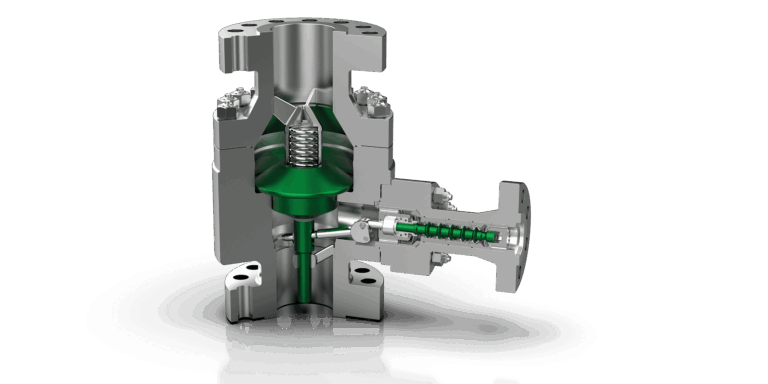
Schroeder SIP
Medium pressure, up to about 250 bar.
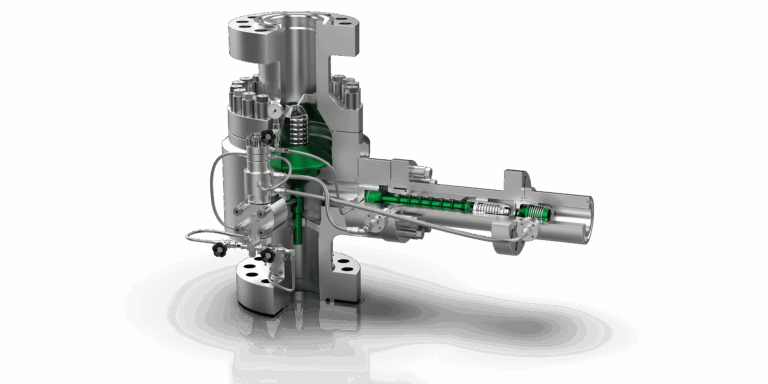
Schroeder SHP
High and very high pressure.

Schroeder SMA
ON/OFF, pilot operated.
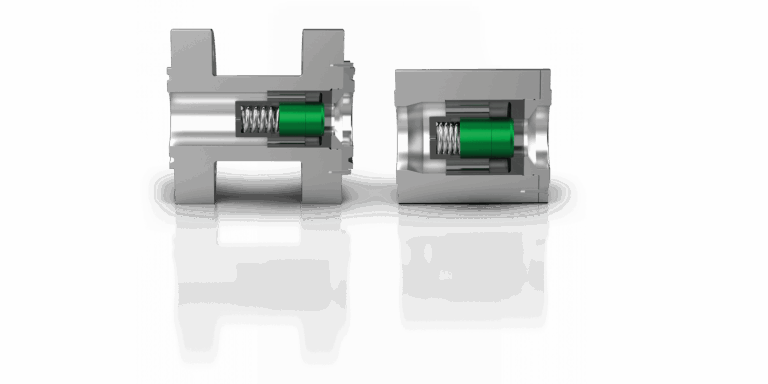
Schroeder SDV
Back pressure device with check function.

Schroeder SSD
Multi-stage throttle for high differential pressure.
Which pumps need a pump protection valve?
Not every pump needs one. A small circulation pump that always runs against an open system is unlikely to see low flow. The picture changes when demand varies, when the pump is large or runs at high pressure, when the medium is hot or volatile, or when the pump is critical for safety or production. Schroeder pump protection valves are used worldwide in energy generation, chemical processing, oil and gas and water treatment. The following applications are typical examples.
Boiler feed water pumps
Feed water pumps combine high pressure, high temperature and a demand that follows the steam load of the boiler. The water comes from the deaerator close to its boiling point, so there is little margin before it vaporises in a pump that runs at low flow. The Schroeder SIP series, designed for pressures up to about 250 bar, is widely used in boiler feed water and utility systems for exactly this reason.
Fire fighting pumps
Fire pumps are special because they spend almost their entire life on standby. They are started for periodic tests, often while no water leaves the network, and in a real emergency they must deliver immediately and without fail. During those test runs the pump would otherwise run against a closed system. A pump protection valve returns the minimum flow during the test and closes the bypass as soon as a hydrant or sprinkler system actually opens. Because the valve needs no electrical power, it also keeps working in the kind of emergency where power may not be reliable.
Seawater pumps
Seawater is one of the standard applications on the Schroeder list, together with fire fighting systems. Seawater lift, cooling and fire water pumps on offshore installations and in coastal plants face varying demand and a corrosive medium at the same time. Here material selection is matched to the medium and the process conditions, and the robustness of a mechanical design without sensors is a real advantage. Offshore and injection systems follow the same logic.
Chemical and hydrocarbon process pumps
In chemical and petrochemical plants, critical process pumps are protected against unwanted operating conditions with Schroeder valves. Ammonia, nitric acid (HNO3), LNG and other hydrocarbons are among the media for which these valves can be supplied. With volatile liquids, heating at low flow can quickly lead to vapour formation, so keeping the minimum flow is directly linked to cavitation prevention.
Water treatment and utilities
In drinking water, waste water and industrial water treatment, flow fluctuations are part of daily life. A Schroeder recirculation valve keeps the pumps stable and safe while the demand changes. The same applies to heavy industry such as steel and paper production, where utility pumps follow the rhythm of the production process.
What changes for operators when the protection is automatic
Many older plants protect their pumps with a manual bypass. The procedure says that the operator opens the bypass valve before starting the pump and closes it again once the process is running. It works as long as everybody follows the procedure every time, on every shift, including the night shift after a trip.
In practice two things go wrong. Sometimes the bypass is not opened, because the start-up is rushed or the valve is hard to reach, and the pump runs its first minutes against a closed system. More often the bypass is opened and then forgotten. The pump is protected, but it recirculates a large flow for weeks, wasting energy and heating up the return vessel, while the process receives less than it should. Neither situation is visible on a normal control room screen.
A pump protection valve takes that procedure out of human hands. The bypass opens when it is needed and closes when it is not, on every start, every trip and every change of load. Operators no longer need to remember a manual step, and shift handovers no longer carry the question of whether the bypass is still open. For maintenance, a mechanical valve without instruments means one item in the plan instead of a manual valve, a procedure and a check round.
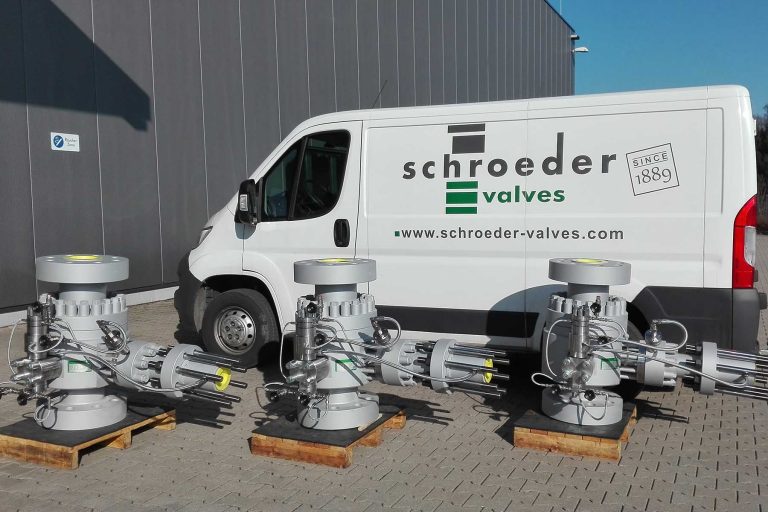
Service and overhaul
OEM
Only original Schroeder parts.
Test bench
Flow calibration and pressure test after overhaul.
Warranty
Full Schroeder factory warranty.
Installation points that make protection work in practice
A good valve can still disappoint when the installation around it is not thought through. The valve belongs on the discharge of the pump, as close to the pump as the layout allows, so that the pump and the valve see the same flow. The bypass outlet is connected to a return line that leads to a point of lower pressure, usually the suction vessel, a tank or the deaerator.
Returning the recirculated liquid to a vessel instead of straight into the suction pipe matters. The liquid has picked up heat in the pump, and a vessel gives it the chance to mix and cool down before it is pumped again. Sending it directly back to the suction can cause the temperature to creep up during long periods at low flow.
The pressure at the return point determines how much pressure the bypass has to reduce. With a small difference a standard design is enough. With a large difference the pressure reduction needs more attention, and Schroeder offers SSD multi-stage throttle valves for controlled pressure and flow reduction in those cases. Finally, the valve should be accessible for inspection and service, because even a robust mechanical valve deserves a periodic check.
Pump protection valve or relief valve: not the same job
Sometimes a pressure relief valve on the pump discharge is expected to protect the pump. That is a misunderstanding worth clearing up. A relief valve opens on pressure and protects the piping and equipment against overpressure. A pump protection valve opens on low flow and protects the pump against running without enough throughput.
A centrifugal pump running against a closed valve does not necessarily build up a dangerous pressure, because its head curve has a limit at shut-off. What it builds up is heat. The relief valve may never open in that situation, while the pump slowly overheats. The two devices can exist side by side, but one does not replace the other.
Specification ready? We will prepare a targeted quote.
Send us medium, pressure, temperature and connection. Our specialists come back with a matching proposal.
How to decide if your pump needs a pump protection valve
We usually go through a short set of questions with our customers, in conversation rather than on a form. How often does the pump start against a closed or nearly closed system? How many hours per year does it run at part load? Can downstream consumers close suddenly? Does the pump work in parallel with other pumps? Is the medium hot, volatile or aggressive? Is the pump critical for safety, as with fire water, or for production, as with feed water? And finally, what does the maintenance history of the pump tell us?
If several of these answers point towards low flow risk, a pump protection valve is usually the most economical way to reduce it. It replaces a conventional minimum flow loop with flow meter, controller and control valve, so there are fewer components that can fail and lower maintenance costs. Less wear on the pump itself means fewer repairs and less unplanned downtime over the life of the installation.
Pump protection with Dutch Valve Vision
Once we know the pump and the application, we select the right Schroeder series. The SSV series covers general industrial applications, and the SSV with control disc handles high minimum flows up to about 70 percent of the main flow for sensitive or heavily loaded pumps. The SIP series goes up to about 250 bar, the SHP series covers high and very high pressures with strongly fluctuating loads, and the pilot operated SMA series provides ON/OFF minimum flow control at very high pressure.
Dutch Valve Vision works with an ISO 9001 certified quality management system, certified by KIWA, and supplies to DIN and ANSI standards. We support you with advice, technical support and reliable supply chain management, and after installation with original Schroeder spare parts and repairs that come with a full Schroeder factory warranty.
Would you like to know whether one of your pumps needs protection? Call us on +31 (0)70-2210560 or email sales@dutchvalvevision.com, Monday to Friday from 09:00 to 17:00. Tell us which pump it is and how it is operated, and we will give you a clear answer.
Frequently asked questions about pump protection valve
Question not listed? Our specialists are happy to help.
- +31 (0)70-2210560
- sales@dutchvalvevision.com
- Vlotlaan 641, 2681 TZ Monster, the Netherlands
- Mon-Fri 09:00-17:00
What does a pump protection valve protect against?
A pump protection valve protects a centrifugal pump against operating at too low a flow. At low flow the pump heats up the liquid in its casing, which can lead to vaporisation, cavitation and erosion. Vibration and extra loads on bearings and seals follow. The valve opens a bypass automatically when process demand drops, so the pump always passes its minimum flow. It also closes its main check disc when the pump stops. That prevents reverse flow and reverse rotation of the impeller. The protection works during start-up, part load, sudden shut-off and shut-down. All of this happens without external energy or control.
Which pumps need a pump protection valve?
Pumps with varying or low demand benefit most from a pump protection valve. Typical examples are boiler feed water pumps, fire fighting pumps and seawater pumps. Process pumps in chemical and petrochemical plants are another important group. Pumps handling hot, volatile or aggressive media are especially sensitive to low flow. The same applies to pumps that often start against a closed system. Pumps working in parallel on a common header are also at risk. A small pump that always runs against an open system may not need one. We help you assess each pump based on how it is really operated.
Why do fire fighting pumps need a pump protection valve?
Fire pumps spend most of their life on standby and are started regularly for tests. During those tests, little or no water may leave the network. The pump then runs against a closed system and heats up the water in its casing. A pump protection valve returns the minimum flow during the test run. When a real demand occurs, the bypass closes and the full flow goes to the fire water network. The valve works without electrical power or control signals. That is a clear advantage in emergency situations. Fire fighting and seawater systems are standard applications for Schroeder valves.
Can a pump protection valve prevent dry running?
A pump protection valve prevents a pump from running without throughput. By guaranteeing a minimum flow, it stops the liquid in the casing from heating up and flashing to vapour. That removes a common cause of running dry with a full suction line. It also reduces the risk of cavitation and erosion. However, the valve cannot supply liquid that is not there. If the suction tank runs empty, the pump still loses its supply. Level protection on the suction side remains a separate safety function. We always look at both sides when we assess a pump.
Is a pump protection valve suitable for seawater?
Yes, seawater is one of the standard applications for Schroeder pump protection valves. They are used in seawater and fire fighting systems, including offshore and injection systems. Seawater is corrosive, so the material execution has to match the medium and the process conditions. We discuss the material choice with you based on your specification. The mechanical design without sensors is robust in offshore environments. There is no cabling or instrumentation to maintain at the valve. That keeps the maintenance effort low on installations that are hard to reach. We advise on the series and execution that fit your pump.
Does a pump protection valve also protect during shut-down?
Yes, the check function protects the pump when it stops. The main check disc closes as soon as the forward flow stops. That prevents the liquid in the discharge line from flowing back through the pump. Without it, the impeller could be driven in reverse. The integrated check function means no separate check valve is needed after the pump. During the run-down the bypass stays open, so the pump keeps its minimum flow until it stands still. The next start then begins with the bypass ready. No reset or intervention by an operator is required.
How is a pump protection valve different from a relief valve?
A relief valve opens on pressure and protects equipment against overpressure. A pump protection valve opens on low flow and protects the pump itself. A centrifugal pump against a closed valve does not always reach a dangerous pressure. What it does build up is heat in the liquid. In that case a relief valve may never open, while the pump overheats. The two devices have different tasks and can be installed side by side. One cannot replace the other. We are happy to help clarify this during a design review.
How does Dutch Valve Vision help with pump protection?
We start with the pump and the way it is operated. We ask for the pump data, the minimum flow, the process flows, the medium and the pressures. Based on that we advise whether a pump protection valve is needed and which Schroeder series fits. As exclusive Schroeder agent for the Benelux we handle advice, technical support and supply. We work with an ISO 9001 certified quality management system, certified by KIWA. After installation we supply original Schroeder spare parts. Repairs come with a full Schroeder factory warranty. You can reach us at sales@dutchvalvevision.com or +31 (0)70-2210560.
Find out if your pump needs protection
Tell us which pump you want to protect, how it is operated and what medium it handles. We will advise whether a Schroeder pump protection valve fits and which series.
- +31 (0)70-2210560
- sales@dutchvalvevision.com
- Vlotlaan 641, 2681 TZ Monster, the Netherlands
- Mon-Fri 09:00-17:00