
Static mixer PVC
When a plastic static mixer is the right choice, how PVC, PE and PVDF differ and which limits to respect.
- Exclusive STRIKO agent Benelux
- ISO 9001 · KIWA
- Engineering support from Monster (NL)
Four steps that repeat in every mixing element.
Split
Mixing elements divide the flow into smaller partial streams.
Redirect
The partial streams are redirected, creating shear.
Recombine
The streams merge again, element after element.
Homogeneous
No moving parts, energy taken from the pressure drop.
A static mixer in PVC, PE or PVDF is a corrosion free, low maintenance option for dosing chemicals into water and other aqueous streams. PVC suits many water treatment duties, PE adds toughness and PVDF extends chemical and temperature resistance. Dutch Valve Vision supplies static mixers in these plastics as well as in stainless steel and carbon steel.
- Plastic options: PVC, PE and PVDF
- Also SS316, 1.4404 and 1.4571
- No moving parts, easy to dismantle
- Exclusive STRIKO agent for the Benelux
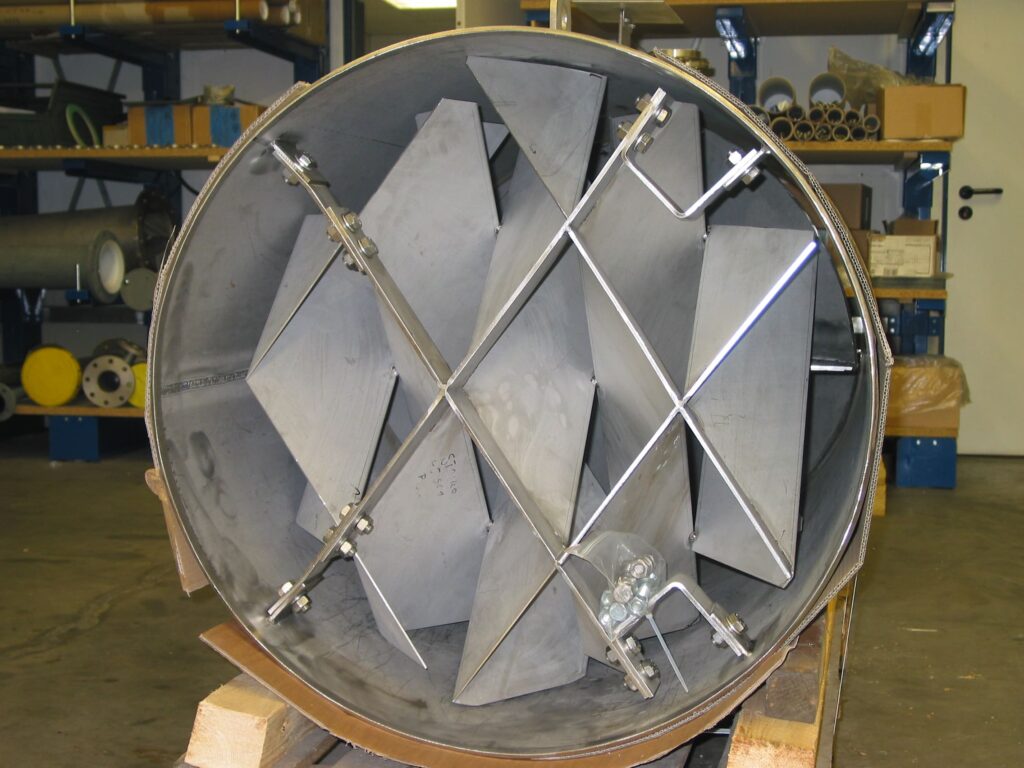
Static mixer PVC: when plastic makes more sense than metal
A static mixer PVC version is often the first option engineers look at when a chemical has to be dosed into water, and for good reason. Many of the chemicals used in water treatment and chemical dosing are aggressive towards carbon steel and, in some concentrations, even towards stainless steel. A plastic mixer does not rust, does not pit and does not need a protective coating that can be damaged. For a large share of water and chemical dosing duties, it simply outlasts the alternatives at a lower weight. The low weight also makes a static mixer PVC section easier to handle during installation and maintenance, which counts when the mixer sits in a crowded pipe rack or a small dosing room.
The principle of the mixer itself does not change with the material. Inside a pipe section, a series of mixing elements splits the flow, redirects it and brings it back together until the dosed chemical is spread evenly across the cross section. The energy comes from the pressure drop across the mixer. There are no moving parts and no seals that wear. What changes with a plastic design is the envelope within which the mixer can operate safely: the chemicals it tolerates, the temperatures it accepts and the pressures it can hold.
At Dutch Valve Vision we work with static mixers in several materials. Plastics such as PVC, PE and PVDF are among them, alongside stainless steel such as SS316, 1.4404 and 1.4571, carbon steel and special coatings or linings for aggressive media. We are the exclusive agent of STRIKO Verfahrenstechnik for the Netherlands, Belgium and Luxembourg. This page focuses on the plastic options: when a static mixer PVC design is the right call, when PE or PVDF is the better choice, and which limits you should respect.
PVC, PE and PVDF: three plastics with three profiles
The three plastics that come up most often for static mixers each have their own strengths. They are not interchangeable, and the choice between them should follow from the chemical, the temperature and the mechanical situation in your line.
PVC
PVC is the workhorse of plastic pipework in water treatment. It is rigid, widely available and resistant to many acids, alkalis and salt solutions at the concentrations and temperatures common in water treatment. Pipe systems in PVC are usually joined by solvent cementing or with flanges, which makes a static mixer PVC section easy to fit into an existing PVC line. The main limitations are temperature and impact. PVC loses stiffness as temperature rises and can become brittle in the cold. It is therefore best suited to duties at moderate, fairly stable temperatures.
PE
Polyethylene is tougher and more flexible than PVC. It handles impact and ground movement better and has good resistance to many acids and alkalis. PE pipe systems are typically joined by butt fusion or electrofusion welding, which gives a homogeneous joint without adhesive. Its temperature range is broadly comparable to that of PVC, and because it is less stiff, a PE mixer and the pipework around it usually need more support. PE is a logical choice where the rest of the line is already in PE or where toughness matters more than rigidity.
PVDF
PVDF is a fluoropolymer and sits in a different class. It resists a much broader range of chemicals, including many strong acids, oxidising agents and halogen compounds that would attack PVC or PE. It also withstands markedly higher temperatures than the other two. The trade off is cost. A PVDF mixer is considerably more expensive than a PVC version, so it is typically chosen when the chemistry or the temperature leaves no room for the cheaper plastics. In high purity applications, its low tendency to release substances into the medium is a further argument.
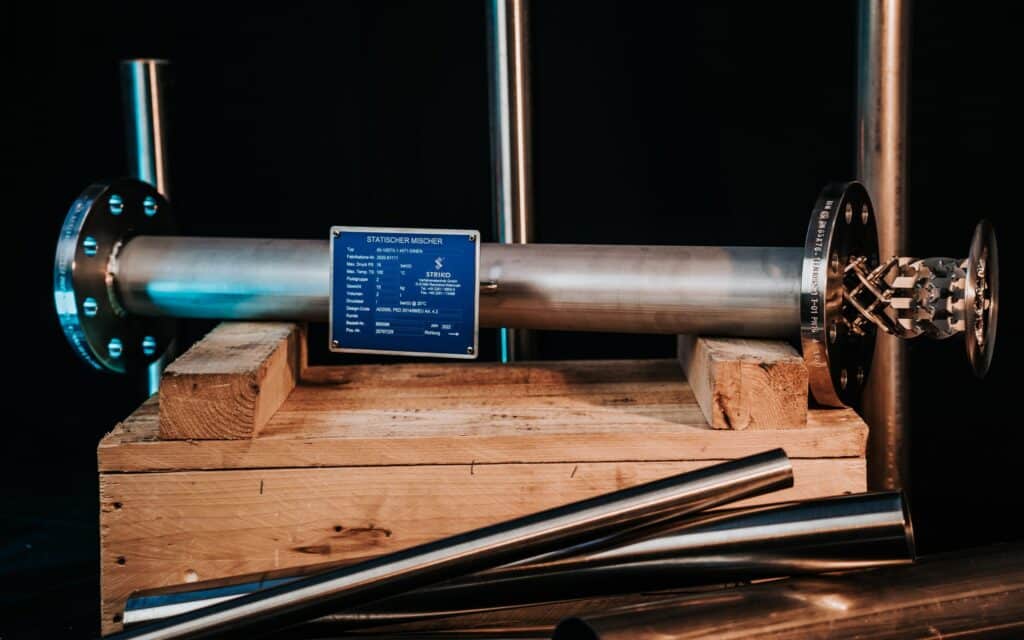
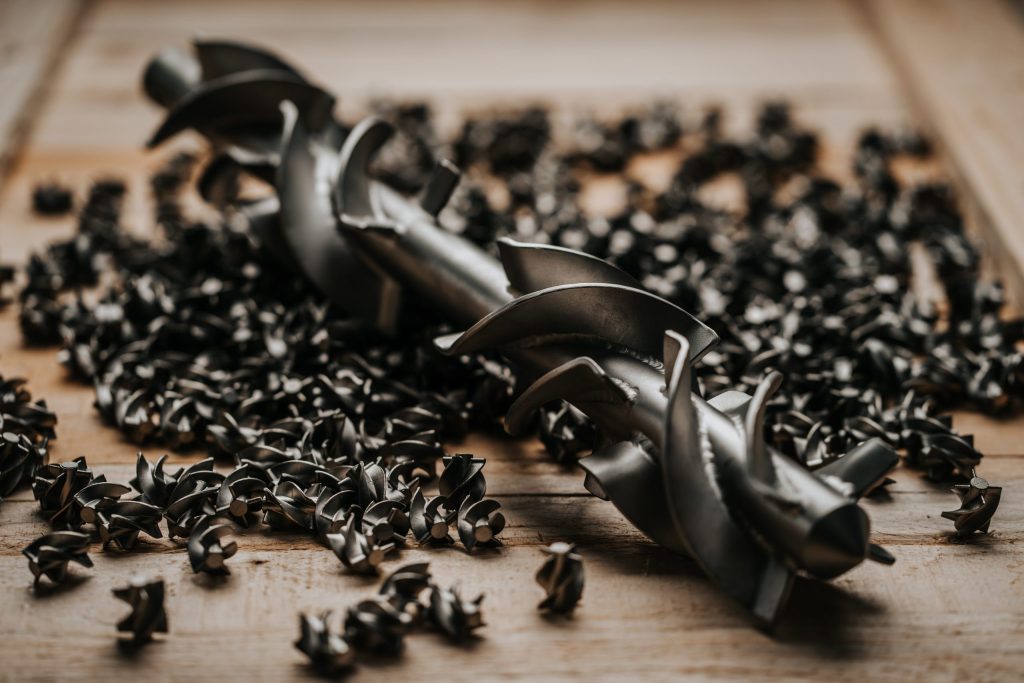
Temperature and pressure: the limits of a static mixer PVC design
A plastic mixer is not a metal mixer made of a different material. Plastics behave differently under load, and those differences shape how a static mixer PVC, PE or PVDF section should be specified and installed.
The first difference is the link between temperature and pressure. For plastics, the allowable pressure falls as the temperature rises. A PVC line that is comfortably rated at a cool water temperature may have a substantially lower rating when the water is warm. This is often described as derating, and manufacturers publish derating factors for their materials. For any plastic mixer, the question is never only what pressure it can take, but what pressure it can take at the highest temperature it will see.
The second difference is time. Plastics under constant stress slowly deform, a phenomenon known as creep. Pressure ratings for plastic pipe systems are therefore based on long term behaviour, not on a short burst test. A mixer that holds a pressure for an hour may not hold the same pressure for years at elevated temperature. Design ratings take this into account, which is why they are lower than short term strength figures.
The third difference is sensitivity to shock. Pressure surges, such as water hammer when a valve closes quickly or a pump trips, place a sudden load on the line. Plastics, and PVC in particular at low temperatures, handle such shocks less gracefully than steel. It is worth checking how quickly valves close and whether surge protection is in place before settling on a plastic mixer.
The fourth difference is thermal expansion. Plastics expand and contract far more with temperature than steel does. A plastic mixer in a line that sees temperature swings needs supports and pipe routing that allow for that movement, otherwise the stress ends up in the flanges or in the mixer itself.
Finally, there is the environment. Plastics exposed to direct sunlight outdoors can degrade over time unless they are protected or stabilised. And a line that can freeze, or that runs in a cold space, brings PVC closer to the brittle end of its range. None of these points rules out a plastic mixer. They simply mean that the actual operating envelope, including start up, shut down and upset conditions, should be known before the material is chosen. We confirm the pressure and temperature suitability per project rather than relying on a general figure.
Selection starts with four data points
With these we choose series, diameter and number of elements.
Viscosity
Of the main stream and of the added component.
Flow rates
Main flow and dosing, also at part load.
Temperature and pressure
Determine material and allowable pressure drop.
Mixing quality
How homogeneous the product must be downstream.
Chemical dosing with a static mixer PVC setup
Chemical resistance is the main reason to choose plastic, but it is also where a quick assumption can go wrong. Resistance tables for plastics list a chemical at a given concentration and temperature. The same chemical at a higher concentration or a higher temperature can move from resistant to limited or not recommended.
For a static mixer, the concentration that matters most is the one right at the injection point. The mixer elements are the first surfaces to meet the dosed chemical before it has been diluted. A static mixer PVC section that copes perfectly well with the treated water downstream may still see a chemical at full strength on its first elements. That is why we always look at the dosed chemical in its delivered concentration, not only at the final mix.
Consider an engineer who is adding a neutralisation step to an existing waste water line in PVC. The logical choice seems to be a mixer in the same material. The caustic solution to be dosed, however, arrives at high concentration and the waste water can be warm after certain production steps. In that case the combination of concentration and temperature at the injection point decides whether PVC is still the right material, or whether PVDF or a stainless steel mixer is the safer option. Asking that question at the design stage is far cheaper than finding out through a leak.
Oxidising chemicals deserve special attention. Some disinfectants and oxidising agents can attack PVC and PE over time, especially at higher concentrations. PVDF is generally more resistant to this group. Solvents and certain organic compounds are another area where PVC and PE can be affected. Where the chemistry is mixed or changes over time, we prefer to be cautious and to review compatibility for every component rather than for the main one alone.
Specification ready? We will prepare a targeted quote.
Send us medium, pressure, temperature and connection. Our specialists come back with a matching proposal.
Connecting a plastic static mixer to the line
A static mixer PVC or PE section has to fit into the surrounding pipework, and the connection method matters. In an all plastic line, the mixer can be solvent cemented or welded like any other pipe section, or connected with flanges. Flanged connections make it easier to remove the mixer for inspection or cleaning, which is one of the practical benefits of a static mixer in the first place.
Where a plastic mixer is connected to metal pipework, the flange joint needs care. Plastic flanges should not be tightened like steel flanges. Excessive bolt torque can crack or deform them, while uneven tightening can create leaks. Backing rings, suitable gaskets and a controlled tightening sequence all help. The weight of adjacent metal pipework should not rest on the plastic mixer, so the line on either side needs its own supports.
Isolation valves on both sides of the mixer make maintenance simple. We supply standard industrial valves such as ball valves, butterfly valves and check valves, in DIN, EN and PN versions and in ASME, API and Class versions, so the valves around the mixer can be matched to the existing line.
Plastic, stainless steel or coated: making the choice
A plastic mixer is not always the answer. Stainless steel such as SS316, 1.4404 or 1.4571 becomes the logical choice when temperatures or pressures exceed what the plastics can handle, when hygienic requirements call for steam cleaning or inline sterilisation, or when the line is already stainless and a plastic section would introduce a weak point. Carbon steel remains an option for media that do not corrode it. Special coatings or linings offer a middle route for aggressive media at conditions where a solid plastic mixer is not suitable.
In practice the decision often comes down to a few questions. What is the highest temperature the mixer will see, including upsets? What is the highest pressure, including surges? Which chemicals are present, at which concentration, at the injection point? And what material is the rest of the line made of? With those four answers, the choice between a static mixer PVC design, PE, PVDF or a metal mixer usually becomes clear.
Cost is the fifth question, and it is a fair one. A static mixer PVC section is usually the most economical option where it fits the conditions, and PVDF or stainless steel only earn their higher price when the chemistry, temperature or hygiene demands them. Choosing an expensive material by default is not a safe choice so much as an unnecessary one. Choosing a cheap material outside its envelope is worse, because the savings disappear with the first leak. We aim for the material that meets the real conditions with a sensible margin, and we explain why.
What we need to advise on your plastic static mixer
To recommend a material and a mixer, we need the dosed chemical and its concentration as delivered, the composition of the main stream, the temperature range including start up and upset conditions, the operating pressure and any pressure surges, and the flows of the main stream and the dose with minimum and maximum. The required mixing quality and the acceptable pressure drop complete the process picture. For installation, the pipe diameter, the material of the existing line and the connection type are useful.
With that information we select the mixer, its elements and its material. After installation, validation with a pressure test and leak detection, measuring points for mixing quality and, where useful, simulations confirms that the mixer performs as intended. Our expertise covers selection and sizing, integration with valves, instrumentation and process automation, and support with installation, validation and optimisation. Dutch Valve Vision works under an ISO 9001 certified quality management system, certified by KIWA. Contact us at sales@dutchvalvevision.com or +31 (0)70-2210560, Monday to Friday from 09:00 to 17:00.
Frequently asked questions about static mixer pvc
When is a PVC static mixer a good choice?
A PVC static mixer is a good choice for dosing chemicals into water at moderate temperatures and pressures. PVC resists many acids, alkalis and salt solutions at the concentrations common in water treatment. It does not corrode, so there is no coating to maintain. It is also light and easy to fit into existing PVC pipework. The limits lie in temperature and impact resistance. PVC loses stiffness when warm and can become brittle when cold. For hotter or more aggressive duties, PVDF or stainless steel is often more suitable. We help you check whether PVC fits your conditions.
What is the difference between PVC, PE and PVDF for a static mixer?
PVC is rigid, widely available and well suited to many water treatment chemicals. PE is tougher and more flexible, which helps with impact and movement. Its temperature range is broadly similar to that of PVC. PVDF is a fluoropolymer with much broader chemical resistance. It also withstands considerably higher temperatures than PVC and PE. The price of PVDF is correspondingly higher. The choice follows from the chemical, the temperature and the pipework around the mixer. We advise on the most suitable plastic for your application.
How hot can a plastic static mixer run?
That depends on the plastic, the pressure and the chemical. For all plastics, the allowable pressure falls as the temperature rises. PVC and PE are best suited to moderate temperatures. PVDF can handle markedly higher temperatures. Manufacturers publish derating factors that link temperature and allowable pressure. Long term exposure matters too, because plastics slowly deform under constant stress. We therefore confirm the suitability for each project based on your actual conditions. Send us the full temperature range, including start up and upsets.
Can a plastic static mixer handle pressure surges?
Plastics handle sudden pressure surges less well than steel. Water hammer from fast closing valves or pump trips puts a sudden load on the line. PVC is particularly sensitive at low temperatures. That does not rule out a plastic mixer, but surges should be considered in the design. Check how quickly valves close and whether surge protection is present. The pressure rating of the mixer should cover the realistic peak, not only the normal operating pressure. Where large surges cannot be avoided, a metal mixer may be the better option. We are happy to review this with you.
Is PVC resistant to all water treatment chemicals?
No, PVC is resistant to many but not all water treatment chemicals. Resistance depends on the chemical, its concentration and the temperature. Some oxidising agents and disinfectants can attack PVC over time, especially at higher concentrations. Certain solvents and organic compounds can also affect it. The highest concentration occurs right at the injection point, where the mixer elements meet the undiluted chemical. That is the concentration to check, not only the final mix. PVDF is generally more resistant to a wider range of chemicals. We review compatibility based on the chemical data you provide.
How do I connect a plastic static mixer to steel pipework?
Flanged connections are the usual method between a plastic mixer and steel pipework. Plastic flanges should not be tightened with the same torque as steel flanges. Excessive or uneven bolt load can crack or deform them. Backing rings and suitable gaskets help distribute the load. The weight of the steel pipework must not rest on the plastic mixer. The line on both sides therefore needs its own supports. Allow for thermal expansion of the plastic where temperatures vary. Isolation valves on either side make later inspection easy.
How much maintenance does a plastic static mixer need?
A plastic static mixer has no moving parts, so there is virtually no mechanical wear. It does not corrode like carbon steel and needs no coating repairs. In clean water applications it can run for long periods without attention. Where solids or deposits are present, periodic inspection is sensible. Flanged mixers can be taken out of the line for cleaning or inspection without much effort. Outdoors, check that the plastic is protected against long term sunlight exposure. Also inspect supports and flanges during planned stops. We can advise on a maintenance approach that fits your process.
What information do you need to recommend a plastic static mixer?
Start with the dosed chemical and its concentration as delivered. Add the composition of the main stream. Give us the temperature range, including start up and upset conditions. State the operating pressure and any pressure surges you expect. Provide the flows of the main stream and the dose, with minimum and maximum. Tell us the required mixing quality and the acceptable pressure drop. The pipe diameter and the material of the existing line are useful for installation. Send everything to sales@dutchvalvevision.com and we will respond as soon as possible.
Ask which plastic mixer suits your chemical
Send us the dosed chemical and its concentration, the temperature range, the operating and peak pressure and the flows. We will advise on PVC, PE, PVDF or a metal alternative.
- +31 (0)70-2210560
- sales@dutchvalvevision.com
- Vlotlaan 641, 2681 TZ Monster, the Netherlands
- Mon-Fri 09:00-17:00