
Extruder rupture disc
How to protect an extruder against blockages and viscosity swings, and why melt temperature decides the real burst pressure.
- Exclusive STRIKO agent Benelux
- ISO 9001 · KIWA
- Engineering support from Monster (NL)
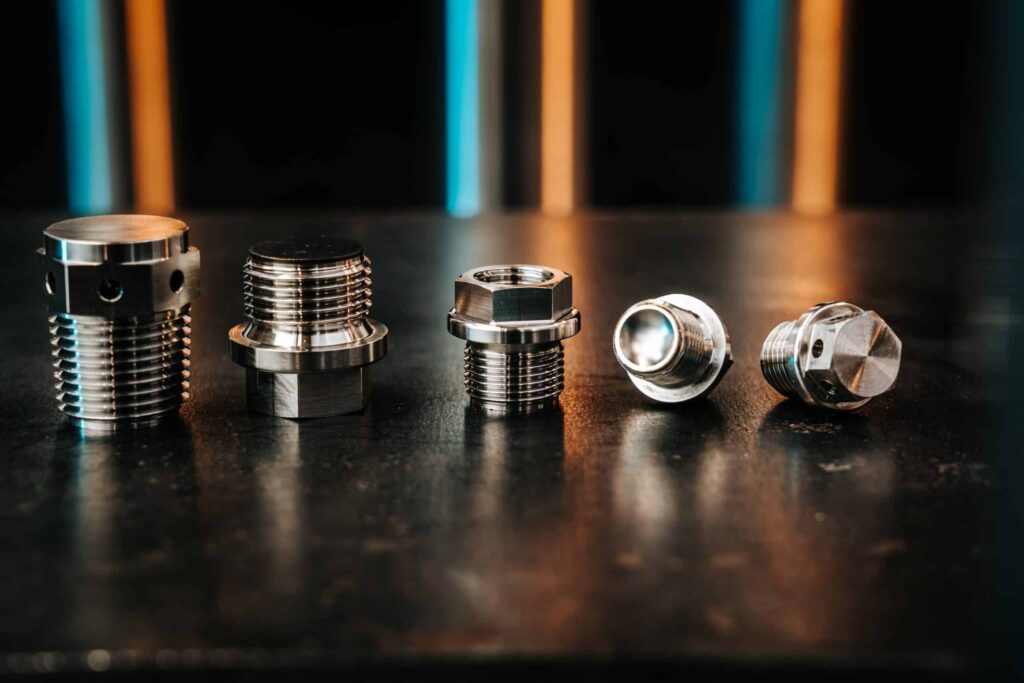
STRIKO extruder metal rupture discs
Burst plugs with threaded connection
Protects screw, barrel and seals
Temperature affects the burst pressure
Why an extruder rupture disc is the last safeguard on the barrel
An extruder rupture disc is one of those components nobody thinks about until the day it saves a screw. Anyone searching for one usually has a concrete reason: a new line that needs protection, a disc that opened and has to be replaced, or a near miss that made someone realise how quickly pressure can build in a barrel full of polymer melt. We understand that urgency, and we also know that this is a very specific application where a generic disc will not do.
An extruder is a pressure machine by nature. The screw conveys material forward, melts it and pushes it through a die, and the pressure in front of the screw is the result of that pushing. As long as the melt flows freely, the pressure stays within its normal band. The moment something blocks the flow, the screw keeps conveying and the pressure has nowhere to go. It climbs fast, much faster than in a typical storage vessel or reactor.
Melt pressure sensors and alarms are the first line of defence on most lines. They can trip the drive when pressure rises. But sensors can fail, trips can be bypassed and a drive does not stop instantly. The extruder rupture disc is the mechanical last line: no power, no signal, no software. It opens at its set pressure and relieves the barrel before the screw, the barrel or the seals are damaged.
At Dutch Valve Vision we supply STRIKO extruder metal rupture discs and STRIKO burst plugs. We are the exclusive STRIKO agent for the Netherlands, Belgium and Luxembourg. STRIKO builds its extruder discs for demanding applications, and it specialises in equipment for viscous and highly viscous media, which is exactly the world of polymer processing. On this page we look at why extruder pressure behaves the way it does, how a disc and a burst plug compare, and why temperature is the factor that decides if your protection works.
How pressure runs away in an extruder
In extrusion, overpressure does not come out of nowhere. Two causes dominate: blockages and unexpected changes in viscosity.
A blockage can take many forms. A screen pack fills up with contamination faster than expected. A piece of foreign material enters the feed and lodges in the die. A die or adapter that was cleaned and reassembled has a restriction that was not there before. In each case the flow path narrows while the screw keeps delivering the same volume, and the pressure rises steeply.
Viscosity changes are more subtle. Polymer melt is viscous by nature, and its viscosity depends strongly on temperature and on the material itself. Picture a start up after a stop, where one heating zone has not quite reached temperature and partly solid material sits in front of the screw. Or a switch to a different grade with a higher melt viscosity, run at the settings of the previous product. Or a heater that fails during production and lets a zone cool down. In all of these situations the melt suddenly resists flow much more than normal, and the pressure goes up with it.
Material can also change in the barrel. Some polymers degrade, crosslink or build deposits when they stay too long at temperature. Those deposits narrow the flow path gradually until one day the pressure jumps. An operator watching the melt pressure trend may see it creep up for weeks before the event, but the event itself can be over in seconds.
What these scenarios share is speed. The screw is a positive conveying element, so it does not slow down on its own when resistance rises. That is why pressure relief on an extruder has to respond immediately and why a single use, passive element is such a good fit.
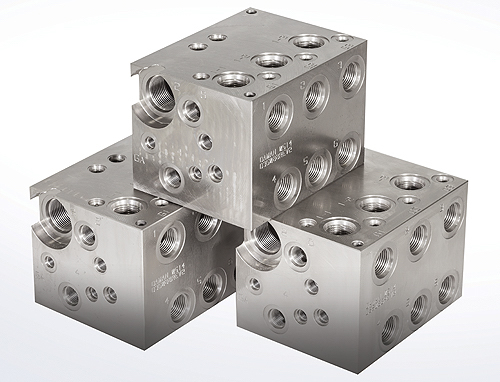
Extruder rupture disc or burst plug?
Both do the same basic job. They open once at a predefined pressure, often in combination with a defined temperature, and relieve the system directly. Both are non-reclosing and have to be replaced after they have opened. The difference lies mainly in form and mounting.
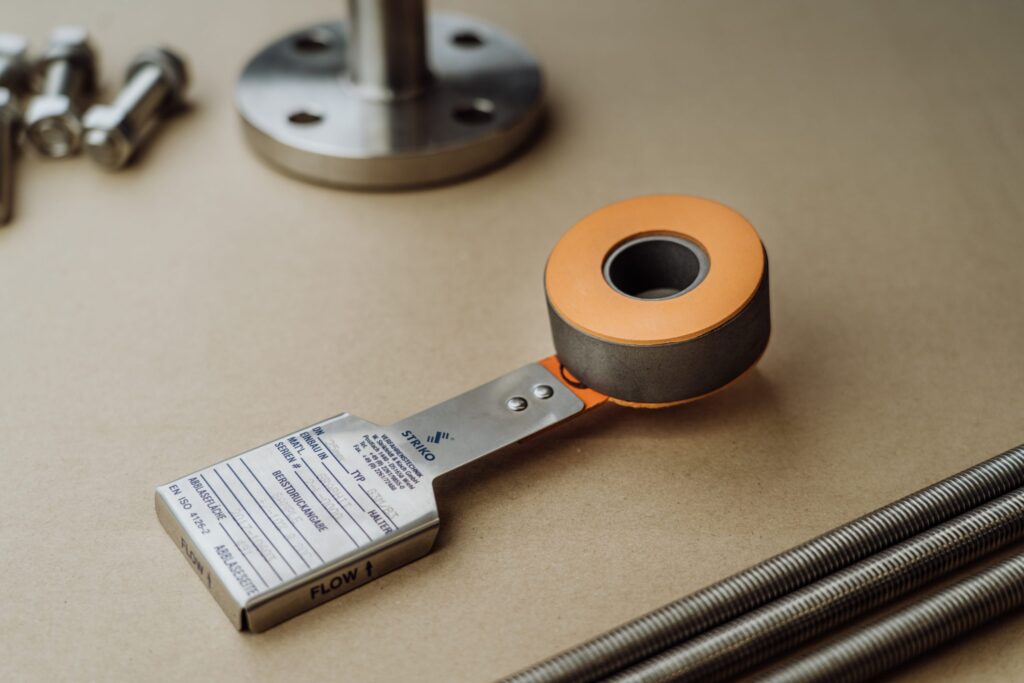
A burst plug is a compact pressure relief element that is usually mounted with a threaded connection in a line, an extruder, a pump or a pressure vessel. Inside the plug sits a calibrated burst element. When the set limit is exceeded, that element fails in a controlled way and opens a path through which the medium can escape. A burst plug has no moving parts, is gas and liquid tight in normal operation, opens fully when it responds and is always replaced after activation. Its compact design suits the limited installation space that is typical on an extruder barrel or adapter.
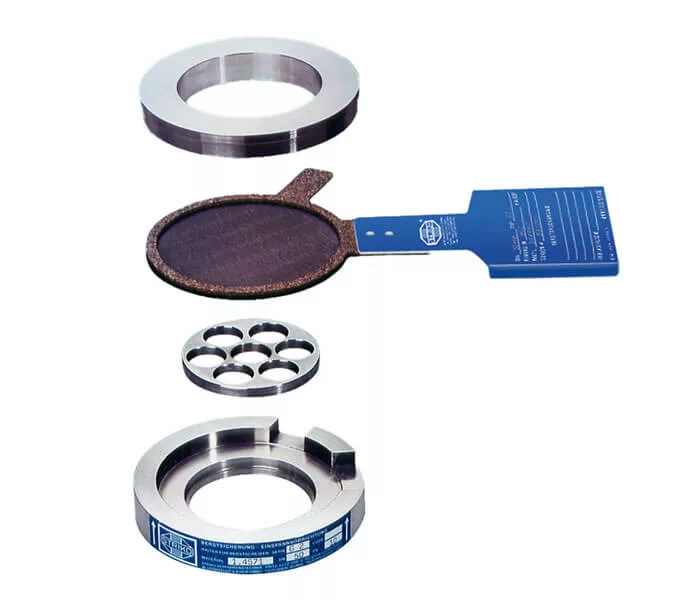
An extruder rupture disc from the STRIKO range is a metal disc designed for these demanding conditions. Which form suits your line depends on the available port, the size of the opening you need, the connection and the way the released melt has to be led away safely. In our experience the question is rarely which one is better in general, and nearly always which one fits the specific position and scenario.
In many installations, burst plugs and discs are used as the primary protection against specific scenarios such as blockages. In others they serve as secondary protection next to a safety valve. Either way, they are selected as part of the total safety concept of the line, not as a loose part.
Compared with a spring loaded safety valve, the passive element has clear advantages on an extruder. It is fully sealed, with no emissions or leakage in normal operation. It responds quickly to sudden pressure peaks. It fits in a small space. And its failure behaviour is predictable, independent of spring or mechanical settings that can drift or stick in a hot, polymer laden environment.
An extruder rupture disc or burst plug is a single use pressure relief element mounted on the extruder, usually with a threaded connection, that opens when a blockage or a sudden viscosity change drives the melt pressure up. It protects screw, barrel and seals from damage. Because temperature lowers the effective burst pressure, it must be selected on the temperature during the critical scenario, not only on the design pressure.
Temperature: why the burst pressure of an extruder rupture disc moves
If there is one point to take away from this page, it is this one. The burst pressure of a burst plug or an extruder rupture disc is not a fixed number that exists separately from its surroundings. Temperature has a strong influence. At higher temperatures the effective burst pressure can fall, depending on material and design.
On an extruder that effect is impossible to ignore. The element sits in or near the melt, and melt temperatures are high by definition. Worse, the temperature in the critical scenario may differ from the temperature in normal operation. A start up with a cold zone is cooler than normal. A line with an overheating zone or a degrading material may be hotter. The element has to open at the right pressure in the situation that actually threatens the machine.
That is why selection must always be based on three things together: the maximum allowable pressure of the installation, the working pressure including peaks, and the temperature during the critical scenario, not only the nominal operating temperature. A disc selected on a cold bench value and installed in a hot barrel will not behave as the tag suggests.
STRIKO burst plugs are available in different material combinations, such as stainless steel and special alloys, so that they function reliably at high temperatures and with corrosive media. The choice of material and design is made together with the temperature data, never before it.
What we need for the right selection
- Medium and composition
- Operating pressure and pressure peaks
- Required burst pressure
- Temperature, normal and in the relief scenario
- Connection and installation space
Designs in the STRIKO range
Every application needs its own rupture disc. These are the designs we supply most often.
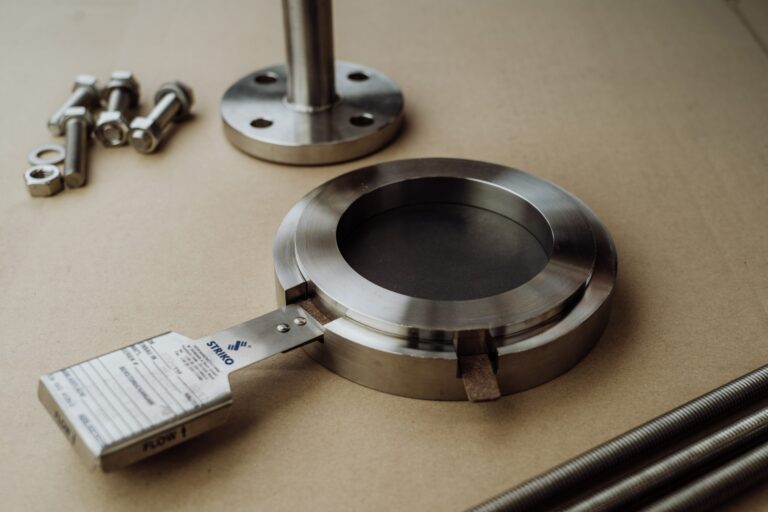
Graphite rupture disc
Corrosion resistant without coating, DN25 to DN400, between ANSI or DIN flanges.

Rupture disc holder
Correct positioning, reproducible loading and a reliable seal.
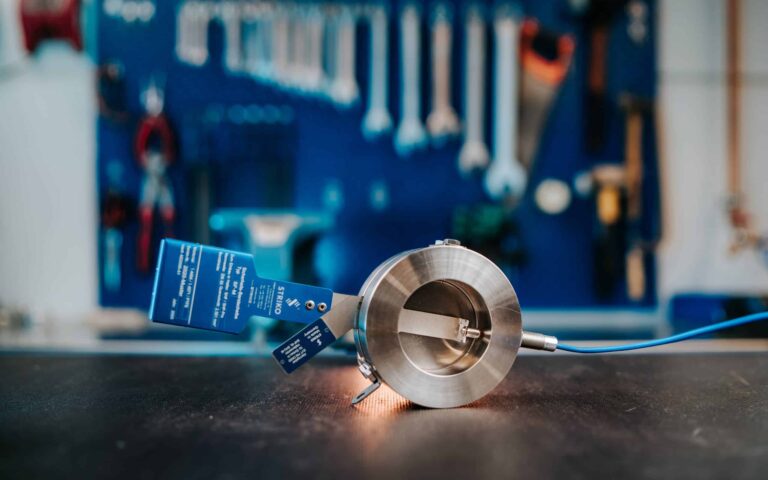
Burst indicator
Signals an opened disc directly to PLC, SCADA or DCS.
Reverse acting rupture disc
Loaded in compression, resistant to pressure cycling.
Melt, deposits and the right materials
The medium matters as much as the pressure. Corrosion, fouling, polymerisation or the presence of particles all call for specific materials and designs. A polymer that leaves deposits on the burst element can change its behaviour over time. Additives or fillers can be abrasive. Some processes release corrosive components at melt temperature. Each of these points has to be on the table when the element is chosen.
The operating ratio deserves attention as well. The relation between the maximum operating pressure and the burst pressure influences service life and reliability. On an extruder the normal melt pressure can fluctuate with throughput, screen condition and material batch. If the set pressure sits too close to that fluctuating band, the element is loaded near its limit day after day, and its life shortens. If it sits too far above, the protection comes too late for the equipment it is meant to save.
Discharge direction is the last practical point. When the element opens, hot melt and gases leave the barrel under pressure. Safe discharge of the medium is essential for people and installation. The position of the port, the direction of the outlet and the space around it should be considered in the design, so that the relief event protects the machine without creating a new hazard for the operator standing next to it.
After an opening, the element has done its job and must be replaced, never repaired or reused. That is the moment to ask why it opened. Was it a blockage, a cold start, a new grade or a failing heater? The answer tells you whether the set pressure and temperature basis are still right, or whether the line needs a different extruder rupture disc from now on. Keeping spare elements in stock for every protected position turns that replacement into a short stop instead of a long wait, and it removes the temptation to restart a line without its last line of defence.

Specification ready? We will prepare a targeted quote.
Send us medium, pressure, temperature and connection. Our specialists come back with a matching proposal.
Common mistakes with extruder rupture disc selection
Burst plugs and extruder discs are simple components, but they are never plug and play without engineering. Three mistakes come up again and again.
The first is selecting only on the design pressure, without a temperature and peak analysis. The number on the machine nameplate says nothing about the temperature in the critical scenario or about the pressure peaks the line sees in normal operation. A selection based on that number alone can give an element that opens too early in normal production or too late in a hot blockage.
The second is seeing a burst plug as a replacement for every safety valve without substantiation. A passive element and a reclosing valve do different jobs. In some positions the burst plug is the right primary device, in others it complements a valve. That decision belongs in the safety concept, backed by the scenarios that have to be covered.
The third is forgetting to reassess after process changes. A new polymer grade, a higher throughput, a different screen pack or a modified die all change the pressures and temperatures in the barrel. The extruder rupture disc that was right for the old process may be wrong for the new one. A short review with the new data is far cheaper than a damaged screw.
Getting the right extruder rupture disc from Dutch Valve Vision
We do not start from a standard product. We start from your application, and the focus is on application specific selection. For an extruder rupture disc or burst plug we need at least the medium and its composition, the operating pressure including pressure peaks, the required burst pressure, the temperature in normal operation and during the scenario, and the connection and installation space. With that information we can advise the STRIKO element that fits both your line and your safety objectives.
You can expect advice based on process data and scenarios, a choice from several designs and pressure ranges, and support for new lines as well as retrofits on existing extruders. Dutch Valve Vision works with an ISO 9001 certified quality management system, certified by KIWA, and supplies to DIN and ANSI/ASME. STRIKO has been active in rupture discs since 1974 and works to a philosophy of testing, evaluating and recalibrating. Where downtime is critical, we offer fast track delivery thanks to an efficient supply chain and close cooperation with manufacturers.
Replacing an element that has just opened, or building protection into a new line? Contact us through sales@dutchvalvevision.com or on +31 (0)70-2210560, Monday to Friday between 09:00 and 17:00. From our office in Monster we will help you choose an extruder rupture disc or burst plug that opens when your machine needs it.

Frequently asked questions about extruder rupture disc
Question not listed? Our specialists are happy to help.
- +31 (0)70-2210560
- sales@dutchvalvevision.com
- Vlotlaan 641, 2681 TZ Monster, the Netherlands
- Mon-Fri 09:00-17:00
What does an extruder rupture disc protect against?
An extruder rupture disc protects the machine against a sudden rise in melt pressure. The most common causes are blockages and unexpected changes in viscosity. A blocked screen pack, foreign material in the die or a cold zone at start up can all drive the pressure up quickly. The screw keeps conveying, so the pressure has nowhere to go. The disc or burst plug opens at its set pressure and relieves the barrel. That prevents damage to the screw, the barrel and the seals. It works without power, signals or software. That makes it the mechanical last line of defence behind sensors and alarms.
What is the difference between a burst plug and an extruder rupture disc?
Both open once at a predefined pressure and must be replaced afterwards. A burst plug is a compact element with a calibrated burst element inside, usually mounted with a threaded connection. It suits the limited space on an extruder barrel or adapter. An extruder rupture disc from the STRIKO range is a metal disc designed for demanding extrusion conditions. The right choice depends on the available port, the required opening and the connection. The way the released melt is led away also plays a part. Both have no moving parts and are gas and liquid tight in normal operation. We advise per position which form fits best.
Why does temperature matter so much for an extruder rupture disc?
Temperature has a strong influence on the burst pressure. At higher temperatures the effective burst pressure can fall, depending on material and design. An extruder element sits in or near hot polymer melt. The temperature in the critical scenario can also differ from normal operation. A cold start or an overheating zone changes the conditions at the moment of relief. Selection must therefore be based on the temperature during the scenario, not only on the nominal operating temperature. STRIKO burst plugs are available in stainless steel and special alloys for high temperatures. We choose material and design together with your temperature data.
Can a burst plug replace the safety valve on my extruder?
Not automatically, and not without substantiation. A burst plug and a safety valve do different jobs. A safety valve can reclose and needs periodic maintenance, while a burst plug is a passive element that opens once. In many installations burst plugs serve as primary protection against specific scenarios such as blockages. In others they act as secondary protection next to a safety valve. Seeing a burst plug as a replacement for every safety valve is one of the common selection mistakes. The decision belongs in the safety concept of the line. We help you match the device to the scenarios it has to cover.
How do I choose the burst pressure for an extruder?
The burst pressure has to fit between the normal melt pressure and the limit of the machine. It is based on the maximum allowable pressure of the installation. The working pressure including peaks sets the lower boundary. The operating ratio, the relation between operating pressure and burst pressure, affects service life and reliability. If the set pressure is too close to normal operation, the element is loaded near its limit every day. If it is too high, the protection comes too late. Temperature during the scenario shifts the effective burst pressure as well. We work through these points with you before a value is fixed.
Which materials are available for extruder burst plugs?
STRIKO burst plugs are available in different material combinations, such as stainless steel and special alloys. These options allow reliable operation at high temperatures and with corrosive media. The medium determines a lot. Corrosion, fouling, polymerisation and particles all call for specific materials and designs. Abrasive fillers and deposits from the melt are part of that assessment. The material is always chosen together with the temperature data. A material that suits one polymer may not suit another. Tell us what runs on the line and we will propose a suitable combination.
Do I need to reassess the disc after changing the process?
Yes, a reassessment after process changes is essential. A new polymer grade can have a different melt viscosity. A higher throughput raises the normal melt pressure. A different screen pack or a modified die changes the pressure profile in the barrel. Each of these changes can move the right burst pressure or temperature basis. Skipping that review is one of the common mistakes we see in selection. A short check with the new process data is far cheaper than a damaged screw or barrel. Send us the changes and we will confirm whether the current element still fits.
What information does Dutch Valve Vision need for an extruder application?
We need the medium and its composition, including relevant additives or fillers. The operating pressure including pressure peaks tells us the normal band. The required burst pressure defines the set point. The temperature in normal operation and during the critical scenario is essential. The connection and available installation space determine the form of the element. Information about the discharge direction helps us advise a safe arrangement. All of this can be sent to sales@dutchvalvevision.com, and questions can go to +31 (0)70-2210560. We then advise the STRIKO disc or burst plug that fits your line.
Protect your extruder against a blockage
Send us the polymer or medium, operating pressure and peaks, burst pressure, melt temperature in normal operation and in the scenario, and the connection.
- +31 (0)70-2210560
- sales@dutchvalvevision.com
- Vlotlaan 641, 2681 TZ Monster, the Netherlands
- Mon-Fri 09:00-17:00