
Inline blender
How an inline blender works as a system of dosing, ratio control, valves and a static mixer, and where Dutch Valve Vision fits into your project.
- Exclusive STRIKO agent Benelux
- ISO 9001 · KIWA
- Engineering support from Monster (NL)
Four steps that repeat in every mixing element.
Split
Mixing elements divide the flow into smaller partial streams.
Redirect
The partial streams are redirected, creating shear.
Recombine
The streams merge again, element after element.
Homogeneous
No moving parts, energy taken from the pressure drop.
An inline blender is a system that blends two or more streams continuously in the pipe, using flow measurement and dosing to hold a fixed ratio and a static mixer to make the result homogeneous. The accuracy of the blend depends on the control of the flows, while the mixer ensures uniformity. Dutch Valve Vision supplies STRIKO static mixers and advises on integration with valves, instrumentation and automation.
- Static mixer as the blending element
- Integration with valves and instrumentation
- No moving parts in the mixer
- Exclusive STRIKO agent for the Benelux
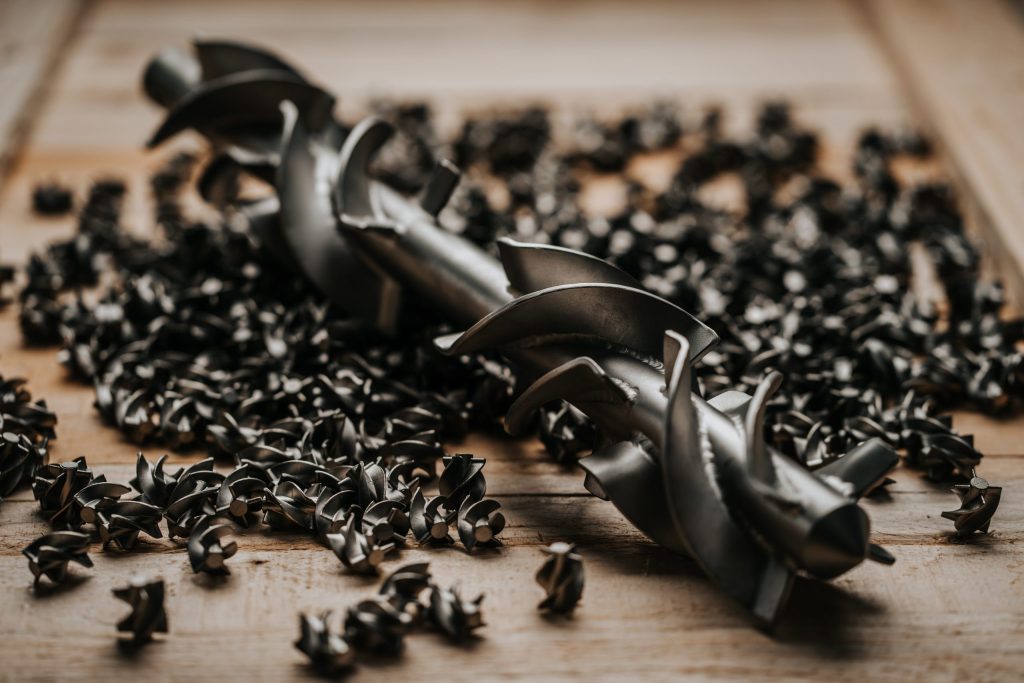
What an inline blender is: a system rather than a single component
An inline blender is not one piece of equipment you can pick from a shelf, but a small system that combines two or more streams continuously while they flow through a pipe. It measures how much of each stream is flowing, doses the additional streams in the right proportion, mixes everything into one homogeneous product and checks the result before it moves on. When all of those parts work together, the product leaving the blender is on specification from the first minute of a production run to the last.
That system view matters because the questions people ask about inline blending are rarely about one component. A plant manager wants to know whether a batch tank can be replaced. A process engineer wants to know how accurately a ratio can be held when the main flow fluctuates. An instrument engineer wants to know where to place the analyser. A buyer wants to know what to order and from whom. Each of them is asking about the same inline blender, from a different angle.
At Dutch Valve Vision we are the exclusive agent of STRIKO Verfahrenstechnik GmbH for the Netherlands, Belgium and Luxembourg, and we supply STRIKO static mixers as the blending element in such systems. As a specialist in special valves for special services, we also advise on the integration of static mixers with valves, measuring instrumentation and process automation. This article walks through the inline blender as a whole: its building blocks, how ratio control works, where the static mixer fits and what we contribute to a project.
Picture a production line where a base product has to be combined with a concentrate and a small amount of an additive. In the old situation, all three were weighed into a tank, stirred, sampled and released. In the new situation, the three streams meet in a pipe, pass a static mixer and go straight to the next step. The recipe has not changed. What has changed is the way it is executed, and that is the essence of inline blending.
The building blocks of an inline blender
Every inline blender contains the same functional building blocks, even if their size and complexity vary widely from one application to the next.
The first building block is the main stream. It usually comes from a pump or a pressurised supply and carries the largest share of the product. Its flow is measured, because every other stream is dosed in proportion to it.
The second building block is the set of dosing streams. Each additional component has its own supply, a dosing pump or a pressurised feed, a flow meter and a way of adjusting the flow. That adjustment is typically a control valve or a variable speed dosing pump. A check valve in each dosing line prevents back flow when dosing stops.
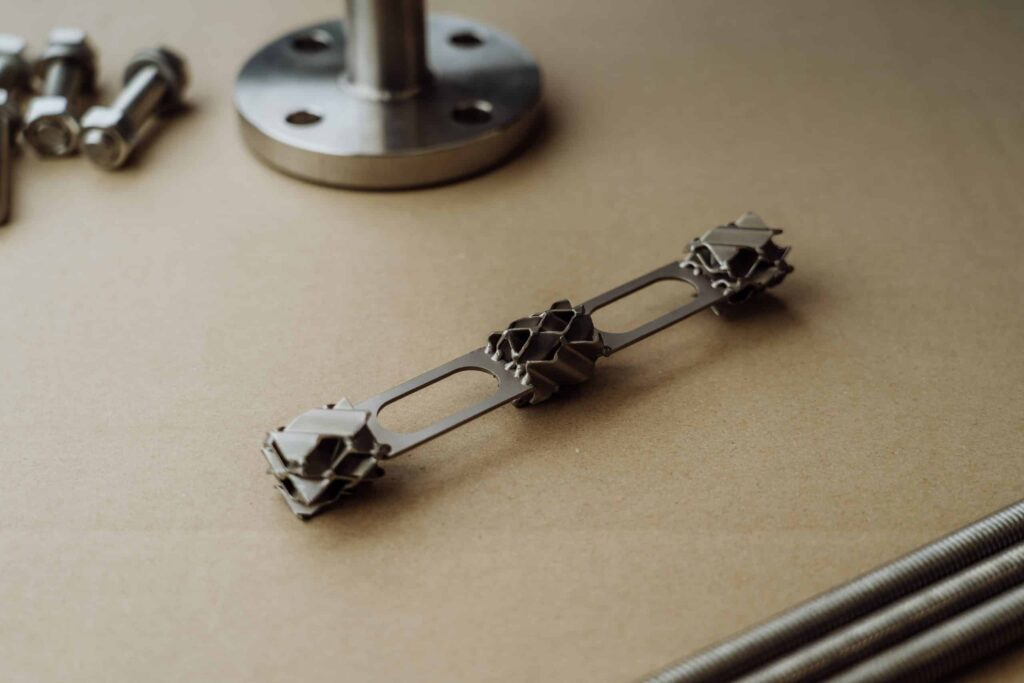
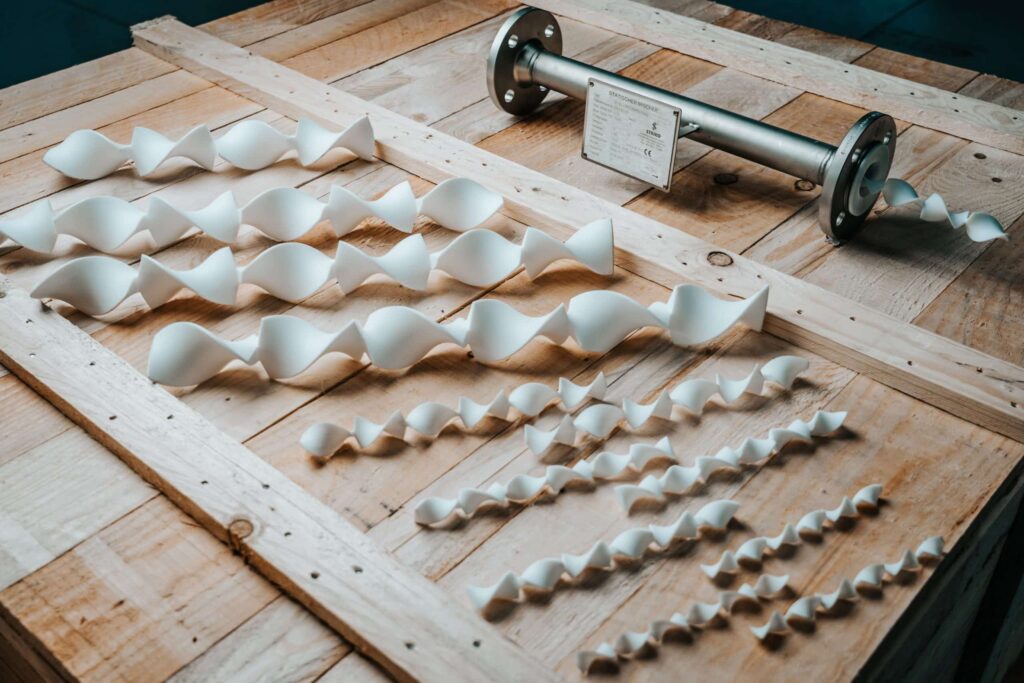
The third building block is the blending element. This is where the streams, now present in the right proportion, are turned into one uniform product. In most inline blending systems that element is a static mixer, with fixed elements that split, redirect and recombine the flow without moving parts.
The fourth building block is verification. A sampling point or an inline analyser downstream of the mixer confirms that the blend meets specification. Its reading can be used to trim the dosing ratio.
The fifth building block is the control system that ties everything together. It reads the flow meters, calculates the required dosing flows, adjusts the control valves or pumps and reacts to the analyser. It also handles start-up, shutdown and alarms.
Each of these building blocks can be designed well or poorly, and the weakest one determines the performance of the whole inline blender. A perfect mixer cannot compensate for an unstable dosing pump, and a perfect ratio controller cannot compensate for a mixer that leaves streaks.
Ratio control: how an inline blender keeps the blend on specification
The heart of an inline blender is ratio control. The principle is simple. The main stream is measured, and its flow is multiplied by the target ratio to give the setpoint for each dosing stream. If the main flow rises, the dosing setpoints rise with it. If it falls, they fall. The ratio between the streams stays constant even when the total throughput changes.
In practice, a few details decide how well this works. The flow meters must be accurate across the full operating range, including the low end where dosing flows can become very small. The dosing equipment must respond quickly enough to follow changes in the main flow without overshooting. And the control loop must be tuned so that it reacts to real changes rather than to noise in the measurement.
Many systems add a second layer of control based on the analyser downstream. If the measured property of the blend drifts from its target, the ratio is trimmed slightly. This feedback compensates for variations that the flow measurement cannot see, such as a change in the concentration of an incoming stream.
That feedback only works if the analyser sees a representative sample. And that is where the static mixer becomes more than a mixing device. It is the component that makes the measurement meaningful.
Selection starts with four data points
With these we choose series, diameter and number of elements.
Viscosity
Of the main stream and of the added component.
Flow rates
Main flow and dosing, also at part load.
Temperature and pressure
Determine material and allowable pressure drop.
Mixing quality
How homogeneous the product must be downstream.
The static mixer as the blending element in an inline blender
In an inline blender, the static mixer has one clear task: make sure that the streams, dosed in the right proportion, leave as one homogeneous product within a short length of pipe. It does this without a motor, drawing its energy from the pressure drop of the flow.
The choice of mixer depends on the streams being blended. For thin liquids in turbulent flow, mixing happens quickly and the design focus is on pressure drop and dosing position. For viscous products in laminar flow, the number and geometry of the elements decide whether the result is homogeneous or streaky. STRIKO specialises in static mixers for (highly) viscous media, which is exactly the area where blending is most demanding.
STRIKO offers four series. Helical is the universal mixer for general blending duties. STX is designed for viscous liquids, ideal for thick and syrupy media. STV is optimised for gases. EREstat is intended for food processing and hygienic duties. Each series is configurable in diameter, length and internal elements, so the mixer can be matched to the viscosity, flow velocity and end quality the blend requires.
The position of the mixer in the inline blender matters as much as its type. Dosing points belong shortly upstream, so the added components enter the elements straight away instead of settling along the pipe wall. The analyser or sampling point belongs downstream, where homogeneity has been reached. Materials include stainless steel in grades such as SS316, 1.4404 and 1.4571, carbon steel, plastics such as PVC, PE and PVDF, and special coatings or linings for aggressive media. STRIKO mixers can be dismantled easily for cleaning or inspection and support inline sterilisation and steam cleaning.
Specification ready? We will prepare a targeted quote.
Send us medium, pressure, temperature and connection. Our specialists come back with a matching proposal.
Start-up, shutdown and changeovers in an inline blender
Steady operation is the easy part. The moments that test an inline blender are the transitions. At start-up, the main flow is established first and the dosing streams follow. Until the ratio has settled and the analyser confirms the blend, the product is usually diverted to a recycle or reject route. The length of that diversion depends on how quickly the dosing loops stabilise and how far the analyser sits from the mixer.
At shutdown, the order is often reversed. Dosing stops first, so the line is not left full of concentrated additive, and the main stream flushes the mixer and the pipework. At a product changeover, the same principle applies. The small internal volume of a static mixer helps here, because little material has to be flushed out before the next recipe can start.
These sequences are written into the control system, but they depend on physical details: the position of valves, the length of pipe between dosing points and analyser, and the response time of the dosing equipment. Designing them together with the hardware avoids a blender that runs well at steady state but produces waste at every start.
Batch tank or inline blender: when the switch makes sense
Not every recipe belongs in the line, and it is worth checking the preconditions before a tank is removed. An inline blender works best when the recipe can be expressed as a ratio between flows, when every stream can be measured reliably and when the supplies are stable enough to be dosed continuously. If those three conditions hold, the system can usually deliver a blend that is at least as consistent as a well run batch process, without the waiting time between filling, stirring, sampling and releasing.
Some situations call for caution. A recipe that depends on a holding time, for example because a reaction needs minutes to complete, still needs volume somewhere, even if the blending itself happens in the line. A component that arrives in irregular deliveries or with a varying concentration needs either buffering or an analyser that can compensate. Solids that must stay in suspension when the line stops are another case where a vessel keeps its role.
There are also situations where the argument for inline blending is especially strong. Frequent product changes favour a system with a small internal volume. Large throughputs favour continuous processing over a series of batches. And processes where the blend feeds directly into the next step, such as a filling line or a reactor, benefit from a supply that never pauses.
A practical approach is to start by writing the recipe as a set of ratios and flow ranges. If that exercise works on paper, an inline blender is very likely feasible, and the next step is to select the mixer and design the dosing and control around it.
Where inline blending is used
In water and waste water treatment, inline blending is the standard way of adding neutralising agents, coagulants or air to a flowing stream for effective treatment and pH control. The water is moving anyway, and a static mixer distributes the chemical evenly.
In continuous chemical processes, blending reactants or feed components in the line before a reactor supports reaction stability, yield and consistent quality. In food and pharma, inline blending supports emulsification, the dosing of additives and temperature regulation of delicate products. In petrochemistry and oil and gas, a homogeneous blend is also the precondition for representative sampling. STRIKO mixers are also found in cosmetics production.
Valves in an inline blender
An inline blender contains more valves than people often expect. There are control valves or their equivalent in each dosing line, check valves to prevent back flow, isolation valves for maintenance and often a diverter valve for off-specification product at start-up. Each of them must suit the medium, the pressure, the temperature and the required accuracy.
Valves are the core of our business. Dutch Valve Vision supplies special valves according to DIN and ANSI standards, in special materials such as duplex, super duplex, Hastelloy and Inconel where the medium demands it. Among our partners are PRUSS Armaturen for high precision control valves and Schroeder Valves for pump protection. That background lets us look at the mixer and the valves around it as one system.
What Dutch Valve Vision contributes to an inline blender project
We do not present ourselves as the builder of complete blending skids. Our contribution is focused and practical. We select and size the STRIKO static mixer that forms the blending element. We advise on the integration of that mixer with valves, measuring instrumentation and process automation, including dosing positions and measuring points. And we support installation, validation and optimisation, with steps such as a pressure test and leak detection, measuring points for mixing quality and simulations of flow velocity and homogeneity.
To start, we need the streams to be blended, their flow ranges, viscosities and chemical composition, the target ratio and required blend quality, temperature and pressure, and a sketch or P&ID of the planned line. Dutch Valve Vision, based in Monster in the Netherlands, holds ISO 9001 certification for its quality management system, awarded by KIWA. Send your data to sales@dutchvalvevision.com or call +31 (0)70-2210560, Monday to Friday from 09:00 to 17:00.
Frequently asked questions about inline blender
What is an inline blender?
An inline blender is a system that combines two or more streams continuously while they flow through a pipe. It measures the main stream and doses the other streams in a fixed proportion. A static mixer then turns the streams into one homogeneous product. A sampling point or analyser downstream checks the result. A control system ties the flow measurement, dosing and verification together. The recipe is executed in the line instead of in a batch tank. That removes waiting times for filling, stirring and sampling. We supply the static mixer and advise on how the system fits together.
What is the difference between an inline blender and an inline static mixer?
An inline static mixer is a single component, a pipe section with fixed elements that mixes whatever flows through it. An inline blender is the complete system around it. That system includes flow measurement, dosing equipment, valves, the mixer, an analyser and control. The mixer makes the product homogeneous, but it cannot correct a wrong ratio. The accuracy of the blend comes from the dosing and control. In short, the mixer is the blending element and the blender is the whole arrangement. Both have to be designed well for the result to be right. We focus on the mixer and on its integration with the rest of the system.
How does ratio control work in an inline blender?
The main stream is measured continuously. Its flow is multiplied by the target ratio to give the setpoint for each dosing stream. Control valves or variable speed dosing pumps adjust the dosing flows to those setpoints. If the main flow changes, the dosing flows follow automatically. Many systems add a trim based on an analyser downstream of the mixer. That trim compensates for variations the flow meters cannot see, such as a concentration change in an incoming stream. The analyser only helps if it sees a homogeneous sample. That is why the static mixer and the measurement position are designed together.
How accurate is an inline blender?
The accuracy of the blend depends mainly on the flow measurement and dosing, not on the mixer. Flow meters must be accurate across the full range, including the lowest dosing flows. Dosing equipment must respond quickly without overshooting. The control loop must be tuned to react to real changes rather than to noise. The static mixer contributes by making the blend uniform, so every part of the product has the same composition. It also makes the analyser reading representative. The achievable accuracy therefore differs per application. We look at the whole chain when we advise on a system.
Can an inline blender handle more than two streams?
Yes, many inline blending systems combine three or more streams. Each additional stream needs its own supply, flow measurement, dosing adjustment and check valve. The ratio control calculates a setpoint for every dosing stream based on the main flow. The dosing points are usually placed shortly upstream of the static mixer. Small dosing ratios and large viscosity differences between streams increase the demands on the mixer. In such cases more elements or a different series may be needed. We take all streams into account when we configure the mixer. Please list every stream with its flow range and properties in your request.
What happens at start-up of an inline blender?
At start-up the main flow is usually established first and the dosing streams follow. Until the ratio has settled, the product may not yet be on specification. Many systems divert this first product to a recycle or reject route. A diverter valve directs the flow back to the normal route once the analyser confirms the blend. The duration depends on how quickly the dosing loops stabilise. The distance between mixer and analyser also plays a role. The small internal volume of a static mixer helps limit the off-specification quantity. We take these transitions into account when advising on the layout.
Which valves does an inline blender need?
Each dosing line typically has a control valve or a variable speed pump to adjust the flow. A check valve in each dosing line prevents back flow when dosing stops. Isolation valves allow maintenance without draining the whole system. A diverter valve is often used for off-specification product at start-up. All valves must suit the medium, pressure, temperature and required accuracy. Dutch Valve Vision specialises in special valves according to DIN and ANSI standards. Our partners include PRUSS Armaturen for high precision control valves. We advise on the valves around the static mixer as part of the system.
What does Dutch Valve Vision supply for an inline blender?
We supply STRIKO static mixers as the blending element, as exclusive STRIKO agent for the Benelux. We select and size the mixer for your streams, viscosities and required blend quality. We advise on integration with valves, measuring instrumentation and process automation. That includes the position of dosing points and measuring points. We also support installation, validation and optimisation. From our wider valve range we can supply special valves for the system. We do not present ourselves as the builder of complete blending skids. Send your data to sales@dutchvalvevision.com and we will discuss your project.
Build your inline blender around the right mixer
Send us the streams to be blended, their flow ranges, viscosities, target ratio, temperature and pressure, plus a sketch of the planned line. We will advise on the static mixer and its integration.
- +31 (0)70-2210560
- sales@dutchvalvevision.com
- Vlotlaan 641, 2681 TZ Monster, the Netherlands
- Mon-Fri 09:00-17:00