
ANSI class 600 butterfly valve
ANSI class 600 butterfly valve: technology, application and the right choice












The technology behind ANSI class 600 butterfly valve
An ANSI class 600 butterfly valve carries the American pressure rating that corresponds roughly to PN100 and that fixes both the flange dimensions and the pressure temperature curve. The term ANSI class 600 butterfly valve is used broadly in the market, which is why it helps to define precisely what it means in your case. We approach ANSI class 600 butterfly valve from the question of what the plant has to do, not from the question of what happens to be in stock. The differential pressure across the closed valve governs the design more than system pressure does, because that difference loads the seat. In the high pressure segment a metal seated offset butterfly valve reaches tightness levels that used to require a ball valve or a gate valve. The pressure temperature curve from the construction standard is leading, and that curve is why a class 600 valve may hold far less than one hundred bar at five hundred degrees. For ANSI class 600 butterfly valve this means that construction and operating conditions cannot be judged separately. The balance between required tightness and available operating force is a recurring tension on ANSI class 600 butterfly valve. With ANSI class 600 butterfly valve it pays to include phase changes in the medium, because those sharply increase the load on the seal. The pressure class states which pressure a valve can hold at a reference temperature, and that value drops as temperature rises. Class 600 corresponds roughly to PN100 and class 900 to PN160, but the pressure temperature curves do not run exactly parallel and that has to be checked case by case. In practice ANSI class 600 butterfly valve is rarely a standard question once medium and temperature move away from average.
ANSI class 600 butterfly valve and the decisive technical choices
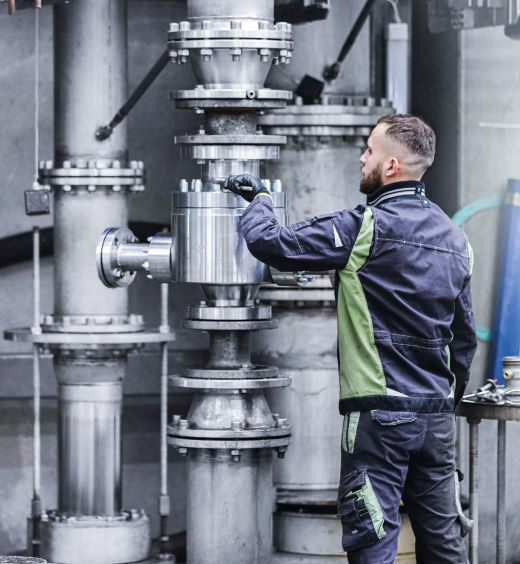
Class ratings are not fixed pressures, because the allowable pressure drops as temperature rises along a defined curve. On ANSI class 600 butterfly valve we always check the full operating envelope, including start up and shutdown. How ANSI class 600 butterfly valve behaves under varying load says more about the quality of the selection than behaviour under steady load. At class 600 the construction moves to a metal seated offset design with a reinforced body and one piece shaft. PN100 means a nominal pressure of one hundred bar, while the American ANSI and ASME system works with class 150 up to class 2500. At higher pressure classes the wall thickness, flange design and stem diameter all increase, which immediately raises weight and operating torque. Face to face length to API 609 makes it possible to fit the valve into an existing line without pipework changes. Material selection becomes more important at high pressure, because stresses in the body and stem approach the allowable limit. The stem connection is a critical point on high pressure valves, and a one piece shaft without a pin prevents the disc from being blown out. Operating conditions govern the service life of ANSI class 600 butterfly valve far more strongly than the nominal figures on a datasheet. We regularly see that a small change in the execution of ANSI class 600 butterfly valve makes a large difference to maintenance frequency.

Applications of ANSI class 600 butterfly valve in industry
These valves are used in petrochemical plants, gas processing, power generation and high pressure technical gas systems. In steam plant pressure and temperature rise together, and that is exactly the combination where many standard valves drop out. Hydrogen projects call for pressure classes that were unusual until recently, and a large part of our recent enquiry volume sits there. On project supply we record per position which execution of ANSI class 600 butterfly valve was delivered, including materials and tests. The application range of ANSI class 600 butterfly valve runs from simple utility duty to heavy process plant, with a corresponding difference in execution. In an existing plant ANSI class 600 butterfly valve is often part of a wider question about availability and maintenance. We supply ANSI class 600 butterfly valve both for new build and for replacement within existing installations. High pressure applications appear in technical gases, in power generation, in hydrogen compression and in petrochemicals. Alongside QUADAX and PRUSS we represent Pibiviesse, Schroeder, Striko, Malbranque, Daume, FluoroSeal and Guichon, so we can select the right brand for each project. We think along from the basic specification through to the tag plate, and supply documentation that a buyer or inspector accepts without discussion. During turnarounds ANSI class 600 butterfly valve is regularly on the critical path, and then predictability matters more than the lowest price. In plants where ANSI class 600 butterfly valve is applied, the emphasis is on reliability rather than lowest purchase price.

Choosing the right ANSI class 600 butterfly valve
The right choice around ANSI class 600 butterfly valve starts with a full set of process data rather than with a request for a price. On a high pressure enquiry we always ask for design pressure and design temperature together, because one without the other says nothing. The actuator must be sized on torque at maximum differential pressure and not on torque at balance, otherwise the valve will stall in service. Face to face length to API 609 or EN 558 determines whether a high pressure butterfly valve fits an existing line without modification. For ANSI class 600 butterfly valve total cost of ownership weighs more than purchase price, certainly when replacement has to happen during a shutdown. If a simpler type will do the job, we say so on ANSI class 600 butterfly valve, even when that means a smaller order. For ANSI class 600 butterfly valve we ask as standard for DN, pressure class, medium, temperature and required actuation. Where there is doubt about ANSI class 600 butterfly valve we quote two executions side by side, with the trade offs stated explicitly. A blow out proof construction is not a luxury at high pressure but a safety requirement stated explicitly in most specifications. If you have an existing tag plate or serial number, send it along, because that lets us work directly from the original configuration. We never recommend a heavier execution of ANSI class 600 butterfly valve than needed, because over specification only raises price and lead time. The cleaning and flushing procedure counts too on ANSI class 600 butterfly valve, because it can be more aggressive than the process itself.
Requesting ANSI class 600 butterfly valve from Dutch Valve Vision
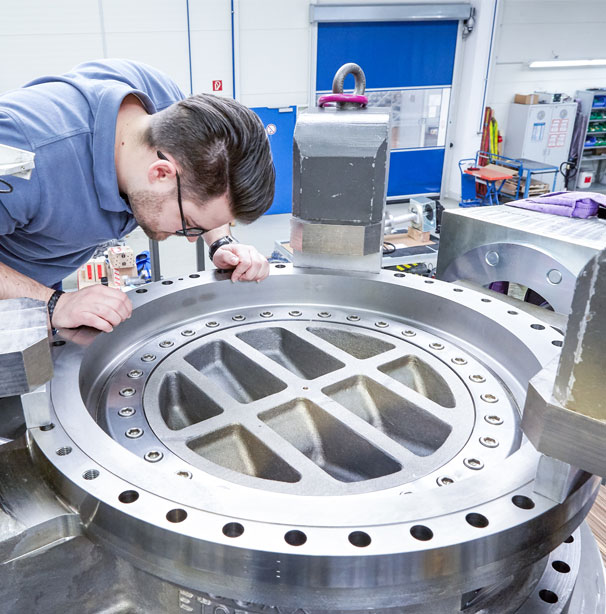
Our specialists are happy to discuss ANSI class 600 butterfly valve on the basis of your P&ID, your datasheet or simply a photograph of the situation. We think along from the basic specification through to the tag plate, and supply documentation that a buyer or inspector accepts without discussion. We handle an enquiry for ANSI class 600 butterfly valve on its technical merits rather than as a price request that only produces a number. On ANSI class 600 butterfly valve we come back with a proposal that explains why we recommend a particular execution. We think along on the spare parts strategy for ANSI class 600 butterfly valve, so critical positions stay covered. We keep spare parts and overhaul kits mapped per project, so that a breakdown does not start with a search from scratch. We quote a realistic lead time rather than an optimistic one, because a missed delivery date costs more than an extra week in the planning. We work on ANSI class 600 butterfly valve under a KIWA ISO 9001 certified quality system, which safeguards traceability. Documentation on ANSI class 600 butterfly valve has to be the kind a buyer or inspector accepts without discussion. Material certificates and test reports are supplied with ANSI class 600 butterfly valve, matched to what the project requires. For ANSI class 600 butterfly valve you can come to Dutch Valve Vision for the selection, the delivery and the support afterwards. You can reach us on +31 (0)70-2210560 and at sales@dutchvalvevision.com, and our office hours are Monday to Friday from 09:00 to 17:00.

Frequently asked questions about ANSI class 600 butterfly valve
What exactly does ANSI class 600 butterfly valve mean?
The differential pressure across the closed valve governs the design more than system pressure does, because that difference loads the seat. At higher pressure classes the wall thickness, flange design and stem diameter all increase, which immediately raises weight and operating torque. The pressure class states which pressure a valve can hold at a reference temperature, and that value drops as temperature rises. An ANSI class 600 butterfly valve carries the American pressure rating that corresponds roughly to PN100 and that fixes both the flange dimensions and the pressure temperature curve. We see this come back regularly in enquiries about ANSI class 600 butterfly valve, and the answer is rarely a single sentence. For ANSI class 600 butterfly valve a good specification up front is cheaper than a correction afterwards. Once ANSI class 600 butterfly valve is correctly specified it disappears from the fault list, and that is exactly the intention. Dutch Valve Vision operates under a KIWA ISO 9001 certified quality system, which in the RFQ stage of chemical and offshore projects is usually a hard requirement.
Which executions of ANSI class 600 butterfly valve are available?
The stem connection is a critical point on high pressure valves, and a one piece shaft without a pin prevents the disc from being blown out. A blow out proof construction is not a luxury at high pressure but a safety requirement stated explicitly in most specifications. Material selection becomes more important at high pressure, because stresses in the body and stem approach the allowable limit. In the high pressure segment a metal seated offset butterfly valve reaches tightness levels that used to require a ball valve or a gate valve. We always explain why we arrive at a particular recommendation on ANSI class 600 butterfly valve, so you can follow the reasoning yourself. Our experience with ANSI class 600 butterfly valve comes from projects in chemicals, power generation, technical gases and offshore. What weighs heaviest on ANSI class 600 butterfly valve in practice is the combination of temperature and differential pressure, not either one alone. Alongside QUADAX and PRUSS we represent Pibiviesse, Schroeder, Striko, Malbranque, Daume, FluoroSeal and Guichon, so we can select the right brand for each project.
Which materials are used for ANSI class 600 butterfly valve?
The pressure temperature curve from the construction standard is leading, and that curve is why a class 600 valve may hold far less than one hundred bar at five hundred degrees. Class 600 corresponds roughly to PN100 and class 900 to PN160, but the pressure temperature curves do not run exactly parallel and that has to be checked case by case. PN100 means a nominal pressure of one hundred bar, while the American ANSI and ASME system works with class 150 up to class 2500. Class ratings are not fixed pressures, because the allowable pressure drops as temperature rises along a defined curve. On ANSI class 600 butterfly valve we include start up and shutdown, because that is where the heaviest loading occurs. That makes ANSI class 600 butterfly valve a subject where discussion up front pays for itself in operation. In practice we find that most failures around ANSI class 600 butterfly valve come not from the material but from a wrong assumption during selection. Our customers work in chemicals, petrochemicals, pharmaceuticals, power generation, offshore and in hydrogen and ammonia projects.
What should I watch technically on ANSI class 600 butterfly valve?
What should I watch technically on ANSI class 600 butterfly valve?
Which applications call for ANSI class 600 butterfly valve?
In steam plant pressure and temperature rise together, and that is exactly the combination where many standard valves drop out. These valves are used in petrochemical plants, gas processing, power generation and high pressure technical gas systems. Hydrogen projects call for pressure classes that were unusual until recently, and a large part of our recent enquiry volume sits there. High pressure applications appear in technical gases, in power generation, in hydrogen compression and in petrochemicals. If you are unsure about this on ANSI class 600 butterfly valve, we are glad to put the question alongside the actual process data. The answer on ANSI class 600 butterfly valve depends strongly on operating conditions, which is why we always ask for those first. On replacement we always check the existing installation dimensions for ANSI class 600 butterfly valve, so the pipework can stay untouched. What defines us is that we would rather spend an extra half hour on the specification than ship the wrong valve that comes back two months later.
What determines the price and lead time of ANSI class 600 butterfly valve?
Please also state the connection standard, the required leakage class and any project requirements such as NACE, PED or ATEX. On repeat orders we record the configuration, so a follow up delivery is identical to the first and installation holds no surprises. We quote a realistic lead time rather than an optimistic one, because a missed delivery date costs more than an extra week in the planning. A P&ID, a datasheet or even a photograph of the existing installation often helps us faster than a long description. In most projects ANSI class 600 butterfly valve turns out to be less standard than it first appears. On ANSI class 600 butterfly valve we prefer a well founded answer to a fast one that turns out to be wrong later. For repeat orders of ANSI class 600 butterfly valve we record the configuration, so a follow up delivery is identical to the first. Call +31 (0)70-2210560 or send your specification to sales@dutchvalvevision.com and we will pick it up.
What about maintenance and spare parts on ANSI class 600 butterfly valve?
Documentation such as material certificates, test reports and declarations is supplied as standard, matched to what the project requires. We keep spare parts and overhaul kits mapped per project, so that a breakdown does not start with a search from scratch. For shutdowns and turnarounds we look at accelerated routes, and in those cases we are honest up front about what is and is not achievable. Lead times depend on the execution, because a standard size from a running series behaves very differently from a valve in an exotic alloy with NACE certification. That makes ANSI class 600 butterfly valve a subject where discussion up front pays for itself in operation. In most projects ANSI class 600 butterfly valve turns out to be less standard than it first appears. We record which execution of ANSI class 600 butterfly valve was delivered, so a follow up delivery or spare part matches exactly later on. We work as a technical supplier rather than a catalogue reseller, which means we carry out the selection ourselves on the basis of medium, pressure, temperature and code requirements.
How do I request a quotation for ANSI class 600 butterfly valve?
We come back with a proposal that explains why we recommend a particular execution, including the alternatives we considered. If you have an existing tag plate or serial number, send it along, because that lets us work directly from the original configuration. For an accurate quotation we need the nominal diameter, the pressure class, the medium, the operating temperature and the required actuation. Please also state the connection standard, the required leakage class and any project requirements such as NACE, PED or ATEX. The answer on ANSI class 600 butterfly valve depends strongly on operating conditions, which is why we always ask for those first. On ANSI class 600 butterfly valve we prefer a well founded answer to a fast one that turns out to be wrong later. Dutch Valve Vision stays available after delivery of ANSI class 600 butterfly valve for technical questions and for parts. You can reach us on +31 (0)70-2210560 and at sales@dutchvalvevision.com, and our office hours are Monday to Friday from 09:00 to 17:00.