

Minimum flow valve
What happens inside a centrifugal pump below its minimum flow, and how a Schroeder minimum flow valve prevents it.
- Exclusive Schroeder Valves agent Benelux
- Original spare parts
- ISO 9001 · KIWA
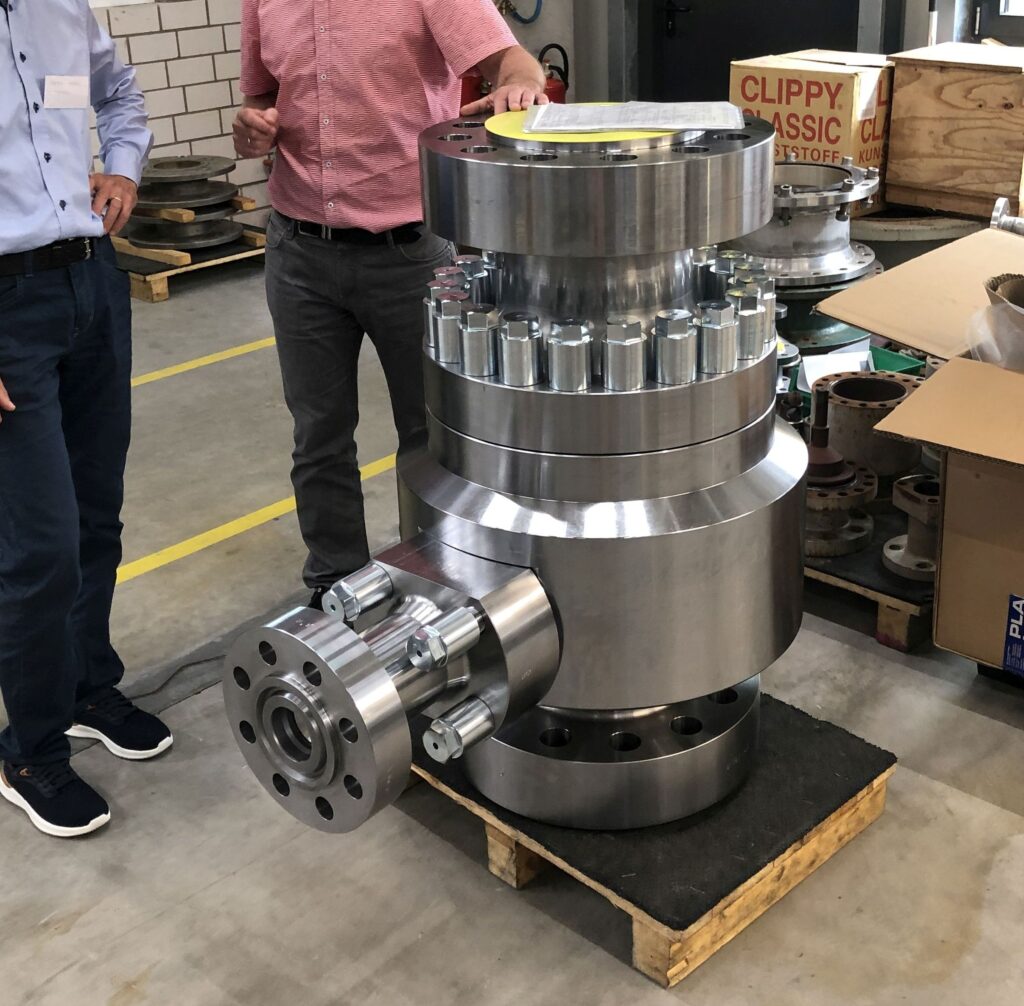
Exclusive agent for Schroeder Valves
Official spare parts distributor
Quality system, KIWA certified
Service and advice from the Netherlands
How an automatic recirculation valve works
One valve that adjusts itself to process demand.
Full load
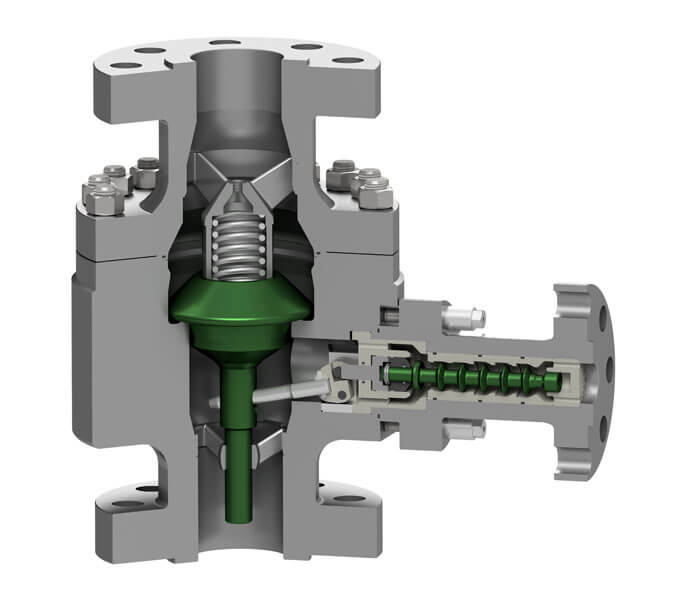
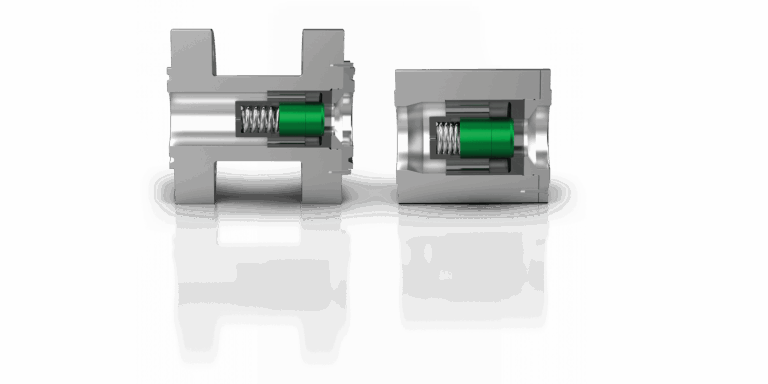
The disc is open in the main flow. The bypass stays closed, no energy is lost.
Part load
As demand drops the disc moves down and the mechanically linked bypass opens.
Zero load
The minimum flow returns through the bypass. The pump stays protected, without external energy.
A minimum flow valve starts with understanding the pump
A minimum flow valve exists for one reason: every centrifugal pump has a lower limit of flow, and below that limit it slowly starts to damage itself. Most people in a plant know that a pump should not run dry. Far fewer realise that a pump running with a nearly closed discharge is in a very similar kind of trouble, even though it is completely filled with liquid.
Think of a night shift in a chemical plant. Production has been reduced, a few consumers downstream have closed their valves, and one of the transfer pumps is now pushing against an almost closed system. Nothing trips and no alarm sounds. The operator on his round only notices that the pump sounds rougher than usual and that the casing feels warmer. A few months later the mechanical seal starts to leak and the bearings need replacing. The root cause is rarely written down, because by the time the pump is opened, the low flow nights are long forgotten.
At Dutch Valve Vision, official and exclusive agent of Schroeder Valves for the Benelux, this is a familiar pattern. Schroeder has been supplying minimum flow valves for more than 70 years with one main purpose: to make sure the minimum flow through a centrifugal pump is guaranteed at all times, so the pump is protected and its life is extended. To choose the right minimum flow valve, it helps to understand what actually happens inside the pump when that flow is missing.
Where the minimum flow of a centrifugal pump comes from
A centrifugal pump is designed around a best efficiency point. At that flow the liquid enters the impeller at the angle the designer intended, leaves it smoothly and the hydraulic losses are at their lowest. Move away from that point and the flow inside the pump no longer matches the geometry. The further you move towards zero flow, the larger the mismatch becomes.
Pump manufacturers translate this into a minimum flow in their data sheets. Behind that single figure there are usually two considerations. The first is thermal: the pump must pass enough liquid to carry away the heat generated by its own losses. The second is hydraulic stability: at very low flows the flow pattern in the impeller becomes unstable, which leads to vibration and fluctuating forces. The minimum flow on the data sheet is the value at which both effects stay within acceptable limits for continuous operation.
That value is not a suggestion. It depends on the pump design, the impeller, the speed and the liquid, and it is the number around which the whole minimum flow valve is sized. We always ask for it before anything else.
Schroeder ARC series at a glance
A dedicated series for every pressure class and application.
A minimum flow valve guarantees that a centrifugal pump always passes at least the flow its manufacturer specifies, by opening a bypass automatically when process demand drops. Below that flow the pump heats its own contents, which leads to vaporisation, cavitation, vibration and damage to bearings and seals. For pumps with a high minimum flow requirement, the Schroeder SSV with control disc covers up to about 70 percent of the main flow.

Schroeder SSV
Standard, compact all-in-one design.
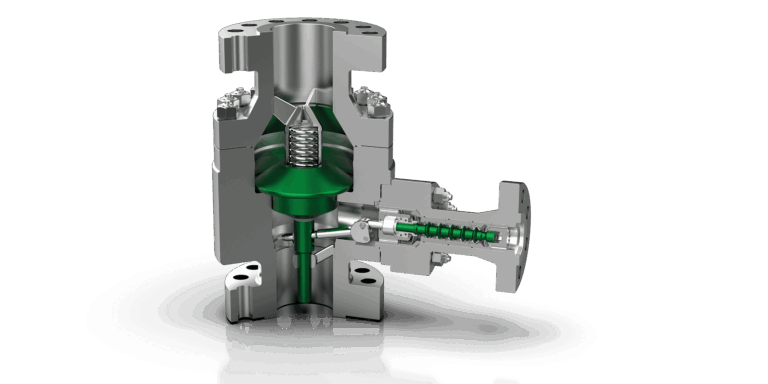
Schroeder SIP
Medium pressure, up to about 250 bar.
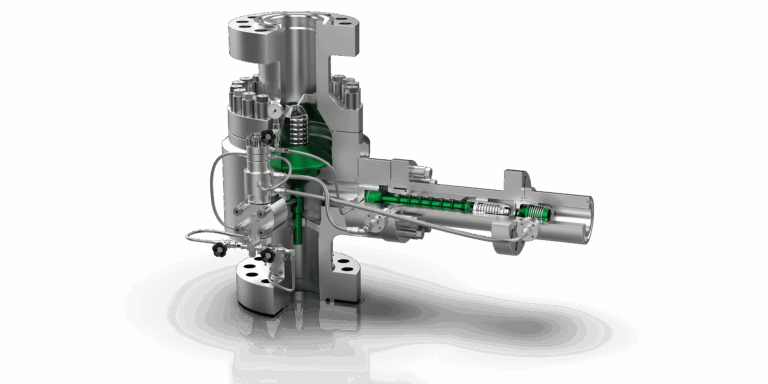
Schroeder SHP
High and very high pressure.

Schroeder SMA
ON/OFF, pilot operated.
Schroeder SDV
Back pressure device with check function.

Schroeder SSD
Multi-stage throttle for high differential pressure.
What happens when a pump runs below its minimum flow
The damage from low flow operation does not come from one single mechanism. Several effects build on each other, and together they explain why pumps without protection often fail in ways that are hard to trace back.
Heat that has nowhere to go
A pump running against a closed or nearly closed system still absorbs power from its motor. Only a small part of that energy is turned into useful pressure, the rest becomes heat in the liquid. At normal flow that heat is carried away with the product. At very low flow the same liquid stays in the casing and warms up with every revolution of the impeller. With hot media such as boiler feed water, which already comes from the deaerator close to its boiling point, there is very little margin before the liquid starts to flash.
Vaporisation and cavitation
Once the liquid in the pump approaches its vapour pressure, bubbles start to form. When those bubbles collapse on the impeller and in the casing, they cause cavitation damage, erosion and noise. In the worst case the pump loses its prime and effectively runs dry, with liquid in the suction line but vapour around the impeller. That is why Schroeder describes protection against dry running, cavitation and overheating as the core task of its minimum flow valves.
Internal recirculation and vibration
At low flow the liquid inside the impeller starts to flow back on itself, both at the inlet and at the outlet of the vanes. These recirculation zones create pressure pulsations and uneven forces. The radial load on the impeller increases, the shaft deflects more and the pump vibrates. The operator hears it as a rough, crackling sound, the same sound our night shift colleague noticed.
Bearings and seals pay the bill
All of this ends up in the most sensitive components. Increased shaft deflection and vibration load the bearings. The mechanical seal suffers from both the vibration and the heat, because seal faces depend on a stable liquid film. Internal erosion adds wear on wear rings and impellers. The pump does not fail on the first night, but every hour below minimum flow shortens its life.

Everyday situations that push a pump below its minimum flow
Low flow operation is rarely a deliberate choice. It creeps into normal operation through situations that look harmless on their own, which is why a minimum flow valve is so often justified only after a pump has already been damaged.
Start-up is the first one. Many pumps are started against a closed or nearly closed discharge, because the process downstream is not yet ready to receive the flow. For those first minutes the pump has nowhere to send its liquid. Then there is part load. Plants that run at reduced capacity at night, at weekends or between batches leave their pumps working far from their design point for many hours. A third situation is the sudden closure of consumers, for example when a downstream unit trips or an operator closes a valve during a change of production.
Parallel operation is a less obvious cause. When two pumps feed a common header and the demand drops, the pump with the slightly higher head can push the other one back towards its shut-off point. On the control room screen both pumps are running, while one of them is doing almost nothing. Standby pumps that start automatically for testing or after a pressure drop can end up in the same position.
Each of these moments is short on its own. Added up over months and years, they are exactly the operating hours that shorten pump life. A minimum flow valve covers all of them with the same mechanism, without the need to predict which scenario will occur next.
Service and overhaul
OEM
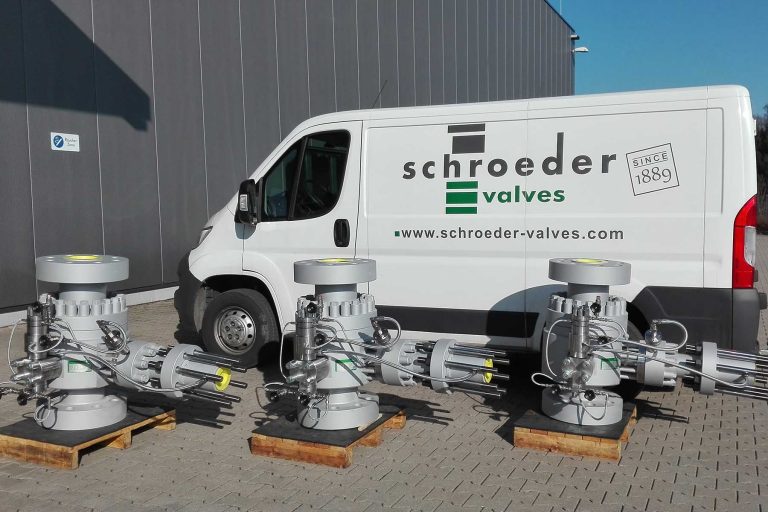
Only original Schroeder parts.
Test bench
Flow calibration and pressure test after overhaul.
Warranty
Full Schroeder factory warranty.
Signs that a pump is already suffering from low flow
In existing plants we are often asked to look at a pump that has become a maintenance problem. The pattern is usually familiar. Mechanical seals that need replacing more often than expected, bearings that run warm, vibration levels that rise at certain times of day and a crackling noise when the process is throttled. Sometimes the impeller shows erosion on the vanes when it is taken out.
None of these symptoms proves low flow operation on its own, and there can be other causes. But when they appear together, and especially when they correlate with periods of low demand, it is worth comparing the actual operating profile with the minimum flow on the pump data sheet. That comparison often explains more than a new seal or bearing ever will, and it is the moment to consider whether a minimum flow valve should be added.
How a minimum flow valve keeps the pump above its limit
A Schroeder minimum flow valve solves this without measuring anything electronically. The valve sits on the pump discharge. A check disc in the main line is lifted by the flow going to the process, and its position is mechanically linked to a bypass. As long as the process takes enough, the bypass stays closed. As soon as the process flow drops towards the minimum, the bypass opens and returns the difference to a tank or suction vessel. The total flow through the pump never falls below the value on the data sheet.
Because the check disc also closes when the pump stops, the valve doubles as the discharge check valve. The recirculation and the check function are integrated in one housing, and the valve works fully automatically, without external measurement or control systems. That makes it reliable under variable load and long lasting under high pressure and temperature.
The practical effect is simple. Whatever the process does, whether it throttles, stops a consumer or closes a valve by mistake, the pump keeps passing its minimum flow. The heat is carried away, the liquid stays liquid and the hydraulic forces stay within the range the pump was designed for.
Specification ready? We will prepare a targeted quote.
Send us medium, pressure, temperature and connection. Our specialists come back with a matching proposal.
When the minimum flow is high: the SSV with control disc
For many pumps the required minimum flow is a modest share of the duty flow, and the standard SSV series, the compact all-in-one minimum flow valve for general industrial applications, covers that perfectly well. Some pumps are different. Sensitive or heavily loaded pumps can have a manufacturer’s minimum flow that is a large fraction of their normal operating flow. In that case the bypass is no longer a small side stream. It carries a substantial part of the total flow, and it may do so for long periods.
For these situations Schroeder offers the SSV series with control disc. This minimum flow valve is intended for applications with high recirculation requirements, with a minimum flow of up to about 70 percent of the main flow. It is typically chosen for pumps where the standard bypass would simply be too small, and where the protection has to remain stable even though the valve is recirculating a large volume.
A high minimum flow also puts more weight on the design of the return line and the point where the recirculated liquid goes. A large recirculated flow carries a lot of heat back to the suction vessel, and the pressure reduction in the bypass has to handle a large volume. Where the pressure difference is high, Schroeder SSD multi-stage throttle valves can take over part of that pressure reduction in a controlled way, which also helps against erosion and noise.
Other Schroeder series for demanding minimum flow duties
Pressure and load pattern decide the rest of the selection. The SIP series is intended for pressures up to about 250 bar and is widely used in boiler feed water and utility systems. The SHP series is built for high and very high pressure with strongly fluctuating loads. The SMA series works as an ON/OFF system with pilot operated automatic minimum flow control, for fast and accurate operation at very high pressure. Where the pump needs a stable minimum upstream pressure to avoid cavitation and evaporation, SDV back pressure devices with an integrated check function can be added.
These valves are used worldwide in power plants, chemical and petrochemical installations, offshore and injection systems, boiler feed water and auxiliary systems, and heavy industry such as steel and paper production.
Selecting a minimum flow valve with Dutch Valve Vision
The selection of a minimum flow valve is only as good as the data behind it. We ask for the pump data sheet with the manufacturer’s minimum flow, the normal and maximum process flow, the medium and its temperature, the pump discharge pressure and the pressure at the return point. We also want to know how the pump is actually operated: how often it runs at part load, whether it starts against a closed system, and whether it works in parallel with other pumps.
With that information we compare the series, size the bypass and choose a material execution that matches the medium and process conditions. Dutch Valve Vision works with an ISO 9001 certified quality management system, certified by KIWA, and supplies to DIN and ANSI standards. After installation we remain your point of contact for original Schroeder spare parts and for repairs with OEM parts, calibration on the Schroeder test bench and a full factory warranty.
Do you suspect that one of your pumps spends too much time below its minimum flow? Contact us at +31 (0)70-2210560 or sales@dutchvalvevision.com, Monday to Friday from 09:00 to 17:00. We will look at the pump data with you and advise the minimum flow valve that protects it.
Frequently asked questions about minimum flow valve
Question not listed? Our specialists are happy to help.
- +31 (0)70-2210560
- sales@dutchvalvevision.com
- Vlotlaan 641, 2681 TZ Monster, the Netherlands
- Mon-Fri 09:00-17:00
What is a minimum flow valve?
A minimum flow valve is an automatic valve that makes sure a centrifugal pump always passes at least its specified minimum flow. It is mounted on the pump discharge and combines a check valve with a bypass. When the process takes less than the minimum, the bypass opens and returns the difference to a tank or suction vessel. When the process takes enough, the bypass closes. When the pump stops, the check function prevents reverse flow. The valve works without external measurement or control systems. It is also known as an ARC valve, automatic recirculation valve or pump protection valve. We supply the Schroeder range as exclusive agent for the Benelux.
Why does a centrifugal pump need a minimum flow?
A centrifugal pump is designed to work around its best efficiency point. Far below that point, the flow inside the impeller no longer matches the design. The pump still absorbs power, and most of that power turns into heat in the liquid. At low flow that heat is not carried away and the liquid warms up. The flow pattern also becomes unstable, which causes vibration and extra radial loads. The minimum flow is the value at which heat and stability stay within acceptable limits. The pump manufacturer states it in the data sheet. A minimum flow valve makes sure the pump never goes below it.
What happens if a pump runs below its minimum flow?
The liquid in the pump heats up because the energy has nowhere to go. With hot media this can quickly lead to vaporisation and cavitation. Cavitation causes erosion on the impeller and casing and a typical crackling noise. At the same time internal recirculation in the impeller creates pulsations and vibration. The radial load on the shaft increases, which puts extra stress on the bearings. The mechanical seal suffers from both vibration and heat. The result is shorter pump life and more frequent repairs. The damage often builds up slowly, which makes the root cause hard to trace.
Who determines the minimum flow of a pump?
The pump manufacturer determines the minimum flow, based on the design of the pump. It depends on the impeller, the speed, the pump construction and the liquid. The value is usually shown in the pump data sheet or on the performance curve. Some manufacturers distinguish between a thermal limit and a hydraulic stability limit. The higher of the two usually becomes the design value. We use that figure to size the bypass of the minimum flow valve. If the value is unclear, it is worth asking the pump supplier before the valve is ordered. We are happy to help interpret the pump documentation.
What if my pump needs a very high minimum flow?
Some sensitive or heavily loaded pumps require a minimum flow that is a large share of their duty flow. A standard bypass is then too small for the job. For these cases Schroeder offers the SSV series with control disc. It is designed for high recirculation requirements, with a minimum flow of up to about 70 percent of the main flow. The return line and return point must be designed for the larger recirculated flow. The heat carried back to the suction vessel also becomes more significant. Where the pressure drop is high, SSD multi-stage throttle valves can help. We review these points together with you during selection.
Is a minimum flow valve the same as an ARC valve?
In practice the terms refer to the same product. ARC stands for automatic recirculation control, which describes how the valve works. Minimum flow valve describes what the valve achieves for the pump. Automatic recirculation valve, pump protection valve and combined check and bypass valve are also used. In Dutch the terms nullastklep and nullast afsluiter are common. Schroeder Valves is known worldwide under all these names. The function is the same in each case. The pump always keeps its minimum flow, without external energy or control.
Can a variable speed drive replace a minimum flow valve?
A variable speed drive can reduce the time a pump spends at low flow, but it does not remove the minimum flow limit. At every speed the pump still has a flow below which it heats up and becomes unstable. If a downstream valve closes, the flow can still drop towards zero, whatever the speed. The drive also depends on power and control signals. A minimum flow valve protects the pump mechanically, independent of the drive. In many plants the two are used together. The drive saves energy in normal operation, while the valve covers the low flow scenarios. We look at your operating profile before we advise.
What does Dutch Valve Vision need to select a minimum flow valve?
We need the pump data sheet with the manufacturer’s minimum flow. The normal and maximum process flow are also required. We ask for the medium, its temperature and the pump discharge pressure. The pressure at the return point tells us how much pressure the bypass must reduce. Information on how the pump is operated helps us judge part load and start-up conditions. We also need the connection standard, DIN or ANSI. With that information we compare the Schroeder series and propose a valve. You can reach us at sales@dutchvalvevision.com or +31 (0)70-2210560.
Protect your pump below its duty point
Send us the pump data sheet with the minimum flow, the normal and maximum flow, medium, temperature and pressures. We will select the Schroeder minimum flow valve that fits.
- +31 (0)70-2210560
- sales@dutchvalvevision.com
- Vlotlaan 641, 2681 TZ Monster, the Netherlands
- Mon-Fri 09:00-17:00