
Rupture disc holder
Why the holder decides how your disc performs, and which types, materials, seals and documents you should specify.
- Exclusive STRIKO agent Benelux
- ISO 9001 · KIWA
- Engineering support from Monster (NL)

Forward acting, reverse buckling, vacuum support
Carbon steel up to Hastelloy and Inconel
Designed to ASME VIII and PED
EN 10204 3.1 certificates included
A rupture disc holder is a safety component, not an accessory
A rupture disc holder rarely gets the attention the disc itself gets, and that is a mistake we see regularly. The disc is the part that bursts, so it is natural to focus on its material, its burst pressure and its tolerance. But a disc only performs as specified when it sits in the right position, under the right load, with a seal that stays tight at operating pressure. All three of those depend on the holder.
Consider what goes wrong when the holder is poorly designed or poorly matched. The disc may be clamped unevenly and burst early. It may be clamped too loosely and weep before it bursts. It may sit slightly out of position and open in a way nobody predicted. Each of those failures looks like a disc problem in the incident report, while the root cause is the housing around it. A poorly designed holder can lead to premature failure, leakage, a wrong burst pressure or even complete system failure.
At Dutch Valve Vision we therefore treat the rupture disc holder as an integral safety component. Burst discs are often the last line of defence in a process, and their performance stands or falls with the holder. On this page we explain what a holder does, which designs we supply, how material and sealing are chosen and which standards and documents come with it.
What the rupture disc holder does in your line
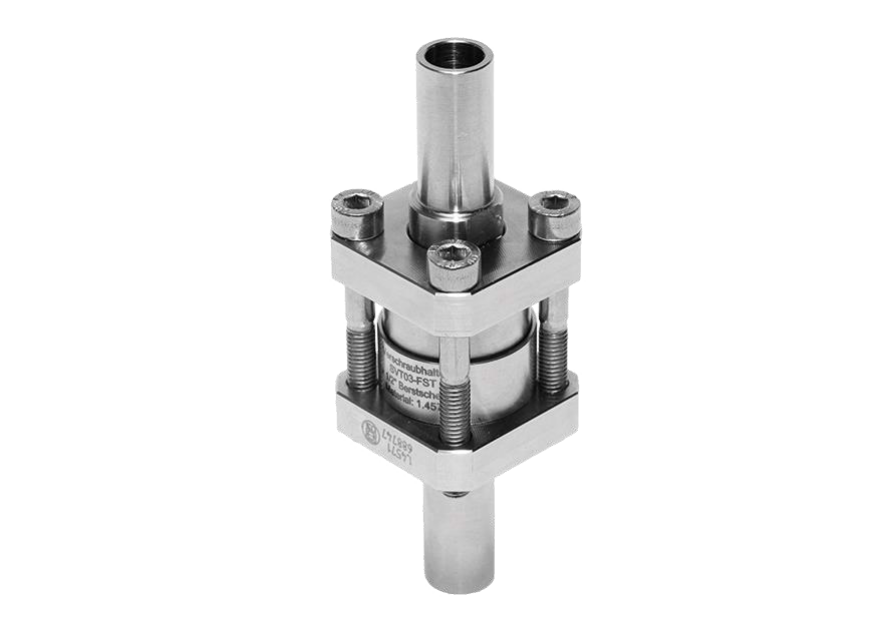
A holder has four jobs. It positions the disc correctly, so the dome faces the right way and sits concentric with the bore. It seals the disc under operating pressure, so nothing leaks past the edge. It applies a controlled load to the disc, so the burst pressure behaves as the manufacturer intended. And it allows safe relief once the set pressure is exceeded, without parts of the holder getting in the way of the flow.
Of those four, the controlled load is the one most people underestimate. When a disc is installed directly between two flanges, the clamping force depends on the gasket, the bolt tightening sequence and the torque that the fitter actually applied. Two technicians can install the same disc in the same flange pair and end up with different loads. A well designed rupture disc holder takes that variable out of the equation. The load on the disc must be reproducible, independent of variations in installation.
Every holder we supply is designed with tight tolerances, so stress concentrations are avoided. Pressure is only one variable in that design. Temperature, corrosion, vibration, cyclic loading and the properties of the medium are taken into account as standard.

Three holder designs for three disc families
The holder has to match the disc it carries. A forward acting disc and a reverse acting disc are loaded in opposite directions, and their housing reflects that. We supply three main designs.
Forward acting holders
Forward acting holders are designed for forward acting discs, where the pressure acts on the process side, on the concave face of the dome. They are known for high accuracy of burst pressure, they suit both gas and liquid applications and they make inspection and replacement straightforward. For many general process duties this is the default choice.
Reverse buckling holders
Reverse buckling holders carry reverse acting discs, where the pressure loads the convex side. This combination offers higher resistance to pressure cycles, better performance at high temperatures and a lower risk of fatigue. If your process switches on and off many times a day, or runs close to the burst pressure, this is where a reverse buckling rupture disc holder usually pays for itself.
Vacuum support holders
Vacuum support holders are developed for processes with alternating pressure and vacuum conditions. They prevent the disc from flipping over or being damaged when the pressure on the outside exceeds the process pressure. In batch processes and cleaning cycles, where a vessel is regularly emptied, cooled or steamed out, a vacuum support holder is essential rather than optional.
A rupture disc holder is the mechanical housing that positions the disc, seals it under operating pressure and applies a controlled, reproducible load, so the disc bursts at its rated pressure. Dutch Valve Vision supplies forward acting, reverse buckling and vacuum support holders in carbon steel, stainless steel, duplex and nickel alloys, designed in line with ASME Section VIII, EN ISO 4126 and PED 2014/68/EU.
Choosing the material of a rupture disc holder
Material choice is more than a question of corrosion resistance. The holder carries bolt loads and pressure loads, it sees the full process temperature and it has to keep its sealing faces flat and intact for years. The material of a rupture disc holder is decisive for its reliability and service life.
Carbon steel is suitable for standard applications with controlled media. Stainless steel 316/316L is corrosion resistant and widely applicable, which makes it the workhorse for chemical and general process duties. Duplex and super duplex combine high strength with good resistance to chlorides, which is why they are used offshore and in seawater related service. Inconel and Hastelloy are chosen for high temperatures and aggressive media. Special alloys are available on request for niche applications.
The holder material is never chosen in isolation. It is selected together with the process data and the disc that will sit in it. A Hastelloy disc in a carbon steel holder may look economical on paper, but if the medium attacks the holder faces, the seal and the load on the disc are compromised long before the disc itself shows any sign of trouble.
What we need for the right selection
- Medium and composition
- Operating pressure and pressure peaks
- Required burst pressure
- Temperature, normal and in the relief scenario
- Connection and installation space

Designs in the STRIKO range
Every application needs its own rupture disc. These are the designs we supply most often.
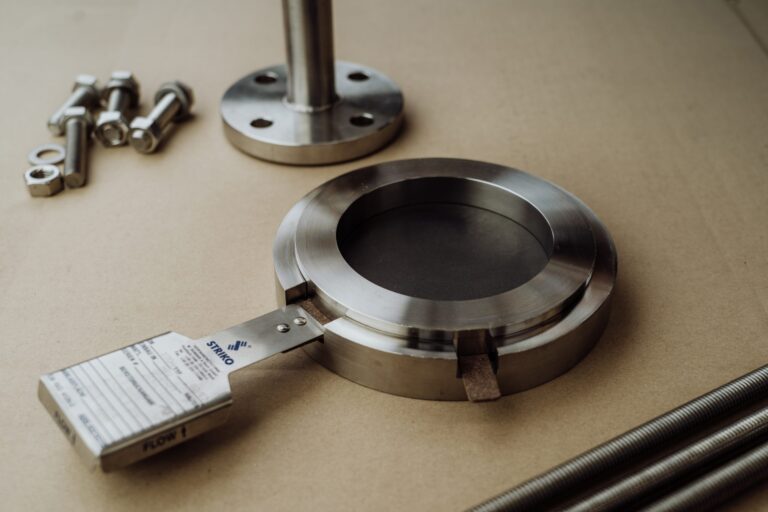
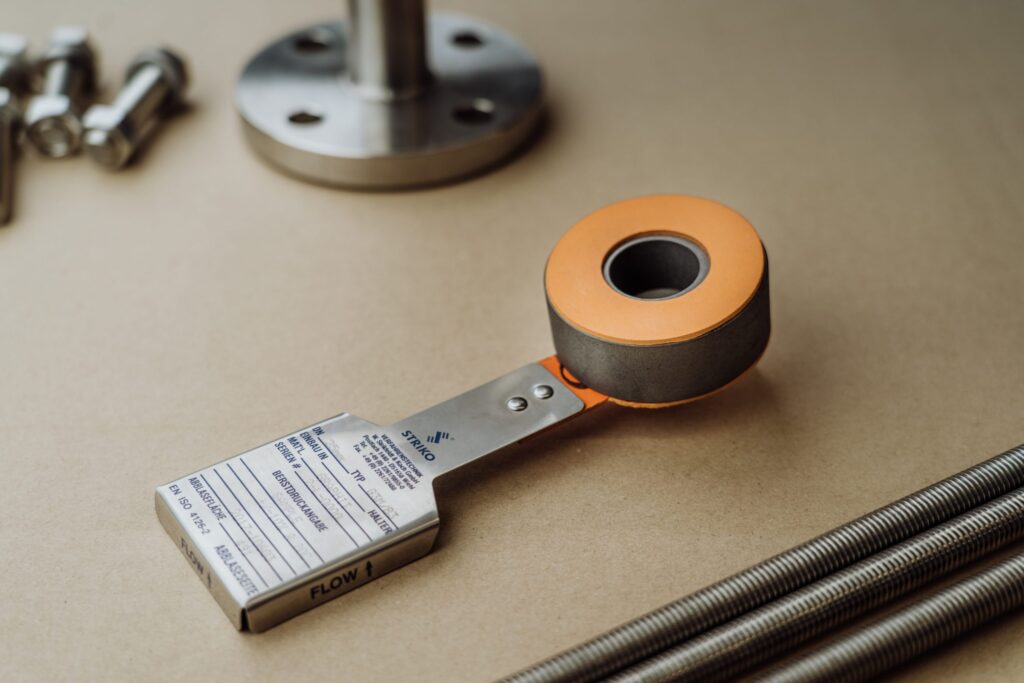
Graphite rupture disc
Corrosion resistant without coating, DN25 to DN400, between ANSI or DIN flanges.
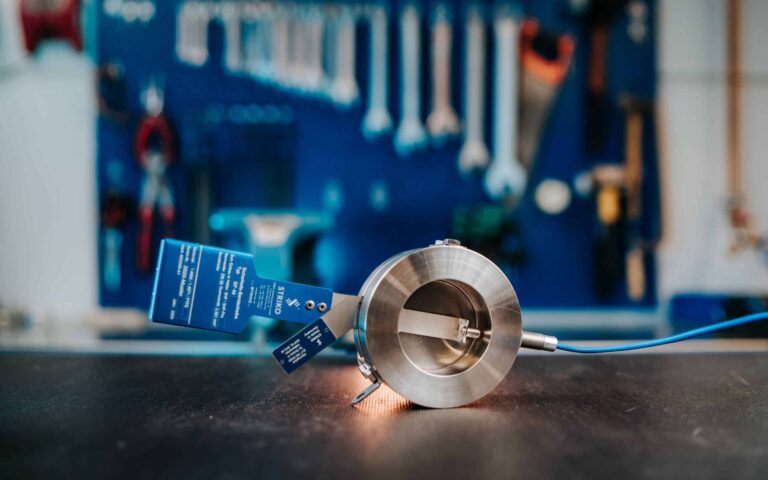
Burst indicator
Signals an opened disc directly to PLC, SCADA or DCS.
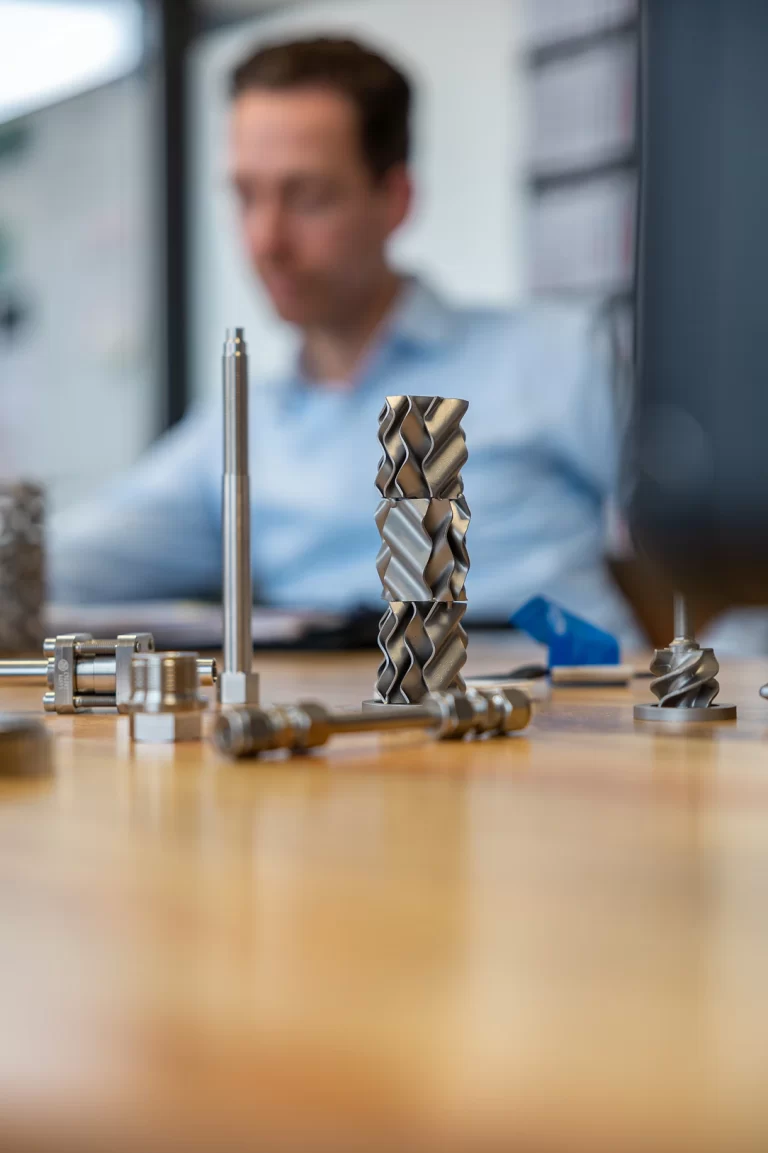
Reverse acting rupture disc
Loaded in compression, resistant to pressure cycling.
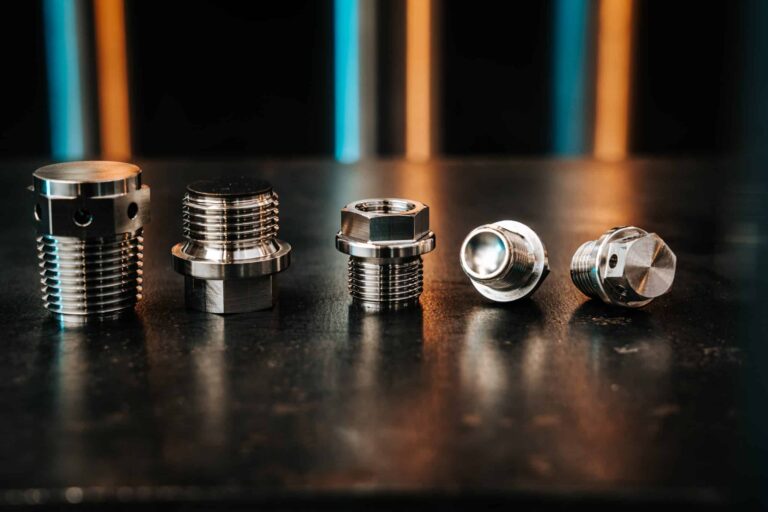
Extruder rupture disc
Built for the pressure peaks of plastics processing.
Sealing surfaces and leak detection ports
In many processes, leakage before bursting is unacceptable. Think of toxic gases, expensive intermediates or media that corrode everything they touch once they escape. For that reason we pay extra attention to three aspects of the holder design.
The first is the sealing faces. Our holders have sealing surfaces with controlled roughness, because a face that is too smooth or too rough will not seal consistently against the disc. The second is the type of seal. Depending on the medium we use metal or soft seals, each with its own strengths in temperature range and chemical compatibility. The third is the option of leak detection ports. A port on the downstream side lets you monitor the space behind the disc, so a pinhole or a weeping edge is noticed before it becomes a problem.
A correctly designed holder prevents micro leakage that can lead to corrosion, product loss or safety risks. That is not a theoretical concern. A small leak past the disc edge can slowly attack the downstream face of the disc, and a disc corroded from the wrong side is a disc with an unknown burst pressure.
Specification ready? We will prepare a targeted quote.
Send us medium, pressure, temperature and connection. Our specialists come back with a matching proposal.

Standards and documentation for every rupture disc holder
A rupture disc holder is part of the pressure envelope, so it has to satisfy the same rules as the equipment it protects. Our holders are designed in line with relevant international standards, including ASME Section VIII, EN ISO 4126 and the Pressure Equipment Directive PED 2014/68/EU. ATEX is taken into account where applicable.
The documentation is just as important as the design. Each holder is supplied with material certificates according to EN 10204 3.1, pressure calculations, inspection reports and traceability per component. For an inspector or a notified body, that documentation is the proof that the holder does what it claims. For you as the owner, it means that five years from now you can still trace exactly which material went into which holder on which vessel.
Dutch Valve Vision itself works with an ISO 9001 certified quality management system, certified by KIWA. We supply according to DIN and ANSI standards, so the holder fits both European PN flanges and ASME class flanges. When you send us your nominal size and flange standard, we match the holder to the pipework you already have.
That matching deserves more attention than it usually gets. A rupture disc holder sits between an existing flange pair, so its outside dimensions, its bolt pattern and its pressure rating have to agree with that pair. In a plant that grew over decades, it is not unusual to find DIN flanges on the original vessels and ANSI flanges on a skid that was added later. The disc may be identical in function, but the holder has to suit the flanges on each side. We check that before we quote, so the holder that arrives on site actually fits the gap it was ordered for.
Installation, bolt load and reuse
Picture a maintenance crew during a turnaround. A disc on a reactor has opened, the replacement is on site, and the crew has a narrow window to get the vessel back in service. With a disc clamped directly between flanges, success depends on the fitter getting the gasket position, bolt sequence and torque exactly right, in the dark, in protective gear, under time pressure. With a proper holder, most of that uncertainty disappears.
A good holder makes installation simpler and reduces the chance of mistakes. Our designs have clear flow and installation markings, so nobody has to guess which side faces the process. The geometry ensures correct positioning of the disc, and the design gives a consistent bolt load. Together, those features take much of the human factor out of fitting a new disc.
Maintenance is limited to visual inspection and periodic replacement of the disc. The holder itself is designed for long-term reuse without loss of performance. After a burst, you replace the disc, check the sealing faces and put the same holder back into service. Over the life of a plant, that is where much of the value of a quality holder lies.
Holder and burst detection
A holder also makes it easier to add burst detection. A sensor that registers the opening of the disc can be integrated in the disc or in the holder, and the signal can go to a PLC, SCADA or DCS. For safety-critical positions we advise specifying detection together with the holder, so the connection, the cable routing and, in hazardous areas, the ATEX requirements are all resolved in one design step instead of as an afterthought.
Where our rupture disc holders are used
In the chemical and petrochemical industry, holders protect reactors, columns and piping against overpressure and runaway reactions. These are the classic positions, often with corrosive media and demanding temperature profiles, and they are where material selection and sealing design matter most.
Oil and gas installations, onshore and offshore, combine high pressures, corrosive media and strict regulation. Here duplex and super duplex are logical holder materials, and the documentation package is scrutinised as closely as the hardware. In energy and hydrogen applications, holders provide reliable pressure relief on electrolysers, compressors and storage modules, where the medium is light, fast and unforgiving of any leak.
Pharmaceutical and biotech producers ask for a hygienic design, reproducible performance and documentation that supports their validation processes. For them, a holder that behaves the same way every time a disc is replaced is as important as the disc material. Finally, OEMs and skid builders integrate holders into their own packages, sometimes in series production. They need a holder that fits their standard design and arrives with a consistent set of documents every time.
Engineering support and total cost of ownership
Not every application is standard. When the process conditions are unusual, we offer engineering support that goes beyond picking a part number. That includes selecting the right combination of holder and disc, FEM analyses on request, optimisation for cyclic loading and support in HAZOP and other safety studies. We work with EPC contractors, end users and OEMs, including skid builders who integrate holders into their own packages.
The economics are straightforward. A quality rupture disc holder reduces unplanned downtime, lasts longer, behaves predictably when overpressure does occur and lowers maintenance costs. A cheap holder that causes one premature burst on a critical reactor can easily cost more in lost production than the price difference with a good holder ever saved. We prefer to invest in reliability from day one, and we advise our customers to do the same.
For a proposal, send us the disc type, nominal size, flange standard, medium, operating and burst pressure and temperature to sales@dutchvalvevision.com, or call +31 (0)70-2210560 on weekdays between 09:00 and 17:00.
Frequently asked questions about rupture disc holder
Question not listed? Our specialists are happy to help.
- +31 (0)70-2210560
- sales@dutchvalvevision.com
- Vlotlaan 641, 2681 TZ Monster, the Netherlands
- Mon-Fri 09:00-17:00
What is the function of a rupture disc holder?
A rupture disc holder is the mechanical housing in which the disc is mounted. It positions the disc correctly in the line. It seals the disc under operating pressure. It applies a controlled and reproducible load to the disc. It also allows safe relief once the set pressure is exceeded. Without a good holder, the disc may burst early, leak or open unpredictably. That is why we treat the holder as a safety component in its own right. We select it together with the disc for every application.
Can I reuse a rupture disc holder after a burst?
Yes, holders are designed for long-term reuse without loss of performance. After a burst, only the disc needs to be replaced. Before reinstalling, the sealing faces should be inspected visually. Check them for damage, deposits or corrosion that could affect the seal. The flow and installation markings should also still be legible. If everything is in order, the holder goes back into service with a new disc. That makes the holder a long-term investment rather than a consumable. We can supply matching replacement discs for the holders we deliver.
Which holder do I need for a reverse acting disc?
A reverse acting disc needs a reverse buckling holder. In this design the pressure acts on the convex side of the dome. The holder is shaped to support that loading direction. The combination offers higher resistance to pressure cycles. It also performs better at high temperatures and has a lower risk of fatigue. Using a forward acting holder for a reverse acting disc would compromise the burst behaviour. We always specify disc and holder as a matching pair. That avoids mismatches during ordering and installation.
When is a vacuum support holder necessary?
A vacuum support holder is necessary when the process can see vacuum as well as overpressure. That happens in batch processes, during emptying and during cleaning cycles. A vessel that cools after steaming can pull a strong vacuum. Without support, the disc could flip over or be damaged. A damaged disc no longer bursts at its rated pressure. The vacuum support holder prevents that reverse deformation. Tell us the lowest pressure your process can reach. We then include the right support in the holder design.
Which materials are available for a rupture disc holder?
We supply holders in carbon steel for standard applications with controlled media. Stainless steel 316/316L is the widely used corrosion resistant option. Where strength and chloride resistance both count, duplex and super duplex are the options. High temperatures and aggressive media call for Inconel or Hastelloy. For niche applications, other special alloys can be supplied on request. Process data always drive the material decision. It is also matched to the disc that sits in the holder. That keeps sealing faces intact and the disc load reliable over time.
Which standards apply to a rupture disc holder?
Our holders are designed in line with ASME Section VIII. They also follow EN ISO 4126 for safety devices against excessive pressure. The Pressure Equipment Directive PED 2014/68/EU applies in Europe. ATEX is taken into account where the application requires it. Each holder comes with material certificates according to EN 10204 3.1. Pressure calculations and inspection reports are included as well. Every component is traceable. Dutch Valve Vision works with an ISO 9001 certified quality system, certified by KIWA.
What are leak detection ports on a holder for?
Leak detection ports give access to the space downstream of the disc. They allow you to monitor whether medium is passing the disc before it bursts. A pinhole or a weeping edge can then be detected early. That matters with toxic, expensive or corrosive media. Undetected leakage can attack the disc from the downstream side. That could change its burst pressure without anyone noticing. Ports are integrated in the holder design when requested. We advise on this option based on your medium and safety requirements.
What information do you need to quote a rupture disc holder?
We need the disc type, forward acting or reverse acting, or the existing disc details. The nominal size and flange standard, DIN or ANSI, are also essential. We ask for the medium and its composition. Operating pressure including peaks and the required burst pressure follow. Temperature in normal operation and in the relief scenario completes the process picture. Tell us if the process can see vacuum and if you want detection or leak detection ports. Mention any documentation requirements from your inspector or client. With that information we propose a holder that fits your line and your paperwork.
Get the right holder for your disc
Send us the disc type, nominal size, flange standard, medium, pressure and temperature. We propose a holder with the right material, sealing and documentation.
- +31 (0)70-2210560
- sales@dutchvalvevision.com
- Vlotlaan 641, 2681 TZ Monster, the Netherlands
- Mon-Fri 09:00-17:00