

The rupture disc working principle is simple: a calibrated membrane stays leak tight until the process pressure reaches its set burst pressure, then opens within milliseconds and relieves the system. Forward acting discs burst in tension with pressure on the concave side, while reverse acting discs buckle with pressure on the convex side. There are no moving parts and the disc is replaced after it opens.
What the rupture disc working principle comes down to
The rupture disc working principle is one of the simplest ideas in process safety, and that simplicity is exactly why engineers trust it. A rupture disc is a thin, calibrated membrane, usually metal or graphite, clamped between flanges or in a holder on a vessel or pipe. It has one job. It stays closed and leak tight while the process runs normally, and it opens the moment the pressure reaches a predetermined value. After that, the medium escapes through the opening, the pressure drops and the vessel, the piping and the people around it are protected.
At Dutch Valve Vision we often call the rupture disc the last line of defence. Control systems, alarms and operators all come first, and every one of them can fail. A rupture disc needs no power supply, no sensor and no control loop to do its work. It responds to one thing only: the actual pressure acting on it.
Where does that pressure come from? Rarely out of nowhere. Think of an exothermic reaction that runs faster than planned, a line that slowly blocks, a valve closed by mistake or a liquid that heats up and expands in a closed section of pipe. Vacuum is a real scenario too. A vessel that cools down after steam cleaning can pull enough vacuum to collapse its wall, which is why some discs are designed to cope with both overpressure and underpressure.
This page walks through the rupture disc working principle step by step. If you are already comparing specific designs, our pages on forward acting, reverse acting and graphite rupture discs go deeper into each type.

Step by step: from normal operation to full opening
Picture a batch reactor running at normal operating pressure. The rupture disc sits on a nozzle on top of the vessel, mounted in a holder, with a discharge line routed to a safe collection point. Here is the rupture disc working principle in action, stage by stage, as an operator in the control room would experience it.
In normal operation the disc is loaded but intact. The process pressure pushes on the membrane, the material carries that load and nothing escapes. Unlike a spring loaded valve with a seat that can wear, an intact rupture disc is 100% leak tight up to the moment it bursts. For toxic, expensive or environmentally harmful media, that alone is often the reason to choose one.
Then something goes wrong. The reaction accelerates and the pressure starts to climb, and the stress in the disc material rises with it. As long as the pressure stays below the burst pressure, the disc holds. This is the part of the rupture disc working principle that people tend to underestimate. Every disc is designed for a precise burst pressure, matched to the safe working pressure of the system, with a tolerance that depends on material properties and the manufacturing process.
At burst pressure the disc gives way. There is no spring to compress and no valve disc to lift, so the opening happens within milliseconds. The membrane tears or opens along its designed lines and creates a flow path for the medium. The pressure in the reactor drops immediately and the equipment stays within its limits.
After the event the disc is spent. A rupture disc is non-reclosing, so the opening stays open until the disc is replaced, and in most plants that means the process stops for a while. That is the price of a device that is simple, fast and leak tight. If the disc is fitted with a burst detection sensor, the control system knows about the opening straight away. An electrical loop that breaks, or a magnetic field that changes when the disc moves, sends a signal to the PLC, SCADA or DCS so the process can be shut down and personnel warned.
At a glance
- Opens within milliseconds at burst pressure
- Leak tight until the moment of bursting
- No moving parts, no external energy
- DVV is exclusive STRIKO agent Benelux
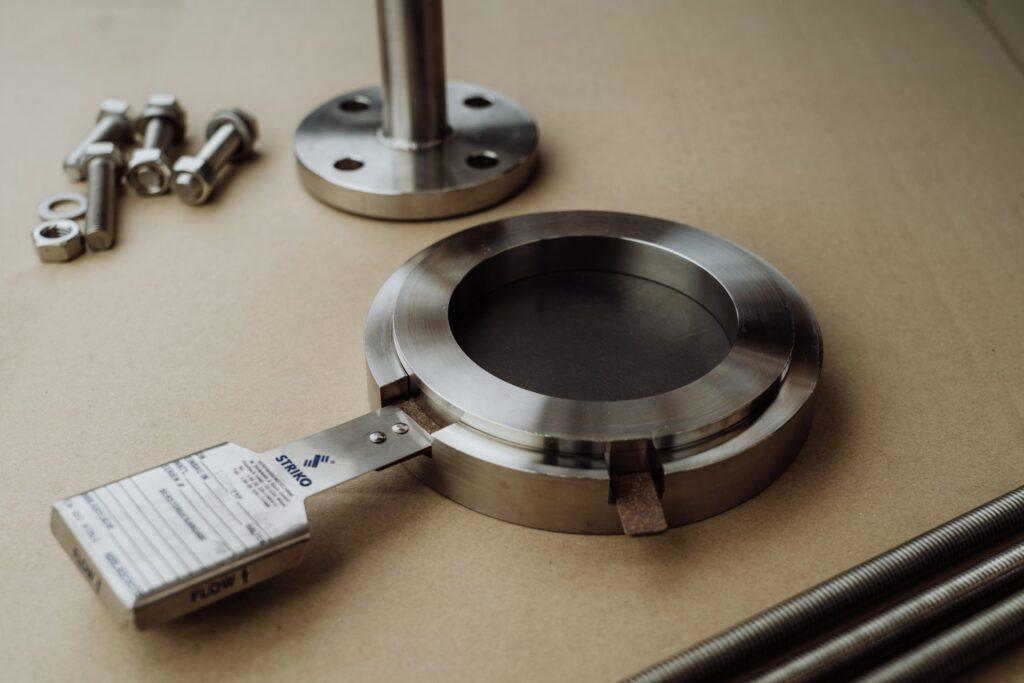
Forward acting versus reverse acting: two sides of the rupture disc working principle
Two families dominate the metal rupture disc market, and the difference between them lies in which side of the dome faces the process. Both follow the same rupture disc working principle of a membrane that fails at a set pressure, yet the mechanics inside the material are completely different.
Forward acting: tension on the concave side
In a forward acting disc the process pressure acts on the concave side of the domed membrane. Think of a balloon being inflated from the inside. The material is loaded in tension, and when the pressure pushes that tension beyond what the disc can carry, it tears open. Score lines or cut patterns can guide how it opens. This is the classic design. Holders for forward acting discs are known for high accuracy of the burst pressure and are suitable for gas and liquid applications, and STRIKO builds forward acting metal discs specifically for high pressure environments. The point to watch is the operating ratio. A forward acting disc that runs close to its burst pressure day after day, or sees strong pressure cycling, is worked harder and can fatigue earlier.
Reverse acting: buckling on the convex side
A reverse acting disc, also called reverse buckling, is loaded the other way round. The pressure acts on the convex side, so the dome is loaded in compression. At the set pressure the dome becomes unstable, snaps through and reverses, and then opens along its prepared lines. Because the material is compressed rather than stretched during normal operation, reverse acting designs cope better with pressure fluctuations. Reverse buckling holders offer higher resistance to pressure cycles, better performance at high temperatures and a lower risk of fatigue. STRIKO positions its reverse acting metal discs on durability and efficiency, and on a process that starts and stops several times a day, that is where you gain.
So which one is better? Neither, in general. A plant with steady pressure and a need for tight burst accuracy on a gas service may be perfectly served by a forward acting disc. A process with frequent cycles and an operating pressure closer to the burst pressure often calls for reverse acting. The choice follows the process, not the other way round.
Unsure about the right choice?
Share your process data with our specialists. We check the numbers with you and give reasoned advice.
Why a principle without moving parts is so reliable
A spring loaded safety valve has a spring, a stem, a seat and a disc. Each of those parts can stick, corrode, wear or drift out of adjustment. A rupture disc has none of them, and that absence is at the heart of the rupture disc working principle. That is not just a maintenance argument, because it changes how the device behaves in an emergency. There is no inertia of moving parts to overcome, so the response to a sudden pressure spike is faster than with many safety valves. There is no external energy involved, so a power failure cannot stop it. And because there are no mechanical systems that need maintenance, the risk of malfunction is lower than with traditional spring loaded devices.
The trade-off is honest and simple. A rupture disc opens once. A safety valve can open and reclose when pressure varies, and can keep the process running. That is why many plants combine both. A rupture disc upstream of a relief valve keeps the valve isolated from corrosive media and prevents leakage through the valve seat, while the valve limits how much medium is lost. Seen this way, the rupture disc working principle and the valve principle complement each other rather than compete.
How temperature, holder and operating ratio shape the rupture disc working principle
Three factors decide whether the theory works in practice. The first is temperature. The burst pressure of a disc is not a number that exists apart from its environment. At higher temperatures the effective burst pressure can fall, depending on material and design. That is why we always look at the temperature during the critical scenario, not just the normal operating temperature. An engineer drawing a P&ID for a storage tank with a corrosive medium has to think about what the disc sees in the relief scenario, not only on an ordinary production day.
The second is the holder. A disc can only perform as designed if it is positioned correctly, loaded reproducibly and sealed properly. Metal discs can be clamped directly between flanges in systems with straight pipe sections, but for pulsating pressure, cyclic loading or where process integrity matters most, a dedicated holder is the better route. A poorly designed holder can cause premature failure, leakage or a wrong burst pressure. We supply forward acting holders, reverse buckling holders and vacuum support holders, with sealing faces of controlled roughness, clear flow and installation markings and consistent bolt load.
The third is the operating ratio, the relation between maximum operating pressure and burst pressure. It directly affects service life and reliability. Material choice follows from chemical compatibility with the medium, working temperature and mechanical load. Our standard metal disc is made of 316 stainless steel, with Hastelloy and titanium as options.
Installation matters as well. Check diameter and burst pressure, make sure flanges are clean and aligned, centre the gaskets, respect the flow direction arrow and tighten the bolts evenly to the recommended torque. A damaged disc must never be installed, because even small defects can change the burst pressure.
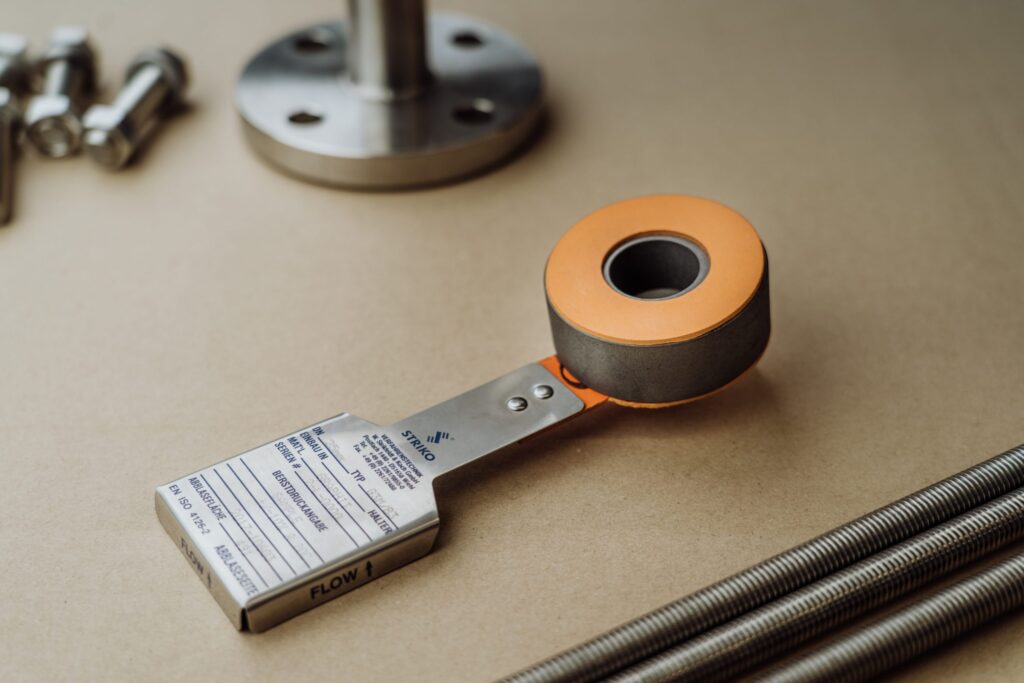
Graphite, flat and vacuum discs: one principle, different forms
Not every rupture disc is a metal dome. The same idea, a membrane that fails in a controlled way at a set pressure, is applied in other shapes and materials. Flat and multi-layer metal discs are the basic version for general process applications, with the multi-layer construction adding strength at higher pressures. Domed discs with an X or C scored dome give a controlled bursting action and a defined opening pattern.
Graphite rupture discs apply the rupture disc working principle with a very different material. Graphite is naturally resistant to many acids, bases and aggressive media without any coating, which makes it the answer where stainless steel would degrade. When a graphite disc bursts, it opens across the full diameter, so pressure is relieved quickly. We supply graphite discs from DN25 to DN400, for mounting directly between ANSI or DIN flanges or in a holder, with optional TFE coating, burst detection and vacuum support.
Vacuum adds another twist. A disc designed for overpressure can be pulled the wrong way when a vessel is emptied or cools down. Vacuum support, vacuum suitable discs or double discs prevent that. In batch processes and cleaning cycles, vacuum support holders stop the disc from flipping over or being damaged.
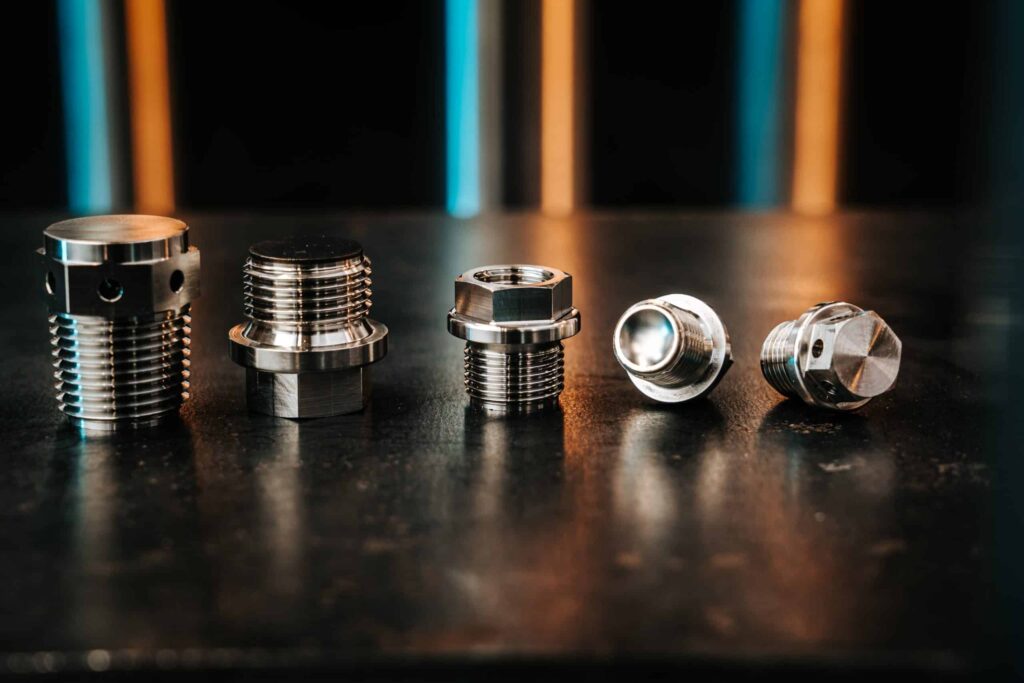
The STRIKO range also includes aseptic metal discs for pharma and food, extruder discs for demanding polymer processing, discs for tank containers and compact burst plugs with a threaded connection. Each one applies the same rupture disc working principle to a specific environment, from sterile process lines to extruder barrels and tank containers.
From working principle to the right rupture disc with Dutch Valve Vision
Understanding the principle is step one. Turning it into a disc that fits your process is step two, and that is where we come in. Dutch Valve Vision, based in Monster in the Netherlands, is the exclusive agent of STRIKO Verfahrenstechnik GmbH for the Netherlands, Belgium and Luxembourg. STRIKO has been active in rupture discs since 1974 and works to a clear philosophy: test, evaluate and recalibrate.
When you ask us for a rupture disc, we start with the process, not the catalogue. We need the medium and its composition, the operating pressure including peaks, the required burst pressure, the temperature in normal operation and in the relief scenario, the connection and the available installation space. With those data we select disc type, material and holder, and advise on burst detection where it adds value.
Our holders are designed in line with ASME Section VIII, EN ISO 4126 and PED 2014/68/EU, and ATEX where applicable. They come with material certificates to EN 10204 3.1, pressure calculations, inspection reports and traceability per component. Metal discs fall under PED, ISO 4126, EN 14491 for explosion safety and CE marking. On request we support FEM analyses as well as HAZOP and other safety studies. Dutch Valve Vision itself works with an ISO 9001 certified quality management system, certified by KIWA.
Planning a maintenance stop, designing a new reactor or replacing a disc that has just opened? Send your data to sales@dutchvalvevision.com or call +31 (0)70-2210560, Monday to Friday from 09:00 to 17:00. We will translate the rupture disc working principle into a disc that works in your plant.
Frequently asked questions
Frequently asked questions about rupture disc working principle
How fast does a rupture disc open?
A rupture disc opens within milliseconds once the set burst pressure is reached. That speed follows directly from the design. There is no spring to compress, no stem to move and no valve disc to lift. The membrane simply gives way in a controlled manner and creates a discharge opening. A graphite disc opens across its full diameter when it bursts, which allows fast pressure relief. This response time matters most with sudden pressure build-up, such as a runaway exothermic reaction or a blockage. The discharge line still has to be designed so the medium can flow away safely. That is why we look at installation and blow-off direction during selection as well.
What is the difference between forward acting and reverse acting rupture discs?
The difference lies in which side of the domed disc faces the process pressure. In a forward acting disc the pressure acts on the concave side and the material is loaded in tension. When that tension exceeds what the disc can carry, it tears open. In a reverse acting disc the pressure acts on the convex side and the dome is loaded in compression. At the set pressure the dome snaps through and then opens along prepared lines. Forward acting holders are known for high burst pressure accuracy in gas and liquid service. Reverse buckling designs offer higher resistance to pressure cycles, better performance at high temperatures and a lower risk of fatigue. We help you choose based on your operating ratio, pressure profile and medium.
Can a rupture disc be reused after it bursts?
No, a rupture disc is a single use, non-reclosing device. Once it has opened, it has to be replaced. The same applies to a disc that has been damaged during handling or installation. Even small defects can influence the burst pressure, so a damaged disc must never be installed. The holder, on the other hand, is designed for long-term reuse without loss of performance. For critical positions we recommend keeping spare discs in stock. That keeps downtime after an activation as short as possible. With burst detection you also know immediately that a replacement is needed.
Why is a rupture disc leak tight while a safety valve may leak?
An intact rupture disc is a closed metal or graphite barrier with no seat and no moving parts. Nothing can open a small gap until the disc actually bursts. That is why a rupture disc is 100% leak tight up to the moment of bursting. A spring loaded safety valve relies on a disc pressed onto a seat. Wear, corrosion or deposits on that seat can lead to small leaks before the valve opens. For toxic, expensive or environmentally harmful media, that difference can decide the design. Many plants therefore install a rupture disc upstream of a relief valve to keep the valve isolated from the medium. We can advise on both the disc and the holder for such a combination.
Does temperature affect the burst pressure of a rupture disc?
Yes, and it is one of the most underestimated factors. The burst pressure of a disc does not exist separately from its environment. At higher temperatures the effective burst pressure can drop, depending on material and design. A disc selected only on normal operating temperature may therefore behave differently in the scenario it is meant for. We ask for the temperature during the critical scenario as well as the normal operating temperature. Material choice plays a role too, from 316 stainless steel to Hastelloy, titanium or graphite. Reverse buckling holders are known for better performance at high temperatures. Always include both temperatures when you send us a request.
What role does the holder play in how a rupture disc works?
The holder is what makes the burst pressure reproducible. It positions the disc correctly, applies a controlled clamping load and seals it under operating pressure. If that load varies, the disc can fail early, leak or burst at the wrong pressure. Our holders are designed with tight tolerances to avoid stress concentrations and carry clear flow and installation markings. Sealing faces with controlled roughness prevent micro-leakage, and leak detection ports can be integrated where needed. Holder materials range from carbon steel and 316/316L stainless steel to duplex, super duplex, Inconel and Hastelloy. The holder itself is reusable, and only the disc is replaced after an event. For pulsating pressure or cyclic loading we almost always advise a holder rather than direct flange mounting.
How do I know when a rupture disc has burst?
Without detection, a burst disc is sometimes only noticed during a routine inspection. By then medium may have been escaping for some time. A burst detection sensor solves this by signalling the opening immediately. Electrical detection uses a loop that is interrupted when the disc breaks. Magnetic detection reads a field that changes when the disc moves. Fail-safe designs also report a defect in the sensor itself, so a false negative is avoided. The signal can go straight to a PLC, SCADA or DCS system to shut down the process and warn personnel. Detection is available as an option for our graphite discs and can be integrated into the disc or holder for other types.
What does Dutch Valve Vision need to select a rupture disc?
We start with the process, so the more complete your data, the faster we can advise. First we need the medium and its composition. Next come the operating pressure including peaks and the required burst pressure. The temperature is needed for normal operation and for the relief scenario. The connection, nominal diameter, any back pressure and the available installation space complete the picture. For a replacement, the existing tag data and specification are usually enough to get started. As exclusive STRIKO agent for the Benelux, we then select the disc type, material, holder and optional detection. Send your data to sales@dutchvalvevision.com and we will get back to you as soon as possible.
Request a quote
Turn the principle into the right disc
Send us the medium, operating pressure including peaks, required burst pressure, temperature and connection. We will advise the matching STRIKO rupture disc and holder.
- +31 (0)70-2210560
- sales@dutchvalvevision.com
- Vlotlaan 641, 2681 TZ Monster
- Mon-Fri 09:00-17:00
Related pages