

STRIKO · exclusive agent Benelux
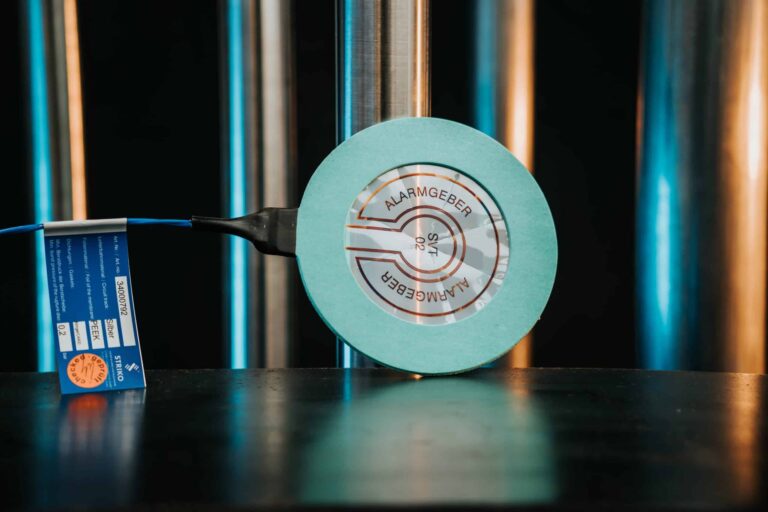
STRIKO burst indicator
How burst detection on a STRIKO rupture disc works, how the signal reaches your control system and what to consider when adding it later.
Why a STRIKO burst indicator matters once the disc has opened
A STRIKO burst indicator exists for the moment after the rupture disc has done its job. The disc has opened, the pressure has been relieved and the vessel is safe. Yet at that exact moment a new risk appears. The installation is now open to the discharge side, medium may still be escaping and the process may continue to run as if nothing happened. Without a signal, nobody in the control room necessarily knows.
Picture a reactor on the top floor of a plant, with the relief line routed to a scrubber or a collection vessel. A short pressure spike during the night opens the disc. The pressure falls back, the alarms clear and the operators move on. The broken disc is only found during a routine inspection round, possibly long after the event. In the meantime, vapour has been escaping, the reactor has been running without its last line of defence and a second upset would find no disc at all. That scenario is exactly what burst detection is designed to prevent.
When we talk about a STRIKO burst indicator at Dutch Valve Vision, we mean burst detection fitted to a STRIKO rupture disc or its holder, supplied by us as one coordinated package. We are the exclusive STRIKO agent for the Netherlands, Belgium and Luxembourg, and detection is one of the questions we raise with every buyer who specifies a disc for a safety critical duty.
The value of detection is not only in safety. It also changes maintenance. With continuous monitoring, a disc is replaced when it has actually burst, rather than on a fixed interval out of uncertainty. That reduces maintenance costs and avoids unnecessary stops.
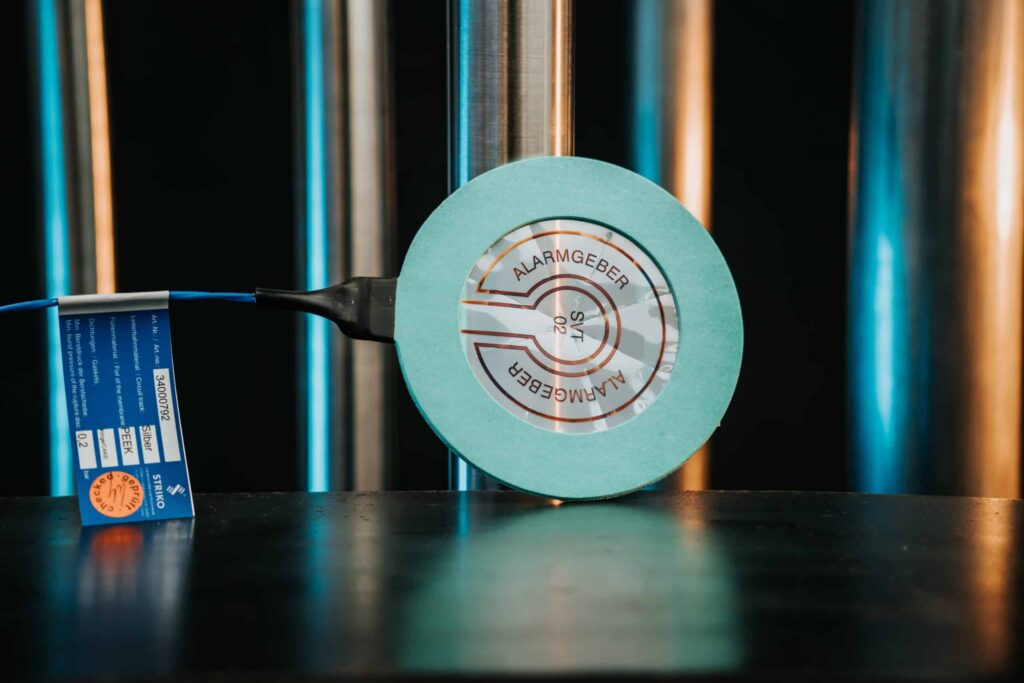
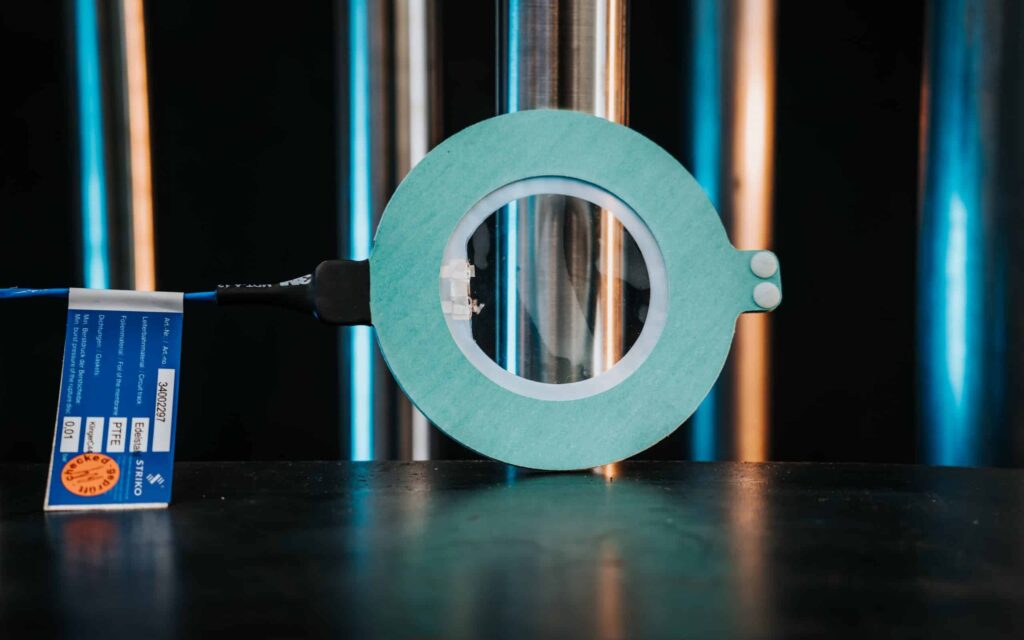
Two detection methods behind a STRIKO burst indicator
Burst detection systems are designed to work reliably and robustly in demanding industrial environments. Two principles cover most installations, and the choice between them depends on the process, the medium and the way the disc is mounted.
Electrical loop detection
With electrical detection, the sensor monitors an electrical loop that is interrupted when the rupture disc breaks. As long as the disc is intact, current flows through the loop. The moment the disc opens, the loop is broken, the current stops and a signal is generated. The logic is easy to explain to operators and easy to test during commissioning: an open circuit means an open disc.
This method is mechanically simple, which is a strength in itself. There is little that can drift or wear, and the signal is binary. Either the loop is closed or it is not.
Magnetic detection
With magnetic detection, a magnet attached to the rupture disc creates a magnetic field that the sensor reads. When the disc breaks and the magnet moves, the field changes and the detection is triggered. Certain detection systems, including magnetic sensors, do not come into contact with the process medium. That keeps them functional even with aggressive substances, which makes this approach attractive in corrosive chemistry.
Both methods can range from mechanically simple to more advanced, depending on the application. That flexibility is why a STRIKO burst indicator can be used with light process media as well as aggressive chemical environments, and even in ATEX zones.
A STRIKO burst indicator is a detection device on a STRIKO rupture disc or its holder that signals the moment the disc opens. It works with an electrical loop that breaks or a magnetic field that changes, and it can be wired to a PLC, SCADA or DCS. Dutch Valve Vision, exclusive STRIKO agent in the Benelux, supplies disc and detection as one package.
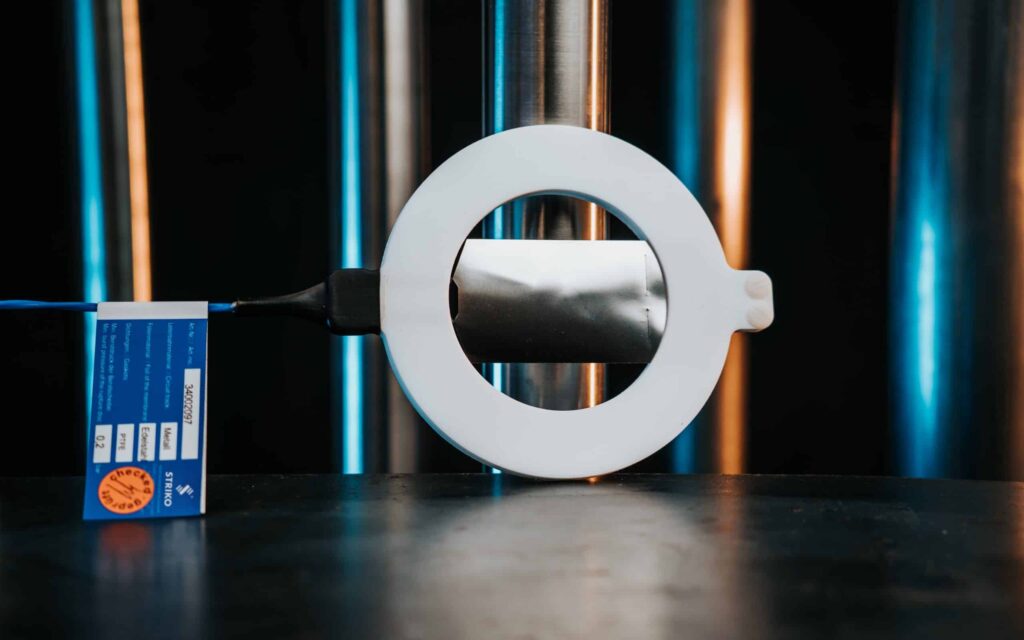
Fail-safe design: the signal you get when the sensor itself fails
A detection device that fails silently is worse than no device at all, because it creates false confidence. Modern burst detection systems are therefore designed on fail-safe principles. A defect in the sensor itself also generates a safe notification, which prevents a false negative.
In practice this means that the control system can distinguish between a healthy, intact situation and anything else. A cut cable, a failed sensor or a burst disc all lead to a signal that demands attention. The operator may have to investigate before knowing which of the three occurred, but the one situation that must never happen, a burst disc without any signal, is designed out.
When you specify a STRIKO burst indicator for a safety critical application, fail-safe functionality should be on the list of requirements. It is one of the four selection criteria we check as standard, alongside chemical compatibility, ATEX certification and integration with your automation platform.
From disc to DCS: integrating the signal into your control system
A burst signal is only useful if it reaches someone who can act on it. Detection signals can be connected directly to control and automation systems such as a PLC, SCADA or DCS. As soon as the disc breaks, the process can be brought to a safe state automatically and personnel can be warned. No manual inspection is needed to find out what happened.
How far the automatic response goes is a design decision for the plant. In one installation the signal may only raise an alarm in the control room. In another it may close feed valves, stop a pump or start a shutdown sequence. For vessels with toxic or harmful media, detection also prevents emissions from escaping unnoticed, which supports compliance with environmental and safety rules.
A useful exercise during engineering is to follow the signal from start to finish. Where does the cable run from the holder to the junction box? Which input card receives it in the DCS? What does the operator see on screen, and what does the procedure say they must do next? A STRIKO burst indicator that is perfectly installed at the disc but badly mapped in the control system loses most of its value. We are used to discussing these interfaces with instrument engineers, because a relief device is only as good as the chain of actions it triggers.

Retrofitting a STRIKO burst indicator on an existing installation
Many sites already have STRIKO rupture discs in service without detection. Sometimes the original design did not require it, sometimes the risk assessment has changed since then, and sometimes a near miss has made the team realise that an unnoticed burst is a real possibility. The question then becomes: can we add detection to what we already have?
Detection is not always supplied as standard with a rupture disc. It can be installed as an option or integrated into the disc or the holder. For safety critical applications we recommend specifying it from the start, but retrofitting is often a realistic route as well. Whether it is possible, and in which form, depends on the existing disc and holder, the available space and the type of detection that suits the medium.
A retrofit is best planned around the next disc change or a scheduled stop. The relief device has to be opened anyway, so combining the two jobs avoids a separate intervention. Before that moment, a few questions need answers. Is the existing holder suitable for integrating a detection system, or does the combination need to change? Is the area classified, so that an ATEX certified version is required? Can the cable be routed safely to a junction box, and does the control system have a free input to receive the signal?
For a retrofit we ask for the data of the current STRIKO disc and holder, a photo or drawing of the installation if available, the medium, the area classification and the control system in use. From there we propose a detection method and describe what has to change at the disc, the holder and the wiring. The aim is a STRIKO burst indicator that fits the existing assembly without compromising the burst behaviour of the disc.
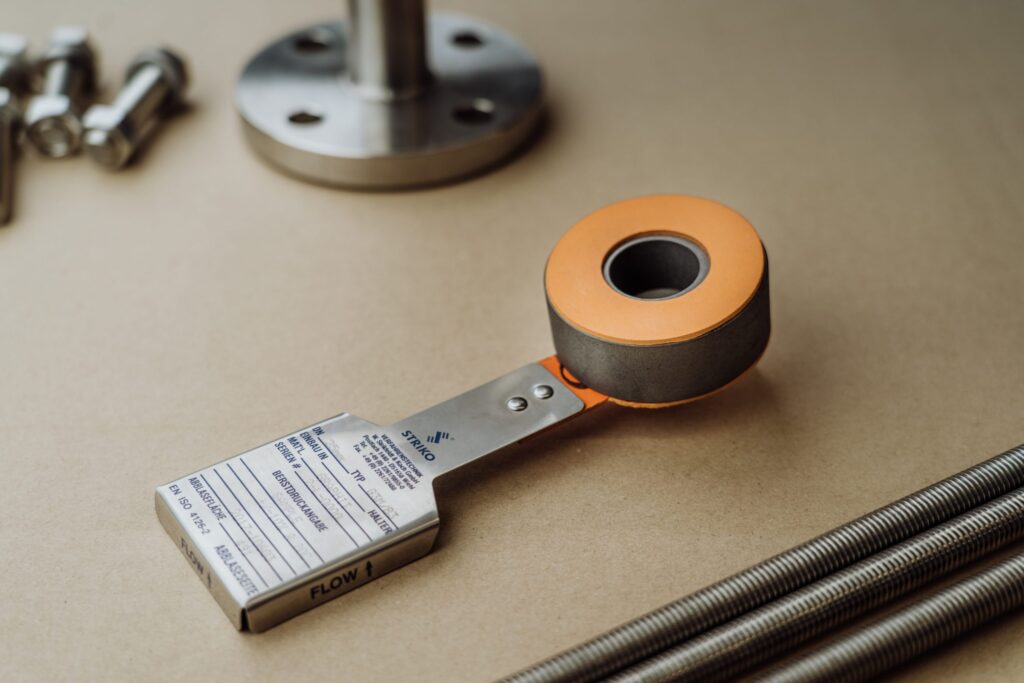
Selecting a STRIKO burst indicator: four criteria that decide
Selection comes down to four criteria. The first is chemical compatibility. The sensor and its cabling must withstand the medium and the ambient conditions, which is why a non contact method is often preferred with aggressive media. The second is ATEX certification. In explosive atmospheres, certification of the detection device is essential and not something to sort out afterwards.
The third criterion is integration. The detection device has to be compatible with the automation and monitoring platforms you already run. The fourth is fail-safe functionality, so that a fault in the sensor is reported safely instead of hiding a burst.
Different industries weigh these criteria differently. In petrochemicals and chemical processing, compatibility with aggressive media and ATEX often dominate. In energy production, integration with the existing DCS and a clear shutdown response are usually the priority. In food, beverage and pharmaceutical production, the hygienic design of the disc comes first, and the detection has to fit around it without creating new cleaning problems. Burst detection is used in all these sectors wherever pressure protection is required.
Where burst detection makes the biggest difference
Not every rupture disc carries the same consequences when it opens. The case for detection grows with the hazard of the medium, the size of the inventory behind the disc and the chance that a burst goes unnoticed. Three situations come up again and again in our conversations with plant engineers.
The first is overpressure protection on pressure vessels. When reactors, boiler installations or pressurised lines are protected by a rupture disc, the combination of disc and detection guards against unforeseen overpressure and makes sure the event is known straight away. Rapid detection prevents a small event from growing into a calamity and helps keep the process under control.
The second is any installation with hazardous or toxic media. A disc that relieves into a closed discharge system may not produce a visible or audible sign at all. Here a STRIKO burst indicator is often the only practical way to know that the protective barrier is gone. Without it, the period during which dangerous substances escape can be much longer than anyone would accept on paper.
The third is the remote or hard to reach disc. Think of a relief device high on a column, inside an enclosure or on an unmanned part of a site. Routine inspection rounds visit such locations less often, which stretches the time between a burst and its discovery. Detection closes that gap without adding walking rounds to the schedule.
What changes for operators and maintenance teams
Adding a STRIKO burst indicator changes daily routines more than people expect, and mostly for the better. For operators, the question after a pressure upset is no longer whether the disc might have opened. The control system answers it. That shortens the time to a decision and removes the need to send someone to check a location that may itself be unsafe right after an event.
For maintenance, detection shifts the replacement logic. Instead of replacing discs on a fixed interval because nobody can be sure of their condition, the team can replace a disc when it has actually burst. That lowers maintenance costs and avoids stops that were only planned out of caution. It does not remove the need for inspection altogether. Discs still deserve periodic visual checks, installation conditions still matter and a reserve stock of replacement discs remains essential, because a burst disc must be replaced before the process can restart safely.
The detection loop itself also deserves a place in the maintenance plan. A simple functional check during a planned stop confirms that the signal still arrives at the control system as expected. Combined with a fail-safe design, that check gives the team real confidence in the whole chain from disc to screen.
A complete relief assembly from one source
A rupture disc, a holder and a STRIKO burst indicator work as one system. When they are specified separately by different parties, interfaces easily go wrong: a holder without room for the sensor, a sensor that does not suit the medium or a cable gland that is not rated for the zone. By supplying the combination, we take those interfaces off your plate.
Our quality procedures run under ISO 9001, certified by KIWA. From our office in Monster we support Benelux sites and international project teams alike. Contact us by phone on +31 (0)70-2210560 or by email at sales@dutchvalvevision.com, Monday to Friday from 09:00 to 17:00.
Frequently asked questions
Frequently asked questions about STRIKO burst indicators
What is a STRIKO burst indicator?
It is a detection device fitted to a STRIKO rupture disc or its holder. Its task is to signal the moment the disc opens. The signal can trigger an alarm, inform the process control system or start an automatic shutdown. Without such a device, a burst disc may only be found during a routine inspection. During that time medium can escape and the installation has lost its protection. Dutch Valve Vision supplies disc and detection as one coordinated package. Our role as exclusive STRIKO agent covers the Netherlands, Belgium and Luxembourg. We advise on the method that suits your process.
How does electrical burst detection work?
The sensor monitors an electrical loop that runs across the disc area. As long as the disc is intact, current flows through the loop. When the disc opens, the loop is interrupted. The current stops and the sensor generates a signal. That signal is sent to the alarm or control system. The logic is simple and easy to test during commissioning. There is little in the method that can drift or wear over time. It is a common choice where the medium does not rule out contact with the sensor.
How does magnetic burst detection work?
A magnet is attached to the rupture disc and creates a magnetic field. The sensor continuously reads that field. When the disc breaks, the magnet moves with it. The field changes and the detection is triggered. Magnetic sensors can work without contact with the process medium. That keeps them functional even with aggressive substances. It makes magnetic detection attractive in corrosive chemistry. We check whether the disc design allows this method.
What does fail-safe mean for a burst indicator?
Fail-safe means that a fault in the detection device itself is also reported. A cut cable or a failed sensor generates a safe notification. This prevents a false negative, where a burst disc goes unnoticed. The control system can then distinguish a healthy situation from anything that needs attention. Operators may need to check what exactly happened. The dangerous situation of a burst without a signal is designed out. For safety critical duties we treat fail-safe behaviour as a standard requirement. It is one of our four selection criteria.
Can the signal be connected to our DCS?
Yes, detection signals can be connected directly to a PLC, SCADA or DCS. When the disc breaks, the control system receives the signal immediately. The plant can then raise an alarm, close feed valves or start a shutdown. How far the automatic response goes is a design decision for your site. We recommend following the signal from the sensor to the operator screen during engineering. Check the cable route, the input card and the operating procedure. A signal that is poorly mapped loses much of its value. We are happy to discuss the interface with your instrument engineers.
Can I retrofit a burst indicator on an existing STRIKO disc?
Often, yes, but it depends on the existing disc and holder. Detection can be installed as an option or integrated into the disc or holder. The available space and the medium also play a role. In classified areas an ATEX certified version is required. Retrofits are best combined with a planned disc change or a scheduled stop. Send us the data of the current disc and holder, preferably with a photo or drawing. We then propose a method and explain what has to change. The goal is detection that does not affect the burst behaviour of the disc.
Can a STRIKO burst indicator be used in ATEX zones?
Burst detection can be used in ATEX zones when the device is certified for the area. Certification is essential in explosive atmospheres. It should be part of the specification from the start, not a detail sorted out on site. The cabling and cable glands must also suit the zone. Tell us the area classification when you send an enquiry. We then select a detection device that meets the requirement. The same applies to retrofits on existing installations. Getting this right avoids delays during inspection and commissioning.
Is detection supplied as standard with every STRIKO disc?
No, detection is not always part of the standard supply. It is an option that can be installed or integrated into the disc or holder. For safety critical applications we recommend specifying it. That is especially true for toxic, harmful or expensive media. Detection also lets you replace discs only after an actual burst. That can lower maintenance costs and avoid unnecessary stops. We raise the question of detection with every enquiry for a critical duty. The final decision always follows from your risk assessment.
Request a quote
Add burst detection to your STRIKO disc
Send us the disc and holder data, the medium, the area classification and the control system you use. We advise the detection method and how to integrate it.
- +31 (0)70-2210560
- sales@dutchvalvevision.com
- Vlotlaan 641, 2681 TZ Monster
- Mon-Fri 09:00-17:00
Related pages